
Blog
Why use trims for commercial spaces: a complete guide

May
TL;DR:
- Properly specified trims in commercial interiors enhance safety, durability, and aesthetic appeal while lowering long-term maintenance costs.
- High-quality materials like solid brass with powder coating resist impact, moisture, and wear, ensuring compliance and a professional finish.
- Early planning and expert guidance in trim selection prevent costly repairs and help maintain a cohesive, high-standard environment.
Trims are one of the most overlooked elements in commercial interiors, yet property managers who get them right avoid costly repairs, prevent accidents, and create spaces that look professionally finished. The question of why use trims for commercial spaces goes well beyond decoration. In a high-traffic office, retail unit, or healthcare facility, trims protect vulnerable flooring edges, manage height differences between surfaces, seal transitions for hygiene, and signal to clients and visitors that the space is maintained to a high standard. This guide covers everything you need to specify trims with confidence.
Key takeaways
| Point | Details |
|---|---|
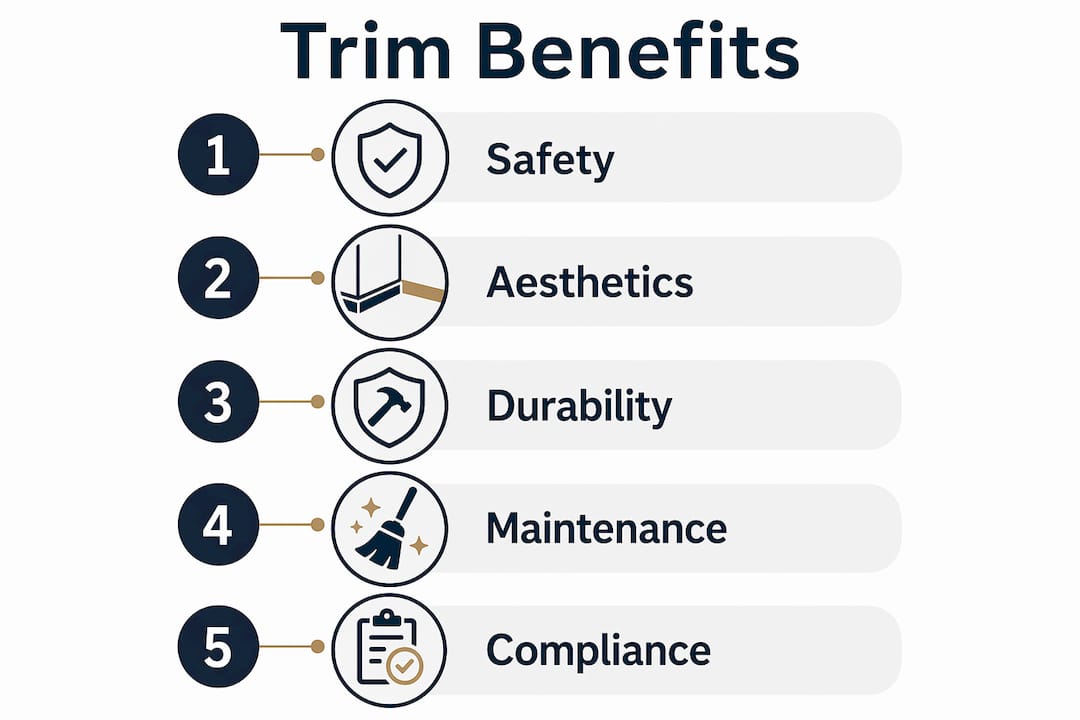
| Safety is the primary driver | Trims manage floor height differences and reduce trip hazards at every transition point. |
| Premium materials outlast cheap alternatives | Solid brass, powder-coated trims resist bending, denting, and splitting under heavy commercial use. |
| Trims support compliance | Accessibility and fire safety regulations require specific trim profiles at floor level changes. |
| Aesthetics reflect your brand | Clean, polished trim finishes project professionalism and reinforce interior design intent. |
| Long-term cost savings are real | Quality trims protect flooring edges and reduce maintenance frequency in busy commercial environments. |
Why use trims for commercial spaces: the safety case
Most accidents in commercial buildings happen at floor level. An uneven transition between carpet and hardfloor, or a raised edge at a doorway, creates a trip hazard that can result in injuries, liability claims, and reputational damage. Flooring trims, also referred to as transition strips or threshold bars in the industry, exist precisely to eliminate these risks.
Floor transitions present particular challenges in commercial environments because foot traffic is relentless and the consequences of a failure are more serious than in a domestic setting. A visitor tripping in a hotel lobby or a staff member catching their foot in a frayed carpet edge at the entrance to a corridor is not a minor inconvenience. It is a health and safety incident.
Key safety functions that trims serve in commercial spaces include:
- Managing height differences. Ramped or bevelled profiles are required where floor level changes exceed a quarter of an inch, with a ramp mandated for changes over half an inch, under accessibility standards including ADAAG and IBC guidance.
- Protecting carpet edges from fraying. An unprotected carpet edge at a doorway degrades quickly under foot traffic. Once the fibres begin to fray, the edge curls, and the trip risk increases rapidly.
- Sealing transitions against moisture ingress. Water pooling under a flooring edge in an entrance or kitchen corridor accelerates subfloor damage and creates slip hazards.
- Wall panel edge protection in corridors. In busy hospital or office corridors, wall panel trims protect exposed panel edges from trolleys, equipment, and general impact.
There is also a compliance dimension that is easy to underestimate. Fire-rated assembly integrity depends on transition hardware not breaching fire-rated membranes in floor-ceiling assemblies. Specifying the wrong trim profile in a multi-storey commercial building is not just an aesthetic mistake. It is a potential code violation.
Pro Tip: In complex commercial installations, look for trims with concealed fixing systems. These allow slip-resistant inserts to be replaced on-site without disassembly, which keeps maintenance costs low and minimises disruption to the working environment.
Aesthetics and professionalism: what trims signal to visitors
The finish quality of a commercial interior communicates directly to clients, tenants, and employees. A floor transition that is uneven, discoloured, or made from a cheap material that has started to chip sends a clear message about how the building is managed. Conversely, a well-specified trim in a polished finish transforms a functional junction into a deliberate design detail.
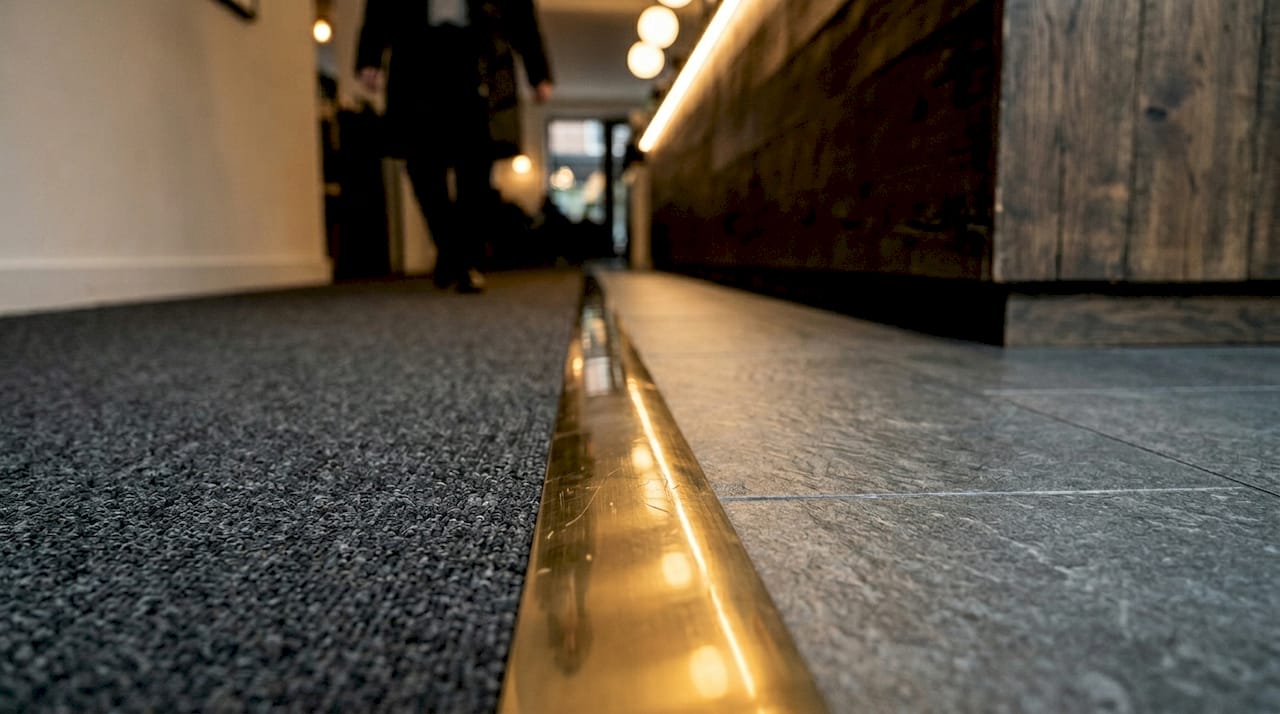
The importance of trims in modern commercial design is tied closely to the move towards clean, minimal interiors. Open-plan offices, contemporary retail environments, and hotel lobbies all rely on consistent surfaces and uninterrupted sight lines. A good trim achieves three things simultaneously: it finishes the floor edge cleanly, it creates a clear visual boundary between surface types, and it ties into the colour and texture palette of the wider interior.
Solid brass trims with powder-coated finishes are the preferred choice for environments where aesthetics matter. Unlike wooden trims that split and warp in areas with moisture or temperature variation, or plastic trims that yellow and crack under UV exposure and cleaning chemicals, solid brass holds its finish. Powder coating applied over solid brass provides consistent colour, scratch resistance, and a surface that withstands industrial cleaning regimes without fading or peeling.
Qualitycarpettrims offers ten hand-finished finishes on their solid brass trims, which means property managers can match trim colour to flooring, fixtures, or brand palette without compromise. In a flagship retail store or a prestige office reception, that level of specification matters. Clients notice. So do the people who work in the space every day.
Here are the finish and design advantages that set premium trims apart:
- Consistent colour across all trim lengths in a project, including thresholds, edge trims, and stair nosings
- Resistance to yellowing, cracking, and surface degradation from commercial cleaning products
- A polished or satin appearance that reads as intentional rather than functional
- Compatibility with carpet, hardfloor, tile, vinyl, and luxury vinyl tile surfaces
Durability and maintenance: where the real value lies
For property managers responsible for large commercial portfolios, maintenance budgets are a constant pressure. Trims that fail within two to three years of installation represent a false economy. The cost of replacement includes not just the materials but the labour, the disruption to tenants or staff, and the temporary downgrade in appearance.
Premium metal trims resist moisture, wear, and impact and require minimal upkeep, which is why they are specified for commercial interiors and exteriors alike. The table below illustrates the practical difference between premium solid brass trims and cheaper alternatives.
| Property | Solid brass with powder coat | Cheaper alternatives (wood, plastic, rubber) |
|---|---|---|
| Impact resistance | High. Will not dent or bend under foot traffic or trolley wheels | Low. Wood splits; plastic dents; rubber tears |
| Moisture resistance | Excellent. No swelling or rust under wet conditions | Poor to moderate. Wood warps; rubber degrades |
| Cleaning tolerance | Withstands commercial cleaning chemicals and frequent mopping | Degrades quickly with harsh cleaning agents |
| Lifespan in commercial use | 10 or more years under normal commercial conditions | Typically 2 to 5 years before replacement needed |
| Maintenance requirement | Wipe clean. No sealing, painting, or retreatment needed | Regular inspection and periodic replacement required |
Sealed floor-to-wall transitions created by quality trims also play a direct role in hygiene compliance. Trims reduce maintenance costs by enabling easier cleaning and improving hygiene at floor junctions, which is especially valuable in healthcare, laboratory, and food-preparation environments where contamination in floor seams is a regulatory concern.
Pro Tip: When specifying trims for a commercial refurbishment, calculate the cost per year of ownership rather than the upfront price. A solid brass trim at twice the initial cost of a plastic alternative, but lasting four times as long, represents a significant saving over a ten-year lease cycle.
Choosing the right trims for your space
Selecting trims for a commercial environment requires matching function, finish, and installation method to the specific demands of the space. There is no single product that suits every situation. A retail showroom has different requirements from a hospital corridor or an office entrance lobby.
Follow these steps to specify trims correctly for a commercial project:
- Audit all transition points. Walk the space and identify every location where flooring types change, where doors create a threshold, where carpeted areas meet hard surfaces, and where staircases need nosing protection. Each point has a specific trim requirement.
- Assess height differentials. Measure the height difference between adjacent flooring surfaces. Uneven floor transitions require ramped profiles to meet accessibility standards. Flush transitions allow flat T-bar or edge trims.
- Specify for performance requirements. Identify whether the space needs fire-resistant profiles, moisture-resistant sealing, or anti-slip surfaces. In commercial environments, trims should meet relevant fire resistance criteria and be verified as compatible with fire-rated floor assemblies.
- Match finish to the interior palette. Choose a powder-coated finish on solid brass that complements your flooring material and wider colour scheme. Request samples before committing to a full order.
- Plan installation method. Concealed fixing systems are preferable in areas of heavy foot traffic because they remove exposed screw heads, which can catch on footwear and create trip points over time. Glue-down systems suit situations where drilling into the substrate is not possible.
- Confirm product compatibility. Verify that the trim profile is rated for the specific flooring types on either side. A carpet to tile transition has different geometry requirements from a hardfloor-to-hardfloor junction.
Investing in quality materials at this stage pays back across the life of the tenancy. Durable trims extend surface lifespan and maintain a professional appearance in busy commercial environments, reducing the frequency of flooring repairs and edge replacements.
Real-world applications: trims solving commercial problems
The practical value of trims becomes clearest when you look at how they perform in specific commercial environments. These scenarios reflect the range of challenges property managers regularly face.
- High-traffic office corridors. A large open-plan office undergoing a phased refurbishment installs new luxury vinyl tile in common areas while retaining existing carpet in meeting rooms. Without transition trims at each doorway, the height difference between surfaces becomes an immediate trip hazard and the vinyl edges begin to lift within weeks. Installing professional flooring transitions locks both surfaces down cleanly and removes the hazard entirely.
- Commercial lobbies with mixed flooring. A building reception area combines polished stone tiles at the entrance with hardwood-effect flooring in the seating zone. Wall panel trims protect exposed panel edges from luggage and equipment, while floor trims at the surface junction create a design feature rather than an awkward gap. The overall effect reads as considered and premium, which supports the building’s rental positioning.
- Healthcare and laboratory environments. Sealed floor-to-wall transitions are not optional in these settings. They are a hygiene requirement. A well-specified trim seals the junction between floor and wall cladding completely, preventing moisture and contaminants from collecting in gaps. This directly reduces cleaning time and supports infection control protocols.
- Retail showrooms with high visual standards. In a premium retail environment, every surface detail is visible to customers. Trims that chip, discolour, or show wear within a year undermine the brand message the retailer has invested heavily to create. Solid brass trims with a hand-finished powder coat maintain their appearance over years of heavy use without repainting or replacement.
My honest view on trims as a commercial investment
I have seen commercial refurbishments where every other element of the interior specification was carefully considered and the trims were treated as an afterthought. A tight budget, a rush to completion, or simply a lack of awareness of the options available led to low-grade profiles being fitted at the last minute. In almost every case, those trims were the first thing to fail and the hardest thing to replace without disrupting the finished space.
In my experience, the mistake is not choosing the wrong trim. The mistake is not thinking seriously about trims at all until something goes wrong. An accident at a raised flooring edge, a maintenance complaint about a fraying carpet threshold, or a client comment about a chipped doorway strip are all avoidable. They are the direct result of specifying trims by price rather than performance.
What I find most convincing about solid brass with powder-coated finishes is not the appearance, though the appearance is excellent. It is the maintenance profile. I have seen cheap plastic trims become brittle and start cracking within eighteen months of installation in a busy office. That kind of failure means re-engaging contractors, managing tenant disruption, and absorbing a cost that was never budgeted for. Premium trims simply do not behave that way.
If you manage a commercial property and you are planning any kind of flooring work, treat trim specification as part of the design brief from the start, not something to resolve at the end when the budget is nearly spent.
— Matt
Explore Qualitycarpettrims’ commercial trim range
If you are specifying trims for a commercial project and want products that perform as well as they look, Qualitycarpettrims supplies solid brass flooring trims hand-finished in ten luxury finishes. Every product is British-made, built to withstand heavy commercial use, and available with expert guidance on profile selection and installation.
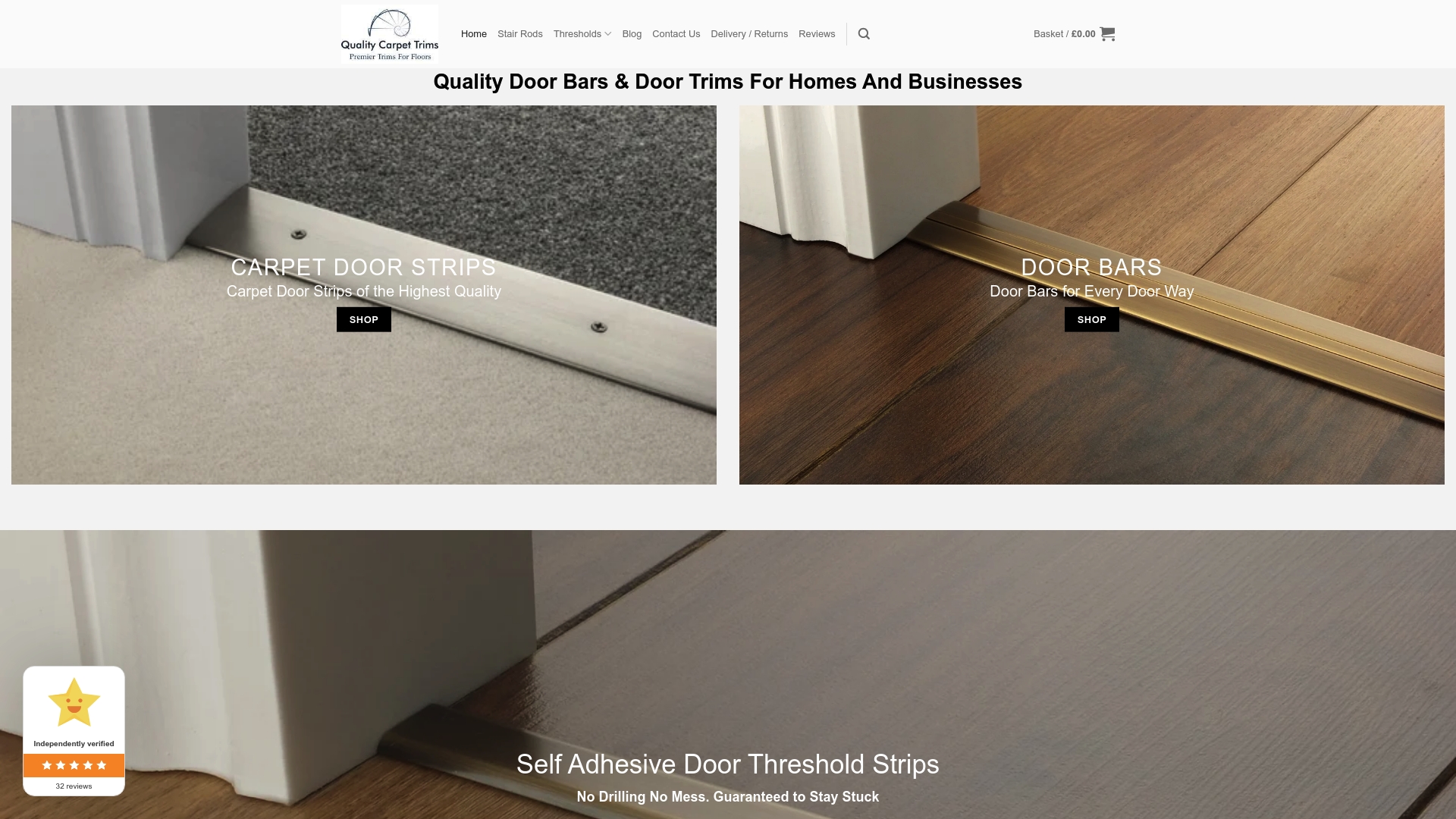
For busy entrances and lobbies, the Matwell flooring trim is a high-priority product that handles heavy foot traffic with a finish that stays sharp. For doorways requiring wider coverage, extra wide threshold bars close tricky gaps without compromise. You can also browse the full door threshold bar range or explore trim types and finishes to match your project requirements. Contact the team directly for tailored commercial advice.
FAQ
What are flooring trims and why do commercial spaces need them?
Flooring trims, also called transition strips or threshold bars, are profiles fitted at junctions between different floor types or at wall bases. Commercial spaces need them to prevent trip hazards, protect flooring edges, and meet accessibility and fire safety compliance requirements.
What material is best for commercial flooring trims?
Solid brass with a powder-coated finish is the best choice for commercial environments. It resists denting, bending, splitting, and moisture, and withstands the industrial cleaning regimes used in offices, retail units, and healthcare facilities.
Do trims need to comply with accessibility regulations?
Yes. Floor level changes greater than a quarter of an inch must be bevelled, and changes over half an inch must be ramped, under accessibility standards. Specifying the correct trim profile is a compliance requirement, not just a design preference.
How do trims reduce maintenance costs in commercial buildings?
Quality trims protect vulnerable flooring edges from damage caused by foot traffic and cleaning equipment. They also seal floor-to-wall junctions, which improves hygiene compliance and reduces the frequency of edge repairs and flooring replacements over the life of the building.
How do I choose the right trim profile for my commercial space?
Measure height differentials between adjacent floor surfaces, identify performance requirements such as fire or moisture resistance, and match the finish to your interior palette. The commercial flooring trim guide on the Qualitycarpettrims website provides a structured process for making the right selection.
Recommended
- How trims transform decor for safer, stylish spaces
- Commercial flooring trims: UK standards and installation
- The role of trims in home decor: a guide for UK homes
- Why trims enhance decor: a homeowner’s guide