
Blog
Why trims prevent trip hazards in your home

Jul
TL;DR:
- Flooring trims prevent trip hazards by creating smooth transitions at height differences and must be securely fixed to the subfloor.
- Choosing the correct trim profile and high-quality materials like solid brass is essential for long-term safety and durability.
Flooring trims are defined as the transition profiles fitted between two adjoining floor surfaces to eliminate abrupt level changes that cause trips and falls. Understanding why trims prevent trip hazards is not a minor detail in any flooring project. It is the difference between a safe, compliant installation and one that puts people at risk. The National Flooring Authority confirms that improper transitions create tripping hazards and violate accessibility standards such as the ADA. Qualitycarpettrims supplies solid brass, powder-coated trims in 10 luxury finishes, built specifically to manage these risks without compromising on finish.
Why trims prevent trip hazards at floor level changes
The mechanics are straightforward. When two floor surfaces meet at different heights, the resulting edge catches feet, wheels, and walking aids. A height difference of just 2mm is detectable by the human foot and poses a genuine trip risk. Most people assume only large gaps need addressing. That assumption is wrong, and it is the most common reason trips occur at flooring junctions.
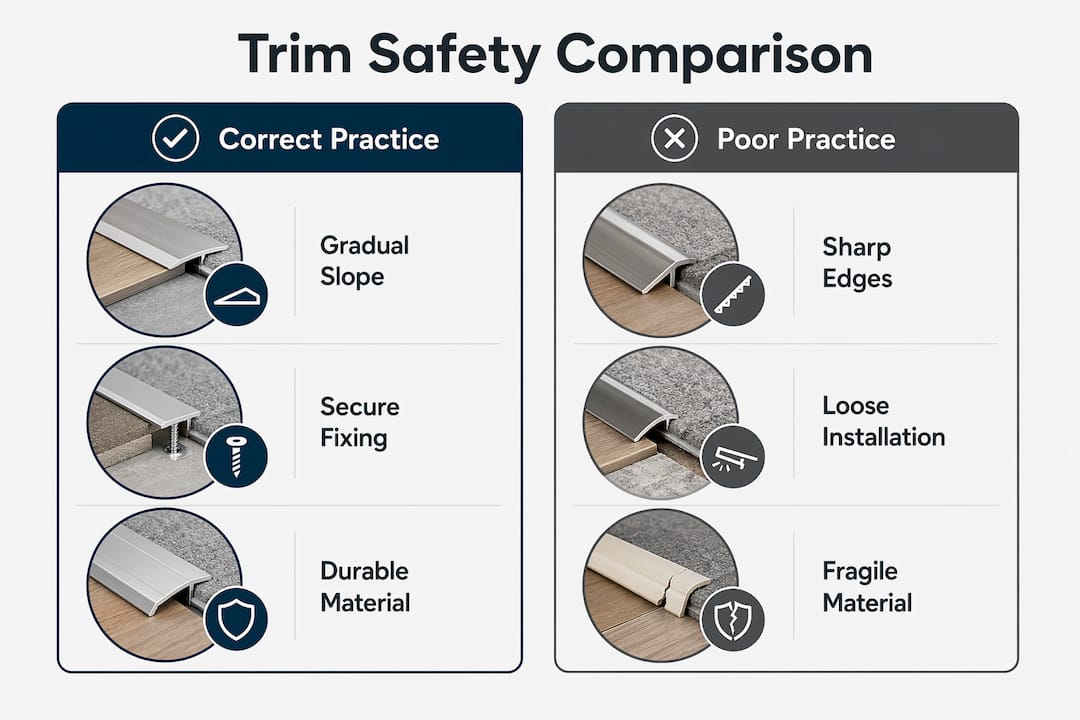
The correct trim profile bridges that gap with a controlled, gradual slope rather than a sharp drop. The ADA sets clear thresholds for this: vertical changes up to 6mm can remain untreated, changes between 6mm and 12mm require a slope no steeper than 1:2, and anything beyond 12mm requires a full ramp. These figures give contractors a precise framework for selecting the right profile before a single plank goes down.
The table below shows how height differentials map to the correct trim type and the relevant compliance requirement.
| Height differential | Trim type required | Compliance note |
|---|---|---|
| Up to 6mm | Flat transition strip | No treatment required under ADA |
| 6mm to 12mm | Reducer or ramp profile | Slope must not exceed 1:2 |
| Over 12mm | Full ramp | Ramp construction required |
| Carpet to hard floor | T-bar or carpet bar | Profile must match pile height |
| Uneven subfloor | Adjustable transition strip | Check uneven floor strips for options |
Pro Tip: Measure the height differential between both floor surfaces before ordering any trim. A profile chosen for the wrong height range will sit proud of the surface and create the very hazard you are trying to remove.
Choosing the wrong profile is not just a cosmetic error. Selecting an incorrect trim profile is a recognised cause of transition failure and a direct route to trip hazards. Trim selection must happen at the planning stage, not as a last-minute fix once the flooring is laid.
Does installation method affect how well trims reduce slips?
Installation method determines whether a trim stays safe or becomes a hazard over time. The single most important rule is this: trims must be fastened to the subfloor, not to the floating flooring beneath them. Floating floors expand and contract with temperature and humidity. A trim anchored to the surface moves with it, buckles, and lifts. A trim anchored to the subfloor stays fixed while the floor moves freely underneath.
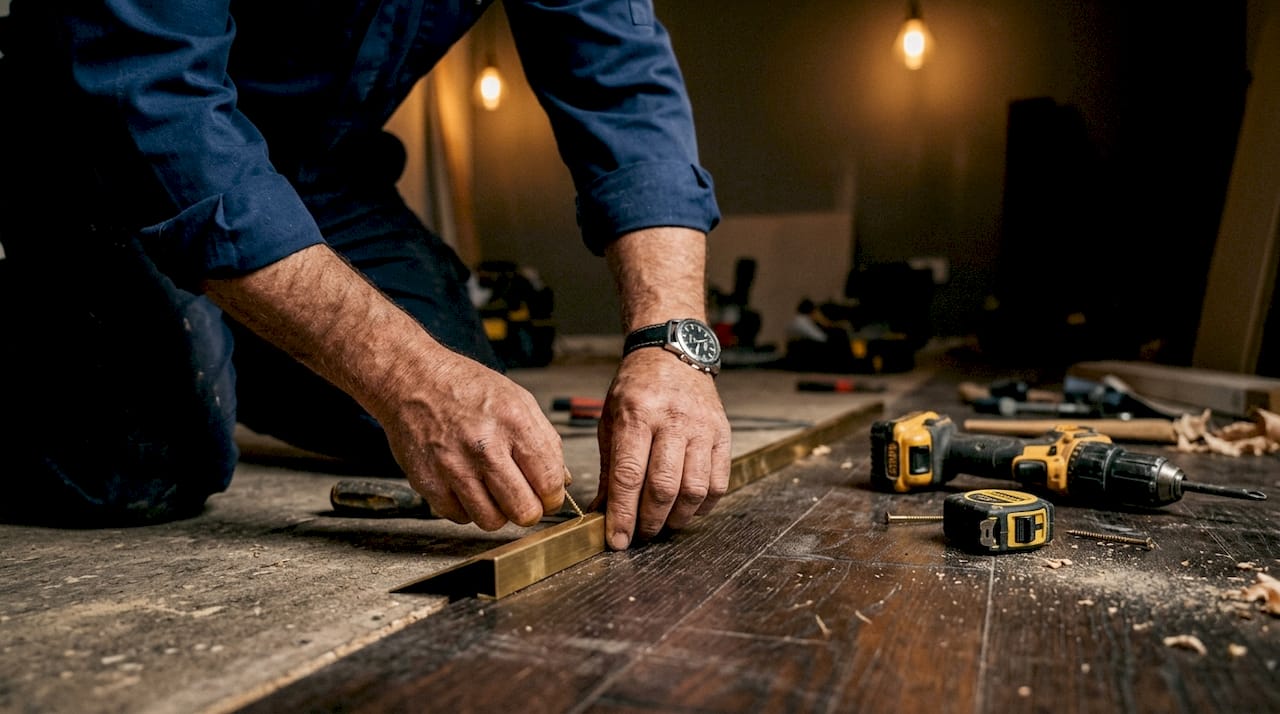
Buckling is not just unsightly. A lifted trim edge is a raised obstacle at exactly the point where two surfaces meet, which is already the highest-risk zone in any room. Anchoring through the floating floor also voids most manufacturer warranties, leaving homeowners and contractors without recourse if the floor fails.
The comparison below shows the difference between correct and poor installation outcomes.
| Installation factor | Correct practice | Poor practice outcome |
|---|---|---|
| Fastening point | Anchored to subfloor | Buckling, lifting, warranty void |
| Surface levelness | Trim sits flush with both surfaces | Raised edge creates trip hazard |
| Threshold height | Low-profile or ramped where needed | High threshold catches feet |
| Fixing spacing | Even intervals along full length | Loose sections lift under foot traffic |
| Floor movement allowance | Gap left for expansion | Trim forces floor to buckle |
Pro Tip: After fitting, run your hand flat across the trim and both adjacent floor surfaces. You should feel no raised edge in any direction. If you do, refit before the room is used.
Loose or warped thresholds are among the most frequent trip hazards found in residential properties. They are also among the most preventable. Correct fastening, checked at the time of installation, eliminates this risk entirely.
Does trim material affect long-term trip hazard prevention?
Trim material is not a secondary consideration. It determines whether a trim remains safe for years or becomes a hazard within months. Wood splits along the grain when exposed to moisture. Plastic cracks under foot traffic and UV exposure. Aluminium dents and deforms under load, leaving sharp, uneven edges. Damaged edges from cheap trims catch footwear and wheels, leading directly to falls.
Solid brass trims behave differently. Brass does not split, bend, or dent under normal residential or commercial use. Qualitycarpettrims manufactures its trims from solid brass, hand-finished in 10 powder-coated colours. The powder-coat layer adds a further layer of protection against surface wear, keeping edges smooth and flush over the long term.
The practical benefits of solid brass over inferior materials are clear:
- No splitting. Brass does not absorb moisture or develop grain-line cracks like wood.
- No cracking. Unlike plastic, brass retains its shape under repeated impact and temperature change.
- No denting. Brass holds its profile under foot traffic, trolleys, and wheelchair use.
- No sharp edges. A brass trim that has been in place for a decade looks and performs like a new one.
- Lasting finish. Powder-coated surfaces resist scuffing and fading, maintaining a flush, safe profile.
Well-executed trim indicates quality workmanship and supports property values. A brass trim that holds its shape and finish for years contributes to both the safety record and the perceived quality of a property. Cheap materials save money once and cost more in replacements, repairs, and potential liability.
How do you identify trip hazards caused by worn or damaged trims?
Trims deteriorate in predictable ways, and most warning signs are visible before an accident occurs. Trims that are loose, lifted, or cracked are major trip hazards and require immediate attention, particularly in high-traffic areas such as hallways, doorways, and kitchen entrances.
The most common signs of a hazardous trim are:
- Raised edges. Any section of trim sitting above the adjacent floor surface by even a small amount is a trip risk.
- Loose fixings. A trim that moves when pressed or walked over has lost its anchor to the subfloor.
- Visible cracks or splits. These indicate material failure and mean the profile is no longer smooth or flush.
- Uneven surface. A trim that has warped or bowed no longer provides a controlled transition.
- Discolouration or swelling. These signal moisture ingress, which weakens the fixing and distorts the profile.
Door thresholds that are too high, damaged, or incorrectly installed pose the greatest risk to children and elderly people. These groups are less able to compensate for unexpected obstacles underfoot. A threshold that an able-bodied adult steps over without thinking can cause a serious fall for someone with reduced mobility or balance.
Regular inspection takes less than a minute per doorway. Press down on each trim, check for movement, and run a finger across the surface to feel for raised edges. Replace any trim that fails this check. The importance of trims in preventing falls is greatest precisely where people are most distracted, at doorways and between rooms.
For guidance on slip and trip prevention in UK properties, the broader safety context is worth understanding alongside your trim maintenance routine.
Key takeaways
Flooring trims prevent trip hazards by eliminating abrupt height changes, staying securely fixed to the subfloor, and maintaining a flush, smooth profile through durable materials such as solid brass.
| Point | Details |
|---|---|
| Height differences cause trips | A gap as small as 2mm is enough to trip a person; the correct trim profile eliminates this risk. |
| Subfloor anchoring is non-negotiable | Fastening trims to floating floors causes buckling and creates the hazard you are trying to prevent. |
| Material quality determines longevity | Solid brass trims do not split, crack, or dent; inferior materials fail and create unsafe edges. |
| Early trim selection prevents problems | Trim profile choice must happen at the planning stage, matched to floor height and subfloor conditions. |
| Regular inspection reduces accidents | Check trims for raised edges, loose fixings, and surface cracks, especially in high-traffic doorways. |
Why I think trims are the most underestimated safety component in any flooring project
Having seen hundreds of flooring installations, the pattern is consistent. Homeowners spend weeks choosing the right floor and five minutes choosing the trim. Contractors sometimes treat trims as the last item on the order, selected after everything else is decided. Both approaches produce the same result: a trim that does not fit the height differential, is fixed incorrectly, or is made from a material that will fail within a few years.
The accidents I have seen caused by inadequate trims were not dramatic. They were a foot catching a lifted edge in a hallway. A wheelchair wheel snagging a cracked threshold. A child stumbling at a doorway. None of these are inevitable. Every one of them was the result of a trim that was either wrong for the application or had been allowed to deteriorate.
My view is straightforward. Treat the trim as a safety component first and a decorative finish second. Choose a profile that matches your height differential precisely. Fix it to the subfloor. Use solid brass with a powder-coated finish that will not deform over time. Inspect it once a year. That is the entire protocol, and it works. The floor transition safety argument is not complicated. It just requires taking it seriously from the start.
— Matt
Qualitycarpettrims: solid brass trims built for safety

Qualitycarpettrims supplies solid brass, powder-coated door threshold bars and flooring trims hand-finished in 10 luxury colours. Every trim is built to stay flush, stay fixed, and stay safe across years of use in both residential and commercial settings. The range covers doorways, room transitions, and exposed carpet edges, with profiles matched to the height differentials and floor types most commonly found in UK properties. For smooth, safe transitions between carpet and hard floor, the matwell trim range offers a high-quality solution that performs where cheaper materials fail. Browse the full range or contact the team for expert advice on the right profile for your project.
FAQ
What is a flooring trim and why does it prevent trips?
A flooring trim is a profile fitted at the junction between two floor surfaces to eliminate abrupt height changes. It creates a controlled, gradual transition that the foot passes over safely rather than catching on.
How small a height difference needs a trim?
A height difference of 2mm is enough to pose a trip risk. Any junction between floor surfaces should be assessed and fitted with an appropriate trim profile, regardless of how minor the height change appears.
Does it matter what material a trim is made from?
Trim material directly affects long-term safety. Wood, plastic, and aluminium trims crack, split, and dent over time, creating unsafe edges. Solid brass trims hold their shape and profile without deforming, keeping the transition flush and safe.
Why must trims be fixed to the subfloor and not the flooring?
Floating floors expand and contract with temperature changes. A trim fixed to the floating surface moves with it, buckles, and lifts. Anchoring to the subfloor keeps the trim stable while the floor moves freely beneath it.
How often should flooring trims be inspected?
Inspect trims at least once a year, and after any significant change in room temperature or humidity. Check for raised edges, loose fixings, and surface cracks, particularly at doorways and high-traffic thresholds.
Recommended
- The role of trims for safety in flooring transitions
- How trims transform decor for safer, stylish spaces
- Brass carpet to tile trims reduce trip hazards by 30%
- Why use edge trims? Enhance safety and style in flooring