
Blog
Why durable trims matter for lasting home interiors

Jul
TL;DR:
- Durable flooring trims, especially solid brass with powder coating, resist damage and maintain a crisp appearance over many years. They protect floor edges from impact and moisture, improving safety and visual cohesion in interior spaces. Choosing high-quality trims can lower long-term repair costs and increase home value with better aesthetic and structural durability.
Flooring trims are defined as the protective and decorative profiles fitted at floor edges, doorways, and transitions between different flooring surfaces. Understanding why durable trims matter is the starting point for any renovation that is meant to last. A poorly chosen trim fails within a few years, leaving exposed edges, trip hazards, and a finish that looks tired before its time. Premium solid brass trims with powder-coated finishes, such as those supplied by Qualitycarpettrims, resist denting, bending, and splitting in ways that wood, plastic, and rubber alternatives simply cannot match. The right trim protects your flooring investment and signals genuine quality to anyone who walks through the door.
Why durable trims matter: protection your flooring depends on
The primary job of a flooring trim is to protect the edge of your floor from daily punishment. Every doorway, every transition between carpet and hard floor, and every exposed edge is a point of vulnerability. Without a solid trim in place, flooring edges chip, fray, and lift under foot traffic, furniture movement, and cleaning.
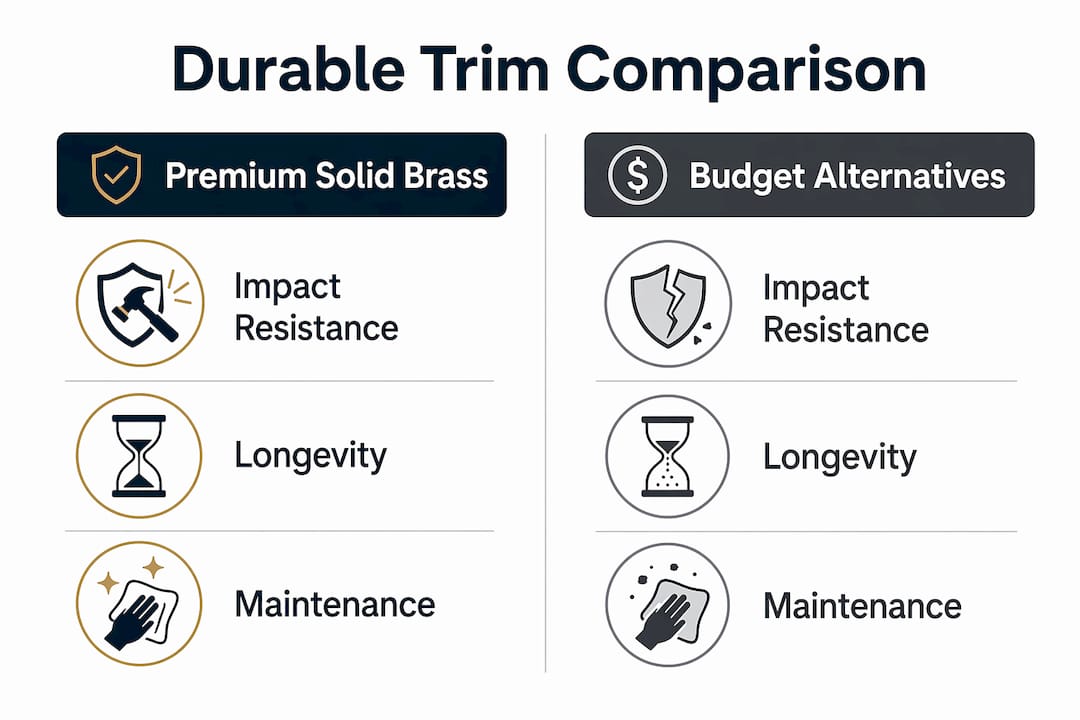
The importance of durable trims becomes clear when you consider what cheaper alternatives do under pressure. Wood trims absorb moisture and swell. Plastic trims crack under impact. Rubber trims compress and deform over time. None of these materials hold a crisp edge for long. Solid brass trims do not split, dent, or bend under normal residential use, maintaining both their structural integrity and their appearance across years of daily contact.
Moisture is the most destructive force acting on floor edges. Spills, cleaning water, and humidity all work their way into unprotected or poorly sealed transitions. Builder-grade trims prioritise cost over durability, which leads to early edge softening, seam separation, and visible damage within a few years. That failure creates maintenance costs and lowers the perceived quality of the entire room.
The benefits of quality trims extend to safety as well. A lifting or cracked trim edge creates a trip hazard, particularly in high-traffic areas like hallways and doorways. A solid, well-fitted trim keeps the transition flat, firm, and safe.
- Edge protection: solid brass trims hold a sharp, clean edge under impact where wood and plastic deform.
- Moisture resistance: powder-coated finishes seal the surface and prevent water ingress at floor transitions.
- Trip hazard prevention: a correctly fitted trim keeps flooring edges flush and stable underfoot.
- Long-term stability: brass does not warp, swell, or crack with temperature and humidity changes.
Pro Tip: Fit your trim before grouting or finishing the adjacent floor surface. This creates a cleaner seal at the joint and reduces the gap where moisture can enter.
What makes a trim genuinely durable: materials and finishes
Material choice is the single biggest factor in how long a trim lasts. Solid brass is the benchmark for residential flooring trims. It is dense, corrosion-resistant, and holds its shape under the kind of repeated impact that a doorway trim experiences every single day.
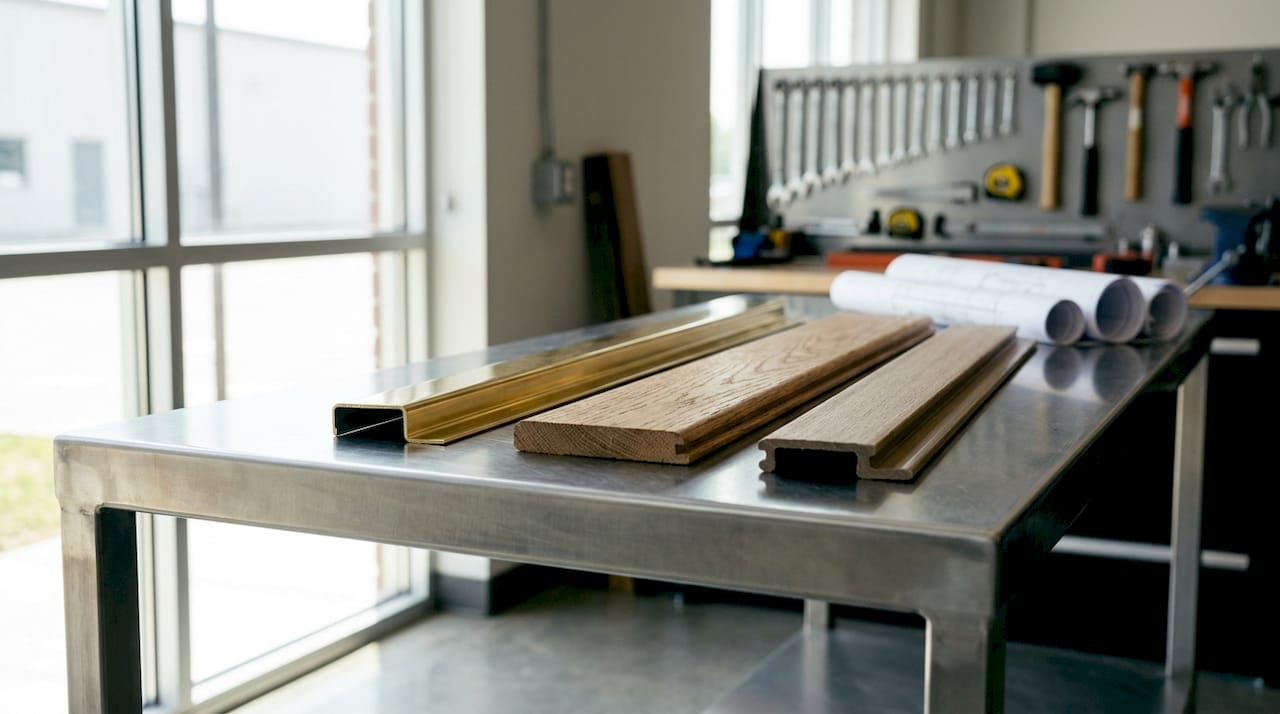
Powder coating adds a second layer of protection. The process bonds a dry polymer finish to the brass surface under heat, creating a coating that resists scratching, fading, and moisture far better than paint or lacquer. Qualitycarpettrims offers ten luxury powder-coated finishes, giving homeowners and designers the ability to match or contrast with any interior colour scheme without sacrificing durability. The finish does not peel, flake, or yellow over time the way painted wood trims do.
Wood, plastic, and rubber trims degrade for predictable reasons. Wood absorbs moisture at cut ends and joints, leading to swelling and rot. Plastic becomes brittle under UV exposure and cracks under point impact. Rubber compresses permanently under furniture legs and foot traffic. None of these materials offer the structural consistency of solid brass, which is why they are the examples of what not to choose when considering trim materials for a renovation that needs to last.
Manufacturing quality also determines longevity. Hand-finished trims, like those produced by Qualitycarpettrims in the UK, have consistent thickness and smooth edges that machine-stamped budget trims lack. Consistent thickness means the trim sits flat across its full length, which prevents rocking, lifting, and the gradual loosening that leads to early failure.
Pro Tip: When selecting a finish, hold a sample against your flooring and skirting board in natural daylight. Artificial lighting shifts colour perception significantly, and a mismatch that is invisible under a showroom spotlight becomes obvious at home.
| Feature | Solid brass with powder coat | Wood trim | Plastic trim |
|---|---|---|---|
| Impact resistance | Does not dent or bend | Dents and chips | Cracks under impact |
| Moisture resistance | Fully resistant | Swells and rots | Warps and discolours |
| Finish longevity | Decade-long durability | Peels and fades | Yellows and flakes |
| Edge integrity | Holds crisp edge permanently | Softens over time | Deforms under load |
How do durable trims improve the look of a room?
Quality trims act as visual anchors that tie flooring, wall colours, and door frames together into a coherent whole. A room without well-chosen trims looks unfinished, regardless of how expensive the flooring or paint is. The trim is the full stop at the end of the sentence. Without it, the eye registers something is missing even if the viewer cannot name it.
Interior designers treat trim upgrades as one of the highest visual return investments available in a renovation. The reason is proportion. A well-fitted trim defines the boundary between surfaces and gives each material its own visual territory. That clarity of boundary makes rooms feel more considered and more spacious.
“Durable trims contribute significantly to visual balance, structural definition, and help unify flooring and wall finishes to create a polished final look. They are a cost-effective design investment that impacts every room in a home.”
The impact on perceived craftsmanship is direct. Buyers and visitors read the quality of a home’s finishes quickly and subconsciously. Mismatched or low-quality trims diminish perceived home value even when the underlying flooring is premium. Consistent, high-quality trims across a property signal that the renovation was done with care and attention to detail.
- Visual cohesion: matching trim finishes across rooms creates a connected, designed feel rather than a piecemeal one.
- Proportion and scale: the right trim width and profile complements the flooring thickness and skirting height.
- Architectural character: a well-chosen trim adds definition to doorways and transitions that flat, unfinished edges lack.
- Perceived value: quality finishes signal to buyers that a home is move-in ready and well maintained.
How to select and maintain durable trims for longevity
Selecting the right trim starts with the environment. A hallway with heavy foot traffic needs a wider, thicker profile than a bedroom doorway. A bathroom transition needs a finish that handles regular moisture exposure without degrading. Matching the trim specification to the actual conditions of the space is the difference between a trim that lasts a decade and one that needs replacing in two years.
- Identify the transition type. Measure the height difference between the two flooring surfaces. A flat transition suits equal-height floors; a ramp profile suits a step-down of up to 10mm.
- Choose the finish to match your interior. Qualitycarpettrims offers ten powder-coated finishes. Select one that complements your skirting boards, door frames, or hardware for a unified look.
- Check the profile width. Wider profiles cover larger gaps and give a more substantial visual presence. Narrower profiles suit minimal, contemporary interiors.
- Prepare the substrate correctly. The floor surface beneath the trim must be clean, flat, and dry before fitting. Any debris or unevenness causes the trim to rock and loosen over time.
- Seal the edges at installation. Moisture enters most readily at the cut ends and the joint between trim and floor. Sealing these points at installation extends trim lifespan dramatically.
Maintenance of solid brass powder-coated trims is straightforward. Wipe with a damp cloth and a mild, non-abrasive cleaner. Avoid scouring pads or solvent-based products, which can damage the powder-coat surface. Inspect the trim twice a year for any lifting at the edges, which indicates the fixing has loosened and needs re-securing before moisture gets underneath.
Pro Tip: If a trim section lifts at one end, re-fix it immediately rather than waiting. A loose trim rocks under foot traffic, which accelerates wear at the fixing points and eventually cracks the substrate beneath.
Is the higher cost of durable trims worth it?
The upfront cost of solid brass powder-coated trims is higher than budget alternatives. The long-term calculation tells a different story. A trim that fails within three years costs the price of the original product plus the labour to remove and replace it, plus any damage to the adjacent flooring caused by the failure. A trim that lasts a decade or more costs nothing beyond the initial purchase.
Durable trims minimise callbacks on building and renovation projects. For contractors, that means fewer return visits and stronger client relationships. For homeowners, it means the renovation stays finished rather than generating a list of small repairs.
| Cost factor | Budget trim | Premium solid brass trim |
|---|---|---|
| Initial purchase | Lower | Higher |
| Replacement frequency | Every 2–5 years | Decade or more |
| Repair costs | Recurring | Minimal |
| Impact on home value | Neutral or negative | Positive buyer perception |
| Environmental impact | Higher waste from replacements | Lower waste over time |
The environmental case for durable trims is straightforward. A trim replaced three times in fifteen years generates three times the material waste of a single premium trim that lasts the same period. Choosing quality once is the lower-waste option, which matters increasingly to both homeowners and buyers.
Buyers perceive homes with quality trims as more move-in ready and well maintained. That perception does not always translate directly into a higher appraisal figure, but it reduces time on the market and increases buyer confidence at the point of offer.
Key takeaways
Solid brass powder-coated trims outperform wood, plastic, and rubber alternatives on every measure that matters: durability, moisture resistance, visual impact, and long-term cost.
| Point | Details |
|---|---|
| Material determines lifespan | Solid brass resists denting, bending, and moisture where wood, plastic, and rubber fail quickly. |
| Powder coating protects the finish | A heat-bonded powder-coat finish resists scratching, fading, and moisture far better than paint or lacquer. |
| Trims anchor room aesthetics | Well-fitted trims unify flooring, walls, and doors, making rooms look considered and complete. |
| Installation quality matters | Sealing edges at fitting and preparing a flat substrate prevents moisture ingress and early loosening. |
| Premium trims cost less long-term | Avoiding repeat replacements and repair costs makes solid brass the lower-cost option over a decade. |
What fifteen years of renovations taught me about trim quality
I have seen the same mistake made on renovation after renovation. The flooring budget gets spent on beautiful tiles or premium carpet, and then the trim gets chosen on price alone. Within two years, the plastic trim at the hallway doorway is cracked, the wood trim in the bathroom has swollen at the cut end, and the whole job looks tired despite the quality of the floor beneath it.
The trim is the last thing fitted and the first thing that fails when it is chosen poorly. That is the uncomfortable truth that most renovation guides skip over. A room with a £50-per-square-metre floor and a quality solid brass trim looks more finished than a room with a £100-per-square-metre floor and a budget plastic bar across the doorway.
What I have found actually works is treating the trim as part of the flooring specification, not an afterthought. Choosing the finish at the same time as the floor, matching it to the door hardware and skirting, and fitting it correctly the first time. That approach produces a result that still looks right a decade later.
The powder-coated brass trims from Qualitycarpettrims are the clearest example I can point to of a product that holds up to that standard. The finish does not fade, the profile does not deform, and the edge stays crisp. That is what durable trims for longevity actually looks like in practice, not in a brochure.
— Matt
Qualitycarpettrims: solid brass trims in ten luxury finishes
Qualitycarpettrims supplies solid brass flooring trims that are hand-finished in the UK across ten powder-coated luxury finishes. Every trim is built to resist the denting, bending, and splitting that makes cheaper alternatives a false economy.
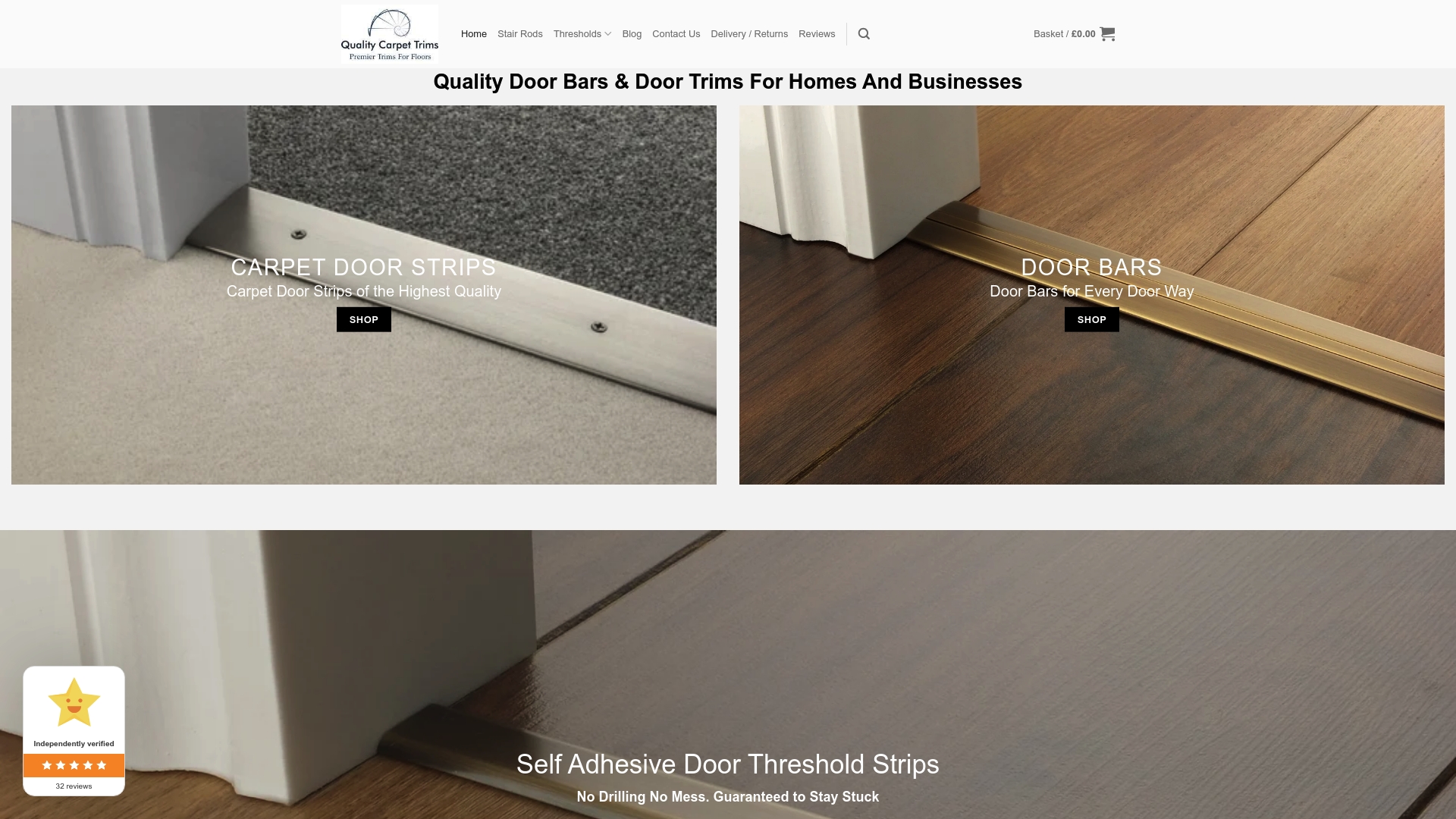
Whether you are finishing a carpet-to-hardfloor transition or fitting a door threshold bar across a busy hallway, the range covers every common residential and commercial transition type. The premium matwell trims are a strong starting point for homeowners who want a finish that matches their interior hardware without compromising on structural performance. Free samples are available, so you can confirm the finish against your flooring before committing to an order.
FAQ
What are durable flooring trims made from?
The most durable flooring trims are made from solid brass with a powder-coated finish. This combination resists denting, bending, moisture, and surface wear far better than wood, plastic, or rubber alternatives.
How long do quality flooring trims last?
Solid brass powder-coated trims maintain their appearance and structural integrity for a decade or more under normal residential use. Budget trims made from wood or plastic typically show visible failure within two to five years.
Do flooring trims affect home value?
Quality trims improve buyer perception by signalling careful, well-maintained renovation work. Buyers read consistent, high-quality finishes as a sign that a home is move-in ready, which supports faster sales and stronger offers.
How do I maintain powder-coated brass trims?
Wipe with a damp cloth and a mild, non-abrasive cleaner. Avoid solvents and scouring pads. Inspect twice a year for any lifting at the edges and re-fix immediately to prevent moisture getting beneath the trim.
What is the difference between a threshold bar and an edge trim?
A threshold bar spans the gap between two flooring surfaces at a doorway, covering the joint and protecting both edges. An edge trim finishes a single exposed flooring edge, such as the border of a carpet or the step edge of a raised floor section.
Recommended
- Why trims enhance decor: a homeowner’s guide
- Why flooring trims are essential for stylish interiors
- Why trims matter: choosing the right finish for your renovation
- Why use premium edge trims for lasting floors