
Blog
Why select vinyl trims: benefits, styles, and fitting tips

Apr
TL;DR:
- Vinyl trims protect edges, allow seamless transitions, and resist moisture for longer-lasting floors.
- They outperform wood and laminate trims in durability, flexibility, and cost-effectiveness, especially in moist areas.
- Proper selection and installation of vinyl trims prevent damage, reduce maintenance, and enhance overall flooring longevity.
Not all flooring trims are created equal, and assuming they are can cost you time, money, and the overall look of your finished floor. Whether you’re laying a new kitchen floor or finishing a busy office corridor, the trim you choose does far more than cover a raw edge. It protects your investment, bridges mismatched surfaces, and shapes how a room feels underfoot. This guide walks you through everything you need to know about vinyl trims, from what they actually do, to how they compare with alternatives, and how to get the installation right first time.
Table of Contents
- What are vinyl trims and where are they used?
- Key benefits of selecting vinyl trims for UK flooring
- Vinyl trims versus other flooring trim materials
- Practical considerations for choosing and installing vinyl trims
- The overlooked value of vinyl trims in modern flooring
- Explore vinyl trim solutions for your flooring project
- Frequently asked questions
Key Takeaways
| Point | Details |
|---|---|
| Seamless transitions | Vinyl trims neatly bridge different flooring types, eliminating tripping hazards and unsightly edges. |
| Durable and low-maintenance | Vinyl trims withstand moisture and heavy use while needing minimal upkeep in busy UK homes and businesses. |
| Affordable and versatile | Cost-effective and available in many designs, vinyl trims suit a wide range of interiors and budgets. |
| Easy installation | Vinyl trims can be fitted by keen DIYers or professionals, making them a practical choice for all projects. |
What are vinyl trims and where are they used?
Vinyl trims are edge profiles designed to finish, protect, or transition between flooring surfaces. They sit at the junction between two materials, at doorways, along exposed edges, or anywhere a floor meets a wall or changes material. Without them, you’re left with raw edges that fray, crack, trip hazards, and unsightly gaps that collect grime and bacteria.
Why vinyl floor trim matters goes beyond appearances. These profiles perform several structural and protective roles that genuinely affect how long your floor lasts and how safe it is to walk on. As one industry guide puts it, “vinyl trims create seamless transitions” and protect exposed edges in both residential and commercial spaces.
Where you’ll find vinyl trims being used:
- Door thresholds, bridging the gap where one room meets another
- Room-to-room transitions where different flooring materials join
- Finishing exposed edges along stairs, ramps, and bay windows
- Connecting dissimilar floor types such as vinyl plank to carpet or tile to laminate
- Hallways and corridors in offices, retail units, and healthcare facilities
Understanding the types of flooring trims available is the first step toward making a decision that works for your specific project. A bathroom floor, for example, has entirely different demands from a hotel lobby or a domestic living room. Vinyl trims are versatile enough to serve across all of these environments, which is a key part of their widespread appeal.
Pro Tip: In healthcare and food service environments, vinyl trims are particularly valued because they resist moisture and bacteria build-up, making cleaning routines faster and more effective.
In the home, people typically think about the floor itself first and then add trims as an afterthought. In commercial installations, experienced contractors specify trims from the start because they know the cost of remediation. Either way, understanding what vinyl trims are and how they function is the foundation of a successful flooring project.
Key benefits of selecting vinyl trims for UK flooring
Having established what vinyl trims are and where they fit, it’s crucial to understand exactly why so many professionals and homeowners now prefer them over older alternatives. The advantages are not trivial. They affect everything from your cleaning routine to how the floor holds up over years of heavy use.
The core advantages of vinyl trims:
- Moisture resistance: Fully waterproof by nature, vinyl trims do not warp, swell, or rot when exposed to water. Waterproof and easy to clean, making them ideal for kitchens, bathrooms, and entryways where spills are routine
- Durability under pressure: Vinyl trims hold their shape and colour under regular foot traffic, furniture movement, and cleaning products
- Flexibility: Unlike rigid wood or metal profiles, vinyl trims can bend slightly to accommodate irregular or slightly uneven subfloor surfaces without cracking or lifting
- Cost-effectiveness: Vinyl trims are considerably more affordable than solid metal profiles or hardwood alternatives, without sacrificing real-world performance
- Aesthetic variety: Available in a wide range of colours and finishes, from wood-effect and stone-effect to solid colours, meaning they suit both modern and traditional interiors
The durability claim is backed by evidence. Durable vinyl trims minimise flooring failures by up to 70%, a statistic that reflects how much edge protection contributes to overall floor longevity. This is particularly significant in high-traffic commercial environments where floor replacement is expensive and disruptive.
Pro Tip: If you’re working in a rental property or letting multiple units, vinyl trims reduce your ongoing maintenance burden considerably. Their resistance to moisture and abrasion means you’re less likely to be replacing them between tenancies.
One benefit that often surprises people is how well vinyl trims adapt to the kind of thermal movement that affects UK homes. British properties experience a fairly wide range of indoor temperatures across the seasons, and flooring materials expand and contract accordingly. Vinyl trims, particularly those with some flex, accommodate this movement without pulling away from the floor or cracking at the edges. This flexibility is something that wood trims simply cannot match, and it’s one of the reasons vinyl has gained so much ground in both the domestic and commercial sectors over the past decade.
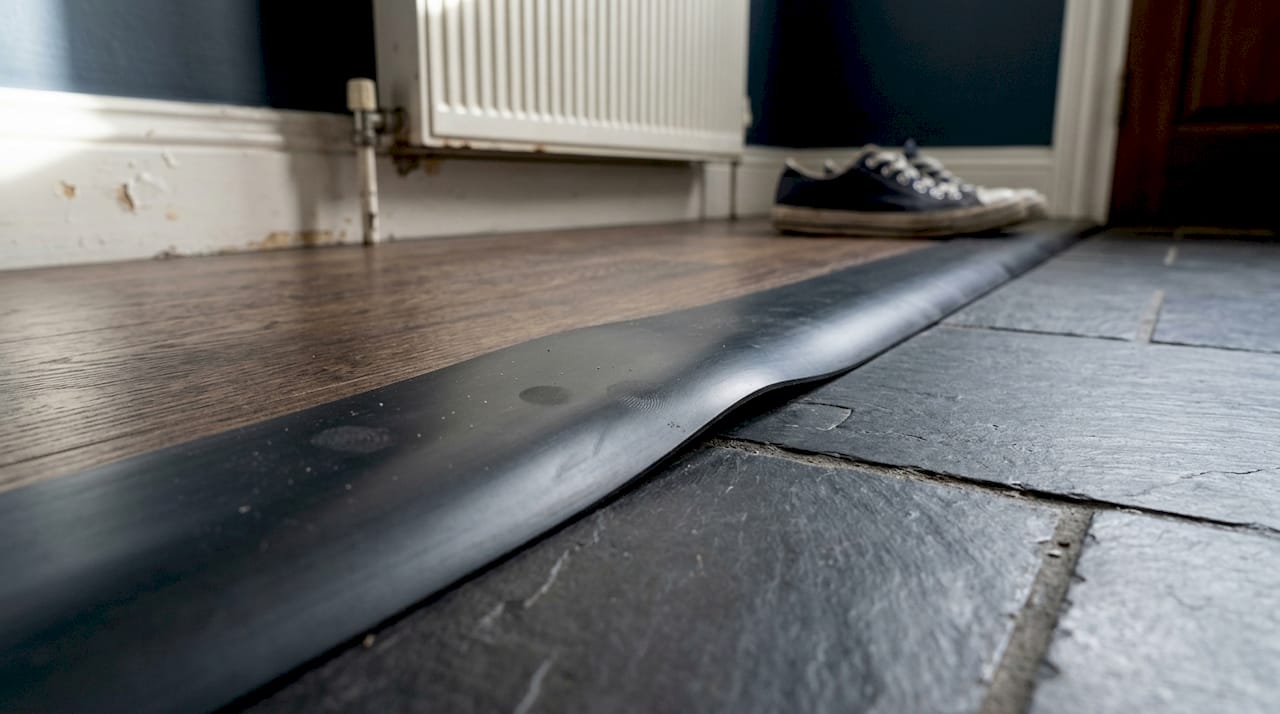
Colour and finish consistency is another practical consideration. Vinyl trims are manufactured to consistent standards, which means the finish you order for a large installation will match across all your profiles. This matters more than most people realise, particularly in open-plan spaces where inconsistency between trims in adjacent doorways is immediately visible.
Vinyl trims versus other flooring trim materials
With the many benefits of vinyl trims in mind, homeowners and contractors often wonder how these stack up against other popular trim materials. The answer depends on the specific demands of the project, but vinyl holds its own well in most domestic and light commercial scenarios.
Trim types explained in detail can help you navigate these differences. Here is a direct comparison across the most commonly considered materials:
| Feature | Vinyl trims | Aluminium trims | Wood trims | Laminate trims |
|---|---|---|---|---|
| Moisture resistance | Excellent | Good | Poor | Moderate |
| Flexibility | High | Low | None | Low |
| Cost | Low | Moderate | High | Low to moderate |
| Durability | High | Very high | Moderate | Moderate |
| Aesthetic options | Wide range | Limited | Natural only | Moderate |
| Maintenance effort | Very low | Low | High | Moderate |
| Best for | Most spaces | Heavy-duty use | Traditional decor | Budget laminate floors |
Looking at this comparison honestly, vinyl trims outperform wood in virtually every functional category. Wood trims swell with moisture, require periodic sealing or varnishing, and can shrink or split with central heating. In a UK kitchen or bathroom, a wood trim is simply not a durable choice.
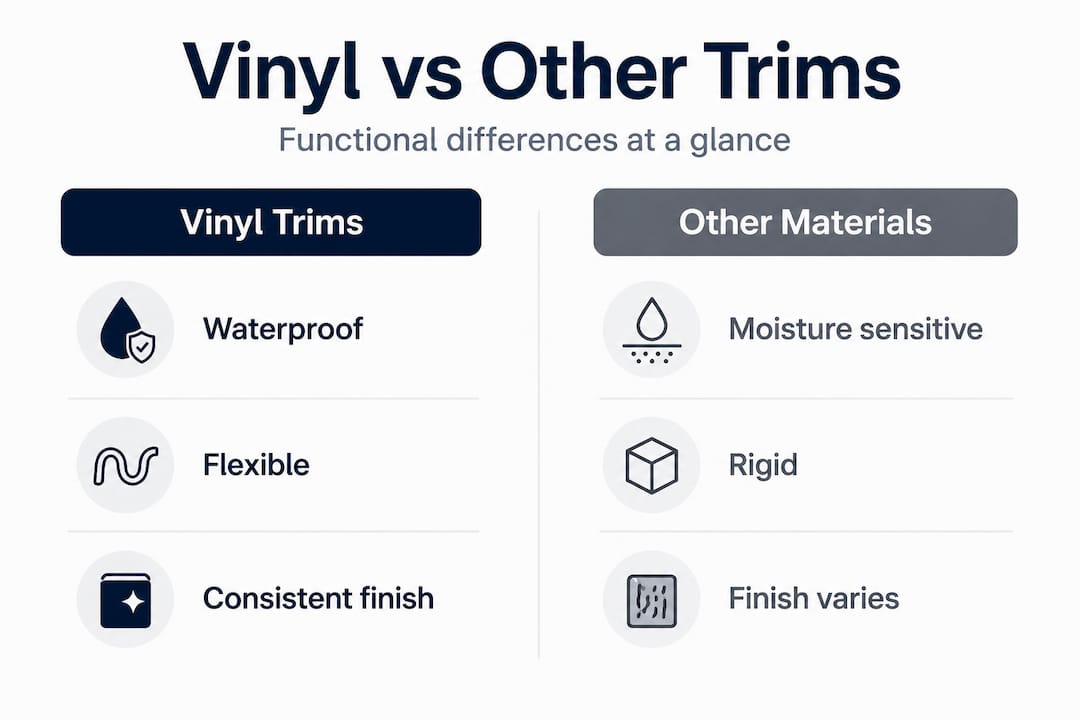
When comparing vinyl to aluminium, the gap is narrower. Aluminium trims are extremely hard-wearing, which makes them suitable for certain industrial or very high-footfall environments. However, they are less forgiving of subfloor irregularities, offer fewer finish options, and tend to cost more. For most domestic settings and mid-range commercial projects, vinyl delivers an equivalent result at a fraction of the price.
Laminate trims present a different trade-off. They are budget-friendly but can chip, peel, or de-laminate over time, particularly in wet conditions. They also tend to look visually thin and less polished compared with quality vinyl profiles. For longer-lasting results, vinyl is the stronger investment even when laminate initially appears cheaper.
Pro Tip: When using metal trim transitions between heavy-duty areas and adjoining rooms, consider finishing the secondary rooms in vinyl trims for a cohesive overall aesthetic without overspending on premium metal profiles throughout.
When vinyl trims clearly win:
- Bathrooms and kitchens where moisture is constant
- Rental properties where low maintenance is essential
- Open-plan spaces requiring consistent colour across many doorways
- Projects with a tight specification budget but professional finish requirements
- Areas where flooring expansion and contraction is a regular concern
Practical considerations for choosing and installing vinyl trims
Understanding how vinyl trims compare to other materials sets the stage for practical advice on getting the best results in real projects. Good specification is only valuable if the installation is carried out correctly.
Step-by-step process for selecting and fitting vinyl trims:
- Identify the transition type. Are you joining two floors at the same height, bridging a height difference, or finishing an exposed edge? Each scenario calls for a different trim profile. T-bar trims suit flush transitions, reducer trims handle height differences, and edge trims finish exposed flooring ends.
- Measure accurately. Always measure the doorway or transition zone before ordering. Measure twice. Vinyl trims are cut to length and incorrect sizing means wasted material and visible gaps.
- Prepare the subfloor. Clean, dry, and level the subfloor before fitting. Debris or moisture trapped beneath a trim will cause it to lift or fail prematurely.
- Choose the right colour and finish. Hold samples against both flooring types before committing. Lighting in the room will affect how a colour reads, so check under both natural and artificial light.
- Use the correct adhesive or fixing system. Most vinyl trims use a track-and-cap system or direct adhesive. Follow the manufacturer’s instructions precisely.
- Allow for expansion gaps. Leave appropriate expansion gaps at edges as specified for your flooring material. The trim will cover these, but they need to be there.
| Common mistakes | How to avoid them |
|---|---|
| Measuring only once | Always double-check dimensions before cutting |
| Ignoring subfloor prep | Clean and level before fitting any profile |
| Choosing colour in bad lighting | Use samples in the actual room at different times of day |
| Over-tightening mechanical fixings | Follow torque guidance to avoid cracking the trim |
| Neglecting thermal expansion gaps | Check the flooring specification for required gap widths |
Vinyl floor edge trim selection depends on matching the profile to the specific flooring height and material. As one fitting guide notes, installation mistakes can undermine the effectiveness of even the best vinyl trims. Getting the basics right at the start is far cheaper than remedial work later.
For DIY installers, a single doorway transition is well within most people’s capabilities. However, if you’re covering a large commercial floor with multiple transition types, or working with height variations that require precise reducer profiles, professional installation is worth the cost. A transition guide for trims can help you understand what level of complexity your project involves before you commit to doing it yourself.
Pro Tip: Order at least 10% extra trim length for any project to account for cutting waste and any measurement adjustments during fitting. Running short mid-installation can cause delays if lead times or stock levels change.
The overlooked value of vinyl trims in modern flooring
In our experience, trims almost never get the attention they deserve until something goes wrong. A floor starts lifting at the edge, a carpet frays in the doorway, or a visitor trips over an unfinished edge. At that point, the conversation about which trim to use suddenly becomes urgent and expensive. The problem is that by then, you’re often looking at remedial fitting work that costs more than proper specification would have in the first place.
Vinyl trims sit in an interesting position within the flooring industry. They’re not glamorous. They don’t feature in interior design magazines the way tiles or hardwood do. But correct trim installation can reduce long-term maintenance issues and protect flooring investments in a way that is genuinely measurable. That 70% reduction in flooring failures is not a marketing figure. It reflects the physical reality that unprotected edges fail faster, full stop.
What we think the market misses is this: vinyl trims are not a compromise. The prevailing view among some contractors is that vinyl is the budget option you choose when you can’t afford metal. That framing is wrong. Vinyl’s flexibility makes it genuinely superior to metal in any environment where subfloor movement, moisture, or installation speed are factors. The material is doing a different job, and in most UK domestic and light commercial settings, it’s doing that job better.
The real value of vinyl trims is that they reward proactive thinking. Specify them correctly at the design stage, fit them properly, and they’ll look good and function reliably for the full life of the floor. Treat them as an afterthought, and you’ll spend that saving on repairs within a couple of years.
Explore vinyl trim solutions for your flooring project
Translating insight into action, homeowners and contractors can now source the exact vinyl trims that deliver value and style for any environment.

At Quality Carpet Trims, you’ll find a curated range of professionally graded vinyl floor edge trims designed to suit every transition scenario, from single doorways to large commercial floors. Each product is selected for durability, finish quality, and ease of fitting. If you’re unsure which profile suits your project, visit the carpet trims shop to browse by type or use the flooring trim types guide to narrow down your choice with confidence. Fast UK delivery, free samples, and expert advice mean you can move from specification to installation without delay.
Frequently asked questions
Are vinyl trims suitable for high-moisture areas like bathrooms?
Yes, vinyl trims are fully waterproof and an excellent choice for bathrooms, kitchens, or anywhere prone to spills. Their resistance to moisture means they won’t swell, warp, or deteriorate the way wood alternatives do. Waterproof and easy to clean, they’re particularly well suited to wet zones.
How do I choose between vinyl and metal trims?
Consider durability, flexibility, finish options, and cost. Vinyl suits most residential and light commercial projects where flexibility and value are priorities, whereas metal may be preferable in very heavy-duty settings. Comparative guides can help clarify the best choice for your specific use case.
Will installing vinyl trims help prevent flooring damage?
Properly installed vinyl trims shield exposed edges and transitions, significantly reducing wear and preventing premature failure. Vinyl trims reduce the risk of flooring failures by up to 70%, making them a sound long-term investment.
Are there stylish vinyl trim options for modern interiors?
Yes, vinyl trims are available in a wide range of colours and finishes to complement both classic and contemporary interiors. Whether you need a neutral wood-effect or a bold contrasting edge, the variety on offer is far greater than many people expect. A range of colours and finishes ensures a match for most decors.
Is professional installation necessary for vinyl trims?
Skilled DIYers can install vinyl trims successfully, particularly for straightforward threshold or edge applications. However, professional fitting ensures the best result in complex or large-scale projects. As fitting guides note, installation mistakes can undermine even the highest quality trim, so professional help is advisable when the scope grows.
Recommended
- Why floor trims matter: improve your home’s look and value
- Why use edge trims? Enhance safety and style in flooring
- What Is Vinyl Floor Trim and Why It Matters
- Vinyl Floor Edge Trim – Quality Carpet Trims