
Blog
Choose sustainable flooring trims for stylish UK homes

Apr
TL;DR:
- Modern sustainable flooring trims match or exceed conventional options in durability and aesthetics.
- Materials like WPC, recycled metal, and FSC-certified timber are eco-friendly and high-performing.
- Lifecycle considerations such as origin, recyclability, and installation impact true product sustainability.
There is a stubborn myth in the renovation world: that choosing eco-friendly flooring trims means settling for bland, fragile, or limited products. It is simply not true. Modern sustainable trims have caught up with, and in many cases overtaken, conventional alternatives in terms of durability, aesthetic range, and long-term value. Whether you are refreshing a Victorian terrace in Bristol or fitting out a new-build in Leeds, the right sustainable trim can finish your floors beautifully while reflecting values that matter. This guide covers materials, performance, practical selection, and the nuances that most articles overlook.
Table of Contents
- Why sustainability matters in flooring trims
- Key sustainable materials for flooring trims
- How sustainable trims perform in real homes
- Practical tips for choosing and installing sustainable trims
- A fresh look: what most guides miss about sustainable trims
- Find the ideal sustainable trims for your project
- Frequently asked questions
Key Takeaways
| Point | Details |
|---|---|
| Eco-friendly trims defined | Sustainable flooring trims use recycled or certified materials and have lower environmental footprints. |
| Material choice matters | WPC, FSC timber, and quality recycled metals each provide unique green and performance benefits. |
| Longevity and warranties | Modern sustainable trims often match or exceed the durability and warranties of traditional products. |
| Right trim for the room | Moisture-resistant trims are advised for kitchens and baths while FSC timber suits living spaces. |
| Beyond labels | Local supply chains, installer skill, and recyclability at end of life are equally vital as product certification. |
Why sustainability matters in flooring trims
Most homeowners focus their green thinking on insulation, heating, or windows. Flooring trims rarely make the shortlist, yet they are installed in virtually every room and replaced far more often than the floors themselves. Conventional trims, particularly those made from virgin plastics or non-certified timber, contribute quietly but consistently to landfill and resource depletion across millions of UK homes.
The environmental case for rethinking trims is straightforward. Traditional PVC and low-grade metal trims often end up in general waste at the end of their life because they are not easily separated for recycling. Timber trims sourced without certification can drive deforestation. When you multiply those individual choices across the UK’s renovation market, the cumulative impact is significant.
Sustainable alternatives address these issues directly. As flooring trims explained on the Quality Carpet Trims knowledge base, trims serve a critical structural and aesthetic function in any interior. Getting that function from a responsibly sourced product simply makes sense.
Key reasons sustainability matters in this product category:
- Landfill reduction: Eco trims made from recycled content keep materials in use longer and reduce disposal waste.
- Resource conservation: Using reclaimed wood fibres and recycled plastics reduces the demand for virgin raw materials.
- Circular economy potential: Products designed for remanufacturing can be collected, processed, and remade rather than discarded.
- Consumer demand: UK homeowners are increasingly requesting sustainable credentials from their suppliers and contractors.
- Regulatory direction: Building regulations and procurement policies in the UK are trending towards lower-embodied-carbon materials.
“Sustainable flooring solutions reduce landfill burden and forest pressure, making them a responsible choice for both residential and commercial projects.”
Wood-Plastic Composites, commonly called WPC, illustrate this shift well. These materials are produced by mixing wood fibres from waste with recycled plastics, enabling a circular economy through remanufacturing and reducing water use by 70% compared to conventional production methods. That is a meaningful environmental gain, not a marginal one.
With the importance of sustainability in mind, we can look at which materials are actually sustainable and perform well in practice.
Key sustainable materials for flooring trims
Not all eco-friendly trims are created equal. The materials market has diversified considerably, and understanding the differences helps you make a genuinely informed choice rather than simply trusting a green label on the packaging.
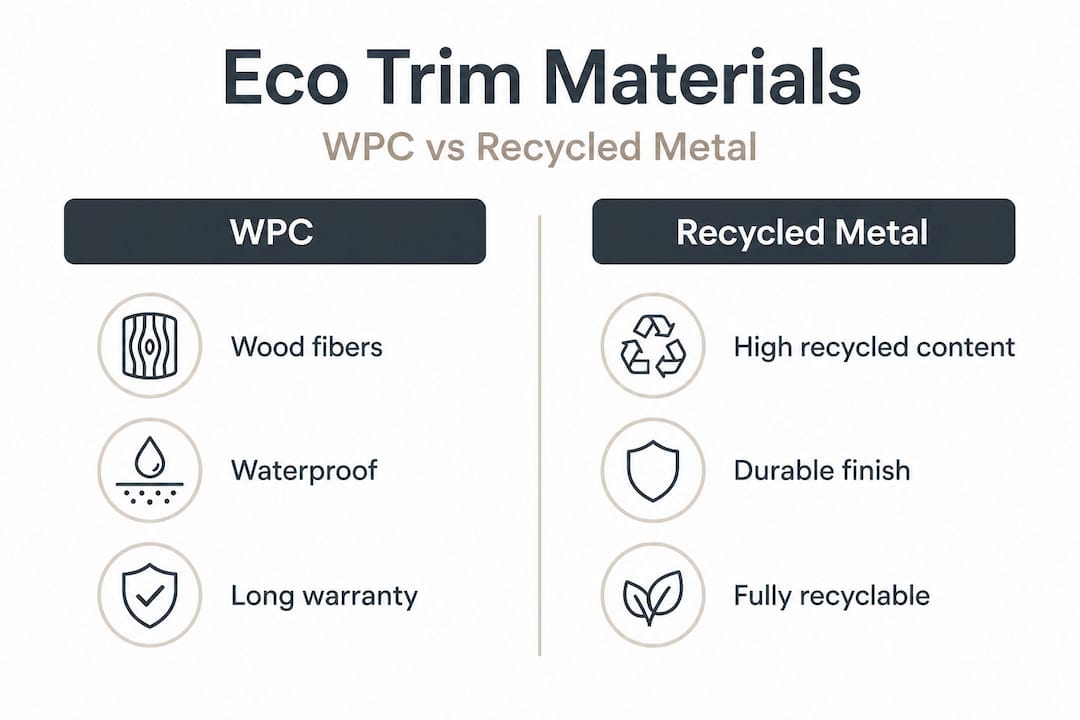
Wood-Plastic Composites (WPC) are currently the most widely discussed sustainable trim material. Their composition is precise: 50% recycled wood, 38% recycled plastic, and 12% additives that improve stability, UV resistance, and colour retention. This blend means WPC trims draw on two waste streams simultaneously, reducing pressure on both forests and plastic recycling infrastructure. They are available in a wide range of profiles including stair nosings, edge trims, and transition bars.
Recycled metals deserve a mention in the context of sustainable trims. Solid metal trims made from high recycled content are durable, long-lasting, and fully recyclable at end of life. Unlike PVC or low-grade composites, metal trims do not degrade in the same way and can outlast the floor they are fitted to. For homeowners who want both sustainability and a premium finish, solid metal trims represent an excellent choice.
FSC-certified timber remains a popular option for skirting boards and decorative trims. The Forest Stewardship Council (FSC) certification guarantees that timber comes from responsibly managed forests where replanting, biodiversity, and worker welfare are monitored. FSC trims biodegrade naturally and, when sourced from UK or European suppliers, carry a lower transport carbon footprint than imported alternatives.
It is also worth noting that Tarkett doubled recycled content to 20% across their flooring range in 2025, signalling that the wider industry is moving towards higher recycled content as a baseline rather than a premium feature. This trend is filtering through to trim accessories as well.
For guidance on trim terminology for UK finishes, it helps to understand the vocabulary before comparing products.
| Material | Recycled content | Water resistance | Durability | Recyclable at end of life |
|---|---|---|---|---|
| WPC | Up to 88% | Excellent | Very high | Partially |
| FSC timber | Varies | Moderate | High | Yes (biodegradable) |
| Recycled solid metal | High | Excellent | Exceptional | Fully |
| Standard PVC | Low | Good | Moderate | Rarely |
When reviewing innovative flooring trims for 2026 projects, this comparison table gives you a starting framework. The goal is not just to find the greenest material in isolation but to find the one that suits your specific room, flooring type, and aesthetic.
Pro Tip: Always ask suppliers for a material disclosure sheet. A trustworthy supplier will tell you the exact percentage of recycled content in their products, not just describe them vaguely as “eco-friendly.”
For achieving seamless trim transitions between different floor surfaces, material choice directly affects how well the trim integrates visually and structurally.
Now that you understand which materials are most sustainable, the next step is understanding their practical performance in UK homes.
How sustainable trims perform in real homes
Sustainability credentials mean little if the product fails within a few years. The good news is that the performance data for modern eco-friendly trims is genuinely impressive, and in several key metrics they outperform conventional alternatives.
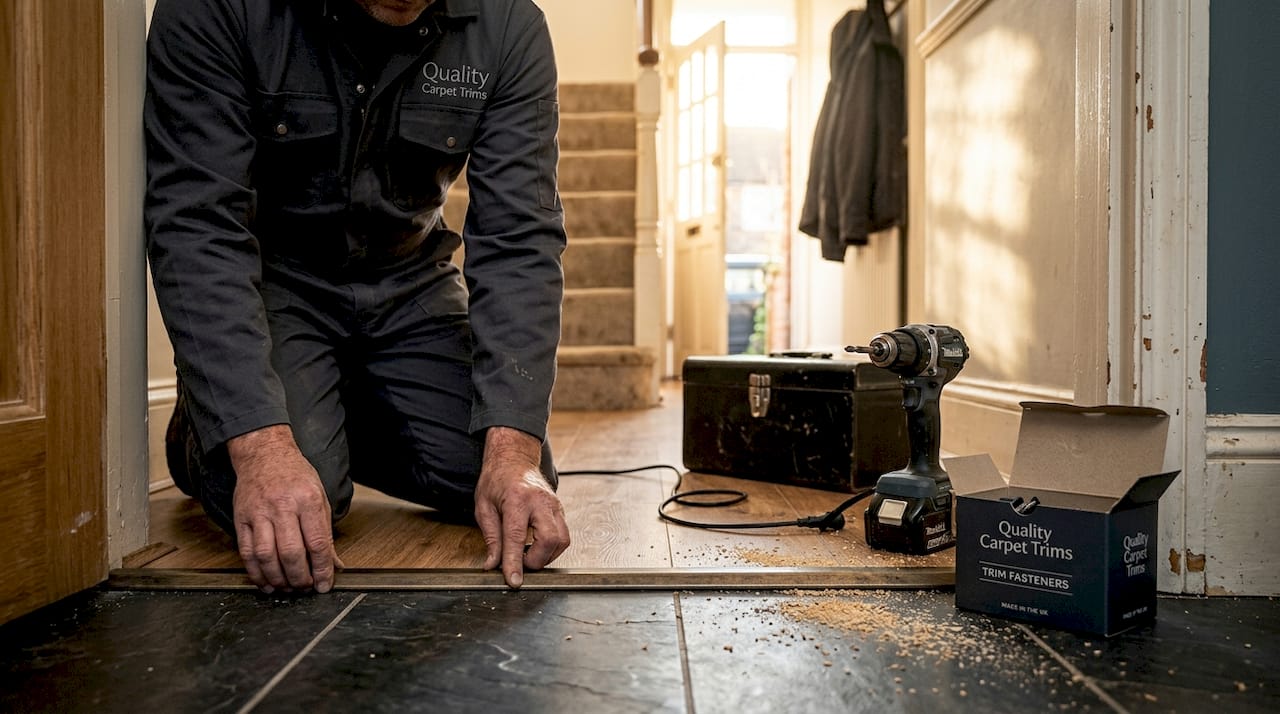
Warranties are one of the clearest indicators of manufacturer confidence. WPC end trims and NeoTimber skirting carry 25-year residential warranties, which is substantially longer than most standard timber or PVC trim warranties. A 25-year guarantee on a trim product is a serious commitment, and it reflects the material’s resistance to swelling, cracking, fading, and delamination.
Emissions and resource benchmarks back up these claims. Tarkett reduced GHG emissions by 27% across their manufacturing operations, demonstrating that sustainable production is not just a marketing position but a measurable operational reality. For homeowners who care about the full lifecycle of a product, this kind of verified data matters.
Understanding what edge trims do in different environments helps clarify which material is right for each space.
| Room type | Recommended sustainable trim | Key performance requirement |
|---|---|---|
| Kitchen | Capped WPC or solid metal | Moisture and stain resistance |
| Bathroom | Capped UV-stable WPC | Humidity and water resistance |
| Living room | FSC timber or WPC | Aesthetics and durability |
| Hallway | Solid metal or WPC | Impact and wear resistance |
| Staircase | WPC stair nosing | Safety, grip, and long-term wear |
Choosing the right sustainable trim for your room: a step-by-step approach
- Identify the moisture level of the space. Bathrooms and kitchens need capped WPC or solid metal rather than uncapped timber.
- Assess foot traffic. High-traffic areas like hallways and stairs need impact-resistant materials with proven wear ratings.
- Match the trim profile to your flooring type. A carpet-to-laminate transition needs a different profile than a tile-to-hardwood junction.
- Check the warranty length and what it covers. A 25-year warranty that excludes moisture damage is not useful in a bathroom.
- Verify recycled content and certifications before purchasing. Ask for documentation, not just claims.
The performance story for sustainable trims is no longer about compromise. It is about choosing the right product for the right place, with confidence that the environmental credentials are genuine.
Armed with this knowledge, it is vital to select trims that are not only green but also appropriate for your chosen aesthetic and technical needs.
Practical tips for choosing and installing sustainable trims
Knowing the materials is one thing. Applying that knowledge on an actual renovation project is another. Here is where many homeowners and even some contractors go wrong: they select a sustainable trim based on its eco credentials alone, without matching it carefully to the flooring, the room conditions, or the fitting method.
For UK residential renovations, prioritise matching trims to your flooring type, whether that is WPC stair nosing paired with composite decking-style steps or FSC skirting alongside solid wood floors. Moisture-prone areas specifically need capped, UV-resistant composites rather than natural timber, which can swell and split in humid conditions.
Practical guidance for selecting and fitting sustainable trims:
- Match colour and texture thoughtfully. WPC trims are available in wood-effect finishes that complement both laminate and engineered wood floors. Solid metal trims suit contemporary interiors with hard flooring.
- Prioritise capped profiles in wet areas. Capping (a protective outer layer) prevents moisture ingress and dramatically extends the life of composite trims in kitchens and bathrooms.
- Check UV stability for conservatories and south-facing rooms. Some WPC trims are specifically formulated to resist fading from prolonged sun exposure.
- Consider the fixing method. Glue-down trims can be harder to remove and recycle at end of life. Clip or screw-fixed profiles are often more sustainable because they allow easier disassembly and material separation.
- Ask about take-back schemes. Some manufacturers now offer collection programmes for old trims when you purchase replacements, keeping materials in the circular economy.
Understanding seamless trim profiles is essential before you commit to a fitting method, particularly if you are working across multiple floor types in an open-plan space.
Pro Tip: Never underestimate the value of professional fitting. A skilled fitter will cut and fix trims precisely, reducing waste off-cuts and ensuring the product performs as the manufacturer intends. Poor fitting can void warranties and create trip hazards, negating both the safety and sustainability benefits of the product.
It is also worth understanding why trims are essential to the overall finish of a renovation, not just as an afterthought but as a structural and aesthetic component that ties the entire floor together.
With these practical strategies, you are well equipped to make decisions that balance style with sustainability. But is the conventional wisdom about eco trims enough?
A fresh look: what most guides miss about sustainable trims
Most articles on sustainable flooring trims stop at certifications and recycled content percentages. That is useful, but it is only part of the picture. The uncomfortable truth is that a trim with an impressive eco label can still have a significant environmental footprint if it has travelled halfway around the world to reach your home, or if it cannot be recycled at the end of its life without specialist facilities.
Regional supply chains matter enormously. A WPC trim manufactured in the UK or northern Europe and delivered by road has a fraction of the transport emissions of an equivalent product shipped from Asia. When you are calculating the genuine sustainability of a trim, the origin of manufacture should be part of your assessment, not just the material composition.
End-of-life recyclability is the other overlooked factor. Many composite trims cannot be separated into their constituent materials at end of life, which means they end up in general waste despite being made from recycled content. Fully recyclable materials, such as solid metal, have a clear advantage here because their end-of-life pathway is well established and widely available in the UK.
We also believe that skilled local installation is an underrated sustainability factor. A trim that is fitted incorrectly will fail sooner, need replacing more frequently, and generate more waste over time. Investing in a qualified fitter who understands the specific requirements of each trim material is not a luxury; it is a practical contribution to reducing the overall environmental impact of your renovation.
Checking UK trim standards before specifying products ensures you are working within recognised quality and safety frameworks, which also supports longer product life and better end-of-life outcomes.
The real measure of a sustainable trim is not just what it is made from, but how it is made, where it comes from, how long it lasts, and what happens to it when the floor is eventually replaced. Thinking across that full lifecycle is what separates genuinely sustainable choices from products that simply carry a green sticker.
Find the ideal sustainable trims for your project
Choosing the right trim for your renovation does not have to be complicated, and it certainly does not mean compromising on finish or quality.
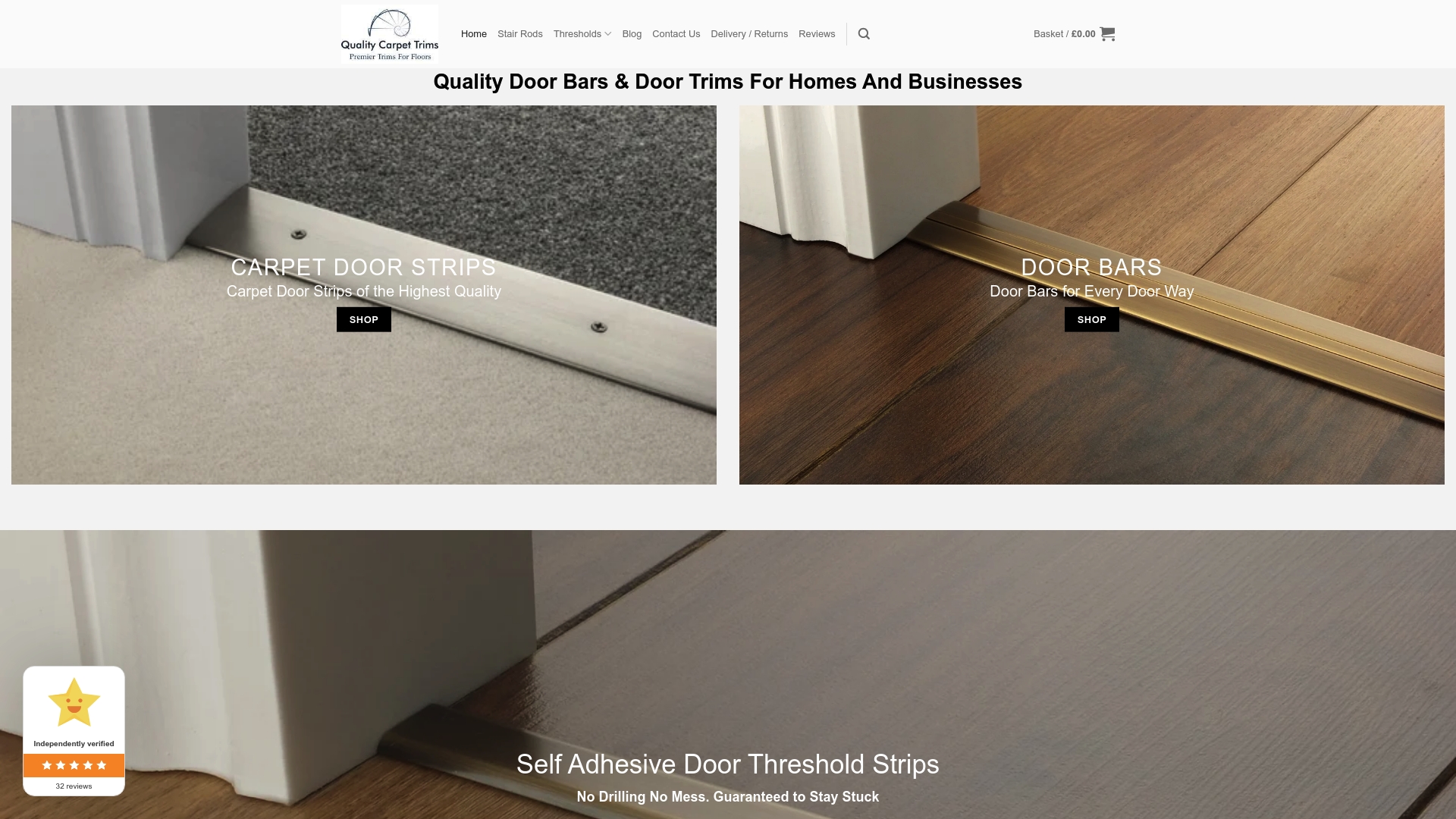
At Quality Carpet Trims, our solid metal door bars are hand-finished in 10 beautiful finishes to complement any interior scheme, from brushed gold to satin nickel. Every product is British-made and built to last. Whether you are looking for a matwell flooring trim for an entrance hall or need help choosing the right flooring trim for a complex multi-surface project, our team is here to guide you. Browse our full range and request free samples when you shop sustainable trims today.
Frequently asked questions
What makes a flooring trim sustainable?
Sustainable trims are made from recycled or responsibly sourced materials and manufactured with reduced environmental impact. For example, WPC trims combine 50% recycled wood and 38% recycled plastic, reducing water use by 70% compared to conventional production.
Are sustainable flooring trims as durable as traditional ones?
Yes, many eco-friendly trims offer comparable or longer performance warranties than standard products. WPC and NeoTimber products carry 25-year residential warranties, which exceeds most conventional trim guarantees.
Which areas of my home benefit most from WPC trims?
Moisture-prone spaces like kitchens and bathrooms benefit most from capped, UV-stable WPC trims. As trim guidance for UK renovations confirms, these outperform natural wood in wet environments where swelling and splitting are common problems.
Do sustainable trims cost more than standard ones?
Upfront costs can be similar or slightly higher, but long warranties and reduced maintenance often make them competitive or better value over the long term. Replacing a failed cheap trim every few years costs more than investing in a quality sustainable product once.
How can I verify a trim’s sustainability claims?
Check for certifications such as FSC for timber, or request a detailed material disclosure showing the exact percentage of recycled content. A reputable supplier will provide this information readily rather than relying on vague marketing language.
Recommended
- Premium flooring trim: enhance your UK home in style
- Edge trims: essential for safe, stylish UK flooring
- Why flooring trims are essential for stylish interiors
- Upgrade interiors with innovative flooring trims for 2026
- Waterproof Basement Flooring: Prevent Damp in Gauteng Homes