
Blog
Why seamless flooring is the smart choice for modern homes

Jul
TL;DR:
- Seamless flooring is a jointless, liquid-applied surface that promotes hygiene and visual continuity in interiors. It expands perceived space, supports flexible layouts, and requires precise installation and quality trims for durability. Proper details, especially at doorways, are essential for long-lasting, safe, and aesthetically appealing seamless floors.
Seamless flooring is defined as a continuous, jointless surface applied as a liquid and cured in place, with no grout lines, tile edges, or panel gaps. The absence of joints removes the primary harbourage points for bacteria, mould, and allergens, which is why seamless flooring is the standard in healthcare facilities and commercial kitchens. For homeowners and interior designers, that same principle translates directly into a cleaner, lower-maintenance home with a visual impact that modular flooring simply cannot match. Qualitycarpettrims supplies the solid brass edge trims and door bars that complete these installations with a finish that lasts.
What are the benefits of seamless flooring in home design?
Continuous flooring without joints visually expands rooms, making spaces appear larger and more open. This is not a styling trick. The eye follows an unbroken floor plane from wall to wall, which increases the perceived depth of any room. In open-plan homes, this effect compounds across multiple zones, creating a sense of flow that tiled or planked floors interrupt.
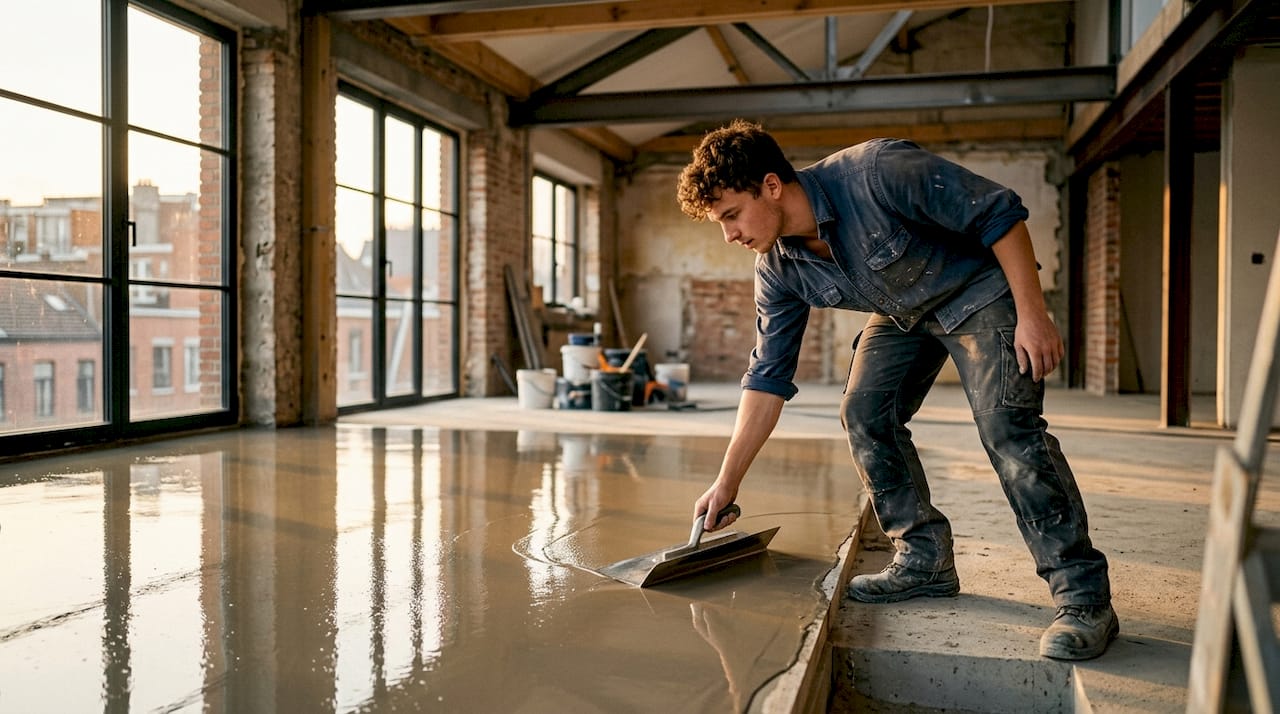
Modern minimalist interiors depend on this continuity. A kitchen flowing into a dining area, or a hallway opening into a living room, reads as a single cohesive space when the floor surface is unbroken. Resin-based systems, including epoxy and polyurethane, allow full colour and texture customisation, so designers can specify anything from a polished concrete look to a warm terracotta tone without sacrificing the jointless finish.
Seamless surfaces support architectural flexibility in a way that rigid modular flooring cannot. When a room’s purpose changes, the floor does not need to be replaced or reconfigured. The surface simply continues, accommodating new furniture layouts, partition walls, or open-plan reconfigurations without visible joins or mismatched sections.
- Unbroken floor plane creates a larger, more open feel in any room size
- Full colour and texture range available through resin-based systems including epoxy, polyurethane, and MMA
- Architectural flexibility means the floor adapts to changing room layouts without visible disruption
- Cohesive design across open-plan zones without the visual interruption of grout lines or plank edges
Pro Tip: When specifying a resin floor for an open-plan space, choose a single continuous pour across all zones rather than separate pours per room. This eliminates any visible join at the boundary and maximises the spatial effect.
How does seamless flooring improve hygiene and maintenance?
Joints and grout lines are primary harbourage points for bacteria, mould, and allergens. Removing them entirely is the single most effective structural change you can make to a floor’s hygiene performance. This is why hospitals, food preparation facilities, and pharmaceutical environments specify seamless resin floors as standard.
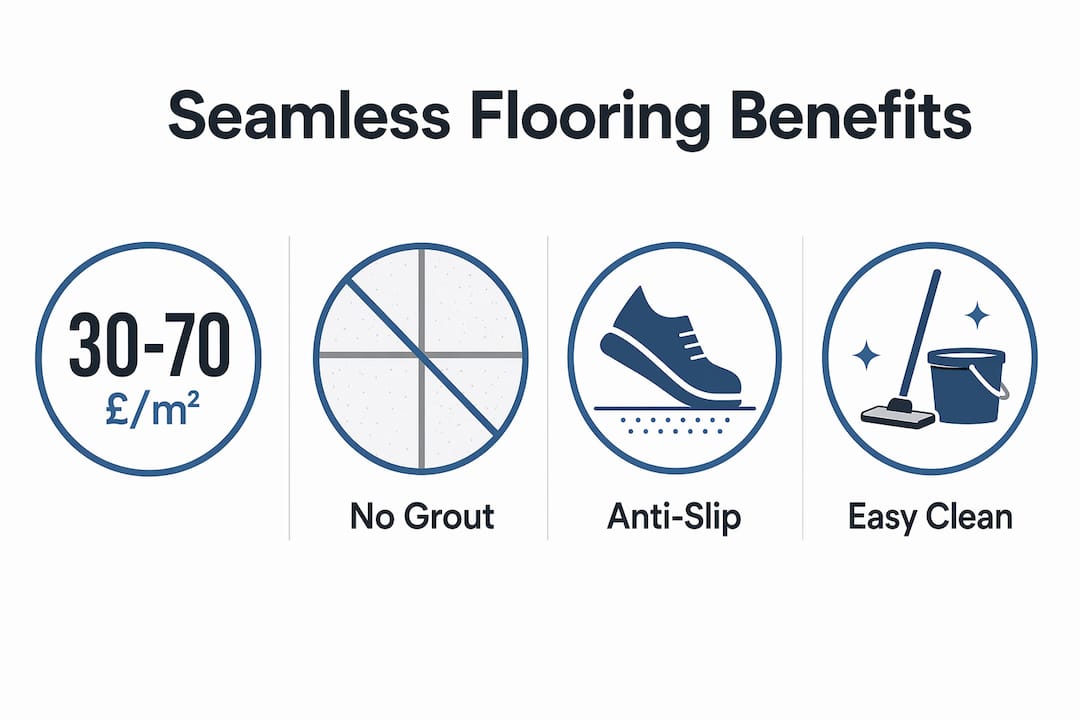
The same benefit applies directly in the home. Kitchens and bathrooms accumulate grease, moisture, and organic matter in grout lines, even with regular cleaning. A non-porous seamless surface resists liquid penetration entirely. Spills sit on the surface rather than soaking into joints, and a single pass with a mop removes them completely.
Maintenance costs fall significantly over time. There is no grout to re-seal, no individual tiles to replace when one cracks, and no edges to lift or peel. The floor is maintained as a single unit. For households with young children, pets, or allergy sufferers, this reduction in bacterial and allergen harbourage points is a genuine health benefit, not just a convenience.
- Eliminate grout lines to remove the primary site for bacterial and mould growth in kitchens and bathrooms
- Choose a non-porous resin so spills cannot penetrate the surface and are cleaned with a single wipe
- Specify coved skirting where the floor curves up the wall 100–150mm, forming a waterproof barrier that eliminates the gap where dirt accumulates at wall junctions
- Reduce long-term costs by removing grout re-sealing, tile replacement, and edge repair from your maintenance schedule
The healthcare and food service industries adopted seamless flooring specifically because the hygiene gains are measurable and consistent. Residential homeowners who apply the same logic gain a floor that is genuinely easier to keep clean, not just one that looks clean.
What technical considerations affect installation and durability?
Professional installation is non-negotiable for seamless resin flooring. Resin and hardener must be mixed at exact ratios on site. Even minor errors in proportion cause curing failures, including tackiness, peeling, or surface delamination, which require complete removal and reinstallation. This is not a DIY-friendly process.
Substrate preparation is equally critical. Subfloor cracks will telegraph through the finished surface if they are not repaired before the resin is applied. A professional installer inspects the concrete subfloor, fills all cracks and voids, and confirms the surface is level and dry before any product is mixed. Skipping this step produces a floor that fails within months.
- Inspect and repair the subfloor before installation. Any crack or void in the concrete will appear in the finished surface
- Confirm moisture levels in the substrate. Excess moisture causes adhesion failure in resin systems
- Use coved skirting to curve the floor up the wall 100–150mm, creating a monolithic waterproof barrier at all wall junctions
- Hire a qualified installer with documented experience in resin flooring. Mixing errors are the leading cause of premature failure
Professional installation for seamless resin flooring costs £30–70 per m², compared to £20–40 per m² for basic tiled flooring. The higher upfront cost reflects the liquid application process and the skill required. Over a ten-year period, the reduction in maintenance and repair costs makes the investment straightforward to justify.
Pro Tip: Ask your installer for a moisture reading report before work begins. A reading above the manufacturer’s specified threshold is the most common reason resin floors fail early. Insisting on this report protects your investment.
How can seamless flooring be tailored for safety and usability?
Safety is built into a seamless floor at the point of installation, not added afterwards. Anti-slip additives are incorporated directly into the resin during mixing, maintaining the non-porous surface while providing traction in wet areas. Bathrooms, utility rooms, and kitchen floors benefit most from this approach. The additive is invisible in the finished surface but measurably reduces slip risk.
Where a seamless floor meets a different flooring type at a doorway or room boundary, the transition requires a quality metal trim. This is where many otherwise excellent installations fall short. Cheap trims made from wood, plastic, rubber, or aluminium split, bend, and dent under foot traffic. They lift at the edges, creating a trip hazard and allowing moisture to penetrate the floor edge.
Qualitycarpettrims supplies solid brass door threshold bars hand-finished in ten luxury powder-coated finishes. Solid brass does not split, bend, or dent. The finish holds under daily foot traffic and matches the visual quality of the seamless floor it borders. For designers specifying a premium resin floor, the trim at the boundary is the last detail that either completes or undermines the whole installation.
| Feature | Solid brass trim | Cheaper alternatives |
|---|---|---|
| Material durability | Will not split, bend, or dent | Wood splits; plastic and aluminium bend and dent |
| Finish longevity | Powder-coated, holds under daily use | Paint chips; surface degrades quickly |
| Trip hazard risk | Flush fit, stable under foot traffic | Lifts at edges over time, creating a hazard |
| Moisture resistance | Fully resistant at floor edge | Absorbs moisture, causing edge failure |
| Finish options | 10 luxury powder-coated colours | Limited and inconsistent |
For a full guide on achieving clean transitions between floor types, the step-by-step UK guide from Qualitycarpettrims covers profile selection, fitting, and finish matching in detail.
Key takeaways
Seamless flooring delivers superior hygiene, visual continuity, and long-term durability by eliminating joints, and the quality of the edge trim at every boundary determines whether that standard is maintained.
| Point | Details |
|---|---|
| Hygiene advantage | No joints or grout lines means no harbourage points for bacteria, mould, or allergens. |
| Visual impact | An unbroken floor plane makes rooms appear larger and supports open-plan design. |
| Installation quality | Correct substrate preparation and exact resin mixing ratios are critical for durability. |
| Safety customisation | Anti-slip additives are mixed into the resin at installation for traction in wet areas. |
| Trim quality matters | Solid brass trims at floor boundaries prevent splitting, lifting, and trip hazards. |
Why the finishing detail is the one most designers get wrong
I have seen genuinely impressive resin floors let down by a single decision: the trim at the doorway. A homeowner or designer spends weeks selecting the right resin colour, hires a qualified installer, and pays for professional substrate preparation. Then, at the last stage, a cheap trim goes in because it seemed like a minor detail.
It is not a minor detail. The trim is the most visible junction in the floor. It is the point where two surfaces meet, where foot traffic concentrates, and where moisture tries to get in. A trim that bends or lifts within a year does not just look poor. It creates a trip hazard and allows water to undermine the floor edge.
My honest view is that seamless flooring is one of the best decisions a homeowner can make for a modern interior. The hygiene benefits are real and measurable. The visual effect in an open-plan home is genuinely striking. But the investment only holds its value when every detail is right, including the trim. Choosing solid brass over cheaper materials is not an upgrade. It is the correct specification for a floor that is meant to last.
The other point worth making is about children and pets. Seamless floors with anti-slip additives and no grout lines are genuinely safer and easier to clean than any tiled or planked alternative. For families, that practical benefit matters as much as the aesthetics.
— Matt
Qualitycarpettrims: the finishing touch your seamless floor deserves
A premium resin floor deserves a trim that matches its quality at every boundary and doorway. Qualitycarpettrims supplies solid brass door bars and flooring edge trims hand-finished in ten powder-coated luxury colours, from brushed gold to matt black. Every trim is made in the UK and will not split, bend, or dent under daily use.
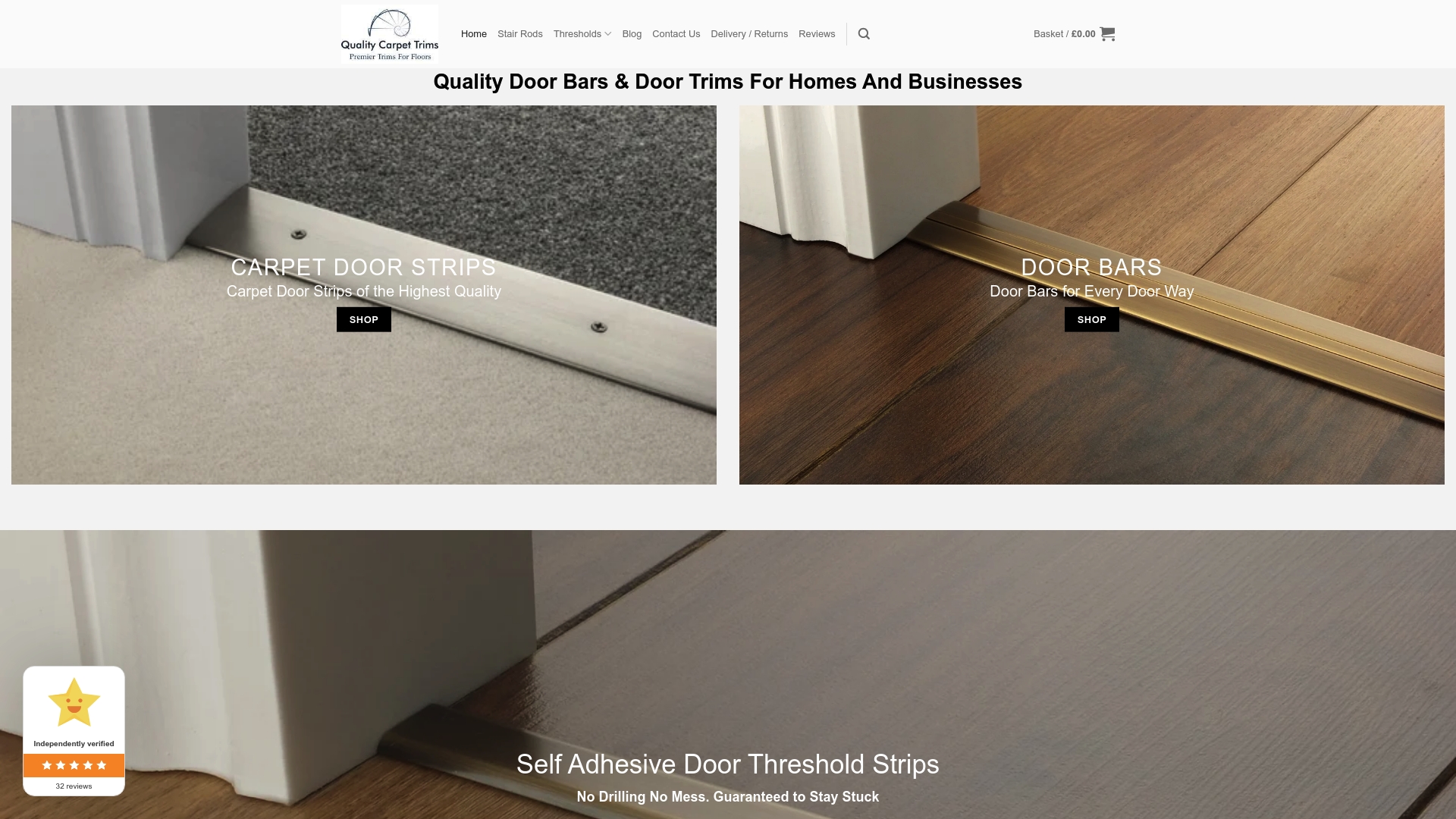
For homeowners and designers who have invested in a seamless resin floor, the matwell and threshold range at Qualitycarpettrims provides the precise finish that completes the installation. Free samples are available, and the team offers expert advice on profile selection and finish matching to suit your specific floor.
FAQ
What is seamless flooring?
Seamless flooring is a continuous, jointless surface applied as a liquid resin and cured in place. It contains no grout lines, tile edges, or panel gaps, making it non-porous and easy to clean.
Is seamless flooring better for hygiene than tiled floors?
Yes. Joints and grout lines harbour bacteria, mould, and allergens. A seamless surface eliminates these entirely, which is why healthcare and food preparation environments specify it as standard.
What does seamless flooring cost to install?
Professional installation costs £30–70 per m² for seamless resin flooring, higher than basic tiled options due to the liquid application process and the skill required for correct resin mixing.
Can seamless flooring be made slip-resistant?
Yes. Anti-slip additives are mixed directly into the resin during installation, providing traction in wet areas without affecting the non-porous surface quality.
What trim should I use at a seamless floor boundary?
Use a solid brass trim. Wood, plastic, rubber, and aluminium trims split, bend, or dent under foot traffic and lift at the edges over time. Qualitycarpettrims solid brass door threshold bars are hand-finished in ten luxury finishes and will not degrade under daily use.
Recommended
- Top Flooring Trends For 2019 Revealed | Quality Carpet Trims
- Why flooring trims are essential for stylish interiors
- Achieve seamless floor transitions: step-by-step UK guide
- Home flooring thresholds: your guide to seamless finishes