
Blog
Why match trim finishes for cohesive interiors

May
TL;DR:
- Matching trim finishes creates a cohesive, intentional look that visually enlarges small spaces and enhances craftsmanship. It also simplifies maintenance, signals quality, and adds long-term value, especially when selecting durable materials like solid brass with powder-coat finishes. Properly matching trims involves considering tone, sheen, material quality, and lighting to achieve a polished, timeless interior design.
There is a persistent belief among homeowners that matching trim finishes produces a flat, uninspired result. The thinking goes: contrast is interesting, matching is boring. But that view misses something fundamental about how a well-considered interior actually works. Understanding why match trim finishes matter is less about following rules and more about understanding how the eye reads a room. When trims align in colour, sheen, and material, a space feels intentional rather than assembled. This article covers the aesthetics, the practicalities, the material choices, and the design nuances that make consistent trim one of the most underrated decisions in any home.
Table of Contents
- Key takeaways
- Why match trim finishes: the fundamentals
- When and where to match trim finishes
- How to match trim finishes in practice
- How matching trims add value to your home
- Common questions about matching trim finishes
- My honest view on matching trim finishes
- Explore premium flooring trims in 10 luxury finishes
- FAQ
Key takeaways
| Point | Details |
|---|---|
| Matching trims expand small spaces | Consistent trim colour reduces visual breaks, making rooms feel larger and more coherent. |
| Sheen level matters as much as colour | Using satin or semi-gloss on trims against flat walls creates definition without clashing. |
| Material quality determines longevity | Solid brass and powder-coated trims hold their finish far longer than cheaper alternatives. |
| Undertones are the hidden variable | Matching warm or cool undertones across trims, flooring, and furniture prevents a chaotic feel. |
| Consistent trims signal craftsmanship | Uniform trim profiles throughout a home are recognised by buyers and designers as a mark of quality. |
Why match trim finishes: the fundamentals
Trim is the architectural punctuation of a room. It defines where the floor ends, where the wall begins, and where one material meets another. When those boundaries are inconsistent in colour or finish, the eye keeps catching on the transitions rather than reading the room as a whole. Matching trim finishes removes that friction.
The most immediate benefit is spatial. Matching trim to wall colour visually expands small rooms by removing the choppy contrast that draws attention to edges and corners. In a compact bedroom or narrow hallway, a contrasting skirting board in a different shade effectively slices the room into horizontal bands. Consistent trim dissolves those divisions.
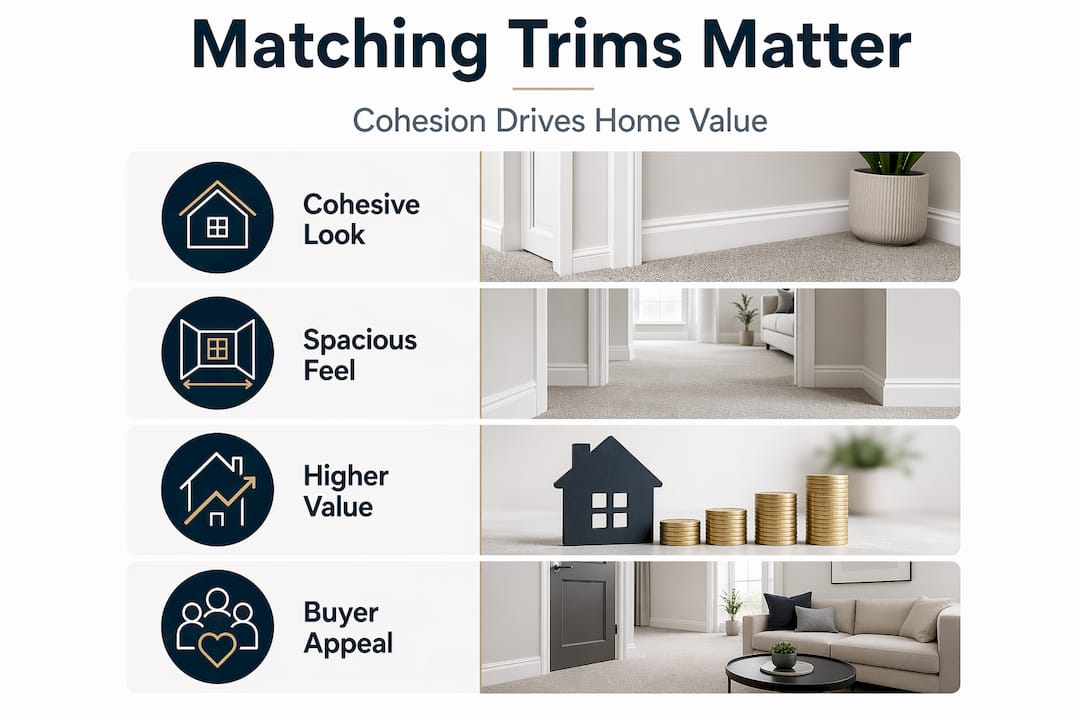
Beyond colour, sheen plays a role that most homeowners underestimate. Walls are typically finished in flat or matt paint, which absorbs light and hides imperfections. Trims, by contrast, take far more physical contact, scuffs, and cleaning. Using satin or semi-gloss on trims against a flat or eggshell wall creates a subtle but effective distinction: the trim reads as intentional, durable, and finished without visually competing with the wall.
The material of the trim itself matters enormously, particularly for flooring transitions. Solid brass trims with powder-coated finishes hold their appearance over years of foot traffic, whereas cheaper options split at the edges, scratch through their surface coating, and age badly within a few seasons. The finish you choose needs a material behind it that can sustain it.
Here is what consistent trim finishes actually deliver in practical terms:
- Visual cohesion: The eye travels smoothly around the room without being interrupted by mismatched edges.
- Perceived space: Fewer contrasting boundaries make rooms feel larger than they are.
- Design confidence: Matching trims signal that a space was considered as a whole rather than decorated in pieces.
- Easier maintenance: Matching trim colour simplifies touch-ups because a single paint reference covers the whole room.
- Material integrity: Premium trims in solid brass retain their powder-coated finish without peeling, splitting, or denting.
Pro Tip: When assessing trim finishes in a showroom or sample, always view them under natural daylight and artificial light separately. A finish that looks perfectly matched under shop lighting can read as a different tone entirely at home.
When and where to match trim finishes
Matching trims is not a one-size-fits-all instruction. The benefit varies significantly depending on room size, ceiling height, architectural complexity, and how much natural light the space receives. Knowing where it works best helps you apply it with real confidence rather than second-guessing yourself.
Follow these situations as a guide for when matching trims delivers the greatest impact:
-
Small or low-ceilinged rooms. This is where matching trims earn their keep most visibly. Matching trims in small spaces removes visual breaks and reduces clutter, making a room feel larger and more coherent. A white skirting board against a pale grey wall in a small bathroom creates a horizontal line that your eye keeps hitting. Match them and the room breathes.
-
Open plan living areas. When a kitchen flows into a dining space and on into a sitting room, consistent trim finishes create a throughline that holds the space together. Varied trim colours in an open plan setting read as separate rooms stitched together rather than one considered space.
-
Rooms with heavy architectural detail. Bay windows, picture rails, dado rails, deep skirting boards, and ornate door frames all compete for attention. Matching all of that trim to the wall colour quiets the visual noise and lets the architecture become a backdrop rather than a focal point.
-
Flooring transitions. When two different floor types meet, a flooring trim in a finish that relates to both surfaces keeps the transition calm. A trim that coordinates with flooring and surrounding hardware creates continuity rather than a jarring interruption.
-
Rooms where contrast trims could overpower a design. A bold contrasting skirting board can work brilliantly as a feature. But in a room already carrying pattern through soft furnishings, wallpaper, or flooring, adding contrasting trim is one visual element too many.
Where contrasting trims can work is in rooms with a single, deliberate focal point: a painted chimney breast, a feature wall, or a piece of statement furniture. In those contexts, contrast trim adds definition rather than chaos. The key distinction is intention. Contrast as a decision is very different from contrast as an accident.
Pro Tip: Trims sharing similar warmth or undertones across surfaces create a layered, collected look that avoids the sterile feeling of overly matchy interiors. Aim to harmonise tone rather than duplicate colour exactly.
How to match trim finishes in practice
Getting trim finishes right is more systematic than most people expect. It is not simply a matter of picking the same colour. The process involves testing, comparing materials, and thinking about how everything in the room relates to each other.
Here is how to approach it:
-
Start with the flooring. Flooring trims and door bars connect surfaces, so their finish sets the reference point. Choose a finish that picks up either the warmth or the cool tone of the floor rather than matching it precisely. High-end interiors rarely match wood tones exactly; close harmony in undertone creates depth, while an exact match can look flat.
-
Choose sheen levels deliberately. Flat or eggshell for walls, satin or semi-gloss for trims is the industry standard for a reason. Avoid using identical sheens on walls and trims because the result reads as unfinished rather than cohesive.
-
Test samples in your actual room. Paint a sample strip and leave it for at least 48 hours before deciding. View it morning and evening, with curtains open and closed. Colours shift more than most people anticipate between morning light and artificial evening light.
-
Think about hardware as part of the system. Door handles, cabinet pulls, and light switch plates all contribute to the overall finish palette. A coordinated hardware finish in the same warmth tone as your flooring trims pulls the room together without matching them exactly.
-
Prioritise material quality over price. A powder-coated solid brass trim will hold its finish through years of cleaning and foot traffic. Cheaper trims that bend or scratch within months force you to revisit finish matching far sooner than you should need to.
| Trim type | Durability | Finish quality | Longevity |
|---|---|---|---|
| Solid brass, powder coated | Excellent | Consistent, rich | 10+ years with normal use |
| Wooden trim | Poor in damp areas | Can warp and split | 2 to 5 years in heavy use areas |
| Plastic or rubber trim | Very poor | Fades and cracks | 1 to 3 years |
| Aluminium trim | Moderate | Prone to scratching | 3 to 5 years |
How matching trims add value to your home
Consistent trim finishes do something that is difficult to achieve through furniture or accessories alone: they signal that a home was designed rather than just decorated.
“Uniformity in trim profiles and finishes throughout a home is one of the most recognisable hallmarks of quality craftsmanship. It tells buyers and visitors that the space was considered as a whole.”
Consistent trim profiles and finishes throughout a home are cited by finish carpentry experts as a leading contributor to perceived home value. Buyers and estate agents recognise the difference between a house where trim was considered and one where it was applied without forethought. It reads in the room immediately.
The psychological effect is real as well. Cohesive trim finishes reduce the visual complexity of a space, which makes rooms feel cleaner, calmer, and larger than they actually are. That translates directly to how a home feels during a viewing.

| Approach | Perceived quality | Spatial feel | Resale impact |
|---|---|---|---|
| Matching trim finishes | High: signals intentional design | Spacious and calm | Positive: adds perceived value |
| Contrasting trim (deliberate) | Medium: works as a feature | Defined but busy | Neutral: depends on execution |
| Mismatched trim (unintentional) | Low: signals poor finish | Fragmented and smaller | Negative: reduces appeal |
Luxury trim materials compound this effect. A solid brass flooring trim with a hand-applied powder-coat finish looks and feels different from a painted wooden bar or a plastic strip. The material has weight and substance. That physical quality communicates itself, and it contributes to the overall impression of a thoughtfully finished home.
Common questions about matching trim finishes
Homeowners often have concerns about the practicalities of consistent trim finishes. Here are the most frequent ones, addressed honestly.
-
Will matching trims show scuffs more? Trims painted in the same colour as walls can make scuffs slightly more visible if the wall paint and trim paint are not the same sheen. Use a durable semi-gloss or satin on the trim itself and touch-ups remain straightforward. For flooring trims, a powder-coated finish on solid brass resists scratching far more effectively than painted or anodised alternatives.
-
Are premium trims significantly more expensive? The initial cost of solid brass, powder-coated flooring trims is higher than cheaper options. But when a cheaper trim needs replacing in two or three years, the total cost exceeds what a quality trim would have cost from the start. The role of trim in design is long term, and the material needs to support that.
-
Can you mix trim materials if the finish matches? Yes, with care. What matters most to the eye is the finish colour and sheen, not the material behind it. That said, if you are using a solid brass flooring trim in a warm antique brass finish, pairing it with hardware in a similar warmth tone creates a more considered result than mixing it with something in a cool chrome.
-
How do I maintain matching trims over time? For painted trims, keep a small pot of the exact paint reference. For powder-coated flooring trims, a soft cloth and mild detergent is all that is needed. Avoid abrasive cleaners, which can dull a powder-coat finish over time. The importance of trim finishes only compounds when the finish is maintained well.
-
Does room lighting affect which finish to choose? Absolutely. North-facing rooms with cooler light suit warmer finish tones to prevent the space from reading as cold. South-facing rooms can handle cooler, purer whites and silvered tones without losing warmth. Always test under the actual lighting conditions of the specific room.
My honest view on matching trim finishes
I have watched homeowners spend a great deal of thought on wall colours, furniture, and soft furnishings, then treat the trim as an afterthought. It is one of the most consistent mistakes I see, and it is one of the most expensive to correct once everything else is in place.
In my experience, the rooms that feel genuinely finished have one thing in common: every trim and transition relates to everything else. Not in an exact, sterile way, but in a way that feels considered. The flooring trim picks up the warmth of the floor. The door bar sits quietly at the threshold without demanding attention. The skirting echoes the wall rather than arguing with it.
What I have also learned is that the material matters as much as the colour. A beautiful finish on a substandard base is a temporary result. I have seen trims painted white over cheap substrates that looked tired within 18 months. Solid brass with a proper powder-coat finish holds its colour and its form for years. That is the difference between a design decision and a maintenance headache.
The trend toward pared-back, cohesive interiors in 2026 is not about minimalism for its own sake. It is about intentionality. Matching trim finishes, done thoughtfully, is one of the most practical expressions of that.
— Matt
Explore premium flooring trims in 10 luxury finishes
If this article has clarified your thinking on why matching trim finishes makes such a difference, the next step is finding trims that can actually deliver on that vision.
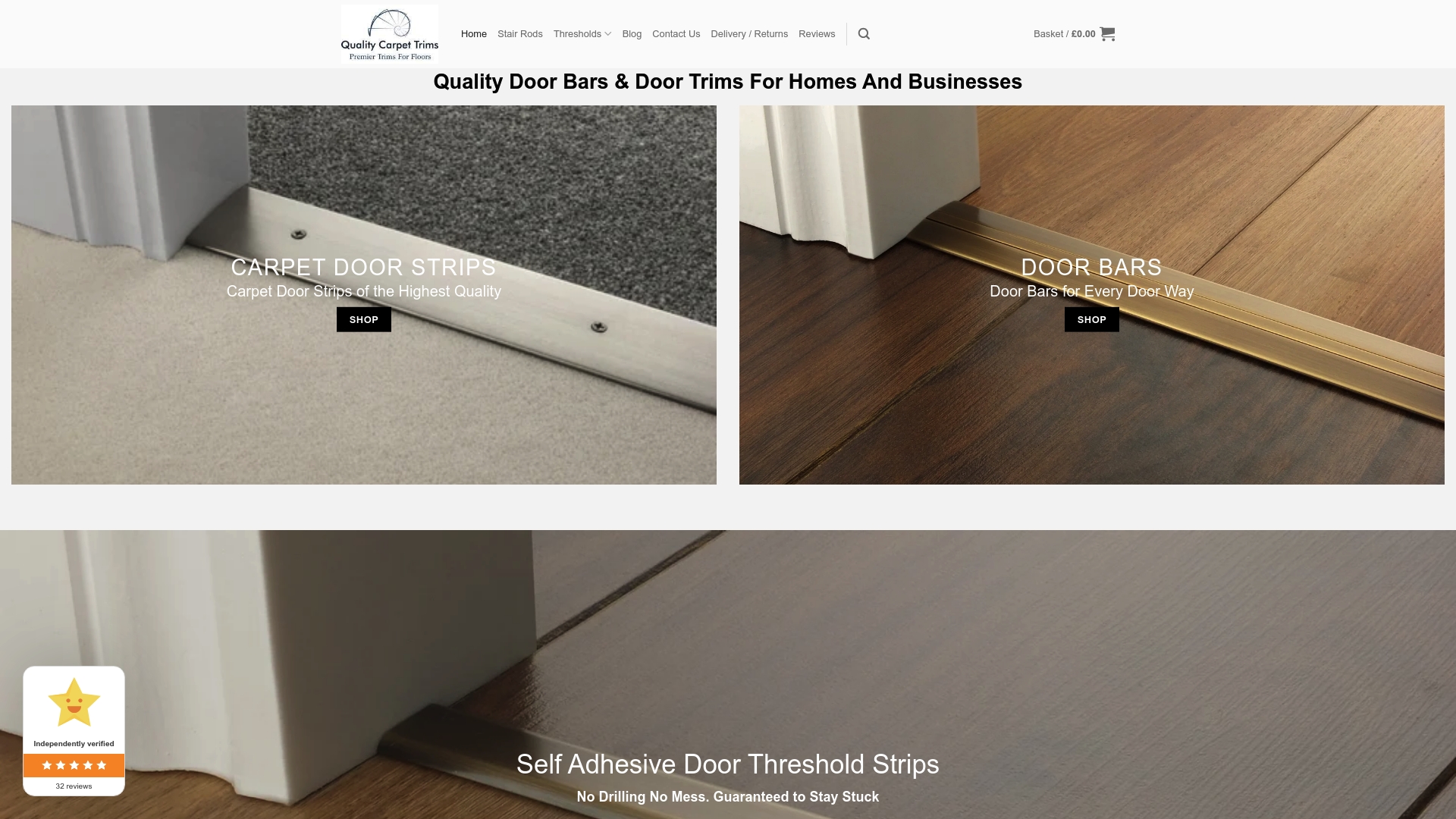
At Qualitycarpettrims, every flooring trim is solid brass and hand-finished in one of ten luxury powder-coated colours. These trims will not split, bend, or dent like cheaper alternatives, and they hold their finish through years of real use. Whether you are finishing a carpet-to-hard floor transition or defining a threshold between rooms, the right finish makes the difference at every doorway. Browse the full range, order free samples, and find the finish that ties your interior together properly.
FAQ
Does matching trim finishes make a room look boring?
No. Matching trim finishes creates cohesion and a sense of considered design. The key is varying sheen levels between walls and trims so the room retains definition without visual fragmentation.
What sheen should I use on trim versus walls?
Satin or semi-gloss on trims and flat or eggshell on walls is the industry-recommended approach. This creates subtle definition while keeping the overall palette consistent.
Do matching trim finishes add value to a home?
Yes. Uniform trim profiles and finishes are recognised by buyers and valuers as a sign of quality craftsmanship, and they contribute positively to perceived home value.
How do I choose a flooring trim finish that matches my decor?
Focus on undertone rather than exact colour. A warm brass or bronze finish suits timber-toned floors and warm-palette rooms, while cooler, darker finishes suit grey or stone-toned interiors. Matching trim undertones to existing flooring and furniture creates layered cohesion.
Why are solid brass trims better than cheaper alternatives?
Solid brass trims with powder-coated finishes resist splitting, bending, and denting that cheaper materials cannot withstand. They hold their finish for years, meaning your carefully matched trim palette stays intact long after lesser materials would have failed.
Recommended
- Trim finishes explained: How to achieve seamless flooring
- How trims transform decor for safer, stylish spaces
- Why trims matter: choosing the right finish for your renovation
- Why flooring trims are essential for stylish interiors