
Blog
Why choose hand finished trims for your home

Jun
TL;DR:
- Hand finished solid brass trims provide superior depth, durability, and aesthetic warmth compared to mass-produced alternatives. Precision milling ensures shadow lines are maintained through repaint cycles, making the profile stable and proportionate. Early specification of these trims enhances interior cohesion and long-term design integrity.
Hand finished trims are solid brass profiles milled to exacting tolerances and finished by hand, delivering visual depth, durability, and authenticity that mass-produced alternatives simply cannot match. If you are renovating a period property or specifying finishes for a contemporary interior, the choice of trim defines whether a room looks considered or merely completed. Qualitycarpettrims supplies solid brass door bars and flooring trims hand finished in 10 luxury finishes, each one crafted to hold its character for decades. The difference between a trim that ages beautifully and one that looks tired within a few years comes down to material, milling precision, and the quality of the finish applied.
Why choose hand finished trims: precision milling and profile quality
The most important technical reason to choose hand finished trims is milling tolerance. Standardised retail trims lose profile depth after just three coats of paint, while trims milled to 1/32-inch tolerances maintain their shadow lines indefinitely. That gap matters enormously in practice.
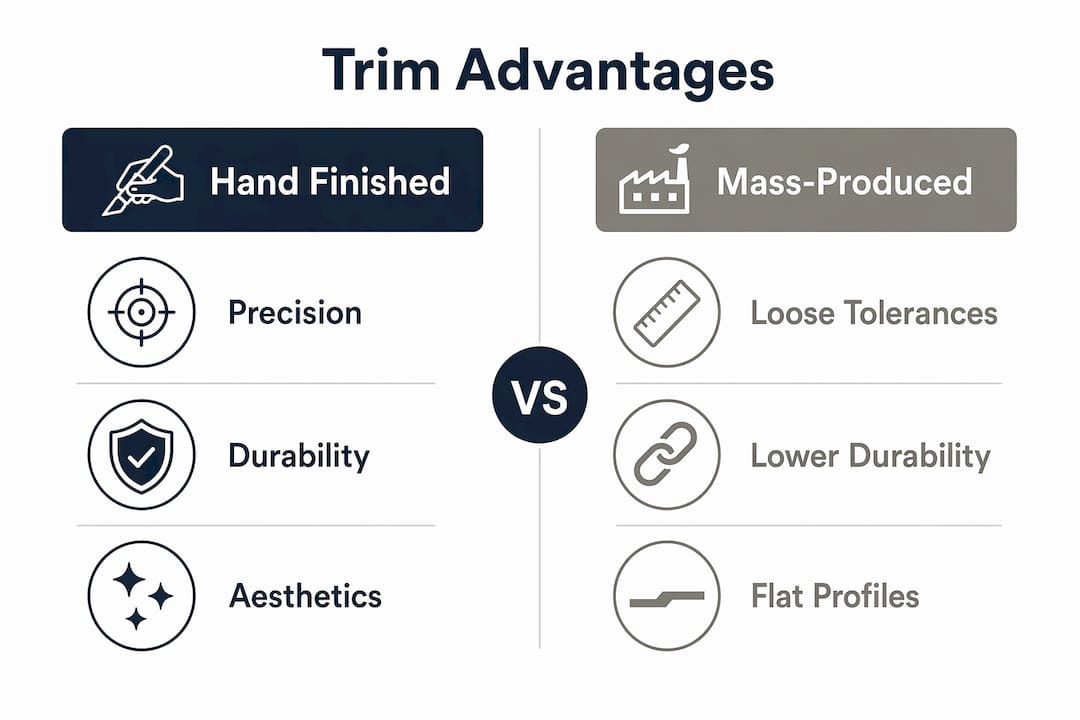
Shadow lines are the fine recesses and edges that give a trim its three-dimensional character. When those lines fill with paint, the profile flattens. A room that looked sharp on completion begins to look tired after the first redecoration. Precision milling prevents that from happening.
Mass-produced profiles are designed for volume and standard widths. They are often flat in historically proportioned or architecturally sophisticated rooms because the profiles lack the depth to hold their own against the surrounding detail. A hand finished trim, milled to specification, holds its proportion and its edge through every repaint cycle.
| Feature | Hand finished trim | Mass-produced trim |
|---|---|---|
| Milling tolerance | 1/32-inch precision | Variable, often loose |
| Shadow line retention | Maintained through repaints | Lost after 3 coats of paint |
| Profile depth | Consistent and defined | Flattens over time |
| Architectural harmony | Matches historic and modern styles | Designed for volume, not proportion |
Pro Tip: If you are specifying trims for a period property, ask for the profile to be matched to the existing architrave depth. A trim that shares the same shadow line depth as your skirting board creates a cohesive visual rhythm throughout the room.
What are the aesthetic advantages of hand-applied finishes?
Hand-applied finishes create depth and a dynamic response to light that uniform machine coatings cannot replicate. This is the quality that separates a room that feels considered from one that simply looks finished.
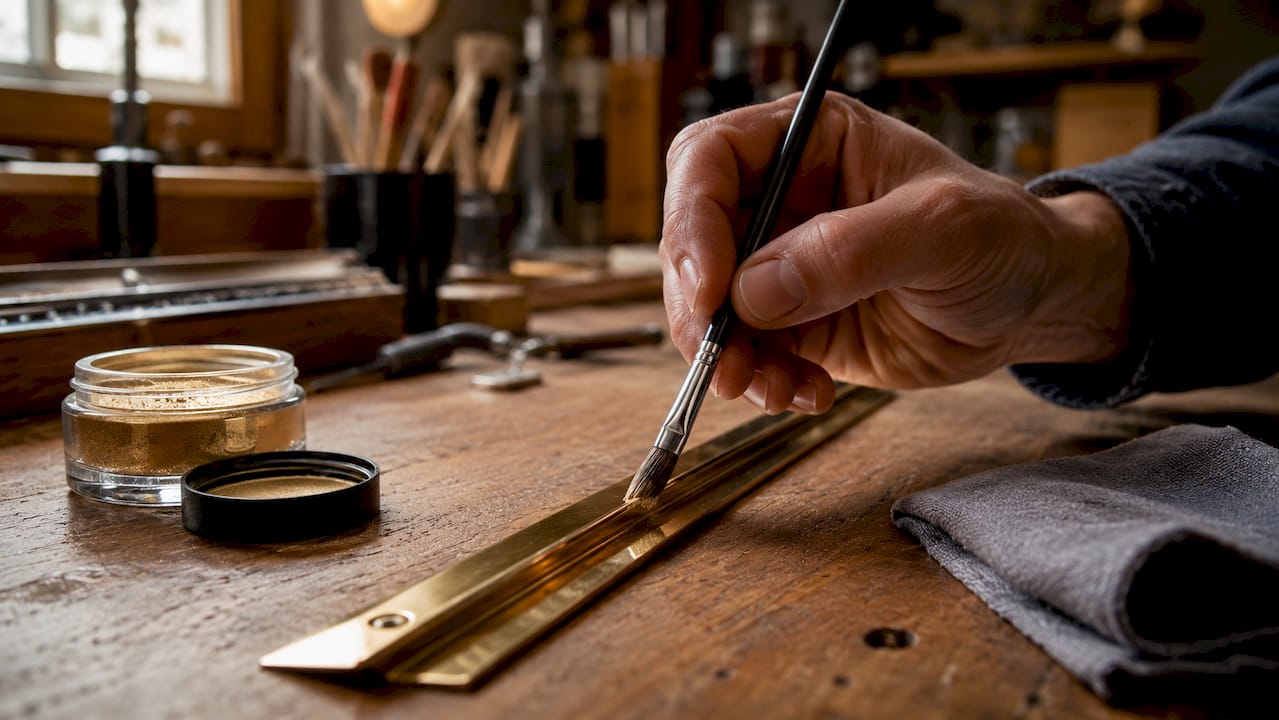
When light moves across a hand finished surface, it catches tonal variations that a synthetic coating would eliminate. Those variations are not imperfections. They are the evidence of skill, and they are what makes a material feel warm rather than clinical. Hand-applied patinas allow subtle tonal variations that synthetic finishes cannot replicate, adding to the material’s capacity to age gracefully and enhance interior warmth.
The practical effect in a room is significant. A hand finished brass trim in a satin or antique finish will interact with morning light differently from afternoon light. That responsiveness softens a modern interior and adds presence to a traditional one.
The advantages of hand finished trims in aesthetic terms include:
- Tonal depth. Each finish carries subtle variation that enriches the surface rather than flattening it.
- Light interaction. The surface responds to ambient light, creating warmth and visual interest throughout the day.
- Graceful ageing. Quality powder-coated brass develops character over time rather than degrading.
- Design cohesion. A finish chosen to complement your hardware and fittings ties a room together in a way that generic silver or chrome cannot.
Pro Tip: Qualitycarpettrims offers free samples of its 10 luxury finishes. Order samples before committing to a finish so you can see how each one reads in your specific lighting conditions.
Do hand finished trims make installation easier?
Precision-milled trims arrive ready for installation, cutting labour and schedule costs by eliminating the on-site rework that mass-produced options routinely require. This is a practical benefit that homeowners and contractors often overlook when comparing prices.
Here is how the installation process differs in practice:
- Accurate dimensions from the outset. A trim milled to specification fits the gap it was made for. There is no shimming, no packing, and no need to cut down an oversized profile on site.
- Cleaner finished lines. When a trim sits flush and true from the moment it is placed, the result looks professional without requiring additional filler or caulk to disguise gaps.
- Reduced labour time. Fewer corrections on site means the job is completed faster. For a contractor working across multiple rooms, that saving compounds quickly.
- Lower total project cost. Custom trims may initially cost more but can be more cost-effective overall due to reduced labour and fewer installation complications. The higher material price is often recovered in the time saved.
The logic is straightforward. A cheaper trim that requires an hour of on-site adjustment costs more in real terms than a precision trim that drops straight into place. For interior designers managing project timelines, that reliability is worth specifying every time.
How do custom hand finished trims support interior design goals?
Custom millwork creates purpose-built additions that define a space’s character rather than functioning as afterthought details. The distinction is between a room that has been designed and one that has simply been fitted out.
Millwork planned early in construction phases with artisan collaboration achieves cohesive design flow and signature details throughout the space. When trims are specified at the design stage rather than selected from a catalogue at the end of a project, they become part of the architectural language of the room.
The benefits of this approach include:
- Consistency across the project. A finish specified at the outset can be matched across door bars, threshold strips, and edge trims throughout the property.
- Adaptability to style. Hand finished solid brass trims work equally well in Georgian townhouses and contemporary open-plan spaces. The finish choice does the work of contextualising the material.
- Signature detailing. A bespoke trim profile at a floor transition or doorway becomes a detail that visitors notice without necessarily knowing why the room feels so considered.
- Long-term design integrity. Because the trims are built to last and finished to hold their character, the design intention survives years of daily use.
“Each handcrafted surface carries evidence of the maker’s skill and intention.” Handcrafted surfaces bring emotion and individuality to interiors, creating spaces that feel warm and timeless.
Interior designers working on high-specification projects increasingly specify trims that match finish choices across the whole scheme. That coordination is only possible when the trim range offers genuine finish depth and variety.
Solid brass vs cheaper trim materials: what is the real difference?
Solid brass trims with luxury powder-coated finishes resist splitting, bending, and denting in ways that cheaper materials cannot. Wood splits when moisture levels change. Plastic bends under foot traffic and discolours with age. Neither material holds a finish with the consistency that solid brass delivers over years of use.
The ten luxury finishes available from Qualitycarpettrims are not surface treatments applied over a weak substrate. They are powder-coated onto solid brass, which means the base material and the finish work together to provide lasting protection and visual quality.
| Material | Durability | Finish longevity | Risk of damage |
|---|---|---|---|
| Solid brass (powder-coated) | Excellent | Decades with normal use | Does not split, bend, or dent |
| Wood | Poor in damp conditions | Degrades, splits, and warps | High risk from moisture and impact |
| Plastic/PVC | Low | Discolours and becomes brittle | Bends and cracks under load |
For a door threshold bar that sits at a high-traffic transition point, the material choice is not cosmetic. It is structural. A solid brass bar will still look and perform exactly as intended ten years after installation. A cheaper alternative will not.
The finish range also matters for maintenance. A powder-coated brass surface requires no specialist treatment. Wipe it clean and it retains its appearance. That low-maintenance quality is one of the most practical advantages of hand finished trims for busy households.
Key takeaways
Hand finished solid brass trims deliver superior aesthetics, lasting durability, and precise installation quality that mass-produced alternatives cannot replicate.
| Point | Details |
|---|---|
| Precision milling preserves profile | Trims milled to 1/32-inch tolerance retain shadow lines through multiple repaints. |
| Hand-applied finishes add depth | Tonal variation and light interaction create warmth that synthetic coatings cannot match. |
| Installation is faster and cleaner | Ready-to-fit precision trims reduce on-site labour and eliminate costly rework. |
| Solid brass outlasts cheaper materials | Brass does not split, bend, or dent unlike wood or plastic alternatives. |
| Early specification improves design | Planning trims at the design stage creates cohesive, signature detailing throughout a space. |
Why I think the finish is the most underrated decision in any renovation
Most homeowners spend considerable time choosing floor coverings, paint colours, and furniture. The trim is treated as a finishing detail, something to sort out at the end. In my experience, that is exactly the wrong way to approach it.
The trim is the line between one surface and another. It is what the eye follows when it moves across a room. Get it wrong and the whole scheme feels unresolved, even if you cannot immediately identify why. Get it right and the room holds together in a way that feels effortless.
I have seen solid brass trims in antique gold and satin nickel finishes transform a hallway that was otherwise unremarkable. The floor was good. The paint was well chosen. But it was the trim at the doorway that gave the space its character. That is the kind of detail that enhances the role of trims in home decor in ways that photographs rarely capture.
My advice to anyone specifying a renovation is to treat the trim finish as a primary decision, not an afterthought. Choose it alongside your hardware, your light fittings, and your door furniture. A satin brass trim that echoes the tone of your handles and tap fittings creates a thread of consistency that elevates the whole project. A mismatched trim undermines work that cost considerably more to achieve.
The practical case for hand finished solid brass trims is strong. The aesthetic case is stronger. Choose the material and finish that will still look right in fifteen years, not the one that saves a few pounds today.
— Matt
Explore Qualitycarpettrims’ solid brass flooring trims
If you are ready to specify trims that combine precision, durability, and genuine design quality, Qualitycarpettrims has the range to match your project.
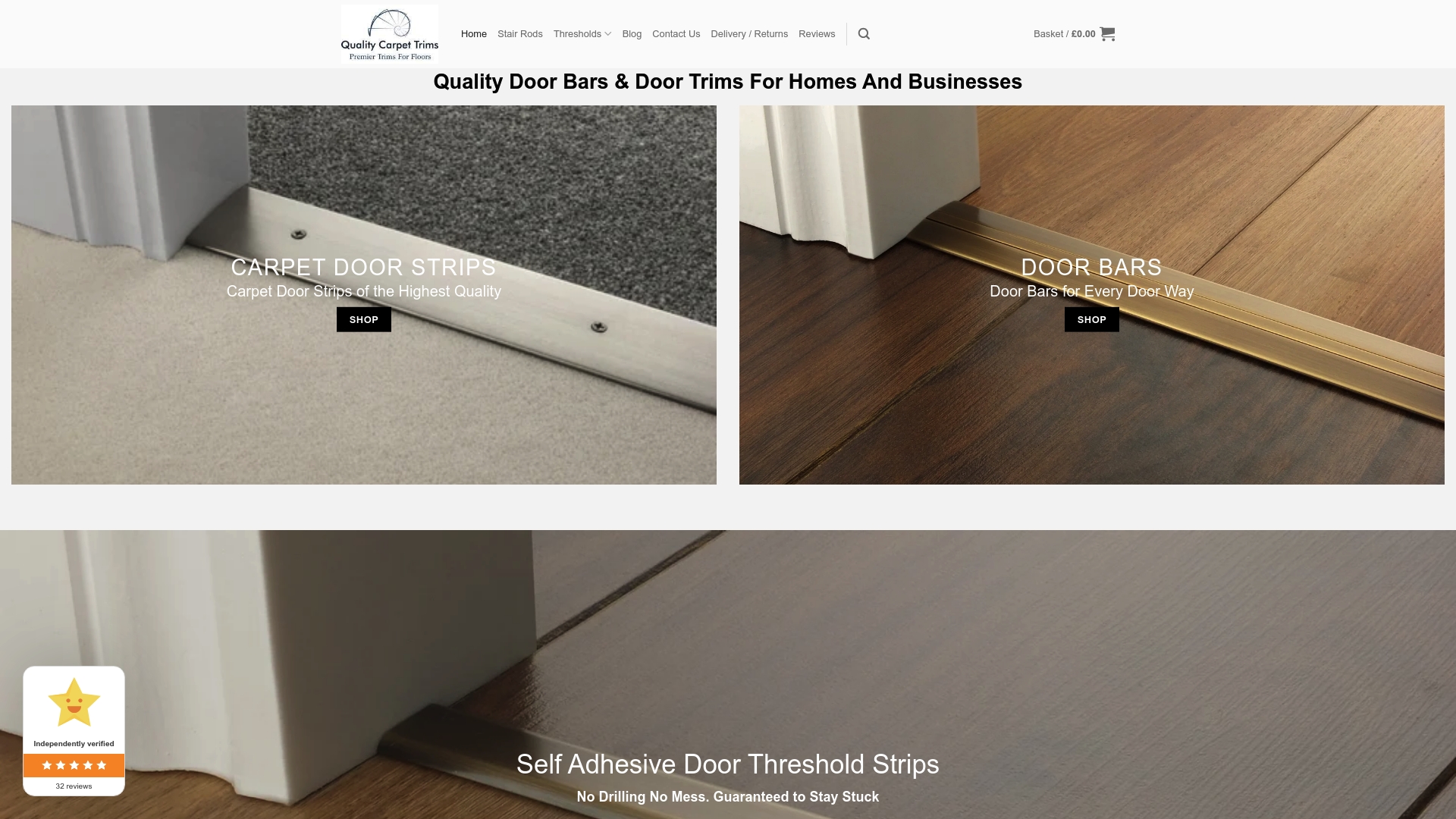
Qualitycarpettrims supplies solid brass door bars and flooring trims in 10 luxury powder-coated finishes, all manufactured in the UK and hand finished to the standard this article describes. Whether you need a carpet to hardfloor trim for a doorway transition or a threshold strip for an open-plan space, every product arrives ready to install and built to last. Free samples are available so you can confirm your finish choice in your own lighting before ordering. Browse the full range at qualitycarpettrims.co.uk and find the finish that completes your interior.
FAQ
What is a hand finished trim?
A hand finished trim is a flooring or door bar profile that has been milled to precise tolerances and finished by hand rather than by automated machinery. The result is a surface with greater depth, tonal variation, and durability than mass-produced alternatives.
Why do hand finished trims last longer than cheaper options?
Solid brass hand finished trims do not split, bend, or dent under normal use. Wood and plastic alternatives degrade with moisture and foot traffic, while powder-coated brass retains its finish and structural integrity for decades.
Do hand finished trims cost more to install?
Precision-milled trims reduce total installed costs by arriving ready to fit, eliminating the shimming and corrective labour that mass-produced trims often require. The higher material price is frequently offset by faster, cleaner installation.
How many finish options does Qualitycarpettrims offer?
Qualitycarpettrims offers 10 luxury powder-coated finishes on its solid brass trims, allowing homeowners and designers to match door bars and threshold strips to existing hardware and fittings throughout a property.
When should I specify trims in a renovation project?
Millwork specified early in construction achieves greater design cohesion and avoids costly late-stage adjustments. Choose your trim finish at the same stage as your hardware and flooring to ensure a consistent result across the whole scheme.
Recommended
- What is hand finished trim? a UK homeowner’s guide
- Hand-finished trims: the UK homeowner’s guide
- Why trims matter: choosing the right finish for your renovation
- Why trims enhance decor: a homeowner’s guide