
Blog
What is vinyl edge trim? 70% fewer flooring failures

Mar
Many homeowners and designers believe vinyl edge trims are purely decorative. This misconception is costly. Proper vinyl edge trims prevent over 70% of flooring edge failures by accommodating expansion and protecting edges. Without understanding what is vinyl floor edging, you risk buckling, moisture damage, and safety hazards. This article explains their functions, types, installation techniques, and material benefits to help you choose correctly.
Table of Contents
- Introduction To Vinyl Edge Trim And Its Importance
- Functions Of Vinyl Edge Trim
- Types Of Vinyl Edge Trim And Their Use Cases
- Common Misconceptions About Vinyl Edge Trim
- Installation Best Practices And Pitfalls To Avoid
- Material Quality And Brand Value
- Practical Applications: Choosing And Maintaining Your Vinyl Edge Trim
- Explore Premium Vinyl Edge Trims At Quality Carpet Trims
- Frequently Asked Questions
Key takeaways
| Point | Details |
|---|---|
| Function over decoration | Vinyl edge trims protect floors from moisture, edge damage, and buckling by covering expansion gaps. |
| Multiple trim types exist | T-molding, reducer strips, and stair noses serve different transition scenarios depending on floor height. |
| Material quality matters | Metal trims outlast PVC and aluminium alternatives with superior durability and finish. |
| Installation requires precision | Following manufacturer guidance and avoiding tight sealing prevents costly buckling and failures. |
| Regular maintenance extends life | Simple cleaning and periodic inspections preserve trim function and appearance for years. |
Introduction to vinyl edge trim and its importance
Vinyl edge trim is a protective profile covering the expansion gaps around vinyl flooring edges. These gaps are not installation errors. They are deliberate spaces allowing your floor to move.
Vinyl flooring expands and contracts with temperature changes. Expansion gaps of 8-12mm accommodate natural movement in floating vinyl floors without causing buckling. Without proper trim coverage, these gaps become entry points for moisture and debris.
Trims serve as your floor’s first defense against damage. They accommodate thermal expansion while protecting vulnerable edges from foot traffic. This dual function prevents the majority of premature flooring failures.
Ignoring trims creates serious problems:
- Buckling occurs when floors expand without adequate gaps, causing visible waves and permanent damage
- Chipping happens at exposed edges where planks meet walls or other surfaces, creating unsightly wear
- Moisture enters through uncovered gaps, compromising subfloors and plank cores over time
- Trip hazards develop at unfinished transitions between flooring types or height differences
Proper trim selection and installation extends your floor’s lifespan by years. The initial investment in quality trims prevents expensive repairs and premature replacement. Understanding trim basics empowers you to protect your flooring investment effectively.
Functions of vinyl edge trim
Vinyl edge trims perform multiple critical protective roles beyond covering gaps. Their functions directly impact your floor’s durability and your home’s safety.
Moisture ingress protection prevents subfloor and plank core damage by sealing vulnerable edges. Water entering expansion gaps causes subfloor rot, mold growth, and plank swelling. Metal trims create a barrier that blocks liquid infiltration while still allowing the slight air movement floors need.
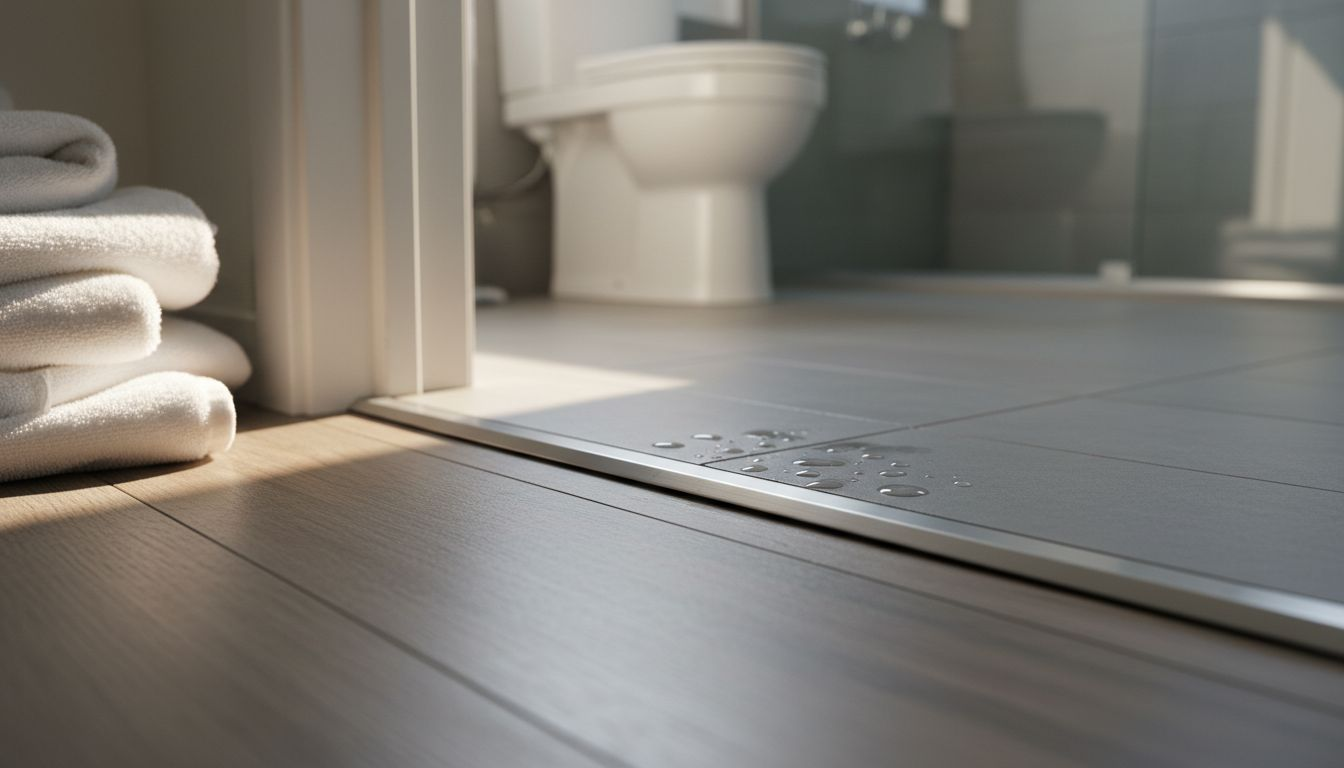
Edge reinforcement protects your flooring investment from daily wear. Exposed plank edges chip and crack under foot traffic, especially in high-use areas like doorways and hallways. Trims distribute impact forces across their metal surface rather than concentrating stress on brittle vinyl edges.
Safety improvements are measurable. Properly installed vinyl edge trims reduce trip hazards by creating smooth transitions between flooring types and levels. Unfinished floor edges create lips and height differences that catch feet, particularly dangerous for children and elderly residents.
Sealing edges blocks dirt and debris accumulation that degrades flooring over time. Gaps without trims collect dust, pet hair, and grit that works its way under planks. This abrasive material grinds against floor undersides, causing squeaks and loosening installations.
Quality functions of vinyl edge trim include thermal accommodation, allowing floors to expand naturally without restriction while maintaining protective coverage. This balance between flexibility and protection defines effective trim performance.
Understanding these functions helps you appreciate why skipping trims or choosing cheap alternatives creates long-term problems. Each function addresses a specific failure mode that would otherwise require expensive repairs.
Types of vinyl edge trim and their use cases
Different floor transitions require specific trim profiles. Choosing the wrong type compromises both appearance and function.

T-molding covers expansion gaps between same height floors, creating seamless transitions in doorways and open-plan spaces. The T-shaped profile sits in the gap with equal coverage on both sides. This design allows independent movement of floor sections while maintaining a clean finished look.
Reducer strips provide smooth slopes where vinyl meets lower surfaces, eliminating abrupt height changes that cause trips. The gradual taper accommodates height differences up to 15mm, common where vinyl transitions to carpet or lower-profile hardwood. These strips are essential in high-traffic doorways where safety is paramount.
Specialized trims serve unique applications:
- Stair noses finish step edges with durable overhangs that protect nosing from impact and wear
- End caps terminate flooring runs at sliding doors or open edges with a finished vertical surface
- Wall base trims cover the joint between floor and wall, replacing traditional skirting in modern installations
| Trim Type | Best For | Height Difference | Material Recommendation |
|---|---|---|---|
| T-molding | Same height transitions | 0-2mm | Hand-finished metal |
| Reducer strip | Floor to lower surface | 3-15mm | Metal with gradual slope |
| Stair nose | Step edges | Varies | Heavy-duty metal |
| End cap | Open floor edges | N/A | Matching metal finish |
Material selection impacts long-term performance significantly. Metal trims offer superior durability and finish quality compared to plastic or aluminium alternatives. Hand-finished metal trims provide visual appeal crucial for high-end residential and commercial projects where aesthetics matter.
Choose your trim type based on the specific transition scenario. Measure height differences accurately before purchasing. Types of vinyl edge trim vary in load capacity and flexibility, so matching profile to application prevents premature failure.
Common misconceptions about vinyl edge trim
Several widespread beliefs about vinyl edge trims lead to poor decisions and installation failures. Clearing these misconceptions protects your investment.
-
Trims are decorative only: This false belief causes most edge failures. Proper vinyl edge trims prevent over 70% of flooring failures through functional protection, not aesthetics. Treating trims as optional decorative elements guarantees premature floor damage.
-
All trim materials perform equally: Material quality dramatically affects lifespan and appearance. Metal trims resist corrosion, maintain finish integrity, and withstand heavy foot traffic far better than PVC or aluminium options. Cheap plastic trims yellow, crack, and fail within months in UK humidity.
-
Sealing expansion gaps tightly is better: Many installers believe eliminating gaps creates stronger installations. The opposite is true. Floors need movement space to expand without buckling. Trims should cover gaps without restricting natural thermal expansion.
-
DIY installation with any trim works fine: While installation is accessible to capable DIYers, using inappropriate or cheap trims creates long-term problems. Incorrect profiles cause gaps that admit moisture or create trip hazards. Low-quality materials fail quickly, requiring expensive removal and reinstallation.
-
Aluminium trims are premium options: Marketing often positions aluminium as high-end, but metal trims offer better performance. Aluminium oxidizes in UK conditions, creating dull finishes that require frequent replacement. Quality metal trims maintain appearance and function for decades.
Pro Tip: Test your chosen trim profile with actual floor samples before purchasing quantities. This reveals fit issues and aesthetic mismatches that specifications alone cannot predict, saving costly returns.
Understanding vinyl edge trim misconceptions helps you avoid common pitfalls that compromise installations. Question advice that contradicts manufacturer guidelines or prioritizes appearance over function.
Installation best practices and pitfalls to avoid
Correct installation maximizes your trim’s protective benefits and aesthetic appeal. Following proven practices prevents common failures.
-
Read manufacturer instructions completely before starting: Each trim profile has specific fitting requirements for gap width, attachment method, and substrate compatibility. Ignoring these specifications causes immediate or delayed failures.
-
Measure expansion gaps accurately: Verify your flooring manufacturer’s recommended gap width, typically 8-12mm. Cut trims to cover gaps completely without compressing floor edges. Gaps that are too narrow restrict movement; gaps that are too wide look unprofessional.
-
Select appropriate attachment methods: Most quality trims use track systems that allow floor movement while securing the trim. Avoid adhesives that bond trim directly to flooring, which restricts necessary expansion. Mechanical attachments to subfloors provide stability without limiting floor flexibility.
-
Ensure flush, level trim installation: Raised or uneven trims create trip hazards and catch debris. Use levels during installation to maintain consistent height. Sand or file metal trim edges smooth to eliminate sharp points.
-
Choose metal trims for durability: Hand-finished metal options from trusted suppliers outlast alternatives by years. The upfront cost difference disappears when you avoid replacement cycles required with cheap plastic or aluminium trims.
Common pitfalls destroy otherwise good installations:
- Ignoring expansion gaps causes buckling as floors expand against rigid trims or walls
- Using mismatched profiles creates visual discontinuity and functional gaps in protection
- Over-tightening screws in track systems restricts floor movement, negating the expansion gap’s purpose
- Cutting trims too short leaves edge exposure that admits moisture and looks unfinished
- Skipping subfloor preparation leads to uneven trim installation and premature loosening
Pro Tip: Test fit your trims completely before final installation. Dry lay the entire run to confirm dimensions, profile fit, and aesthetic compatibility with your flooring. This rehearsal identifies problems while corrections are simple and inexpensive.
Detailed guidance on installation best practices and comprehensive flooring edge trims installation guides walk you through each step with visual references.
Material quality and brand value
Material selection determines whether your trims perform reliably for decades or require replacement within months. Quality differences are substantial and measurable.
Metal trims deliver superior wear resistance compared to aluminium or PVC alternatives. High-quality metal resists scratching from furniture movement, pet claws, and grit tracked from outside. The material’s hardness prevents the surface deformation common in softer plastics.
Corrosion resistance matters enormously in UK homes where humidity fluctuates seasonally. Metal trims maintain their protective barrier and aesthetic finish through years of exposure to moisture, cleaning products, and temperature changes. Aluminium and plastic options degrade visibly, developing oxidation, discoloration, or brittleness.
Hand-finished metal trims provide visual appeal essential for premium residential and commercial installations. The finishing process creates depth and richness in color that mass-produced plastic trims cannot match. Ten finish options allow precise coordination with existing décor elements.
Brand assurance and quality guarantees indicate manufacturer confidence in product longevity. Reputable British manufacturers stand behind their trims with guarantees covering materials and workmanship. This assurance provides peace of mind worth far more than the modest price premium over generic imports.
Avoiding inferior materials prevents these common problems:
- Aluminium trims oxidize in moisture, creating dull gray surfaces that contrast poorly with flooring
- PVC trims yellow under UV exposure from windows, becoming unsightly within months
- Cheap plastic options crack under impact or temperature stress, requiring early replacement
- Generic imports often use incorrect dimensions that fit poorly with standard UK flooring profiles
Investment in premium metal vinyl edge trims adds measurable value through extended lifespan, maintained appearance, and reliable performance. Calculate total cost over expected service life rather than initial purchase price. Quality trims lasting 20+ years cost less annually than cheap alternatives requiring replacement every few years.
Practical applications: choosing and maintaining your vinyl edge trim
Applying your trim knowledge to real-world decisions ensures successful outcomes. These practical guidelines support confident selection and long-term satisfaction.
Match trim profiles to specific transition situations accurately:
- Same height floor-to-floor transitions in doorways require T-molding for clean, functional coverage
- Height differences at carpet boundaries need reducer strips with appropriate taper angles
- Moisture-prone areas like kitchens and bathrooms demand metal trims with superior seal integrity
- High-traffic commercial spaces benefit from heavy-duty profiles designed for constant use
Maintaining metal trims preserves their finish and function:
- Clean regularly with mild detergent and soft cloth to remove dirt without scratching
- Avoid abrasive cleaners or scouring pads that damage protective finishes
- Dry thoroughly after cleaning to prevent water spots on polished surfaces
- Inspect quarterly for loosening, damage, or debris accumulation requiring attention
Source trims from trusted UK suppliers offering expert guidance and quality assurance. Free sample programs allow you to evaluate finish quality, profile fit, and aesthetic compatibility before committing to full orders. This testing eliminates guesswork and prevents costly mismatches.
Schedule regular inspections as part of routine home maintenance. Check that trims remain securely attached, gaps stay clear of debris, and finishes maintain their appearance. Early detection of minor issues prevents major repairs.
Pro Tip: Order samples of your shortlisted trims and place them alongside your actual flooring in natural light. Color and finish appearance varies dramatically between artificial showroom lighting and your home environment. This real-world testing ensures satisfaction with your final selection.
Detailed guidance on choosing vinyl edge trims and maintaining vinyl edge trims provides additional support for confident decisions.
Explore premium vinyl edge trims at Quality Carpet Trims
Your flooring deserves protection that lasts. Quality Carpet Trims supplies premium vinyl floor edge trims in profiles and finishes matching your specific needs. Hand-finished metal trims deliver the durability and aesthetic quality your project demands.

Expert customer support helps you select the perfect trim for your application. Free samples let you verify fit and finish before ordering. Fast UK delivery ensures your project stays on schedule. Whether you are a homeowner upgrading your space or a designer specifying materials for clients, Quality Carpet Trims provides the trusted quality and service you need. Explore flooring edge trims explained to understand your options fully.
Frequently asked questions
What is vinyl edge trim used for?
Vinyl edge trim covers expansion gaps, protects floor edges from moisture and damage, and creates smooth safe transitions between flooring types or levels. It is essential for both residential and commercial vinyl floor installations to prevent buckling and extend floor life.
Can vinyl edge trims prevent trip hazards?
Yes, properly installed trims eliminate uneven floor edges and height differences that cause trips and falls. Reducer strips are specifically designed to provide gradual slopes where vinyl meets lower adjacent surfaces, significantly improving safety in doorways and transition areas.
Are all vinyl edge trims the same quality?
No, material quality varies dramatically between products. Metal trims offer superior durability, corrosion resistance, and finish longevity compared to PVC or aluminium alternatives. Choosing reputable British manufacturers with quality guarantees ensures reliable long-term performance.
How do I maintain vinyl edge trims?
Regular cleaning with mild detergent and non-abrasive cloth preserves metal finishes without causing damage. Periodic inspection identifies loosening or debris accumulation requiring attention. Prompt repair of minor issues prevents major problems and extends trim lifespan significantly.
Do I need different trims for different rooms?
Transition requirements vary by room based on floor height differences, moisture exposure, and traffic levels. Kitchens and bathrooms need moisture-resistant metal trims, while doorways require profiles matching specific height transitions. Assess each location individually for optimal trim selection.
Recommended
- What Is Vinyl Floor Edging? Prevent 70% Flooring Failures
- Vinyl Floor Edge Trim – Premier Trims | Quality Carpet Trims UK
- Vinyl Flooring Edging Strip For LVT – We have the trim you need!