
Blog
What Is a Carpet Trim? 30% Safer & 3x Longer Lasting

Mar
Not all carpet trims are created equal. Many homeowners assume these fixtures merely hide untidy edges. In reality, choosing the right material makes your floors significantly safer and extends their lifespan. Solid metal trims last three times longer than aluminum or PVC alternatives and reduce trip hazards by up to 30%. This guide reveals how selecting quality carpet trims transforms your renovation from functional to flawless.
Table of Contents
- Understanding Carpet Trims: Definition And Core Purpose
- Types And Profiles Of Carpet Trims Commonly Used In UK Homes
- Material Quality And Aesthetic Options: Why Solid Metal Brass Trims Lead
- Safety, Durability, And Protection Benefits Of Carpet Trims
- Common Misconceptions About Carpet Trims
- Installation Guidance: Measuring, Fitting, And Practical Tips
- Choosing The Right Carpet Trim For Your Home: Style And Function Considerations
- Explore High Quality Carpet Trims For Your Home Renovation
- Frequently Asked Questions About Carpet Trims
Key Takeaways
| Point | Details |
|——-|———||
| Safety and Protection | Carpet trims secure edges and reduce trip hazards by 30% while protecting flooring investments. |
| Material Superiority | Solid brass trims last three times longer than aluminum or PVC with superior durability under foot traffic. |
| Profile Selection | Choosing the correct profile ensures safety and seamless transitions between different floor types. |
| Installation Precision | Proper measurement of pile height, underlay, and floor differences guarantees professional lasting results. |
| Aesthetic Integration | Selecting trims in finishes that match your décor enhances visual appeal across room transitions. |
Understanding Carpet Trims: Definition and Core Purpose
Carpet trims are solid metal profiles designed to secure carpet edges at transition points between flooring types. They serve three essential functions in UK home renovations.
First, they protect vulnerable carpet edges from fraying and lifting. Without proper securing, carpet edges deteriorate rapidly in high traffic areas. Second, carpet trims reduce trip hazards by up to 30% by securing carpet edges and preventing fraying and lifting. This safety benefit proves particularly valuable for households with elderly residents or young children. Third, they create smooth aesthetic transitions between carpet and hard floors, tile, or other carpet types.
Quality carpet trims extend carpet lifespan significantly. When edges remain secured and protected from wear, the entire installation maintains its appearance longer. They also cover expansion gaps that prevent seasonal buckling. By bridging height differences between flooring materials, these profiles eliminate abrupt edges that catch feet or vacuum cleaners.
The right carpet trim transforms a functional floor covering into a professional installation. Key benefits include:
- Edge protection preventing premature wear and tear
- Trip hazard elimination through secure carpet anchoring
- Aesthetic continuity across different flooring materials
- Longer carpet lifespan through prevented fraying
- Coverage of expansion gaps maintaining floor integrity
Types and Profiles of Carpet Trims Commonly Used in UK Homes
Selecting the appropriate profile depends on your specific flooring transition. Several distinct carpet trim types address different scenarios in residential installations.
Square edge trims work perfectly when carpet meets hard flooring at the same height. The straight profile creates a clean line without height adjustment. Z bar trims suit situations where carpet sits slightly higher than adjacent hard floors. The offset design accommodates the height difference smoothly. T bar trims excel at carpet to carpet transitions where both sides share similar pile heights. The symmetrical profile secures edges on both sides equally.
Reducer trims address significant height differences between carpet and lower hard floors. The gradual slope prevents tripping while maintaining visual flow. Grip bars secure carpet edges at thresholds without visible metal on the surface. The teeth grip carpet backing underneath for invisible holding power.
Selecting the correct profile depends on carpet pile height, underlay thickness, and flooring height differences for seamless transitions. Measuring these factors accurately ensures proper fit and safety.
| Profile Type | Best Application | Height Difference Managed |
|---|---|---|
| Square Edge | Carpet to hard floor, level surfaces | 0 to 2mm |
| Z Bar | Carpet higher than adjacent floor | 3 to 8mm |
| T Bar | Carpet to carpet, equal heights | 0 to 2mm |
| Reducer | Carpet significantly higher than floor | 8 to 15mm |
| Grip Bar | Hidden edge securing at thresholds | Variable |
Carpet pile height and underlay thickness directly influence profile selection. Deep pile carpets with thick underlay require trims accommodating greater overall height. Understanding your carpet trim profiles options prevents installation errors. For specific scenarios, explore carpet to tile trim solutions or carpet to carpet trims designed for seamless room connections.
Pro Tip: Measure carpet pile plus underlay thickness before ordering trims. Add these measurements to determine total height above the subfloor, then select profiles matching this dimension for perfect alignment.
Consult profile selection guidance resources when uncertain about your flooring measurements. Proper profiling eliminates gaps and trip points.
Material Quality and Aesthetic Options: Why Solid Metal Brass Trims Lead
Material choice dramatically impacts both durability and visual appeal. Solid brass trims outperform alternatives across every meaningful metric for UK homeowners.
Solid brass trims last three times longer than aluminum or PVC and retain their appearance under heavy foot traffic. Aluminum trims dent easily under furniture movement and daily wear. PVC trims crack with temperature changes common in British homes. Wooden trims warp with moisture exposure. Brass maintains structural integrity and finish quality for decades.
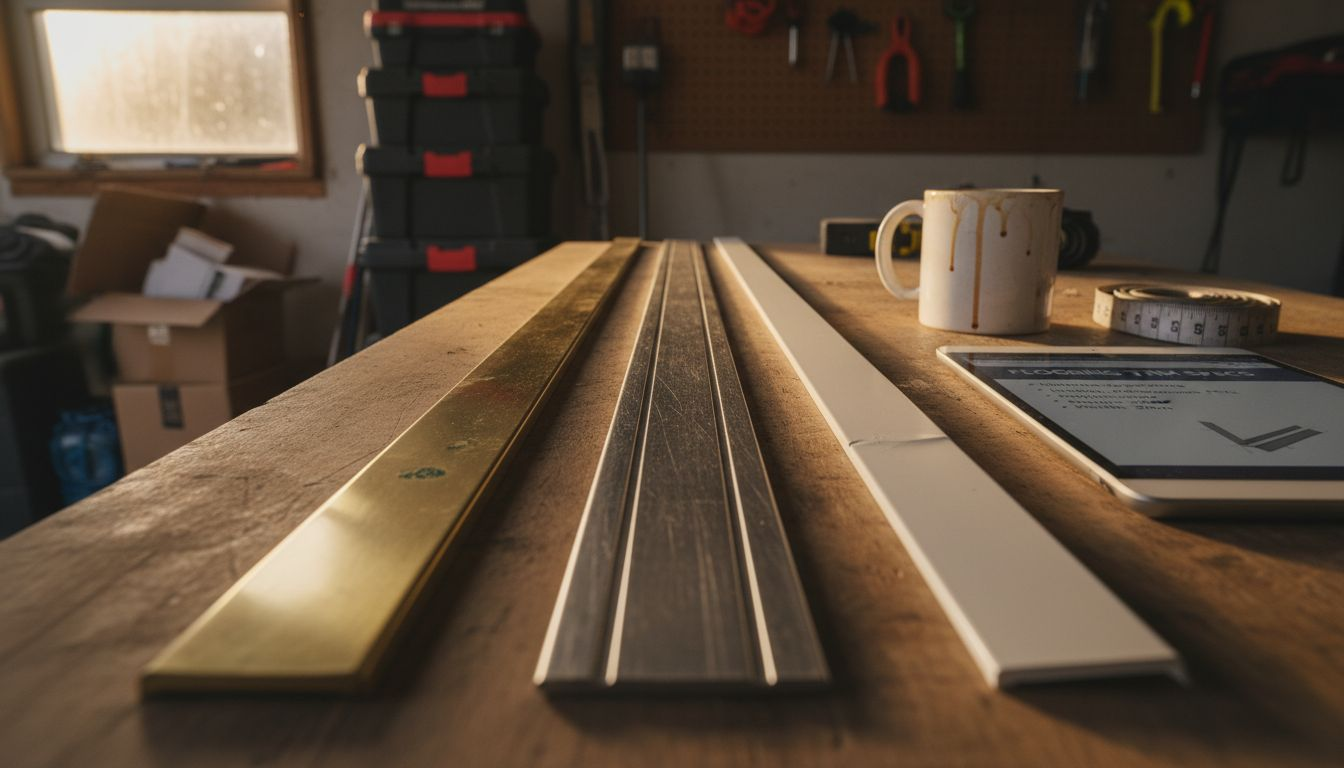
The hand finished metal construction resists bending that creates trip hazards over time. Cheaper materials lose their shape, allowing carpet edges to lift. Brass trims hold their profile permanently. This structural reliability translates directly to ongoing safety.
Aesthetic options in solid brass accommodate diverse interior design preferences:
- Antique brass for traditional and period properties
- Satin nickel for contemporary minimalist spaces
- Polished chrome for modern high gloss aesthetics
- Brushed finishes for subtle elegant transitions
- Custom patinas matching existing metalwork
Each finish undergoes hand finishing to ensure consistent quality. Unlike mass produced alternatives, these bespoke finishes integrate seamlessly with door furniture, light fixtures, and architectural details. The visual cohesion elevates overall interior design.
Maintenance requirements differ significantly by material. Brass trims require occasional cleaning with appropriate metal polish. Aluminum scratches permanently. PVC discolours and cannot be refinished. The longevity of brass justifies minimal maintenance effort.
Pro Tip: Match trim finish to existing door handles and light switch plates. This subtle coordination creates professional designer cohesion throughout your home without obvious matchy appearance.
Investing in superior materials prevents replacement costs and maintains safety standards year after year. Quality proves economical long term.
Safety, Durability, and Protection Benefits of Carpet Trims
Beyond aesthetics, carpet trims deliver measurable improvements to home safety and flooring longevity. Statistical evidence demonstrates their practical value.
Carpet trims reduce trip hazards by 30% and extend carpet lifespan by 20 to 30% by preventing edge damage. This dual benefit protects both residents and flooring investments. Trip and fall accidents frequently occur at flooring transitions where edges lift or height differences create unexpected obstacles.
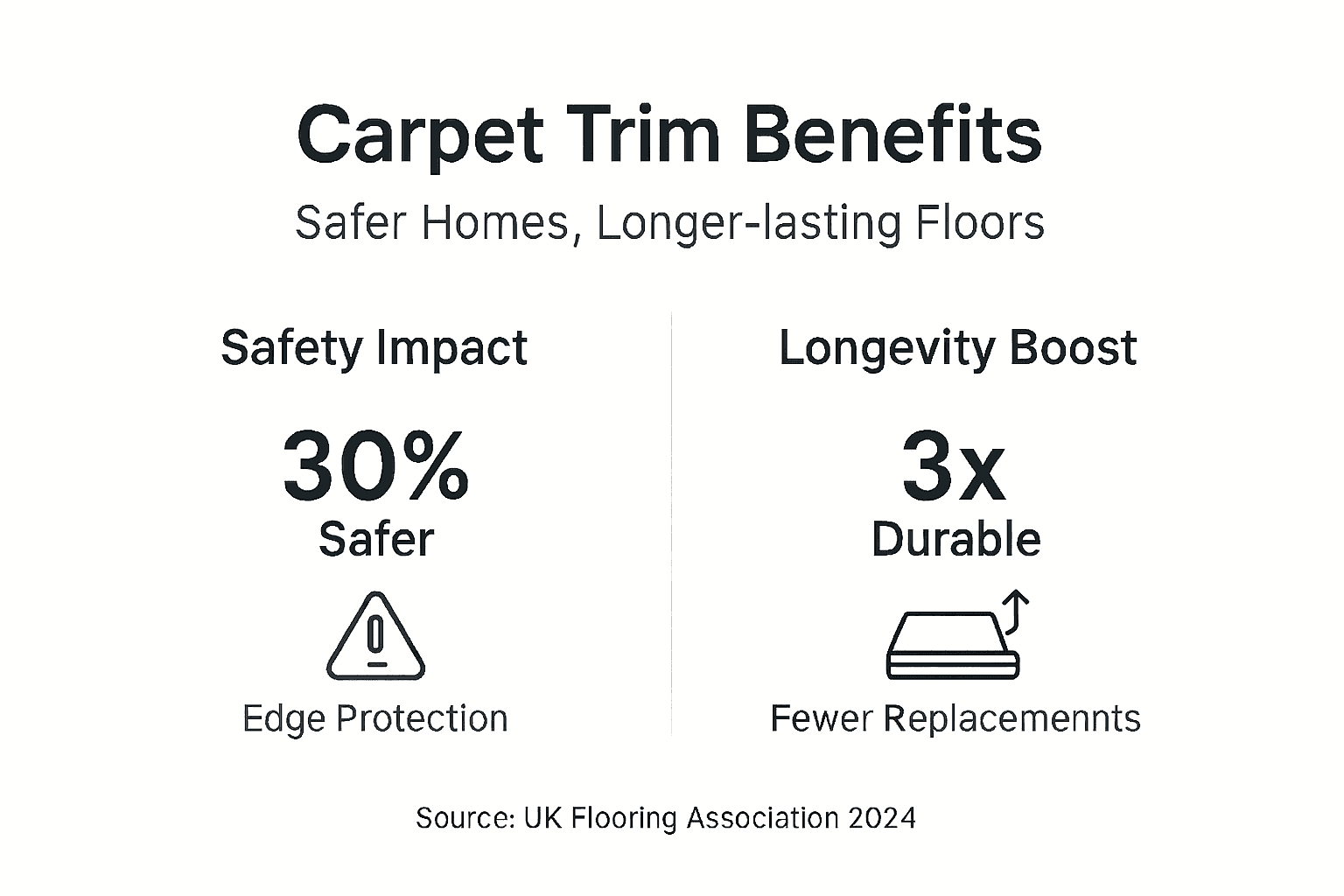
Secured carpet edges resist the lifting that causes trips. Unsecured edges curl upward with foot traffic, creating progressively worse hazards. Quality trims anchor edges permanently flat. This security proves especially critical in homes with mobility challenged residents.
Flooring protection extends carpet life significantly. Frayed edges spread inward, requiring premature replacement. Trims prevent initial fraying, maintaining carpet appearance and structural integrity. The 20 to 30% lifespan extension translates to years of additional use from your carpet investment.
Trims also cover expansion gaps essential for climate adaptation. UK homes experience temperature and humidity fluctuations causing flooring expansion and contraction. Uncovered gaps look unfinished and collect debris. Covered gaps maintain clean appearance while allowing necessary floor movement. This prevents buckling during humid summer months.
High traffic transition zones experience concentrated wear. Door thresholds and room entries see far more foot traffic than room centres. Unprotected carpet edges in these zones deteriorate rapidly. Metal trims distribute weight and friction across their surface rather than concentrating damage on carpet fibres. This protection maintains uniform appearance across the entire floor.
Key safety and durability benefits include:
- 30% reduction in trip hazard incidents at transitions
- 20 to 30% longer carpet service life
- Prevention of progressive edge fraying
- Coverage of expansion gaps preventing buckling
- Protection from concentrated wear in high traffic zones
Explore how proper installation can reduce trip hazards throughout your home. Professional trip hazard reduction makes homes safer for all residents.
Common Misconceptions About Carpet Trims
Several persistent myths prevent homeowners from making informed carpet trim decisions. Evidence based corrections clarify the reality.
-
All carpet trims offer equal durability and safety. Contrary to belief, solid brass trims significantly outperform other materials in durability and safety. Aluminum dents under normal use. PVC cracks with temperature changes. Brass maintains integrity indefinitely. Material quality directly determines both safety performance and replacement frequency.
-
Carpet trims serve purely decorative purposes. While aesthetic appeal matters, the primary function involves safety and protection. Trims prevent the 30% of trip incidents occurring at unsecured carpet edges. They extend carpet life by preventing fraying. Decoration remains secondary to these critical functions.
-
Any trim fits all flooring situations. Profile selection must match specific carpet pile height, underlay thickness, and adjacent floor height. Using incorrect profiles creates gaps, trip points, or visible carpet backing. Proper measurement and profile matching ensure safe seamless transitions. Universal trims do not exist in professional installations.
These misconceptions lead to poor purchasing decisions. Choosing cheap aluminum saves money initially but costs more through early replacement. Ignoring safety functions risks injury. Using wrong profiles creates the hazards trims should eliminate. Understanding truth versus myth enables smart renovation choices.
Installation Guidance: Measuring, Fitting, and Practical Tips
Proper installation requires precision measurement and careful fitting. Following systematic steps ensures professional results.
-
Measure carpet pile height accurately using a ruler pressed firmly into the carpet. Measure from subfloor to carpet surface. Record this dimension precisely. Measure underlay thickness separately if accessible. Add these measurements for total carpet assembly height. Measure adjacent hard floor height from the same subfloor reference. Calculate the difference between carpet and hard floor heights. This difference determines required trim profile.
-
Use wedges when underlay exceeds 6mm thickness. Thick underlay compresses unevenly without support, creating gaps under trim edges. Wedges provide gradual transition from carpet to hard floor. They ensure trim sits flush and stable. Install wedges before positioning trims for proper alignment.
-
Place gripper bars correctly to secure carpet under trim edges. Position grippers parallel to the transition line, offset by the carpet thickness. This allows carpet backing to stretch over gripper teeth and tuck under the trim. Incorrect gripper placement prevents secure carpet anchoring.
-
Tuck carpet edges neatly under trim lips. Use a bolster chisel or similar flat tool to push carpet backing firmly into place. Ensure no backing shows above the trim. Smooth any ripples or bunching. Properly tucked edges look professional and stay secured.
Installation typically takes about 2 hours for standard doorway transitions and requires precise measurement of pile, underlay, and floor height. Rushing measurements causes costly errors. Allow adequate time for careful work.
Pro Tip: Measure twice, cut once. Double check all measurements before cutting trims to length. Metal trims cannot be lengthened after cutting. Verify measurements at multiple points along the transition, as floors may not be perfectly level.
Consult the detailed installation guide for visual instructions and troubleshooting common fitting challenges.
Choosing the Right Carpet Trim for Your Home: Style and Function Considerations
Balancing aesthetics with practical requirements ensures optimal trim selection for your renovation project. Several factors guide decision making.
Match metal finish to existing interior design themes. Traditional homes benefit from antique brass warmth. Contemporary spaces suit satin nickel or chrome. Coordinate trim finish with door hardware, light fixtures, and cabinet pulls. This subtle consistency creates cohesive professional design.
Choose trim profile according to measured carpet and flooring heights. Refer to measurements taken during installation planning. Select profiles specifically designed for your height difference. Using correct profiles prevents gaps and trip hazards while ensuring proper carpet securing.
Prioritize solid brass trims for maximum durability and safety. Initial cost differences prove minimal compared to replacement expenses. Brass trims last decades while aluminum requires replacement within years. The performance gap justifies premium material investment.
Consider maintenance requirements and expected foot traffic. High traffic areas demand more durable finishes. Brushed finishes hide minor scratches better than polished surfaces. Assess realistic cleaning commitment before selecting high maintenance finishes.
| Finish Type | Durability Rating | Best For | Maintenance Level |
|---|---|---|---|
| Antique Brass | Excellent | Traditional interiors | Low |
| Satin Nickel | Excellent | Contemporary spaces | Low |
| Polished Chrome | Very Good | Modern high gloss | Medium |
| Brushed Bronze | Excellent | Rustic or industrial | Very Low |
| Custom Patina | Excellent | Unique design schemes | Low |
Key selection considerations include:
- Coordination with existing metalwork and fixtures
| Profile compatibility with measured flooring heights - Material durability for expected traffic levels
- Maintenance requirements matching your lifestyle
- Aesthetic integration with overall design scheme
Review the comprehensive guide to selecting carpet trims for detailed selection criteria addressing your specific renovation needs.
Explore High Quality Carpet Trims for Your Home Renovation
Now that you understand how proper carpet trims enhance safety, durability, and aesthetics, explore premium options designed for UK homes. Quality Carpet Trims offers solid brass profiles in multiple finishes, all hand finished to exacting standards.
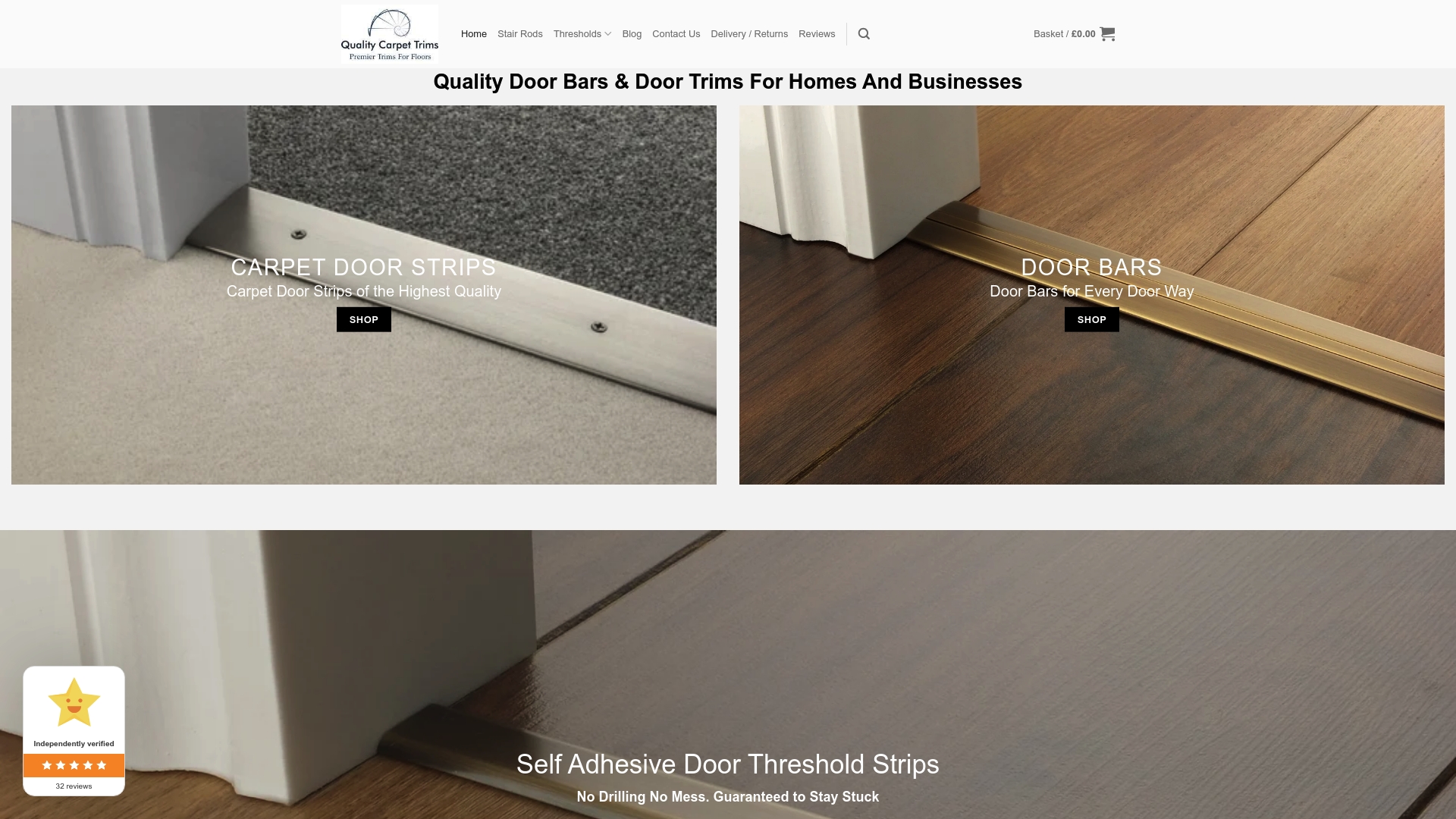
Browse carpet edge trims for secure finishing at room perimeters. Discover carpet to carpet trims creating seamless transitions between rooms. Examine matwell flooring trims for entrance areas requiring robust protection. Each product includes detailed specifications and installation guidance. Expert support helps match profiles to your measurements. Fast UK delivery brings professional results to your renovation project quickly.
Frequently Asked Questions About Carpet Trims
What is the best material for carpet trims in UK homes?
Solid brass provides superior durability, lasting three times longer than aluminum or PVC alternatives. Brass resists denting, maintains its finish under heavy traffic, and offers hand finished aesthetic options matching any interior design scheme.
How do I measure for the correct carpet trim size?
Measure carpet pile height from subfloor to surface, then measure underlay thickness separately. Add these measurements together. Measure adjacent floor height from the same subfloor reference. The difference determines which profile accommodates your transition safely.
Can carpet trims help prevent trip hazards?
Yes, properly installed carpet trims reduce trip hazards by 30% by securing carpet edges flat and preventing lifting. They eliminate the abrupt height changes and loose edges responsible for most transition related falls.
How long does a professional installation of carpet trims take?
Standard doorway transitions typically require about 2 hours including measurement, cutting, and fitting. Complex installations with multiple transitions or height adjustments may take longer. Careful measurement prevents delays from fitting errors.
Are solid brass trims worth the extra cost compared to aluminum?
Absolutely. Brass trims last three times longer, eliminating replacement costs within several years. They maintain safety performance permanently while aluminum dents and loses effectiveness. The durability and safety benefits justify the modest initial premium.
Recommended
- What Is Carpet Edge Trim? 30% Safer, 3x More Durable
- Carpet To Carpet Trim – Quality Carpet Trims
- Carpet Edge Trim – Carpet Trim Solutions | Quality Carpet Trims