
Blog
What is a floor threshold? A practical UK guide

Mar
Many homeowners believe floor thresholds are purely decorative touches, but this overlooks their essential role in safety, durability, and regulatory compliance. Floor thresholds bridge different flooring surfaces, prevent trips, manage moisture, and meet UK accessibility standards. Whether you’re renovating a period property or designing a modern extension, understanding threshold types, materials, and installation methods ensures smooth transitions that enhance both function and aesthetics. This guide clarifies common misconceptions and equips you with practical knowledge for choosing and installing the right floor thresholds in your UK home.
Table of Contents
- Key takeaways
- What is a floor threshold and why does it matter?
- Common floor threshold materials and their uses
- Navigating UK regulations and installation considerations
- Comparing flush vs raised floor thresholds: which is right for your project?
- Explore quality floor thresholds and trims for your project
- Frequently asked questions
Key Takeaways
| Point | Details |
|---|---|
| Threshold types explained | Different thresholds support standard doorways, wider openings, ramp requirements and weather protection to suit various transitions. |
| UK regulatory guidance | Threshold design must meet accessibility and safety standards set by BS 8300 and Part M to aid mobility. |
| Material choices by use | Aluminium and stainless steel offer durability for high traffic, while PVC and rubber suit wet areas and cost considerations. |
| Installation methods vary | Fixing approaches depend on floor type, subfloor condition and whether thresholds are flush or raised. |
What is a floor threshold and why does it matter?
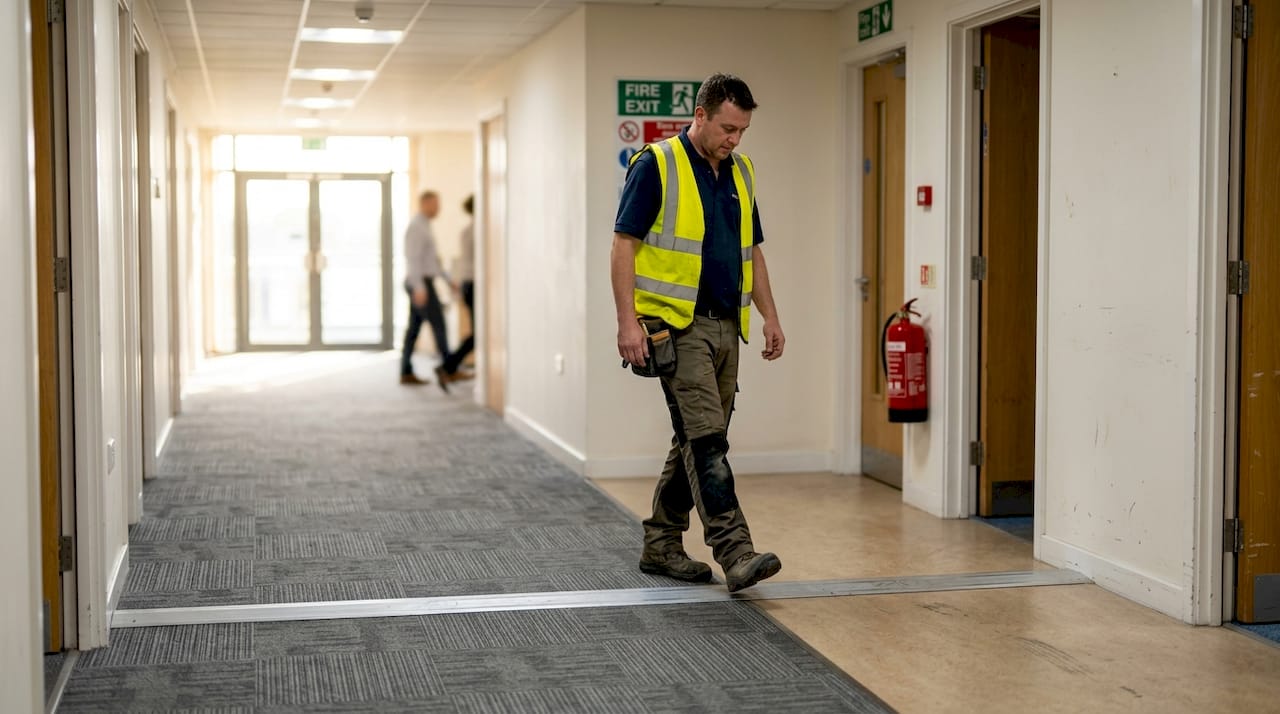
A floor threshold is a transitional strip installed where two different flooring surfaces meet, typically in doorways, between rooms, or at level changes. These profiles create smooth joins between materials like carpet, laminate, vinyl, and tile, preventing gaps that collect debris or create trip hazards. Beyond aesthetics, thresholds perform critical functions: they protect flooring edges from damage, seal against draughts and moisture, and accommodate natural movement in floating floor systems.
The role of flooring thresholds extends to regulatory compliance. UK standards require thresholds to reduce trip hazards and meet accessibility laws, particularly in public buildings and new residential construction. BS 8300 and Part M of Building Regulations specify maximum heights, slopes, and design criteria to ensure wheelchair users and people with mobility challenges can navigate transitions safely. Fire safety regulations also govern threshold specifications for fire doors, limiting gaps to maintain compartmentation.
Different threshold types serve specific purposes:
- Single door thresholds bridge flooring at standard doorways
- Double door thresholds accommodate wider openings and French doors
- Ramp profiles manage level changes between floors of different heights
- Weatherbar thresholds protect external doorways from rain and wind
- Expansion joint covers allow movement in large floor areas
Typical applications include connecting hardwood to carpet in hallways, joining laminate to tile at bathroom entrances, and creating weatherproof seals at external doors. Each scenario demands careful consideration of material durability, profile height, fixing method, and compliance with relevant standards.
“Thresholds are not optional details but essential components that influence safety, longevity, and legal compliance in every flooring project.”
Choosing the wrong threshold type or installing it incorrectly can create trip hazards, void flooring warranties, or fail building inspections. Understanding their purpose and selection criteria is fundamental to successful flooring installations.
Common floor threshold materials and their uses
Material selection significantly impacts threshold performance, longevity, and visual integration with your interior design. Materials include aluminium, stainless steel, PVC, rubber, and brass for specific durability and design needs, each offering distinct advantages depending on location and traffic patterns.
Aluminium thresholds dominate commercial and high-traffic residential applications due to their strength, corrosion resistance, and affordability. These profiles handle heavy footfall without deforming and resist moisture damage in kitchens and bathrooms. Anodised or powder-coated finishes provide colour options matching contemporary interiors. Stainless steel offers superior durability and a premium aesthetic, ideal for luxury properties or areas requiring exceptional hygiene standards like medical facilities.
PVC and rubber thresholds excel in wet environments where flexibility and waterproofing matter most. These materials absorb minor substrate movement without cracking, making them suitable for bathrooms, utility rooms, and commercial kitchens. Rubber profiles provide slip resistance and cushioning, reducing noise transmission between floors. However, both materials offer less visual refinement than metal alternatives and may discolour over time with UV exposure.
Brass thresholds suit period properties and decorative applications where ornate detailing enhances traditional aesthetics. The warm metallic finish complements wooden floors and classic door furniture. Brass requires regular polishing to maintain its lustre and develops a natural patina that some homeowners find appealing. These thresholds work best in low-traffic areas where wear resistance is less critical.
Pro Tip: Always request samples before purchasing thresholds to assess how finishes coordinate with your flooring, skirting, and door furniture under your home’s specific lighting conditions.
Material performance varies by environment:
| Material | Best for | Avoid in | Typical lifespan |
|---|---|---|---|
| Aluminium | High traffic, wet areas | Period properties requiring traditional aesthetics | 15-20 years |
| Stainless steel | Premium installations, hygiene-critical spaces | Budget-conscious projects | 25+ years |
| PVC | Wet zones, flexible substrates | High-traffic commercial areas | 10-15 years |
| Rubber | Slip-prone areas, noise reduction | Formal reception rooms | 8-12 years |
| Brass | Period properties, decorative features | Wet areas, heavy traffic | 20+ years with maintenance |
Your choice should balance functional requirements with design preferences. Consider traffic levels, moisture exposure, substrate type, and visual compatibility. Metal door bar threshold options provide durable solutions for most residential applications, whilst specialist profiles address unique challenges like underfloor heating or uneven subfloors.
Navigating UK regulations and installation considerations
Understanding UK building standards ensures your threshold installation meets legal requirements whilst avoiding common pitfalls that compromise performance. BS 8300 and Equality Act set slopes and height limits; fire doors capped at 6mm gap with hardwood threshold to maintain compartmentation and prevent smoke spread. These specifications apply particularly to new builds, extensions, and commercial premises, though best practice recommends following them in all installations.
Accessible threshold design requires careful attention to profile height and slope. Ramps connecting different floor levels must not exceed a 1:12 gradient to accommodate wheelchair users safely. Upstands at doorways should remain below 15mm where possible, with bevelled edges to reduce trip risk. External thresholds balancing weather protection with accessibility often incorporate concealed drainage channels rather than raised weatherbars.
Fire door thresholds present specific challenges. The 6mm maximum gap beneath fire doors prevents smoke infiltration whilst allowing door operation. Hardwood or intumescent thresholds expand under heat to seal this gap during fire events. Installing thresholds that exceed this dimension or using inappropriate materials can void fire certification and create serious safety risks.
Installation approaches vary for uneven subfloors, floating floors, wet areas and areas with underfloor heating, requiring adapted techniques:
- Assess subfloor condition before selecting threshold type and fixing method
- Check for underfloor heating pipes using thermal imaging or installation plans
- Choose adhesive fixing where screwing risks pipe damage or substrate integrity
- Allow expansion gaps for floating floors to prevent buckling and warranty issues
- Install waterproof membranes beneath thresholds in wet areas before fixing profiles
Underfloor heating systems demand particular care. Never screw through floors with embedded heating elements, as puncturing pipes causes expensive damage and system failure. Adhesive-fixed thresholds or surface-mounted profiles with edge screws into walls provide safer alternatives. Always consult heating system documentation before drilling.
Floating floor installations require thresholds that accommodate natural expansion and contraction. Fix threshold profiles to the subfloor or doorframe, never to the floating floor itself. This allows the floor to move independently beneath the threshold, preventing buckling during seasonal humidity changes. Transition strips for uneven floors often incorporate flexible elements that mask minor level differences whilst permitting movement.
Wet area installations benefit from thresholds with integrated water barriers. Seal the threshold base with flexible waterproof adhesive or membrane, ensuring water cannot penetrate beneath the profile. Slope floors slightly away from dry areas to encourage drainage. Laminate flooring threshold strips designed for bathrooms often include rubber gaskets that compress against flooring edges, creating watertight seals.
Pro Tip: When installing thresholds on uneven subfloors, use self-levelling compound to create a flat fixing surface rather than forcing profiles to conform to dips and humps, which creates stress points and premature failure.
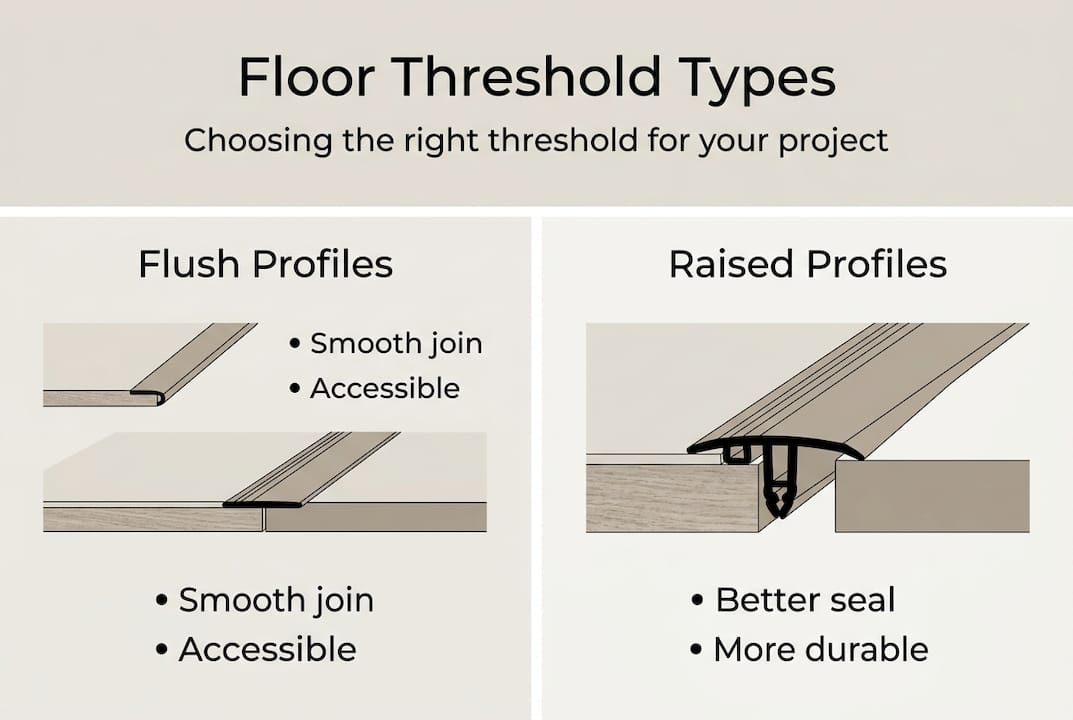
Raised versus flush thresholds present distinct installation considerations. Raised profiles offer simpler installation with surface-mounted fixing, whilst flush thresholds require precise recess cutting into subfloors. External applications typically demand raised weatherbar designs for superior water resistance, whilst internal accessible routes prioritise flush profiles.
Comparing flush vs raised floor thresholds: which is right for your project?
The choice between flush and raised threshold profiles fundamentally shapes accessibility, weather performance, and visual integration in your flooring project. Each approach offers specific advantages depending on location, usage, and design priorities.
Flush thresholds enable seamless indoor-outdoor flow and accessibility but may need concealed drainage to handle weather in the UK. These profiles sit level with surrounding floor surfaces, eliminating trip hazards and creating continuous sightlines between spaces. Modern bifold and sliding door systems increasingly specify flush thresholds to maximise the connection between interior living areas and gardens or patios.
Accessibility benefits make flush thresholds essential in inclusive design. Wheelchair users navigate level transitions effortlessly, whilst people using walking aids face no obstruction. Part M compliance typically requires flush or near-flush profiles in accessible dwellings, making this choice mandatory rather than optional in many new builds and adaptations.
However, flush thresholds present weatherproofing challenges at external doorways. Without a raised barrier, wind-driven rain can penetrate beneath doors during storms. Solutions include:
- Concealed drainage channels that collect and divert water
- Sloped external paving directing water away from thresholds
- Enhanced door seals with compression gaskets
- Covered porch or canopy protection reducing direct weather exposure
These measures add cost and complexity but deliver the aesthetic and accessibility benefits flush designs provide.
Raised or weathered thresholds offer superior weather protection through physical barriers that deflect water and block draughts. Traditional designs incorporate upstands of 15-25mm that prevent rain ingress even during severe weather. This makes them ideal for exposed locations, period properties maintaining historical detailing, or budget-conscious projects where concealed drainage is impractical.
Durability advantages favour raised thresholds in high-traffic areas. The elevated profile protects flooring edges from impact damage as people and equipment cross the threshold. Commercial premises and busy family homes benefit from this additional resilience, extending flooring lifespan and reducing maintenance.
The accessibility compromise requires honest assessment. Raised thresholds create minor trip hazards, particularly for people with mobility challenges or visual impairments. Bevelled edges and contrasting colours mitigate but do not eliminate this risk. Regulations permit raised thresholds in existing buildings where flush alternatives prove impractical, but new construction faces stricter requirements.
| Feature | Flush thresholds | Raised thresholds |
|---|---|---|
| Accessibility | Excellent for wheelchairs and mobility aids | May create trip hazards |
| Weather resistance | Requires drainage solutions | Superior rain and draught protection |
| Visual impact | Seamless, contemporary aesthetic | Traditional, defined transition |
| Installation complexity | Higher, requires subfloor recessing | Lower, surface-mounted |
| Suitable locations | Internal doorways, accessible routes, modern extensions | External doors, period properties, high-traffic areas |
| Cost | Higher due to drainage and preparation | Lower for standard installations |
Your decision should weigh location-specific factors. Internal thresholds between rooms rarely need weather protection, making flush profiles attractive for their clean appearance and accessibility. External doorways in sheltered positions with good drainage may suit flush designs, whilst exposed entrances demand raised weatherbars. Matwell flooring trim options provide intermediate solutions for entrance areas, combining recessed mats with protective thresholds.
“The best threshold choice balances practical performance with design intent, recognising that no single solution suits every application.”
Consider future needs when selecting profiles. Homes designed for long-term occupation should prioritise accessibility even if current residents face no mobility challenges. Flush thresholds future-proof properties against changing needs whilst enhancing resale appeal to buyers seeking inclusive design.
Explore quality floor thresholds and trims for your project
Having explored threshold types, materials, and installation considerations, you need reliable suppliers offering products that meet UK standards and suit your specific requirements. Quality Carpet Trims provides an extensive range of matwell flooring trims and threshold solutions designed for residential and commercial applications. Their hand-finished solid metal profiles deliver durability and aesthetic refinement that inferior alternatives cannot match. Comprehensive guides help you understand flooring trim types explained, ensuring you select the right profile for your floor combination and installation scenario.
Browse their complete threshold strips range to find profiles matching your project specifications, with expert support available to answer technical questions about compatibility, fixing methods, and finish coordination. British-made quality and fast delivery support both DIY enthusiasts and professional installers achieving seamless flooring transitions.
Frequently asked questions
What is a floor threshold?
A floor threshold is a transitional profile installed where two different flooring surfaces meet, creating a smooth join that prevents trips and protects flooring edges. These strips bridge materials like carpet to laminate or tile to hardwood, accommodating level differences and sealing against draughts. Thresholds serve functional roles including moisture management, edge protection, and compliance with UK accessibility standards.
What is the difference between a threshold and a transition strip?
The terms are often used interchangeably, though subtle distinctions exist in professional contexts. Thresholds traditionally refer to profiles at doorways, particularly external doors requiring weather protection. Transition strips describe any profile joining different flooring types, whether at doorways or open-plan room boundaries. Functionally, both create smooth flooring joins, with specific designs optimised for internal or external applications.
Which materials suit wet areas best?
Aluminium and PVC thresholds perform excellently in wet environments due to corrosion resistance and waterproof properties. Aluminium offers superior durability for high-traffic bathrooms and commercial kitchens, whilst PVC provides flexibility that accommodates substrate movement. Both materials resist moisture damage that would degrade wood or cause metal corrosion. Ensure proper sealing beneath any threshold in wet areas using waterproof adhesive or membrane systems.
How do I choose the right material for my floor threshold?
Material choice depends on balancing durability requirements with aesthetic preferences and budget constraints. Aluminium and stainless steel suit high-traffic areas and wet zones, offering longevity and low maintenance. Brass provides decorative appeal for period properties but requires regular polishing. Consider traffic levels, moisture exposure, and visual coordination with existing finishes. Request samples to assess how materials appear under your home’s lighting before committing to purchases.
What are the installation options for uneven floors?
Screw-down thresholds provide solid fixing on uneven subfloors, with screws driven into solid areas and shims filling voids beneath profiles. Adhesive fixing suits situations where screwing risks damaging underfloor heating or where substrate cannot accept fixings. Transition strips for uneven floors often incorporate flexible bases that conform to minor irregularities. For significant level differences, use self-levelling compound to create flat surfaces before threshold installation.
Are floor thresholds necessary for accessibility compliance?
UK standards (BS 8300) require low or ramped thresholds for wheelchair access in new builds and public buildings. Thresholds must not exceed 15mm height where possible, with ramps not steeper than 1:12 gradient. Flush profiles offer optimal accessibility, eliminating trip hazards entirely. Existing buildings may use raised thresholds where flush alternatives prove impractical, though best practice recommends accessible designs throughout to future-proof properties.
Can floor thresholds help reduce trip hazards?
Properly designed thresholds reduce trip hazards by smoothing level changes between different flooring types and heights. Low-profile or tapered designs minimise obstruction whilst protecting flooring edges. Contrasting colours help people with visual impairments identify transitions. However, poorly installed or excessively raised thresholds create rather than prevent trip risks, making careful selection and professional installation essential for safety.
Recommended
- Threshold Strips Guide for UK Homes: Types, Uses and Sizing – Quality Carpet Trims
- Understand the role of flooring thresholds for a perfect finish
- Why Use Laminate Thresholds – Practical Benefits Explained
- Discover Top Laminate Flooring Threshold Strips – Quality Carpet Trims