
Blog
What is a carpet transition? Your 2026 pro guide

Mar
Many homeowners assume carpet transitions are purely decorative, a finishing touch to make floors look neat. In reality, these essential components serve critical structural and safety functions in both residential and commercial properties. A carpet transition manages the junction between different flooring surfaces, prevents trip hazards, accommodates material expansion, and ensures compliance with UK building regulations. This guide explains the types available, their practical applications, proper installation methods, and how to select the right solution for your specific project requirements.
Table of Contents
- What Is A Carpet Transition And Why Is It Essential?
- Types Of Carpet Transitions And Suitable Applications
- How To Install Carpet Transitions Properly
- Choosing The Right Carpet Transition For Your UK Project
- Explore Premium Carpet Transition Trims At Quality Carpet Trims
- Frequently Asked Questions
Key takeaways
| Point | Details |
|---|---|
| Definition and purpose | Carpet transitions connect different floor surfaces whilst reducing trip hazards and managing height differences |
| Multiple types available | Metal strips, reducer strips, and thresholds suit various applications from carpet to tile or hardfloor junctions |
| Installation methods vary | Securing techniques include adhesive, nails, or Z-bars depending on floor type and traffic levels |
| Material selection matters | Solid metal options offer superior durability and longevity compared to vinyl or composite alternatives |
| UK compliance essential | Proper transitions meet accessibility standards and building regulations for safety and warranty protection |
What is a carpet transition and why is it essential?
A carpet transition is a specialised connector installed at the junction between different flooring surfaces or where floor heights change. These components create a smooth passage from carpet to tile, laminate, vinyl, or hardfloor materials whilst managing the structural challenges that occur where dissimilar surfaces meet. The primary function extends far beyond aesthetics.
Carpet transitions serve several critical roles in flooring systems. They eliminate trip hazards by creating gradual height changes rather than abrupt edges. Flooring transitions manage junctions between different floor surfaces affecting slip resistance and performance, which directly impacts safety in both domestic and commercial environments. These components also allow for natural expansion and contraction of flooring materials, preventing buckling or gaps that compromise appearance and function.
Compliance with accessibility and fire safety standards represents another essential function. UK building regulations require specific transition profiles in commercial premises and increasingly in residential new builds. Properly installed transitions maintain floor warranty conditions, as many manufacturers specify approved connection methods between their products and adjacent surfaces. Without appropriate transitions, warranties may become void.
The long term maintenance implications cannot be overlooked. Quality transitions protect vulnerable floor edges from damage caused by foot traffic, wheeled equipment, or cleaning activities. They contain flooring materials securely, preventing fraying carpet edges or lifting laminate planks that create ongoing repair costs.
Key benefits of proper carpet transitions:
- Reduce accident liability through elimination of trip hazards
- Preserve flooring warranties by meeting manufacturer specifications
- Extend floor lifespan by protecting vulnerable edges
- Facilitate easier cleaning and maintenance routines
- Enhance property value through professional finishing
Pro Tip: Planning transition locations during the design phase allows for optimal placement that considers traffic flow, furniture arrangement, and door swing patterns, avoiding costly adjustments after installation.
Types of carpet transitions and suitable applications
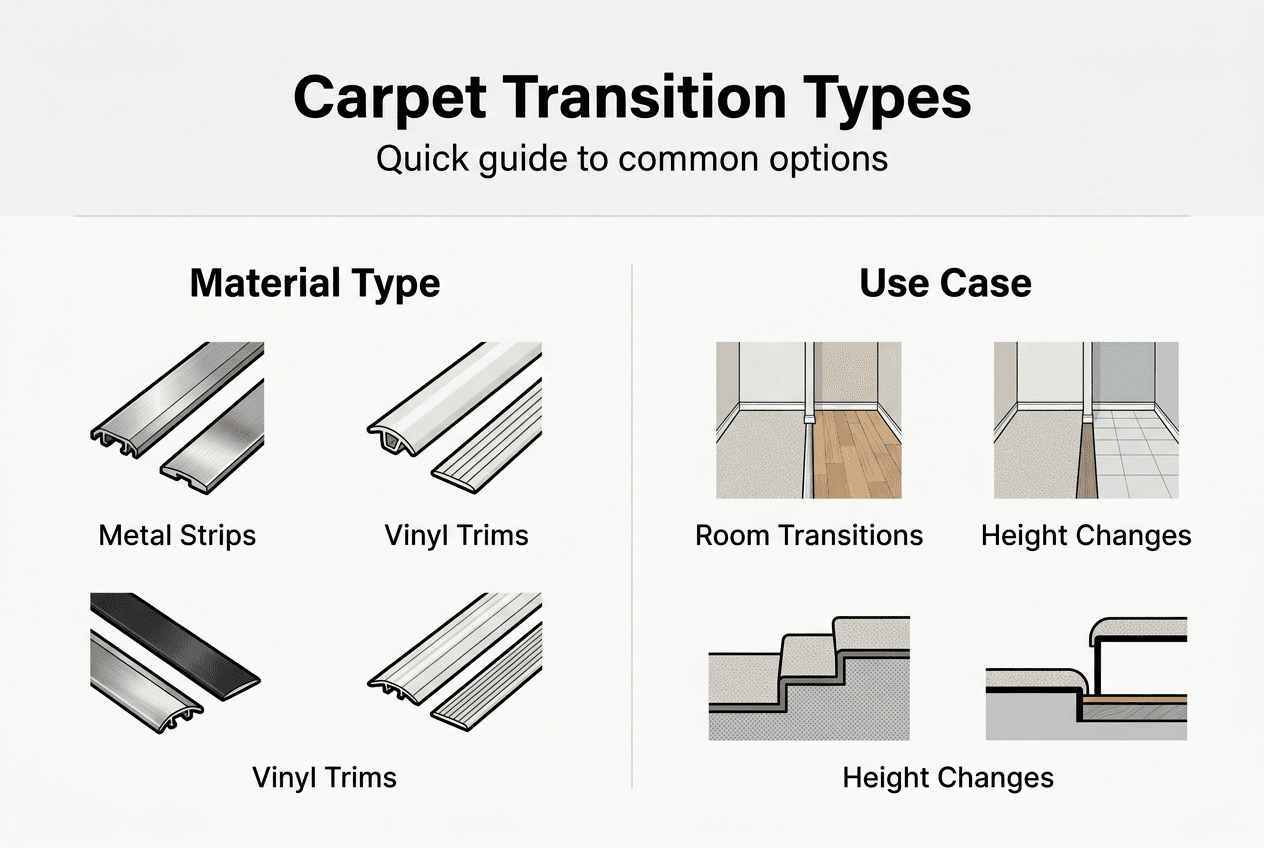
Selecting the appropriate transition type depends on the specific flooring junction, height difference, and intended use. Understanding the characteristics of each option enables informed decisions that balance performance, aesthetics, and budget considerations.
Metal strips represent the most durable solution for high traffic areas. Metal transition strips such as aluminium and brass are durable and ideal for high traffic areas, providing long lasting performance in commercial premises, hallways, and doorways. Solid brass and bronze options offer superior wear resistance compared to aluminium or composite materials. These strips typically feature a visible top surface with various finish options to complement interior schemes.
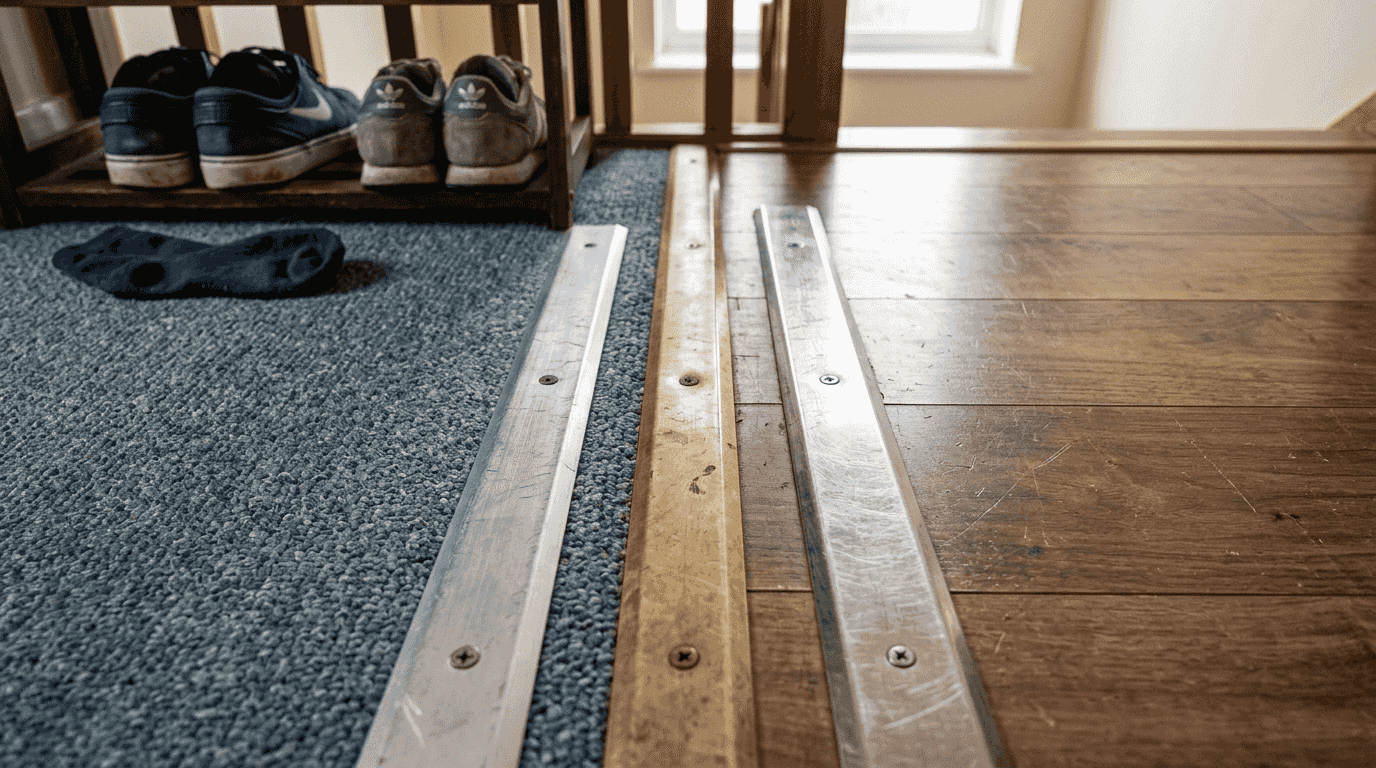
Reducer strips create smooth transitions where floor heights differ by 5mm to 15mm. Reducer strips create smooth descents between floor heights especially in hallways and sliding doors, making them essential for connecting carpet to lower vinyl or tile surfaces. The gradual slope prevents tripping whilst maintaining an aesthetically pleasing profile. These work particularly well in open plan layouts where different flooring zones meet.
Threshold strips serve doorways and room entrances, providing a defined boundary between spaces. Available in various heights and profiles, they accommodate both level transitions and moderate height differences. Door bars specifically designed for high traffic doorways withstand constant use whilst maintaining their appearance.
Edge trims secure carpet perimeters where they meet walls, steps, or other vertical surfaces. These components prevent fraying and provide a clean finished edge that enhances the professional appearance of carpet installations.
| Transition Type | Best Applications | Typical Lifespan | Installation Complexity |
| — | — | — |
| Solid metal strips | High traffic commercial areas, main doorways | 15-25 years | Moderate |
| Reducer strips | Height transitions, carpet to vinyl junctions | 10-20 years | Moderate to high |
| Threshold bars | Doorways, room entrances | 15-25 years | Low to moderate |
| Edge trims | Stair nosings, wall perimeters | 10-15 years | Low |
Material considerations for different scenarios:
- Brass and bronze: Superior durability for commercial premises and heavy domestic use
- Powder coated metal: Colour matched options for contemporary interior schemes
- Low profile designs: Accessibility compliant solutions for wheelchair users
- Wide strips: Coverage for larger gaps or irregular junctions
The choice between carpet to carpet trims and carpet to hardfloor trims depends on the specific flooring combination. Same surface transitions require different profiles compared to mixed material junctions, affecting both appearance and performance.
How to install carpet transitions properly
Professional installation ensures carpet transitions perform their safety and structural functions whilst maintaining aesthetic appeal. Poor fitting compromises durability, creates trip hazards, and may void flooring warranties. Following systematic procedures produces reliable results.
Preparation steps:
- Clean both floor surfaces thoroughly, removing dust, debris, and old adhesive residues
- Measure the transition length precisely, accounting for door frame widths or wall to wall spans
- Check floor height differences to select appropriate reducer or level transition profiles
- Verify subfloor condition, ensuring it provides adequate support for fixing methods
- Test fit the transition strip before permanent securing to confirm alignment and appearance
Securing methods selection:
Proper installation involves securing strips via adhesive, nails, or Z-bars to ensure durability, with each method suited to specific conditions. Adhesive fixing works well for solid subfloors and low to moderate traffic areas, providing invisible securing without surface penetration. High quality construction adhesive ensures long term bonding that withstands cleaning and foot traffic.
Nail or screw fixing offers maximum security for high traffic locations and commercial installations. Pre-drilling prevents metal strip cracking whilst ensuring precise placement. Countersunk screws sit flush with the transition surface, maintaining a smooth profile. This method allows for future removal if flooring replacement becomes necessary.
Z-bar systems provide professional results for carpet edges, gripping the carpet backing securely whilst the visible metal strip covers the junction. This approach works particularly well for carpet to tile transition strips where height differences require secure carpet retention.
Common installation pitfalls to avoid:
- Inadequate surface preparation leading to poor adhesive bonding
- Incorrect measurements resulting in gaps or overlapping strips
- Over-tightening screws that crack or distort metal profiles
- Misalignment creating trip hazards or unsightly appearance
- Using inappropriate fixing methods for specific floor types
Pro Tip: For transition strips for uneven floors, flexible profiles accommodate minor subfloor irregularities whilst maintaining a safe walking surface, avoiding the need for extensive floor levelling work.
The installation sequence matters significantly. Install transitions after completing adjacent flooring but before final skirting or door frame fitting. This timing ensures accurate measurements and allows for adjustments without disturbing finished elements. Allow adhesives to cure fully before subjecting transitions to foot traffic, typically 24 hours for most products.
Choosing the right carpet transition for your UK project
Selecting appropriate carpet transitions requires evaluating multiple factors that influence performance, compliance, and aesthetic integration. Systematic assessment ensures the chosen solution meets both immediate installation needs and long term durability requirements.
Traffic load represents the primary consideration. Commercial premises, rental properties, and family homes with children require robust solutions that withstand constant use. Solid metal transitions outperform composite or vinyl alternatives in these demanding environments, justifying their higher initial cost through extended lifespan and reduced maintenance.
Height differences between adjacent floors dictate profile selection. Level transitions suit floors of equal height, whilst reducer strips accommodate differences up to 15mm. Larger height variations may require ramped transitions or architectural solutions that meet accessibility standards. Measuring accurately prevents selecting inadequate profiles that create trip hazards.
Aesthetic considerations influence finish selection. Modern interiors favour brushed or satin metal finishes that complement contemporary schemes, whilst traditional properties may suit brass or bronze options. Colour matched powder coated finishes integrate seamlessly with specific flooring tones, creating cohesive visual flow between spaces.
UK specific regulatory requirements:
- Approved Document M specifies maximum transition heights for accessible dwellings
- Commercial premises must meet Equality Act 2010 accessibility provisions
- Fire safety regulations affect transition materials in escape routes
- Building Control approval may be required for significant floor level changes
Transition strips serve both practical and aesthetic purposes maintaining warranty conditions and preventing hazards, making compliance verification essential during product selection. Manufacturers typically provide certification documentation confirming regulatory compliance.
| Selection Factor | Budget Option | Mid-Range Choice | Premium Solution |
| — | — | — |
| Material durability | Composite strips | Powder coated metal | Solid brass or bronze |
| Expected lifespan | 5-10 years | 10-15 years | 15-25 years |
| Traffic suitability | Light domestic | Moderate domestic | Heavy commercial |
| Maintenance needs | Regular replacement | Occasional refinishing | Minimal upkeep |
| Installation cost | Low | Moderate | Moderate to high |
Budget allocation should consider total lifetime costs rather than initial purchase price alone. Premium transitions that last 20 years represent better value than budget options requiring replacement every 5 years, particularly when installation labour costs are factored. Professional contractors typically recommend investing in quality transitions for permanent installations.
Pro Tip: Planning transitions during the project design stage allows for coordinated flooring heights, optimised door clearances, and strategic placement that enhances traffic flow whilst minimising material waste and installation complexity.
Understanding flooring trim types explained and flooring trim terminology UK ensures clear communication with suppliers and installers. Precise terminology prevents ordering incorrect profiles that delay projects or require costly returns.
Explore premium carpet transition trims at Quality Carpet Trims
When your flooring project demands professional grade transitions that combine durability with aesthetic appeal, Quality Carpet Trims offers comprehensive solutions tailored for UK residential and commercial applications. Our range includes solid metal door bars hand finished in ten beautiful finishes, designed to complement any interior scheme whilst providing long lasting performance.

Browse our specialist matwell flooring trim collection for entrance areas requiring robust, dirt trapping solutions. Our detailed flooring trim types explained guide helps you select the optimal profile for your specific junction requirements. Understanding industry terminology flooring trims ensures you order precisely the right products for your project, avoiding delays and compatibility issues. Quality Carpet Trims exclusively supplies solid metal products, rejecting inferior aluminium, wooden, stainless steel, or PVC alternatives that compromise performance and longevity.
Frequently asked questions
What makes a good carpet transition?
A quality carpet transition features solid construction that withstands regular foot traffic without bending, cracking, or losing its finish. The profile should create a smooth walking surface that eliminates trip hazards whilst securely holding adjacent flooring materials. Proper installation with appropriate fixing methods ensures long term performance. Visit what is carpet transition for detailed specifications.
How do metal strips compare to wood or vinyl?
Metal strips offer superior durability and longevity compared to wood or vinyl alternatives, particularly in high traffic areas. Solid brass and bronze resist wear, maintain their appearance for decades, and require minimal maintenance. Wood transitions can warp with moisture exposure, whilst vinyl options may crack under heavy use or temperature fluctuations. Metal provides the most reliable long term solution.
Are carpet transitions required by UK building regulations?
UK building regulations mandate appropriate transitions in specific circumstances, particularly for accessibility compliance in commercial premises and new residential developments. Approved Document M specifies maximum height differences at floor junctions, requiring suitable transition profiles. Even where not legally required, transitions prevent trip hazards that create liability exposure. Professional installations always incorporate proper transitions to meet warranty conditions.
Can I install carpet transitions myself or hire a professional?
Competent DIY enthusiasts can successfully install carpet transitions using proper tools and following manufacturer instructions. However, professional installation ensures optimal results, particularly for complex junctions, uneven subfloors, or commercial applications. Professionals possess specialised tools and experience that prevent common mistakes like misalignment or inadequate securing. Consider your skill level and the project’s complexity when deciding.
How do I maintain and clean carpet transition strips?
Metal transitions require minimal maintenance beyond regular cleaning with damp cloth and mild detergent. Avoid abrasive cleaners that damage finishes. Periodically check fixing screws or adhesive bonds, tightening or repairing as needed. Quality metal strips maintain their appearance for years without refinishing. Powder coated finishes may benefit from occasional waxing to preserve their lustre. Address any damage promptly to prevent deterioration spreading to adjacent flooring.
Recommended
- What Is Carpet Transition? Achieving Seamless Floors
- Carpet To Tile Transition Strip – Overcome height differences
- Carpet to Tile Transition: Achieving Seamless Floors
- What is a flooring transition: guide for UK homeowners 2026