
Blog
Understanding carpet gripper: complete guide for 2026

Mar
Many homeowners believe carpet installation is straightforward, assuming any gripper will do. This misconception leads to premature carpet failure, wrinkling, and costly replacements. Choosing the correct carpet gripper and installing it properly can extend your carpet’s lifespan by up to 30%, saving money and maintaining aesthetic appeal. This comprehensive guide walks you through gripper types, selection criteria based on subfloor and carpet characteristics, installation best practices, and maintenance tips to ensure your carpet performs beautifully for years.
Table of Contents
- The Role And Types Of Carpet Grippers
- Selecting The Right Carpet Gripper For Your Project
- Preparing The Subfloor And Installing Carpet Grippers Correctly
- Enhancing Carpet Lifespan: Padding, Moisture And Maintenance Tips
- Explore Quality Carpet Trims And Finishing Solutions
- FAQ
Key takeaways
| Point | Details |
|---|---|
| Right grippers prevent damage | Matching gripper type to subfloor and carpet thickness avoids premature wear and seam issues. |
| Subfloor dictates gripper choice | Wooden floors require tackless strips whilst concrete needs adhesive-backed grippers. |
| Proper installation extends lifespan | Correct orientation and placement can improve carpet durability by 20 to 30%. |
| Moisture affects performance | Testing subfloor moisture prevents adhesive failure and mould growth beneath carpets. |
| Safety precautions are essential | Sharp pins demand gloves and eye protection during handling and installation. |
The role and types of carpet grippers
Carpet grippers serve as the foundation for secure carpet installation, anchoring carpet edges to prevent movement, wrinkling, and seam separation. These narrow wooden or composite strips feature angled pins that grip carpet backing through mechanical interlock. When carpet is stretched over grippers and pressed down, the pins penetrate the backing and hold it firmly in place. This system allows carpets to remain taut without adhesives, simplifying future removal or replacement.
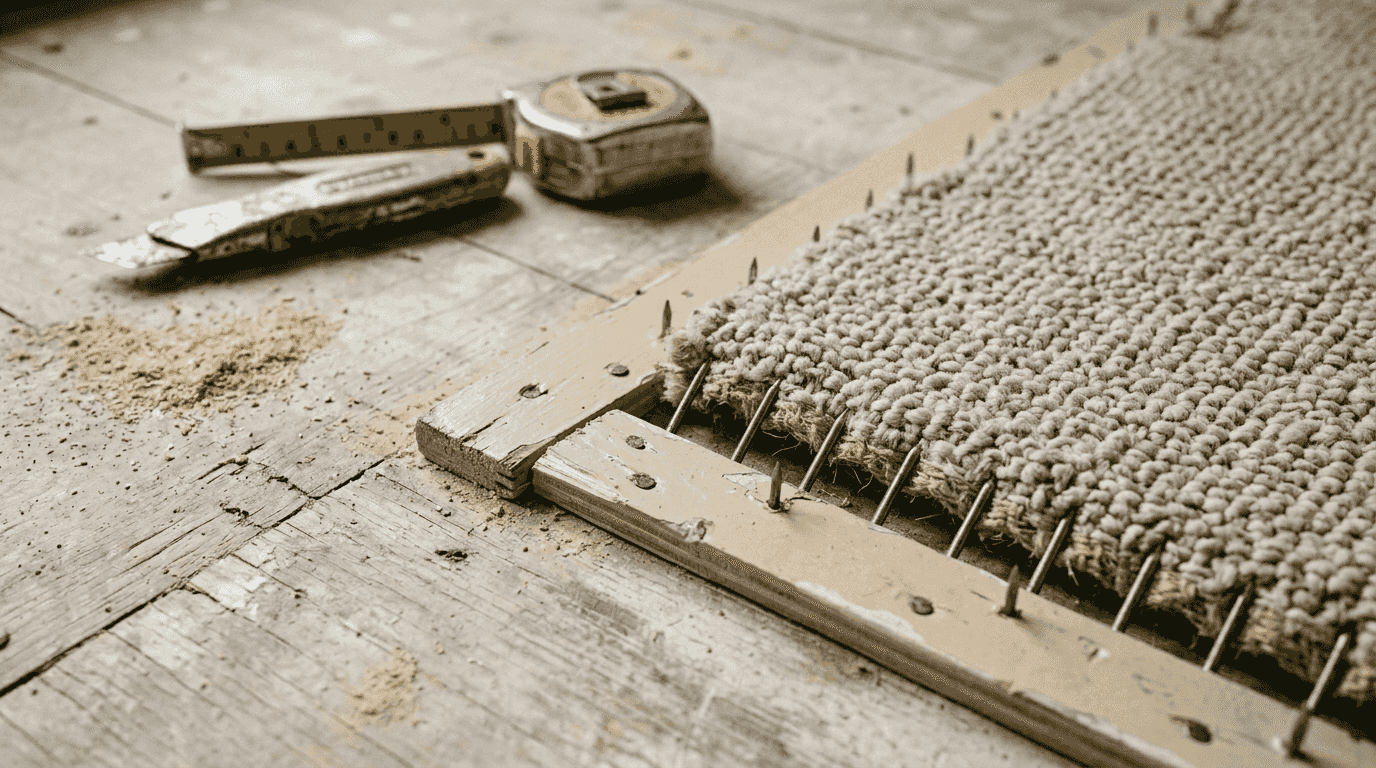
Several gripper types cater to different subfloor materials and installation scenarios. Tackless strips, the most common type for wooden subfloors, feature pre-installed nails on the underside that secure the gripper to timber. Concrete grippers incorporate adhesive backing or masonry nails for attachment to concrete or screed floors. Carpet grippers like Roberts Carpet Gripper Medium Pin Dual Purpose use mechanical interlock to secure carpets preventing movement and seam issues. Dual-purpose grippers combine features for versatility across multiple subfloor types, making them popular among contractors handling varied projects.
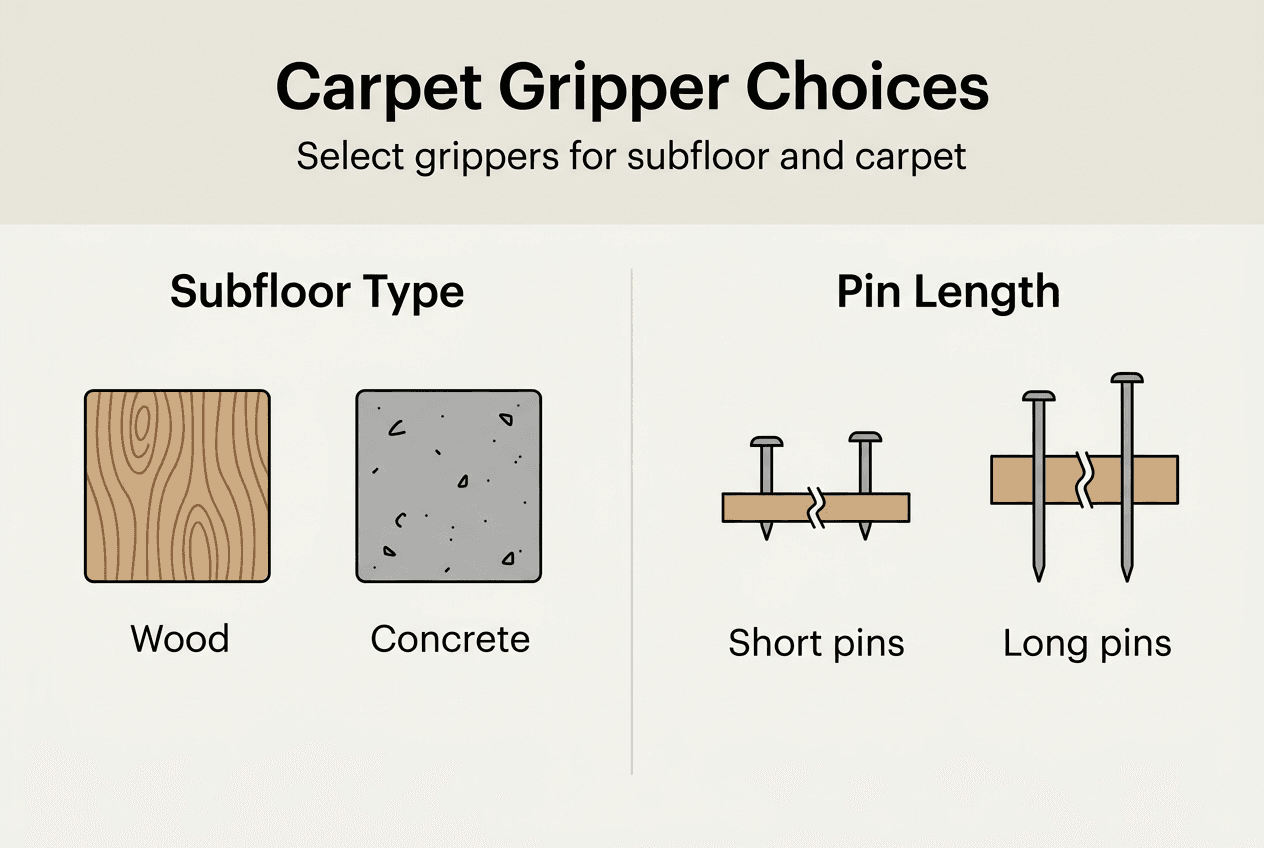
Pin length and spacing directly influence gripper performance. Standard pins measure approximately 5mm to 6mm, suitable for most residential carpets with medium backing thickness. Longer pins accommodate thicker carpets or those with dense backing, whilst shorter pins work for thin loop-pile carpets. Pin spacing affects grip strength, with closer spacing providing firmer hold for heavy-traffic areas. Understanding these variations helps you select grippers matching your specific carpet gripper basics requirements.
Key gripper features include:
- Angled pins facing the wall for proper carpet engagement
- Pre-attached nails or adhesive backing for subfloor attachment
- Varying pin lengths for different carpet thicknesses
- Dual-purpose designs for multiple subfloor types
Pro Tip: Always orient gripper pins towards the wall, not into the room. This ensures carpet backing catches properly when stretched, preventing slippage and maintaining tension over time.
Selecting the right carpet gripper for your project
Choosing appropriate grippers requires matching product specifications to your subfloor material, carpet type, and environmental conditions. Wooden subfloors accept tackless strips readily, as pre-installed nails penetrate timber securely. Concrete or screed floors demand grippers with strong adhesive backing or masonry nails, as standard wood nails cannot penetrate these harder surfaces. Dual-purpose grippers offer flexibility but may not provide optimal performance compared to purpose-built options for specific subfloors.
Carpet thickness and backing density determine required pin length. Thin loop-pile carpets need shorter pins to avoid penetrating through to the surface, which creates visible damage. Thick cut-pile carpets with dense backing require longer pins for adequate penetration and grip. Measure your carpet backing thickness before purchasing grippers. Choice of gripper depends on subfloor and carpet type; incorrect selection causes premature carpet failure in 40% of cases. This statistic underscores the importance of proper matching rather than assuming any gripper will suffice.
Moisture testing prevents costly failures, particularly on concrete subfloors. High moisture levels compromise adhesive bonds, causing grippers to detach and carpets to buckle. Use a moisture meter to test concrete floors before installation. Readings above 75% relative humidity indicate excessive moisture requiring remediation before proceeding. Wooden subfloors also benefit from moisture checks, as damp timber can warp grippers and promote mould growth beneath carpets.
Comparing common gripper types helps clarify selection:
| Gripper type | Best for | Pin length | Installation method |
|---|---|---|---|
| Tackless strip | Wooden subfloors | 5mm to 6mm | Nailed directly |
| Concrete gripper | Concrete/screed | 5mm to 7mm | Adhesive or masonry nails |
| Dual-purpose | Mixed subfloors | 5mm to 6mm | Nails or adhesive |
| Heavy-duty | Commercial areas | 7mm+ | Reinforced attachment |
Avoid placing grippers in doorways or high-traffic walkways without proper thresholds. Exposed gripper pins create trip hazards and damage footwear. Instead, position grippers slightly back from doorways and install appropriate threshold bars to cover transitions. This approach maintains safety whilst ensuring carpets remain secure at room perimeters. Consulting BSI carpet installation standards provides additional guidance on placement and spacing requirements for various applications.
Pro Tip: Order gripper quantities based on room perimeter measurements plus 10% extra for cuts and wastage. Running short mid-installation disrupts workflow and delays project completion.
Preparing the subfloor and installing carpet grippers correctly
Subfloor preparation directly impacts gripper performance and carpet longevity. Clean floors thoroughly, removing dust, debris, and old adhesive residues that prevent secure gripper attachment. Vacuum concrete floors and sweep wooden subfloors, then inspect for levelness. Uneven surfaces cause grippers to sit at angles, reducing pin effectiveness and creating carpet ripples. Fill low spots with levelling compound and sand high points smooth before proceeding.
Moisture testing remains critical even after initial checks. Test multiple locations across the subfloor, particularly near external walls and plumbing fixtures where moisture intrusion occurs most frequently. Document readings and address any areas exceeding safe thresholds. This diligence prevents future problems that compromise both grippers and carpet backing.
Proper gripper installation follows a systematic approach:
- Measure room perimeter and cut grippers to required lengths using a saw
- Position grippers 6mm to 10mm from walls, maintaining consistent spacing
- Orient pins towards walls at approximately 60-degree angles
- Secure grippers using appropriate method for subfloor type
- Verify all grippers sit flush and level before carpet installation
- Double-check pin orientation and spacing around doorways
Pin orientation proves crucial for effective carpet retention. Angling pins towards walls ensures carpet backing engages properly when stretched over grippers. Pins angled incorrectly allow carpets to slip off, creating loose areas and wrinkles. Proper gripper installation significantly extends carpet lifespan by 20 to 30%, making attention to detail worthwhile during this foundational stage.
Never position grippers directly in walking paths or doorway centres. This creates dangerous trip hazards and accelerates gripper wear. Instead, install threshold bars at doorways to cover gaps and provide smooth transitions between rooms. Quality carpet edge trim guidance helps you select appropriate profiles for various transition scenarios.
Improper carpet stretching negates even perfect gripper installation. Insufficient stretching leaves slack that develops into wrinkles and traffic patterns. Excessive stretching overstresses backing fibres, causing premature failure. Use a power stretcher for rooms larger than 3.5 metres, as knee kickers alone cannot generate adequate tension. Stretch from the centre outward, working systematically to distribute tension evenly.
Pro Tip: Mark gripper positions with chalk lines before installation to ensure consistent spacing and alignment. This simple step prevents crooked installations that compromise carpet appearance and performance.
Common installation mistakes detailed at carpet installation mistakes include incorrect spacing, wrong pin orientation, and inadequate subfloor preparation. Learning from these errors saves time and material costs.
Enhancing carpet lifespan: padding, moisture and maintenance tips
Carpet padding significantly influences overall performance and comfort. Quality padding absorbs impact, reduces wear on carpet fibres, and improves insulation. Padding thickness typically ranges from 6mm to 12mm for residential applications, with denser padding providing better support. Low-quality padding can reduce carpet lifespan by up to 50%, making this component worth investing in properly. Match padding density to traffic levels, using firmer padding for high-traffic areas and softer padding for bedrooms.
Moisture management extends beyond initial subfloor testing. Monitor humidity levels in rooms with carpets, particularly ground-floor spaces and basements prone to dampness. Use dehumidifiers in problem areas to maintain relative humidity below 60%. Excessive moisture promotes mould growth beneath carpets, creating health hazards and unpleasant odours. Address water leaks immediately and allow affected areas to dry completely before reinstalling carpets.
Routine maintenance preserves carpet appearance and extends functional life. Vacuum high-traffic areas twice weekly to remove abrasive dirt particles that cut carpet fibres. Deep clean carpets annually using hot water extraction methods, which remove embedded soil and refresh pile appearance. Rotate furniture periodically to distribute wear patterns evenly across carpet surfaces.
Good gripper installation complements these maintenance practices by maintaining proper carpet tension. Well-secured carpets resist wrinkling and bunching, which trap dirt and accelerate wear. The combination of quality grippers, appropriate padding, moisture control, and regular maintenance maximises your carpet investment. Consider carpet threshold trims at room transitions to protect carpet edges from fraying and provide clean visual breaks between spaces.
Safety considerations include:
- Wearing thick gloves when handling grippers to avoid pin punctures
- Using eye protection when cutting or nailing grippers
- Keeping grippers away from children and pets during installation
- Disposing of old grippers carefully to prevent injury
Pro Tip: Store unused grippers pin-side down in their original packaging to prevent accidental injuries and maintain pin sharpness for future projects.
Explore quality carpet trims and finishing solutions
Completing your carpet installation with professional finishing touches elevates the entire project. Quality Carpet Trims offers an extensive range of solid metal door bars and threshold profiles designed specifically for carpet transitions. These hand-finished products, available in 10 beautiful finishes, provide durable solutions that complement proper gripper installation whilst enhancing safety and aesthetics.
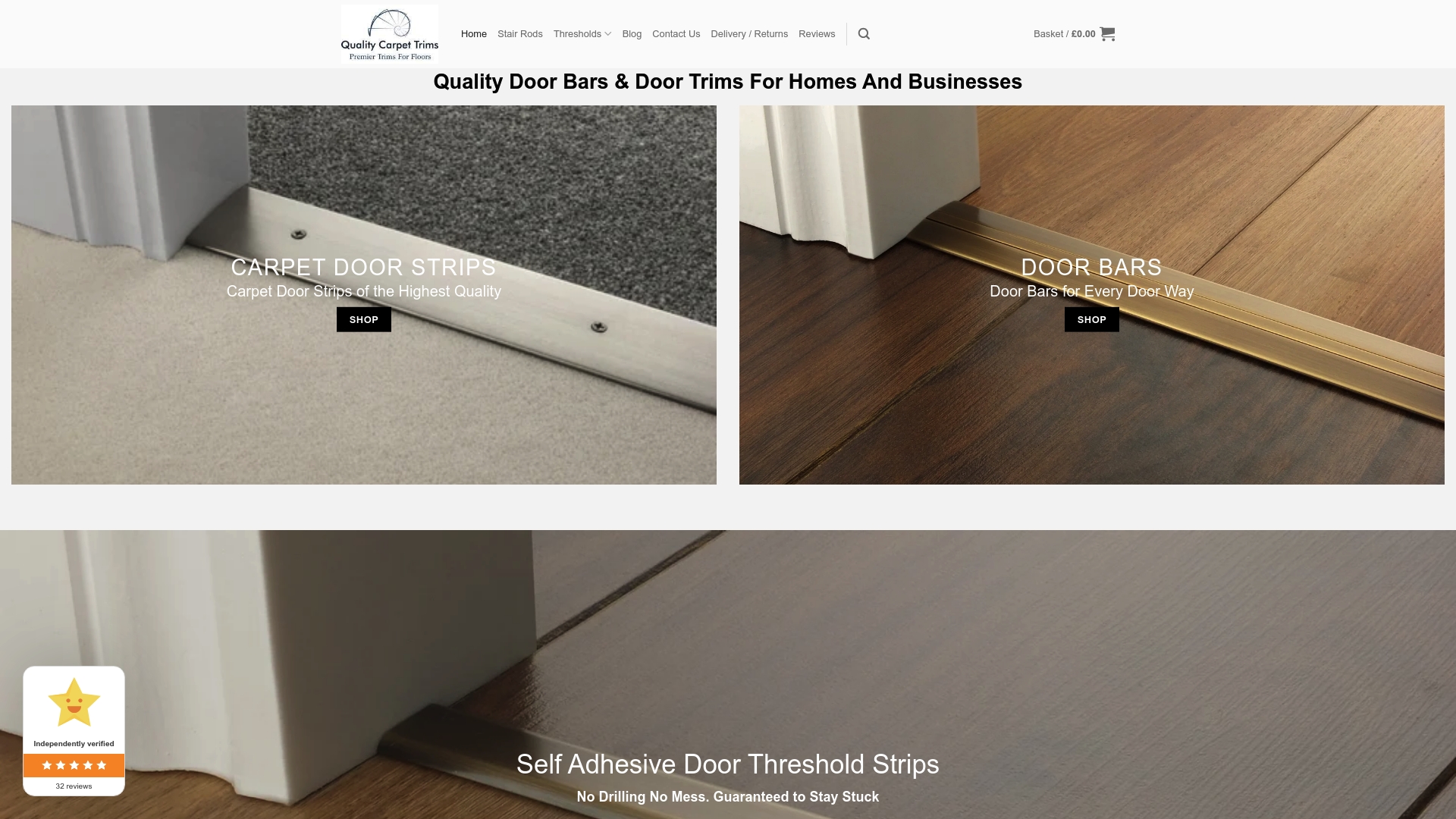
Whether you need matwell flooring trims for entrance areas or carpet to carpet trims for seamless room transitions, our British-made products deliver lasting quality. Free samples let you verify finish compatibility before ordering, whilst expert advice ensures you select the right profile for your specific application. Explore our comprehensive flooring trim terminology explained guide to understand product options and make informed decisions for your project.
FAQ
What is a carpet gripper and why is it needed?
Carpet grippers are narrow strips with angled pins that secure carpet edges to subfloors, preventing movement and wrinkling. They create mechanical interlock by gripping carpet backing when stretched over them. Without grippers, carpets shift underfoot, develop wrinkles, and separate at seams. Proper grippers extend carpet lifespan significantly whilst maintaining appearance.
How do I choose the right carpet gripper for my floor type?
Wooden subfloors require tackless strips with pre-installed nails that penetrate timber securely. Concrete floors need grippers featuring strong adhesive backing or masonry nails. Match pin length to carpet thickness, using longer pins for thick carpets and shorter pins for thin loop-pile varieties. Testing subfloor moisture before selection prevents future adhesive failures.
What safety precautions should I take when installing carpet grippers?
Always wear thick gloves and eye protection when handling grippers, as sharp pins easily puncture skin. Avoid placing grippers in direct walking paths or doorway centres where they create trip hazards. Install threshold bars to cover transitions and protect exposed edges. Store unused grippers pin-side down away from children and pets. Following preventing trip hazards during installation guidance enhances project safety.
Can using the wrong carpet gripper affect carpet lifespan?
Incorrect grippers cause premature carpet failure in up to 40% of installations through inadequate grip or backing damage. Wrong pin length either fails to engage backing properly or penetrates through to visible surfaces. Mismatched grippers for subfloor type detach over time, allowing carpets to shift and wrinkle. Proper gripper selection and installation extend durability significantly, as explained in effects of incorrect gripper use resources.
Recommended
- Complete Guide to Selecting Carpet Trims for Perfect Finishes
- A Quick Guide To Sustainable Carpeting | Quality Carpert Trims
- Carpet Cover Strips – Quality Carpet Trims
- 7 Essential Carpet Trim Options for a Seamless Finish
- Mats4EU | Mats versus Carpets – Mats4U USA