
Blog
Flooring Edge Trims: The Key to a Seamless Finish

Feb
Finding the right finishing touches for your floor can feel just as important as choosing the flooring itself. For UK homeowners who want their renovation to look flawless from every angle, solid metal edge trims offer more than aesthetic value. They create sturdy, seamless transitions that help prevent trip hazards and protect flooring edges from daily knocks, while maintaining the clean, unified look you expect from a professional installation. Discover how the right trim elevates style and performance throughout your home.
Table of Contents
- What Are Flooring Edge Trims and Their Role
- Comparing Flooring Edge Trim Types and Profiles
- How Solid Metal Trims Enhance Performance
- Best Practices for Trim Selection and Installation
- Avoiding Common Trim Mistakes and Pitfalls
Key Takeaways
| Point | Details |
|---|---|
| Function of Edge Trims | Edge trims conceal raw edges, create smooth transitions, and protect floors from damage, enhancing both safety and aesthetics. |
| Material Impact | Choosing solid metal trims, such as brass, significantly improves durability and performance compared to cheaper alternatives. |
| Importance of Measurement | Accurate measurement is crucial to avoid shortages and ensure proper fit, preventing costly installation mistakes. |
| Profile Selection | Selecting the right trim profile affects both the visual appeal and functionality of the flooring installation, so consider traffic levels and aesthetics. |
What Are Flooring Edge Trims and Their Role
Flooring edge trims are the finishing pieces that bridge gaps between different flooring materials or create smooth transitions at level changes. They’re far more than decorative—they’re structural components that define the quality of your entire floor installation.
At their core, edge trims serve three critical functions. They conceal raw edges that would otherwise look unfinished and cheap. They create smooth, stable transitions between flooring surfaces, enhancing both safety and accessibility. They also protect the underlying floor materials from damage and wear.
In practical terms, edge trims appear wherever flooring meets a doorway, changes height, or transitions from one material to another. They’re the barrier between your beautiful new floor and whatever lies beyond it.
Quality edge trims transform a DIY installation into a professional-looking finish that will last for decades without splitting, bending, or denting.
Why edge trims matter in your home:
- They prevent tripping hazards by smoothing transitions between different floor heights
- They seal gaps where dirt, moisture, and debris can accumulate
- They protect flooring edges from impact damage during daily use
- They create a cohesive aesthetic throughout your rooms
The material you choose dramatically affects performance and longevity. Cheaper alternatives like wooden, plastic, rubber, or aluminium trims will eventually split, bend, or dent under regular foot traffic. Solid brass edge trims with powder-coated finishes, by contrast, maintain their integrity indefinitely.
In healthcare and commercial settings, seamless transitions between flooring surfaces prevent pathogens from harboring in gaps and reduce infection risks. This same principle applies to your home—a seamless finish is a hygienic finish.
For UK homeowners tackling flooring renovations, selecting the right edge trim isn’t just about aesthetics. It’s about protection, safety, and ensuring your investment lasts. Understanding the different types of flooring trims available helps you make informed decisions for every room.
Pro tip: Measure all your transitions carefully before ordering—accounting for doorways, stairs, and room borders ensures you won’t face mid-project shortages or wasteful overordering.
Comparing Flooring Edge Trim Types and Profiles
Edge trim profiles aren’t one-size-fits-all. Different profiles suit different flooring types, room aesthetics, and traffic levels. Choosing the right profile determines how your floor looks and performs over years of use.
The main profiles you’ll encounter are bevelled edge, rounded edge, and square edge. Each has distinct characteristics that affect installation difficulty, safety, and visual impact. Your choice depends on balancing aesthetic considerations with durability requirements.
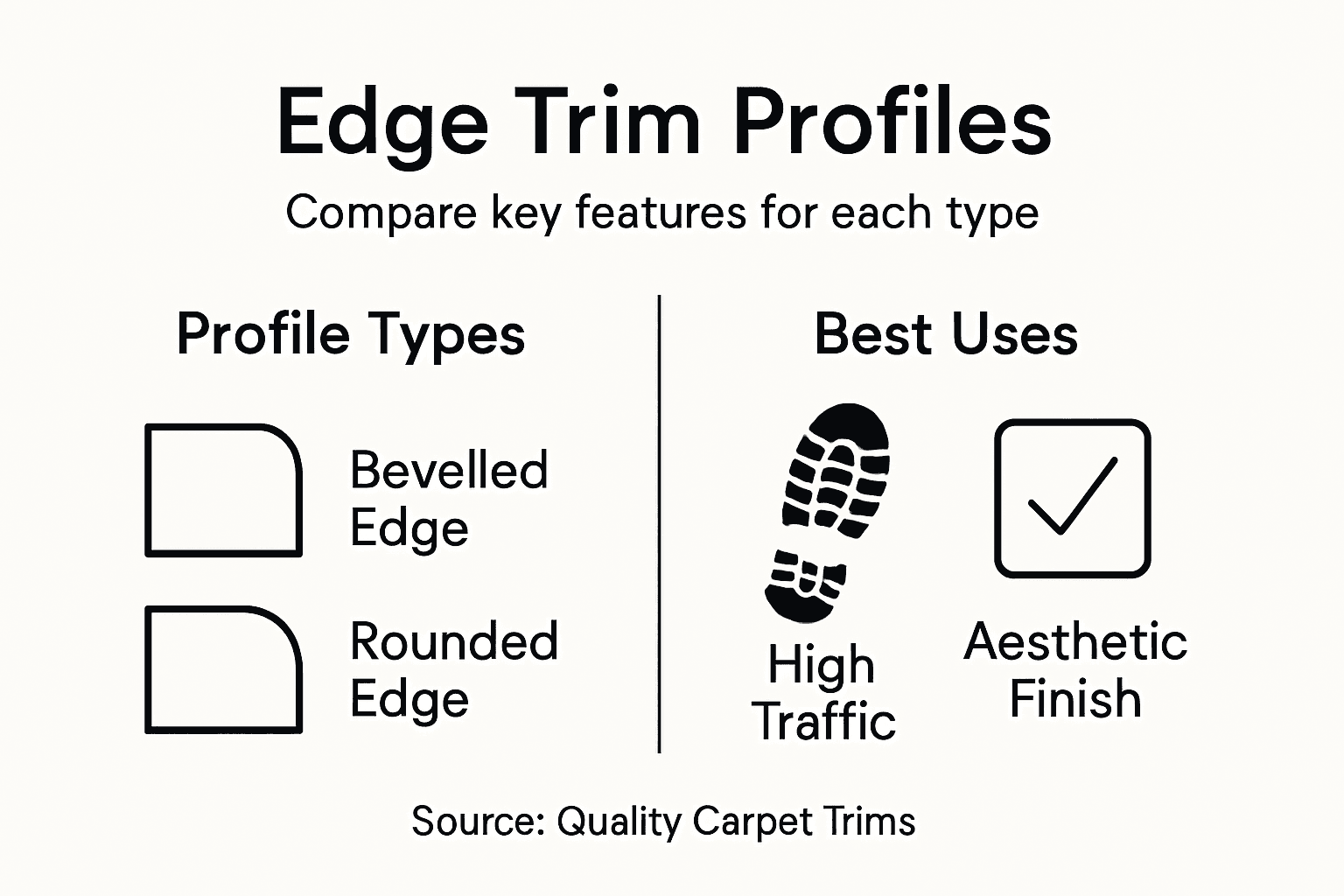
Bevelled edge trims feature angled cuts at 45 degrees. They create a subtle, sophisticated look and hide minor gaps beautifully. Bevelled edge profiles are ideal for traditional and modern homes alike, accommodating slight installation variations with grace.
Rounded edge trims curve smoothly where flooring meets transitions. They’re forgiving during installation and provide a softer, more contemporary appearance. Rounded profiles work exceptionally well in open-plan spaces where you want seamless visual flow.
Square edge trims sit flush and straight. They offer a clean, minimalist aesthetic and work perfectly with geometric interior designs. Square profiles demand precise installation but deliver a sharp, professional finish.
The material you select matters more than the profile. Solid brass edge trims maintain their shape indefinitely, whereas cheaper alternatives warp and crack under traffic.
Key differences between profiles:
- Bevelled: Hides gaps, traditional appeal, moderate installation difficulty
- Rounded: Contemporary look, forgiving tolerances, smooth transitions
- Square: Minimalist design, demands precision, modern aesthetic
When selecting a profile, consider your flooring material and room traffic levels. High-traffic hallways need robust profiles that won’t compress. Bedrooms and lounges allow more flexibility in aesthetic choices.
To help you select the ideal trim, here’s a comparison of edge trim profiles and their suitability for different spaces:
| Profile Type | Suitable Flooring | Best For | Aesthetic Impact |
|---|---|---|---|
| Bevelled Edge | Wood, Laminate | Living rooms, Halls | Subtle, classic look |
| Rounded Edge | Vinyl, Carpet | Open-plan, Bedrooms | Soft, modern appearance |
| Square Edge | Tile, Stone | Contemporary lounges | Minimalist, crisp finish |
The difference between cheap plastic or wooden trims and solid brass becomes obvious when comparing profiles. Cheap materials distort under pressure, making even premium profiles look poor. Solid brass with powder-coated finishes maintains the integrity of whichever profile you choose.
Measure your transitions carefully before deciding on a profile. Some profiles suit specific installation scenarios better than others. A professional installation partner can recommend the ideal profile for your particular renovation.
Pro tip: Request sample trims in your chosen profile and finish before committing to your full order—this ensures the aesthetic matches your vision perfectly and prevents costly mid-project changes.
How Solid Metal Trims Enhance Performance
Solid metal trims deliver performance that cheaper materials simply cannot match. The difference lies in fundamental material science and structural integrity over time.
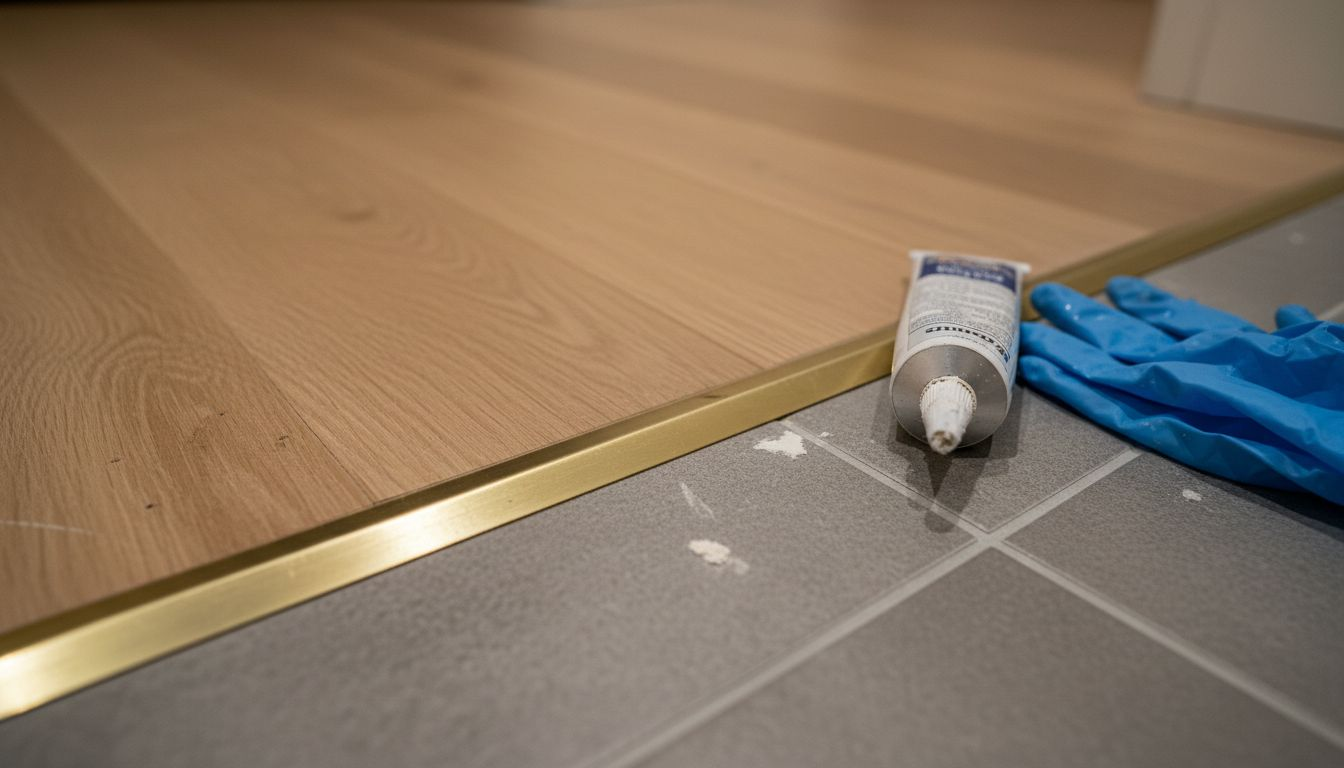
When you install solid brass trims, you’re investing in longevity. Unlike plastic, rubber, or wooden alternatives that deteriorate under foot traffic, solid metal maintains its shape and finish indefinitely. Your trims won’t crack, split, or dent after years of daily use.
What makes solid metal superior:
- Maintains structural integrity under pressure and heavy traffic
- Resists deformation that compromises both safety and aesthetics
- Provides superior durability and wear resistance compared to alternative materials
- Delivers precise edge finishing that stays sharp and clean
- Withstands temperature fluctuations without warping
Consider what happens to cheaper trims in a busy UK hallway. Wooden trims absorb moisture and split along the grain. Plastic trims compress under repeated footfalls, creating unsightly dips. Rubber and aluminium alternatives bend permanently. Solid brass? It remains exactly as it was installed, decade after decade.
Solid metal trims protect your entire floor investment by maintaining structural integrity where flooring meets transitions—the points most vulnerable to damage.
The powder-coated finishes on quality solid brass trims add another layer of protection. These hand-finished coatings resist scratches, moisture, and discolouration. Ten different luxury finishes mean your trims blend seamlessly with any interior design scheme.
In high-traffic areas, this performance difference translates to real savings. You won’t replace trims every five to seven years. You won’t deal with safety hazards from compressed or split edges. You install once and enjoy professional-quality results for life.
The initial investment in solid metal trims is higher than cheap alternatives. But when you calculate the cost per year over a 20-year lifespan, solid brass becomes the most economical choice. One installation replaces what would require multiple replacements with inferior materials.
For a clear overview, here’s how solid brass trims outperform alternative materials over time:
| Material | Durability | Maintenance Needs | Resistance to Moisture |
|---|---|---|---|
| Solid Brass | Decades | Low | Excellent |
| Wood | 2–5 years | High (prone to rot) | Poor |
| Plastic | 3–7 years | Moderate (may distort) | Moderate |
| Aluminium | 5–10 years | Moderate (can bend) | Good |
Thermally, solid metal performs differently too. It conducts temperature evenly without expanding or contracting excessively, maintaining consistent gaps and transitions regardless of seasonal changes.
Pro tip: Choose powder-coated solid brass trims in a finish that complements your door hardware and light fittings—this unified aesthetic elevates your entire interior and justifies the premium investment.
Best Practices for Trim Selection and Installation
Selecting and installing the right edge trims requires planning and attention to detail. Getting this right transforms a renovation from acceptable to exceptional.
Start by understanding your flooring material. Different flooring types need different trim approaches. Carpet requires different support than laminate or vinyl. Your trim choice must complement your specific flooring material’s requirements and characteristics.
Key selection criteria:
- Match trim profile to your flooring type and aesthetic preference
- Verify compatibility with flooring material before purchasing
- Consider room traffic levels when choosing profiles
- Select finishes that coordinate with your interior design scheme
- Measure all transitions accurately to avoid shortages
Measure twice, order once. Take measurements of every doorway, room border, and level change. Add 10% extra for cuts and mistakes—professional installers expect some waste. Accurate measurements prevent frustrating mid-project delays.
Preparation matters enormously. Your subfloor must be clean, dry, and level before installation begins. Uneven surfaces cause gaps and misalignments that compromise both safety and appearance. Take time preparing properly; it saves hours of frustration later.
Proper installation requires secure anchoring without damaging flooring and allowing for natural expansion and contraction of materials.
When installing solid brass trims, use appropriate fasteners and adhesives designed for your specific flooring type. Never force trims into place—they should fit naturally. Forcing them risks damaging the trim or underlying floor materials.
Sealing edges prevents moisture from creeping underneath and compromising your installation. Avoiding gaps and uneven transitions maintains a seamless finish and ensures safety, particularly in high-traffic areas.
Allow trims to acclimate to your home’s temperature and humidity for 24 hours before installation. This prevents expansion or contraction issues after installation that create gaps or buckles.
Consider hiring a professional installer if you lack experience. Solid brass trims represent significant investment; professional installation ensures flawless results. Many installers offer guarantees on their workmanship.
Pro tip: Install trims after all other flooring work is complete—adhesives, sealants, and new flooring need time to cure properly before trims are fitted.
Avoiding Common Trim Mistakes and Pitfalls
Most flooring projects fail not because of bad materials but because of preventable mistakes made during selection and installation. Understanding these pitfalls saves time, money, and frustration.
The first major mistake is choosing trims based purely on price. Cheap wooden, plastic, rubber, or aluminium trims seem attractive initially. But they split, bend, and dent within years, forcing costly replacements. Solid brass trims cost more upfront yet eliminate this problem entirely.
Common mistakes to avoid:
- Selecting trims incompatible with your flooring type and material
- Measuring inaccurately, leading to shortages or excess waste
- Neglecting moisture control, causing edge failures and rot
- Installing trims before flooring has fully cured
- Forcing trims into place rather than allowing natural fit
- Skipping surface preparation, resulting in gaps and misalignment
Mismatching trim materials with flooring type creates incompatibility issues that compromise both aesthetics and performance. Always verify your trim choice works with your specific flooring material before purchasing.
Moisture is flooring’s enemy. Water creeping under trims causes wood rot, mould growth, and structural failure. Selecting corrosion-resistant trim materials and ensuring proper drainage prevents premature deterioration in UK homes with variable humidity.
Poor planning during trim selection creates problems that are expensive and time-consuming to fix after installation.
Underestimating the importance of surface preparation leads to visible gaps and uneven transitions. Subfloors must be genuinely flat and clean before trims are installed. Rushing this step shows immediately and ruins an otherwise professional-looking project.
Another pitfall is installing trims too soon. New flooring, adhesives, and sealants need time to cure and settle. Installing trims before this process completes causes buckling, gaps, and misalignment as materials shift beneath the trims.
Don’t force trims into place. If a trim doesn’t fit naturally, something is wrong. Either your measurements are off or your subfloor isn’t level. Address the underlying issue rather than forcing the trim.
Using incorrect fasteners or adhesives for your flooring type causes trims to fail. Solid brass requires appropriate fixings designed for your specific flooring material. Always follow manufacturer recommendations.
Pro tip: Create a detailed installation plan before starting—mark all transitions, measure multiple times, and verify your trim selections match your flooring type and room conditions.
Achieve the Perfect Flooring Finish with Quality Carpet Trims
Seamless flooring transitions are crucial for safety, durability, and that professional look your home deserves. If you have faced challenges like warped plastic trims or cracked wooden edges that spoil your beautiful new floor, it is time to upgrade to solid brass trims. These trims offer unmatched longevity and a flawless finish, addressing common problems such as moisture damage and wear at high-traffic thresholds mentioned in the article.
Discover the full range of expertly crafted, hand-finished door bars and edge trims at Quality Carpet Trims. With 10 stunning powder-coated finishes and UK manufacturing quality, our products ensure your transitions are both safe and stylish. Benefit from our free samples and professional advice to choose the right profile that perfectly matches your flooring type and aesthetic goals. Start your project with confidence by exploring our selection and find out why so many homeowners and contractors trust us for durable, premium finishing solutions.
Frequently Asked Questions
What are flooring edge trims?
Flooring edge trims are finishing pieces that bridge gaps between different flooring materials or create smooth transitions at height changes. They serve to conceal raw edges, enhance safety and accessibility, and protect the underlying floor materials from damage.
Why do I need edge trims in my home?
Edge trims prevent tripping hazards by smoothing transitions, seal gaps to prevent dirt and moisture accumulation, protect flooring edges from impact damage, and create a cohesive aesthetic throughout your rooms.
What materials are best for flooring edge trims?
Solid brass edge trims are recommended for their longevity and durability. Unlike cheaper alternatives like wood, plastic, or rubber, solid brass maintains its shape and finish, making it an economical choice over time.
How do I choose the right profile for my flooring edge trims?
Choosing the right profile depends on your flooring type and room traffic levels. Bevelled edge trims are good for traditional aesthetics, rounded edge trims provide a contemporary look, and square edge trims offer a modern minimalist design. Consider your personal style and the demands of the space when making your choice.
Recommended
- Types of Flooring Trims Explained: Seamless Finishes
- Industry Terminology: Flooring Trims Explained
- Square Edge Carpet Trim: Stylish Solutions for a Polished Finish – Quality Carpet Trims
- Discover the Best Floor Edge Trim Solutions for Every Room in Your Home – Quality Carpet Trims
- How to Match Doors and Windows for Seamless Design
- Finishing Your Basement: Code, Cost, Comfort – Henley Contracting Ltd.