
Blog
How trims shape garment durability: a manufacturer’s guide

Jul
Trims are the unsung workhorses of garment construction. Every zip, fastener, reinforcement tape, and binding you attach to a garment does far more than finish it off aesthetically. The role of trims in durability is structural: they reinforce seams under tension, prevent fraying at stress points, and absorb the repeated mechanical forces that daily wear and washing impose on fabric. Garments treated as integrated systems, where trims receive the same technical scrutiny as primary textiles, consistently outlast those where trims are selected as an afterthought.
- Trims are all non-fabric components used to construct and finish a garment, including fasteners, tapes, labels, and reinforcements.
- Functional trims reinforce seams and stress points to prevent fraying and garment failure.
- Premium materials such as solid brass distribute tension away from seams, avoiding the localised damage that weaker components cause.
- Cheap alternatives, whether plastic, soft metals, or thin pressed materials, bend, split, or corrode under repeated stress, accelerating garment failure.
- Selecting trims that are compatible with the garment’s fabric weight, construction method, and end use is the single most controllable factor in extending product lifespan, highlighting the importance of surface preparation for lasting results.
What types of trims are used in garment manufacturing?
Garment trims fall into several distinct categories, each with a specific structural or finishing function. Understanding what each type does, and what it should be made from, is the foundation of any serious approach to longevity.
- Zippers and zip pulls: Used at openings, pockets, and closures. High-quality metal zips resist distortion across repeated use cycles; cheap pressed alternatives jam, split, or corrode quickly.
- Buttons and fasteners: Provide closure and contribute to garment silhouette. Solid metal buttons hold their shape and thread attachment far longer than moulded plastic equivalents, which crack under tension.
- Reinforcement tapes: Sewn or bonded along high-stress seams, cuffs, and openings. These tapes absorb mechanical load and prevent seam breakdown, particularly in workwear and sportswear.
- Elastics and bindings: Maintain fit and resist distortion from stretching. Quality elastics retain their recovery across many wash cycles; inferior grades lose tension quickly and cause garments to lose their shape.
- Labels and woven badges: Primarily informational, but their attachment method and material affect the fabric around them. Poorly attached labels create friction points that weaken surrounding cloth.
- Drawcords and cord locks: Enable fit adjustment across a range of body shapes. Solid cord locks made from durable materials hold position reliably; cheap versions slip or crack.
- Shoulder pads and internal reinforcements: Structural elements that maintain garment shape and distribute weight evenly across the body.
The material a trim is made from matters as much as its design. Solid brass trims with premium powder coatings resist bending, splitting, and denting under stress in ways that plastic, soft metals, or thin pressed components simply cannot match. Plastic trims crack under repeated mechanical load. Soft metals deform. Neither offers the structural consistency that a well-made garment demands over years of use.
How do functional and decorative trims differ, and why does it matter?
The distinction between functional and decorative trims is real, but the boundary between them is often narrower than manufacturers assume.
Functional trims exist primarily to enhance structure, fit, and durability:
- Metal fasteners that hold closures under tension
- Reinforcement tapes that prevent seam failure at high-wear points
- Elastics that maintain fit through repeated stretching and washing
- Bindings that protect raw edges from fraying
Decorative trims are chosen primarily for visual effect, but the best ones carry structural value too:
- Woven labels that also reinforce the fabric panel they are attached to
- Contrast stitching that simultaneously strengthens a seam and defines a design line
- Embroidered badges that add rigidity to soft panels
- Branded hardware that functions as a closure while communicating quality
The essential role of trims in garment design lies in this overlap. A decorative button made from solid brass does not just look better than a moulded plastic one. It holds its thread attachment longer, resists cracking under tension, and does not discolour with washing. Selecting trims with both function and appearance in mind is not a luxury consideration. It is how garments earn a longer commercial life and a stronger reputation for quality.
Heavy trims on delicate fabrics create a different problem: mismatched weight causes sagging and structural stress at attachment points. Compatibility between trim weight, fabric construction, and intended use is non-negotiable for any garment expected to last.
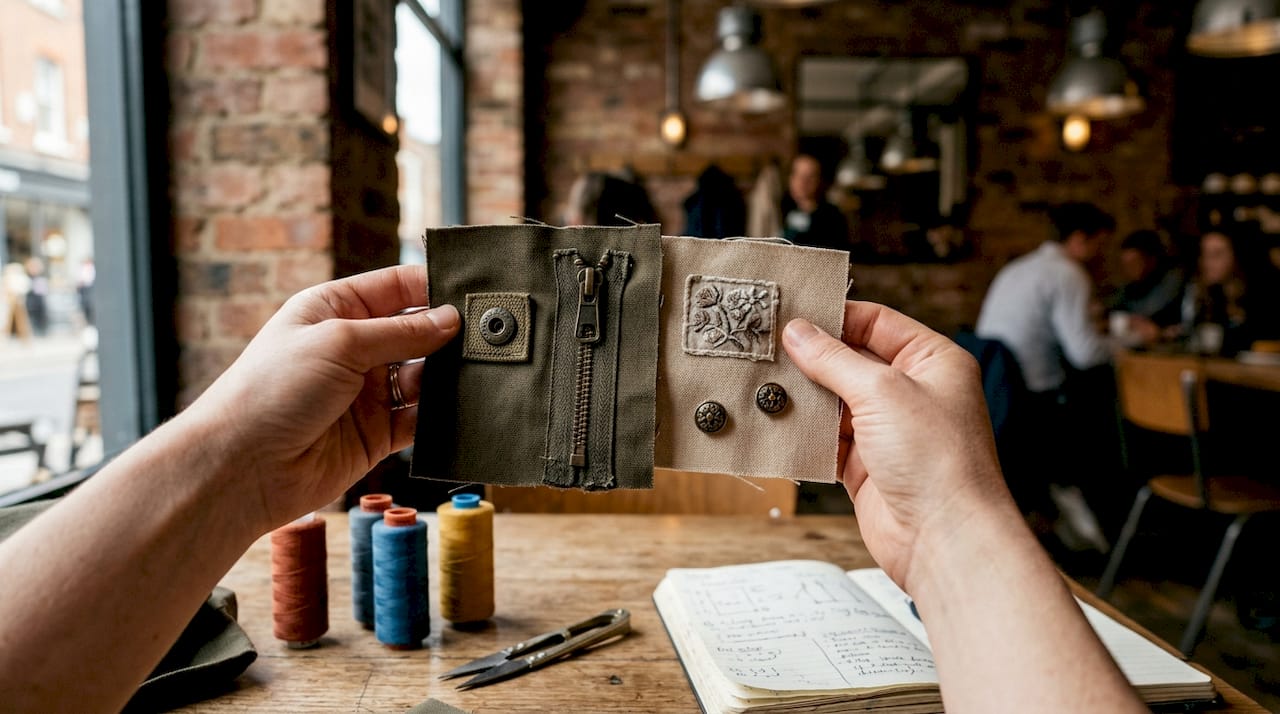
How trims are applied to strengthen garments in practice
The practical applications of trims in garment construction map directly onto the points where fabric is most likely to fail.
- Seam reinforcement at high-stress points: Crotch seams, underarm seams, and shoulder joins bear the most mechanical load. Reinforcement tapes bonded or sewn along these lines prevent the seam from pulling apart under repeated stress.
- Cuff and opening protection: Cuffs and necklines are opened and closed thousands of times across a garment’s life. Binding and tape at these edges protect the raw fabric from fraying and abrasion.
- Zip integration: A high-quality zip, correctly set into a reinforced opening, maintains structural integrity under stress. Zips and elastics that resist distortion extend sportswear garment life by maintaining performance across many wash cycles.
- Stress distribution: Solid metal hardware distributes tension across a wider area of fabric rather than concentrating it at a single attachment point. This prevents the localised tearing that cheap, rigid trims cause.
- Attachment method: Secure sewing techniques, including bar tacks at zip ends and reinforced buttonhole stitching, are as important as the trim itself. Inadequate attachment causes trim failure independently of the trim’s own quality.
Maintenance considerations are equally practical:
- Inspect metal fasteners and zip pulls periodically for signs of deformation or corrosion.
- Check reinforcement tape edges for lifting, particularly after high-temperature washing.
- Re-secure any loose button or fastener attachment before it causes fabric damage around the hole.
- Store garments so that metal hardware does not press against delicate fabric panels under sustained pressure.
Pro Tip: When specifying trims for a new garment, test the complete assembly, fabric plus trim plus attachment method, through at least 20 wash cycles before signing off on production. A trim that performs well in isolation can still cause seam failure if the attachment method is wrong for the fabric weight.
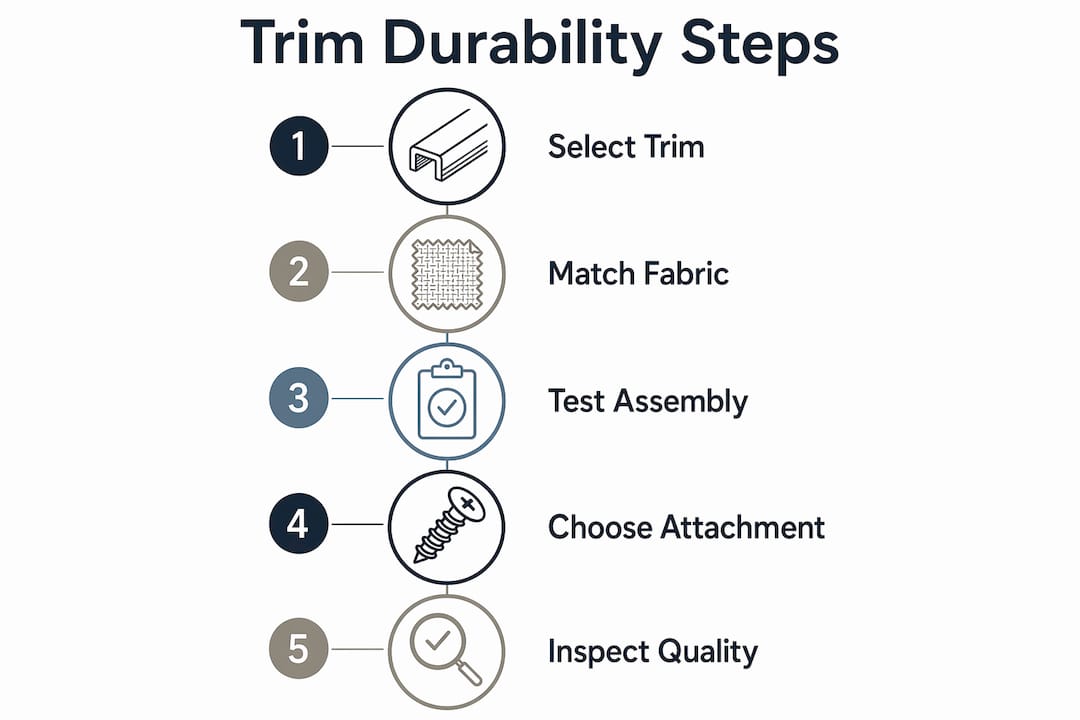
Industry insights on trims and garment durability for UK fashion manufacturers
The UK garment manufacturing sector has long understood that fabric innovation alone does not determine product quality. Poor-quality trims can cause garment failure even when the primary textile is technically advanced. This is the central misconception the industry still battles: that trims are secondary components whose quality is a cost-saving opportunity rather than a structural decision.
Textile Exchange notes that garment performance depends on the interaction between fabrics, trims, and construction methods, rather than any single component in isolation. The Council of Fashion Designers of America (CFDA) reinforces this, emphasising specialised component sourcing as central to consistent construction quality and durability in apparel production.
Trims are engineered solutions, not decorative afterthoughts. They act as the first line of defence against friction and damage, protecting edges and transitions from the daily wear that degrades fabric over time.
The sustainability argument for premium trims is straightforward. A garment that lasts twice as long because its trims were specified correctly represents half the raw material consumption, half the manufacturing energy, and half the end-of-life waste. For UK manufacturers working towards extended producer responsibility targets, trim quality is a lever that is frequently underused.
Pro Tip: Select trims in harmony with the garment’s fabric weight, washing requirements, and end use before finalising any other design decision. A trim that is incompatible with the fabric’s care requirements will degrade faster than the fabric itself, pulling the whole garment out of service prematurely.
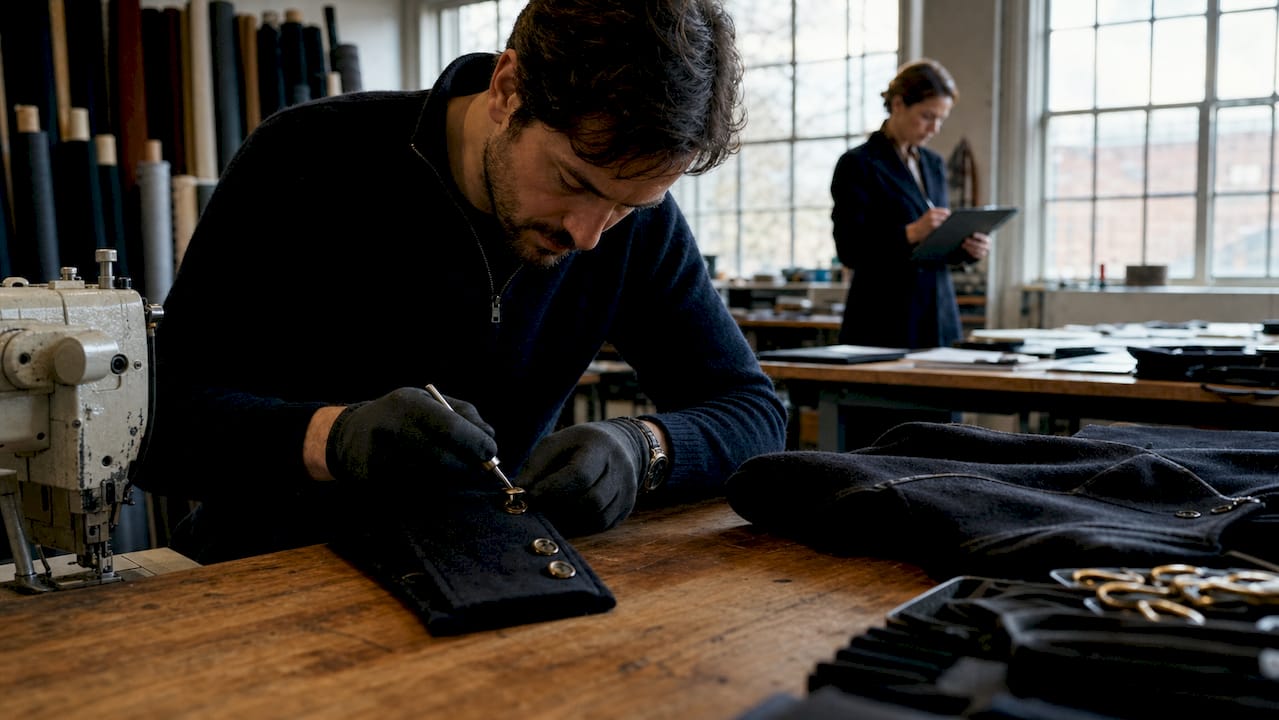
The same principle applies in flooring and interior finishing. Qualitycarpettrims supplies solid brass door bars hand-finished in ten luxury finishes precisely because the material choice at transitions and edges determines how long the whole installation holds up. Brass does not split, bend, or dent under load. The parallel with garment manufacturing is direct: the trim material sets the ceiling on the product’s lifespan.
Case studies: how trims improve garment structural integrity
Real-world examples from garment and product manufacturing show consistently that trim specification is where longevity is won or lost.
Sportswear: where trim failure is visible and immediate
In performance apparel, the consequences of poor trim selection are immediate. A zip that distorts after ten wash cycles renders a jacket unwearable regardless of how well the shell fabric has held up. Manufacturers working with specialist trim suppliers find that high-quality zips resist distortion, elastics retain their recovery, and reinforcement tapes prevent seam breakdown across the product’s full expected lifespan. The garment’s commercial value is preserved because the trims were treated as engineered components from the outset.
Workwear: reinforcement tapes at critical seams
Heavy-duty workwear is subjected to sustained mechanical stress that exposes weak trim specification within weeks. Bar-tacked reinforcement at pocket corners, zip ends, and crotch seams is standard practice in quality workwear manufacturing because these are the points where fabric concentration and repeated load combine to cause failure. Manufacturers who skip reinforcement tapes at these junctions find that garments return under warranty with seam failures, not fabric failures. The fabric was adequate. The trim specification was not.
Premium fashion: solid metal hardware and long-term brand perception
A premium jacket with solid brass hardware communicates quality at the point of purchase and continues to deliver it across years of use. Brass buttons hold their thread attachment, resist surface degradation, and do not deform under the tension of a well-fitted closure. Contrast this with moulded plastic buttons, which crack under sustained tension, or soft metal press-studs, which deform and lose their grip after repeated use. The trim’s material determines whether the garment’s quality promise holds up beyond the first season.
Flooring trims: the same principle at a different scale
The structural logic of trim specification applies beyond garments. At flooring transitions, a solid brass threshold bar absorbs the mechanical load of foot traffic and prevents edge damage to the flooring on either side. Qualitycarpettrims produces its matwell flooring trims in solid brass with powder-coated finishes precisely because the material must not bend, split, or dent under sustained load. Cheaper pressed alternatives fail at the transition point, causing damage to the flooring they were meant to protect. The principle is identical to garment manufacturing: the trim is the component most exposed to stress, and its quality determines the lifespan of the whole assembly.
Key takeaways
Trims are structural components that determine garment lifespan, and solid brass or premium metal hardware consistently outperforms plastic or soft metal alternatives under repeated mechanical stress.
| Point | Details |
|---|---|
| Trims are structural, not decorative | Functional trims reinforce seams, distribute tension, and prevent fraying at high-stress points. |
| Material quality sets the ceiling | Solid brass trims resist bending, splitting, and corrosion; plastic and soft metals fail under repeated load. |
| Compatibility is non-negotiable | Heavy trims on delicate fabrics cause structural stress; match trim weight to fabric construction and care requirements. |
| Attachment method matters as much as the trim | Bar tacks, reinforced buttonholes, and secure sewing techniques prevent trim failure independently of trim quality. |
| Premium trims support sustainability goals | Garments that last longer because of quality trim specification reduce raw material consumption and end-of-life waste. |
Recommended
- Why durable trims matter for lasting home interiors
- Why use trims for commercial spaces: a complete guide
- Why durable flooring trims matter: style and protection
- Quality assurance in trims: the 2026 guide for professionals