
Blog
Why trim durability matters for lasting flooring results

Jul
TL;DR:
- Durable trims protect flooring edges from impact and moisture, extending the lifespan and maintaining home value. Solid brass trims with powder-coated finishes outperform cheaper materials by resisting dents, warping, and finish degradation over decades. Choosing quality metal trims and proper installation reduces ongoing costs and preserves aesthetics in high-traffic areas.
Trim durability is the measure of a trim’s ability to withstand daily wear, impacts, and moisture without damage or degradation. For homeowners investing in flooring, the importance of trim durability goes far beyond appearances. Cheap trims made from wood, plastic, or aluminium warp, split, bend, and dent within a few years, leaving flooring edges exposed and rooms looking tired. Solid brass trims with powder-coated finishes resist all of these failure modes entirely. Qualitycarpettrims supplies hand-finished solid brass trims in 10 luxury finishes, purpose-built for UK homes where quality and longevity are non-negotiable.
Why does trim durability impact flooring lifespan and home value?
Durable trims protect the edges of your flooring from the daily punishment that causes premature wear. Every time a door opens, a foot crosses a threshold, or furniture shifts, the trim at that transition point absorbs the impact. A trim that bends or cracks transfers that stress directly to the flooring edge beneath it, causing chipping, lifting, and fraying that spreads inward over time.
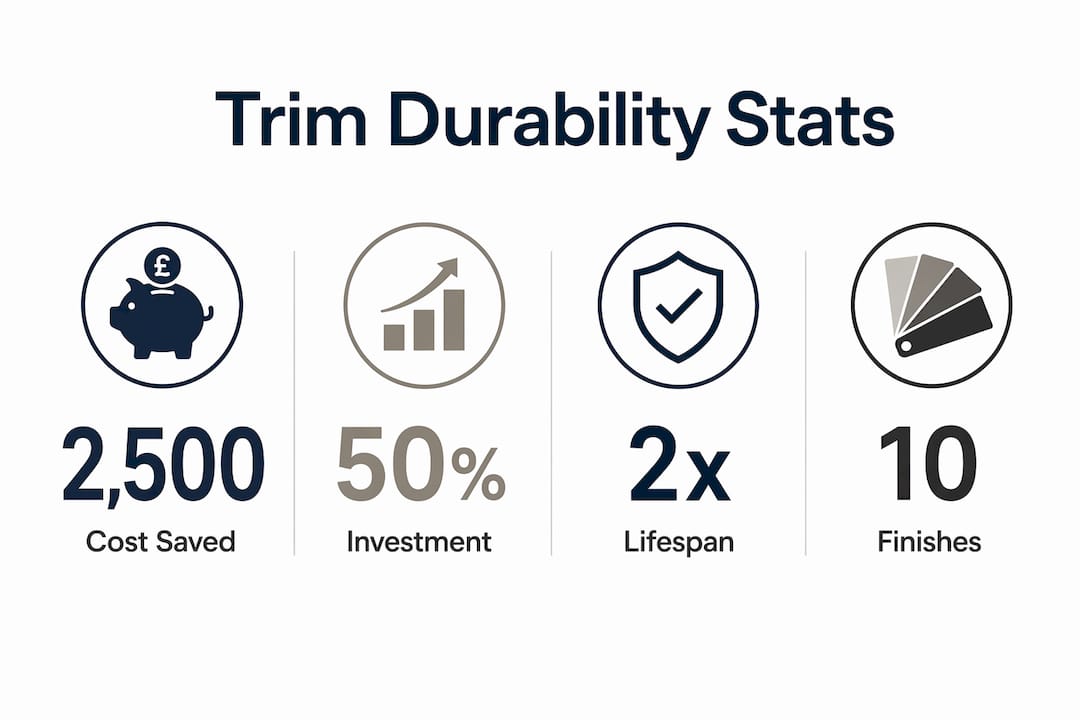
The financial case for quality trim is clear. Poor-quality trim choices cost homeowners an average of £2,500 in replacements every 7–10 years. That figure represents not just the cost of new trim, but the labour, disruption, and incidental flooring damage that comes with repeated replacement. Choosing a durable trim from the outset avoids that cycle entirely.
Investing 20–50% more upfront in premium trim materials yields a lifespan that is twice as long, with some products offering up to 50 years of functional performance. That is a straightforward return on investment that most homeowners underestimate when they reach for the cheapest option at the point of purchase.
The benefits of durable trim extend to property value too. Appraisers and buyers notice finish quality. Trims that are dented, discoloured, or lifting signal deferred maintenance and reduce perceived value. Premium trims that hold their finish and structure communicate care and quality throughout a property.
Key trim durability benefits at a glance:
- Prevents flooring edge damage from impact and foot traffic
- Reduces replacement frequency and associated labour costs
- Maintains room aesthetics over the long term
- Supports property value at resale
- Eliminates the disruption of repeated repair work
What makes a trim genuinely durable, and why do brass trims excel?
Durability in a trim comes down to four properties: hardness, impact resistance, moisture tolerance, and finish stability. A trim that scores well on all four will outlast one that excels in only one area.
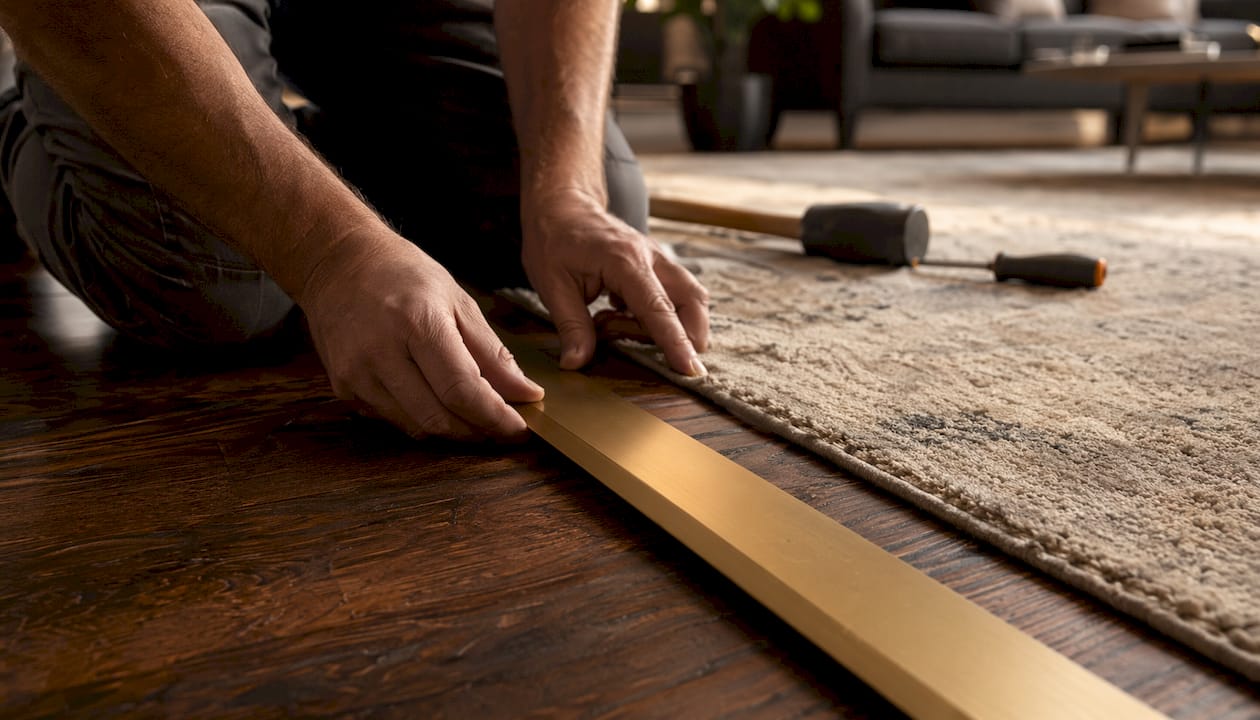
Hardness determines how well a trim resists dents and surface damage. Harder woods like oak achieve a Janka rating of 1,290 lbf compared to pine at 380 lbf, yet even oak splits along the grain under sustained impact. Solid brass exceeds both by resisting dents, bends, and splits entirely. No grain structure means no weak axis for failure to follow.
Moisture tolerance is where wood and plastic trims fail most visibly. In humid environments, untreated softwoods fail 2–3 times faster than durable alternatives. Plastic trims expand under heat and humidity, creating gaps and buckles at transition points. Solid brass does not absorb moisture and does not expand or contract in response to normal indoor humidity changes.
Finish stability determines how a trim looks after years of cleaning and use. Powder-coated brass trims offer superior colour retention and scratch resistance compared to untreated metal or painted wood. The powder coating bonds at a molecular level to the brass substrate, creating a surface that resists household chemicals, scuffs, and UV fading without peeling or flaking.
Pro Tip: When assessing any trim for durability, press a fingernail firmly against the surface. If it marks, the finish will not survive a year of normal foot traffic near a doorway.
The contrast with cheaper materials is stark. Wood trims warp and split when moisture levels change. Plastic trims bend under load and become brittle with age. Aluminium trims dent easily and oxidise, leaving a chalky residue that no amount of cleaning removes. Solid brass with a powder-coated finish avoids every one of these failure modes, which is why long-lasting trim materials in the premium category are almost exclusively metal-based.
How to choose durable trim materials and finishes for your home
Choosing the right trim starts with material composition, not colour. The finish matters enormously for aesthetics, but a beautiful finish on a weak substrate is a short-term solution. Prioritise the base material first, then select the finish that suits your interior.
For high-traffic areas such as hallways, doorways, and open-plan living spaces, the trim profile must be low enough to avoid becoming a trip hazard while being wide enough to cover the transition gap fully. A trim that leaves the flooring edge exposed, even partially, accelerates wear at that point regardless of how durable the trim itself is.
Powder coating as a finish technology deserves particular attention. It applies a dry powder electrostatically and cures it under heat, producing a finish that is far harder than conventional paint. The result resists scratching, retains colour under UV exposure, and cleans easily with a damp cloth. Qualitycarpettrims offers 10 hand-finished powder-coated options, covering everything from classic polished brass to contemporary matt black and satin chrome effects.
Practical criteria for selecting durable trim:
- Choose solid brass as the base material for maximum impact and moisture resistance
- Select a powder-coated finish for colour stability and scratch resistance
- Match the profile width to the transition gap to avoid exposed flooring edges
- Prioritise finishes that coordinate with door furniture and skirting boards for visual consistency
- Balancing aesthetics with durability means choosing hardness and moisture resistance over decorative features alone in high-traffic spaces
Pro Tip: Order a free sample before committing to a finish. Brass tones shift under different lighting conditions, and a sample viewed in your actual room will save you from a costly mismatch.
What are the best practices for installing and maintaining durable trims?
Correct installation determines whether even the best trim performs as intended. A solid brass trim fitted poorly will fail to protect the flooring edge and may work loose over time, creating a safety hazard. Getting the installation right is as important as choosing the right product.
Follow these steps to maximise trim lifespan from day one:
- Measure the transition gap accurately before ordering. A trim that is too narrow will not cover the gap; one that is too wide creates an unnecessary trip hazard.
- Clean and dry the subfloor at the transition point before fitting. Moisture trapped beneath the trim causes adhesive failure and, in the case of wood subfloors, localised rot.
- Use the correct fixings for your subfloor type. Solid brass trims are heavier than plastic alternatives, and the fixing method must match the load.
- Seal all edges and joints at the point of installation. Failure to seal end cuts and edges is a leading cause of moisture infiltration and trim failure, regardless of how durable the trim material is.
- Check alignment before the adhesive or fixings set. A trim that is not level creates an uneven surface that concentrates wear at the high point.
Ongoing maintenance for powder-coated brass trims is minimal. Wipe with a damp cloth and a mild detergent when needed. Avoid abrasive cleaners or wire wool, which will scratch the powder coating. Treating trim as part of the overall building envelope and maintaining sealed joints reduces long-term maintenance costs and keeps the finish looking sharp for decades.
Pro Tip: Apply a thin coat of clear furniture wax to powder-coated brass trims once a year. It adds a protective layer against scuffs and makes routine cleaning faster.
Common misconceptions about trim durability
The most persistent myth is that all trims are essentially the same and that spending more is unnecessary. This belief costs homeowners money. Cheaper trim materials like wood and plastic commonly warp, crack, or dent, requiring repeat repairs, and premium trims reduce installation time by up to 30% because they need less preparation and adjustment.
A second misconception is that a durable trim must look industrial or utilitarian. Solid brass trims with luxury powder-coated finishes prove this wrong. They are available in finishes that complement every interior style, from period properties to contemporary open-plan spaces, without any sacrifice in toughness.
A third myth is that the trim is a minor detail that does not affect the overall result. In practice, the trim is the most visible finishing element at every flooring transition. A trim that discolours, lifts, or dents draws the eye immediately and undermines the quality of the entire floor installation around it.
Key misconceptions corrected:
- “All trims perform similarly” — material composition creates significant performance differences
- “Durable means unattractive” — solid brass trims are available in 10 luxury finishes
- “Trim is a minor detail” — it is the most visible element at every flooring transition
- “Cheaper trims save money” — repeated replacement costs far exceed the upfront premium for quality
- “Maintenance is the same across materials” — powder-coated brass requires far less upkeep than wood or plastic alternatives
Key takeaways
Durable solid brass trims with powder-coated finishes outperform wood, plastic, and aluminium on every measure that matters: hardness, moisture resistance, finish stability, and long-term cost.
| Point | Details |
|---|---|
| Material composition is decisive | Solid brass resists dents, bends, and splits that destroy cheaper trim materials. |
| Upfront cost pays back quickly | Premium trims last up to twice as long, avoiding repeated replacement and repair costs. |
| Installation quality matters | Sealing all edges and joints at fitting prevents moisture ingress and premature failure. |
| Finish choice affects longevity | Powder-coated surfaces retain colour and resist scratches far better than paint or bare metal. |
| Trim affects property value | Well-maintained, quality trims signal care and raise perceived value at resale. |
Why I think most homeowners get this decision completely wrong
I have seen the same mistake made hundreds of times. A homeowner spends thousands on new flooring, then buys the cheapest trim available because it looks fine in the shop. Within two years, that trim is bent at the doorway, the finish has worn through, and the flooring edge it was meant to protect is already showing damage.
The problem is that trim is purchased as an afterthought. By the time you reach the trim decision, the budget feels spent and the temptation is to cut costs. But the trim is the one component that takes a direct hit every single day. Every foot crossing a threshold, every door swinging open, every vacuum cleaner bumping the edge: the trim absorbs all of it.
Solid brass trims change that calculation entirely. They do not bend under load, they do not split when moisture levels change, and the powder-coated finish does not peel or fade. I have seen brass trims in hallways that look as good after fifteen years as they did on the day they were fitted. You cannot say that about wood, plastic, or aluminium.
My advice is straightforward. Treat the trim as part of the flooring investment, not as an accessory to it. The importance of quality trim only becomes obvious after a cheap one fails. Make the decision before that happens.
— Matt
Qualitycarpettrims solid brass trims: built to last
Qualitycarpettrims supplies solid brass flooring trims hand-finished in 10 luxury powder-coated finishes, designed for UK homeowners who want a result that holds up as well as it looks.
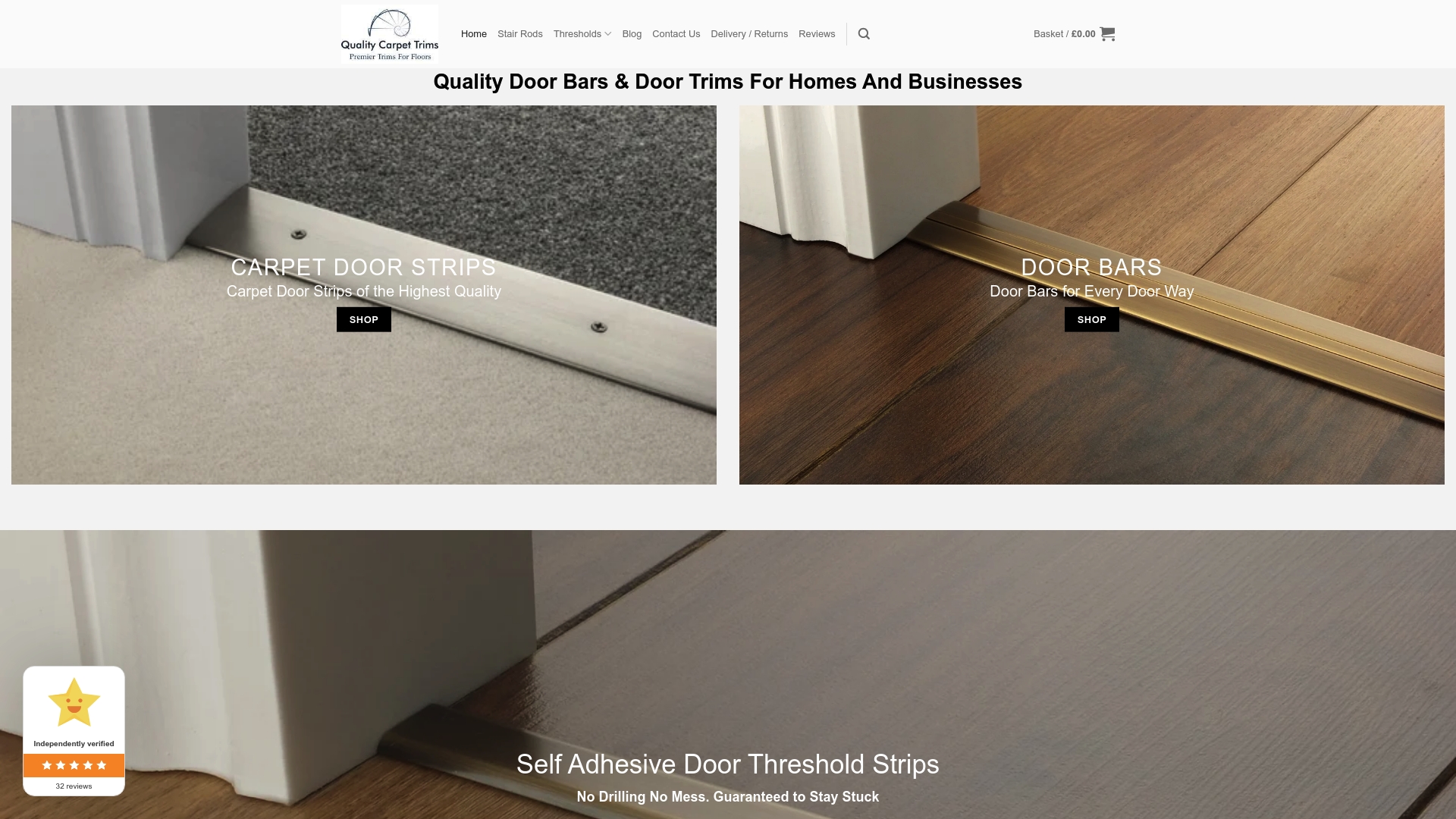
Every trim is manufactured in the UK and finished by hand, so the quality is consistent across every order. The solid brass base will not split, bend, or dent under normal use, and the powder-coated finish retains its colour and sheen for years without specialist maintenance. Whether you need a door threshold bar for a high-traffic hallway or a carpet edge trim for a clean finish at a room boundary, the range covers every common flooring transition. Free samples are available, so you can confirm the finish in your own home before you order.
FAQ
What is trim durability and why does it matter?
Trim durability is a trim’s ability to resist wear, impact, and moisture over time without bending, splitting, or losing its finish. It matters because a failing trim exposes flooring edges to damage and creates ongoing repair costs.
Why do solid brass trims outperform wood or plastic trims?
Solid brass resists dents, bends, and moisture absorption that cause wood to warp and plastic to buckle. With a powder-coated finish, brass trims also retain their colour and surface quality far longer than painted or untreated alternatives.
How do I maintain a powder-coated brass trim?
Wipe with a damp cloth and mild detergent as needed, and avoid abrasive cleaners. A thin coat of clear furniture wax applied annually adds extra protection and keeps the surface looking fresh.
Does trim quality affect my home’s resale value?
Quality trims that hold their finish and structure signal well-maintained interiors to buyers and appraisers. Dented or discoloured trims at doorways and flooring transitions suggest deferred maintenance and can reduce perceived property value.
How long do premium brass trims last compared to cheaper options?
Premium durable trim materials can offer up to 50 years of functional performance. Cheaper wood or plastic trims typically require replacement every 7–10 years, making the long-term cost of quality trim significantly lower.
Recommended
- Why durable flooring trims matter: style and protection
- Why durable trims matter for lasting home interiors
- Why use premium edge trims for lasting floors
- Why flooring trims are essential for stylish interiors