
Blog
Upgrade interiors with innovative flooring trims for 2026

Apr
TL;DR:
- Flooring trims are now essential design elements that improve safety, aesthetics, and property value.
- New materials and finishes like brushed brass and matte black elevate modern and luxury interiors.
- Proper early specification and advanced installation methods ensure seamless, durable, and visually cohesive transitions.
Most people treat flooring trims as an afterthought, something to sort out once the main flooring is down and the budget is nearly spent. That assumption is costing designers and homeowners some of the most impactful finishing touches available in modern interiors. In 2026, flooring trims have moved firmly into the spotlight, with new materials, bold finishes, and precision installation methods transforming what was once a purely functional component into a genuine design statement. Whether you are fitting out a luxury home, a busy commercial space, or a stylish open-plan flat, the right trim can define the entire character of a room.
Table of Contents
- Why flooring trims matter in 2026 interiors
- New materials and finishes leading the way
- Essential types of flooring trims and their applications
- Innovative installation methods and smart integration
- Our perspective: what most designers underestimate about flooring trims
- Explore premium flooring trims and elevate your projects
- Frequently asked questions
Key Takeaways
| Point | Details |
|---|---|
| Trims set the tone | 2026’s flooring trims combine style and function, transforming spaces with design-led detail. |
| Material innovation | Composite and metal trims with advanced finishes are leading the industry for durability and aesthetics. |
| Installation advances | Precision-fit and smart integration make modern trims easier to install and future-proof. |
| Customisation | Bespoke colours, profiles, and smart features allow trims to match or enhance any interior vision. |
Why flooring trims matter in 2026 interiors
For years, flooring trims sat quietly at the bottom of specification lists, chosen for price rather than purpose. That approach is changing fast. Interior designers and contractors across the UK are recognising that trims do far more than cover a gap between two floor surfaces. They protect floor edges from chipping, prevent trip hazards at level changes, and create visual continuity across complex layouts.
The importance of flooring trims is particularly evident in open-plan living spaces, where multiple flooring types meet in full view. A poorly chosen or badly fitted trim immediately draws the eye for all the wrong reasons. A well-specified one, by contrast, creates a seamless flow that makes the entire floor feel intentional and considered.
Safety is another dimension that professionals cannot ignore. In commercial settings especially, floor transitions must comply with UK building regulations covering slip resistance and trip prevention. As the industry standards for trims confirm, flooring trims are integral to achieving both a seamless finish and compliance with UK safety standards.
“A trim is not just a cover strip. In 2026, it is a design decision that signals the quality and care put into every square metre of a project.”
Here is why specifying trims early in 2026 projects pays dividends:
- Visual coherence: Trims tie together contrasting floor materials without visual interruption
- Edge protection: They shield vulnerable floor edges from daily wear and impact
- Accessibility compliance: Correctly profiled trims support wheelchair and mobility aid access
- Acoustic performance: Certain trim profiles reduce sound transfer between zones
- Property value: Professionally finished transitions signal quality to buyers and tenants
With 2026 interiors leaning heavily into mixed-material floors, statement trims are no longer optional extras. They are a core part of the design vocabulary.
New materials and finishes leading the way
The materials available for flooring trims have expanded dramatically, and the finishes now on offer would have seemed extravagant even five years ago. Today’s market reflects a broader shift in interior design towards warmth, sustainability, and individuality.

Brushed brass is perhaps the single biggest finish trend of 2026. It brings warmth and a sense of craftsmanship to both traditional and contemporary interiors. Paired with herringbone hardwood or large-format stone tiles, a brushed brass threshold bar elevates the entire floor scheme.
Matte black continues its dominance in industrial and minimalist spaces. It reads as bold without being brash, and it works particularly well in monochrome kitchens and bathrooms where every detail is deliberate.
Solid metal trims, hand-finished to exacting standards, are setting the benchmark for quality and longevity. As metal and sustainable composite trims are outpacing traditional wood due to durability and eco-credentials, the case for investing in premium metal finishes has never been stronger.
| Finish | Best setting | Durability | Sustainability |
|---|---|---|---|
| Brushed brass | Residential, boutique commercial | High | Recyclable metal |
| Matte black | Industrial, minimalist | High | Recyclable metal |
| Satin chrome | Contemporary, neutral schemes | High | Recyclable metal |
| Antique bronze | Heritage, traditional | High | Recyclable metal |
| Champagne gold | Luxury residential | High | Recyclable metal |
For commercial trims installation in high-footfall environments, durability is non-negotiable. Solid metal trims outperform plastic and composite alternatives under sustained pressure and heavy trolley or wheelchair traffic.
There is also growing demand for antimicrobial finishes, particularly in healthcare and hospitality settings. These specialist coatings inhibit bacterial growth on trim surfaces, adding a hygiene benefit that clients in those sectors are actively requesting.
Pro Tip: Before committing to a finish, order physical samples and hold them against your actual floor material in the project’s lighting conditions. Finishes can shift significantly between a product image and real-world installation. Familiarise yourself with trims terminology explained so you can specify with precision and avoid costly ordering errors.
Essential types of flooring trims and their applications
Knowing which trim type to use where is just as important as choosing the right finish. The wrong profile in the wrong location creates both visual and practical problems. Understanding the choosing trim types process helps you make confident decisions from the outset.
As confirmed by specialist guidance, choosing the right trim type for each flooring transition is critical for both aesthetics and functionality. Here is a breakdown of the most-used profiles in 2026 projects:
| Trim type | Primary use | Floor types joined |
|---|---|---|
| T-bar | Same-level transitions | Laminate to tile, vinyl to hardwood |
| Reducer strip | Different-height transitions | Carpet to hard floor, tile to vinyl |
| Scotia | Perimeter finishing | Skirting to floor edge |
| Threshold bar | Doorway transitions | Any combination |
| Edge trim | Exposed floor edges | Steps, raised platforms |
The most popular choices for 2026 projects, ranked by versatility:
- Threshold bars for doorways, where two rooms meet with different flooring on each side
- T-bars for large open-plan areas where flooring types change mid-room
- Reducer strips where there is a meaningful height difference between two floor surfaces
- Scotia trims for clean, professional perimeter finishes at walls and skirtings
- Edge trims for steps, platforms, and any exposed floor edge requiring protection
For complex layouts with multiple floor types, mixing trim profiles is entirely acceptable and often necessary. The key is maintaining finish consistency. If you use brushed brass in the hallway threshold, carry that same finish through to the kitchen reducer and the living room T-bar. Consistency in finish creates coherence even when profiles differ.
Pro Tip: When working with underfloor heating, always check that your chosen trim profile accommodates the slight thermal expansion of the floor. A trim fitted too tightly can buckle as the floor moves with temperature changes. Review the full flooring trim overview to understand how different profiles handle expansion gaps.
Innovative installation methods and smart integration
Even the most beautiful trim can fail if it is poorly installed. The good news is that installation technology has advanced considerably, and advanced installation methods are now accessible to both professional fitters and confident DIY enthusiasts.
The most significant shift is the move away from visible screws. Precision-fit and push-in trim systems use concealed fixing channels that grip the trim securely without any hardware showing on the surface. The result is a cleaner, more refined finish that looks as though the trim grew from the floor itself.
Key installation advances shaping 2026 projects:
- Concealed fixing channels that eliminate visible screws and create flush, clean lines
- Adhesive-backed profiles for surfaces where drilling is not possible or desirable
- Flexible trim profiles that follow curved or irregular floor layouts without gaps
- Pre-finished trim systems that arrive ready to fit, reducing on-site labour time
- Smart trims with embedded LED lighting or wireless sensors for occupancy detection
Smart trim technology deserves particular attention. Trims with integrated LED strips are being specified in hospitality and high-end residential projects to create subtle wayfinding lighting at floor level. This is especially effective in cinema rooms, hotel corridors, and open-plan spaces where atmospheric lighting is a priority.
As advances in installation techniques are reducing errors and improving design outcomes, the gap between a DIY finish and a professional one is narrowing. That said, for commercial projects or complex multi-material floors, engaging a specialist fitter remains the safest route to a lasting result.
40% reduction in installation failures has been recorded where contractors follow structured, method-specific fitting guides rather than relying on general experience alone.
For underfloor heating integration, always use transition techniques that account for thermal movement. Rigid trims fixed too firmly across a heated floor will stress the surrounding material as it expands and contracts through daily heating cycles.
Our perspective: what most designers underestimate about flooring trims
Here is the uncomfortable truth that most project post-mortems eventually surface: trims are almost always specified too late. By the time a designer or contractor turns their attention to transitions, the floor is down, the budget is committed, and the trim choice becomes whatever fits the remaining spend rather than what best serves the design.
This is backwards. Specifying trims at the same time as the main flooring, not after it, opens up a completely different set of possibilities. You can plan for coordinated finishes across every transition in the space. You can order samples alongside your floor samples. You can budget properly for premium metal trims that genuinely elevate the style impact of flooring trims rather than settling for a functional compromise.
The other underestimated truth is that a beautifully chosen trim is one of the most cost-effective ways to add perceived quality to an interior. Swapping a standard silver strip for a hand-finished brushed brass threshold costs relatively little in the context of a full flooring project, yet the visual difference is immediate and lasting. Clients notice. Buyers notice. It is the detail that separates a good finish from a genuinely impressive one.
Explore premium flooring trims and elevate your projects
You now have a clear picture of what is trending, why it matters, and how to install it well. The next step is finding the right products to bring those ideas to life on your actual projects.
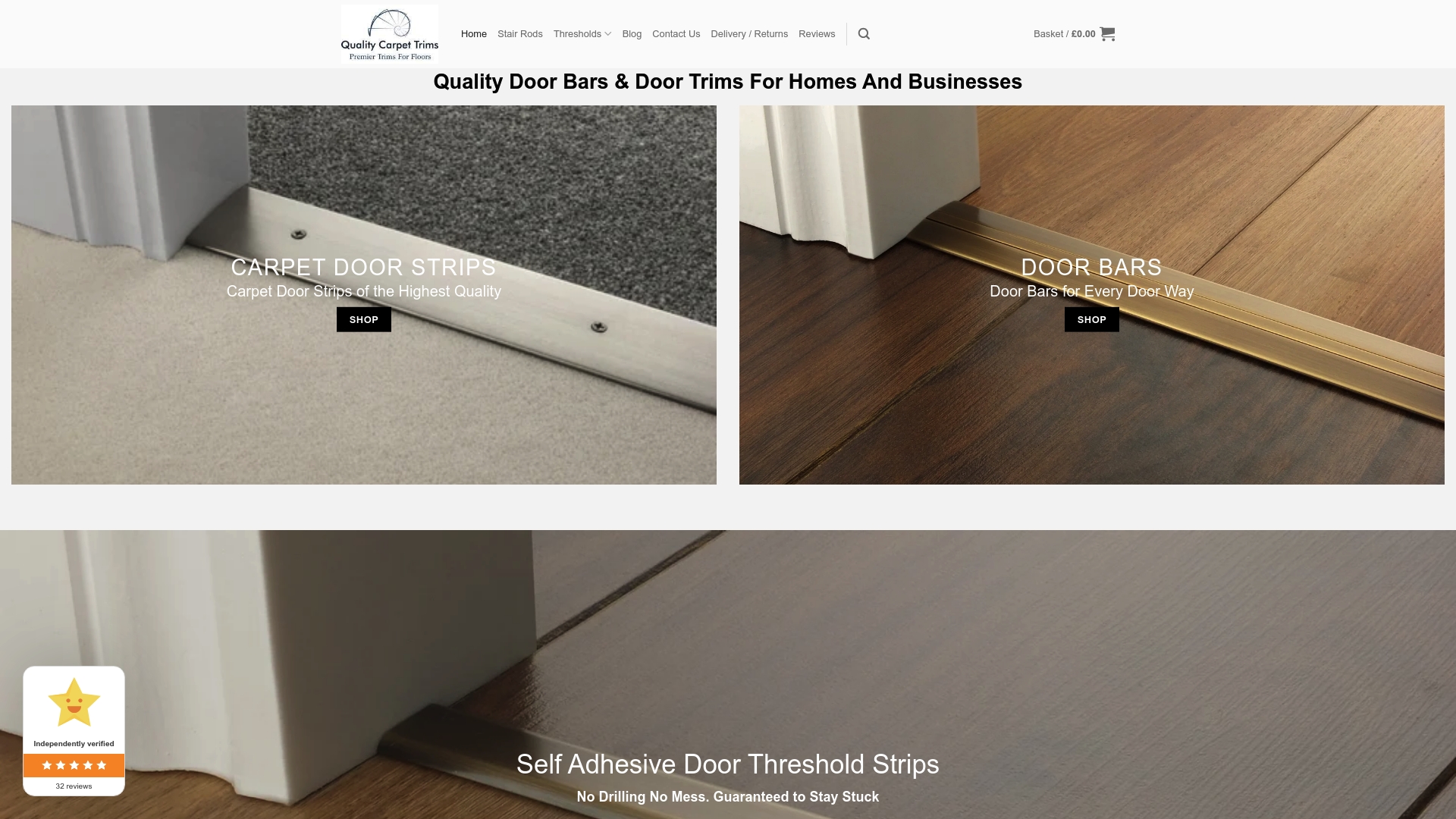
At Quality Carpet Trims, we supply solid metal door bars and flooring trims hand-finished in ten beautiful finishes, manufactured right here in the UK. Whether you need premium matwell trims for entrance areas, a specific threshold profile for a complex doorway, or guidance on which finish coordinates best with your floor, our team is ready to help. Browse the full range of all trim types to find your perfect match, or shop for trims directly and take advantage of free samples and fast UK delivery. Elevate every transition in your project with trims that are built to last and finished to impress.
Frequently asked questions
Which flooring trim materials are most popular for 2026?
Metal and sustainable composite trims are the top choices for 2026, outpacing traditional wood due to their durability, modern appearance, and strong eco-credentials. Brushed brass and matte black finishes are particularly sought after across both residential and commercial projects.
Are smart or lighted trims available in the UK for residential use?
Yes, smart trims with integrated lighting and wireless sensors are gaining real popularity for homes and high-end projects, offering both atmospheric effect and practical wayfinding at floor level.
How do you choose the right trim for different floor transitions?
Select trims based on the materials being joined, the height difference between surfaces, footfall levels, and design intent. As specialist guidance confirms, choosing the right trim type for each transition is critical for both aesthetics and long-term functionality.
Can flooring trims be customised for unique interior designs?
Absolutely. There is increasing demand for custom colour matches and unique finishes, and many suppliers now offer bespoke profiles and hand-applied finishes to coordinate precisely with tailored interior schemes.
Recommended
- Why flooring trims are essential for stylish interiors
- Top Flooring Trends For 2019 Revealed | Quality Carpet Trims
- Flooring Trim: Ensuring Seamless, Safe Transitions
- Matwell Flooring Trim – Premier Flooring Trims. 10 Colours Order Online Now