
Blog
Door threshold benefits for stylish UK homes in 2026

Apr
TL;DR:
- Door thresholds serve crucial functions, including sealing gaps, preventing draughts, managing moisture, and ensuring safety.
- They also enhance interior design with seamless finishes, matching colours and textures to complement spaces.
- Choosing the appropriate threshold type—flush or raised—depends on location, weather exposure, and accessibility needs.
Most homeowners give door thresholds little thought, treating them as an afterthought once the flooring is laid. Yet these slim strips of metal do far more than cover a gap. They define the visual flow between rooms, protect your home from draughts and moisture, and even determine whether your space meets UK accessibility standards. Whether you are a homeowner refreshing a hallway or a designer specifying finishes for a full renovation, understanding what a threshold actually does will change how you approach every flooring transition in your project.
Table of Contents
- What is a door threshold and what does it do?
- Style meets function: How thresholds enhance interiors
- Practical benefits: Accessibility, draughts, and moisture defence
- Flush vs. raised thresholds: What works best and where
- The real difference thresholds make in modern UK homes
- Find the ideal thresholds and trims for your project
- Frequently asked questions
Key Takeaways
| Point | Details |
|---|---|
| Unify style and function | Quality thresholds create seamless transitions and complement your overall home design. |
| Improve safety and access | Choosing the right threshold reduces trip hazards and supports accessibility for all users. |
| Protect against the elements | Thresholds help block draughts, damp, and water—especially in weather-exposed UK homes. |
| Select for your setting | Flush thresholds suit sheltered areas for aesthetics, but raised types deliver better water protection in harsh conditions. |
What is a door threshold and what does it do?
A door threshold is the strip fitted at the base of a doorway, bridging the point where two different flooring surfaces meet. It might sit between carpet and laminate, tile and hardwood, or two rooms with different floor heights. Think of it as the full stop at the end of one flooring sentence and the capital letter starting the next. Without it, you get a ragged, unfinished edge that looks unprofessional and can become a genuine safety hazard.
The common misconception is that thresholds are purely decorative. In reality, they perform several vital functions that affect your daily comfort and your home’s long-term condition. Understanding the door threshold basics helps you make smarter choices from the outset.
Here is what a quality threshold actually does for your home:
- Bridges flooring transitions cleanly, preventing edges from lifting or fraying over time
- Reduces draughts by sealing the gap at the base of external and internal doors
- Manages moisture by creating a barrier that slows water movement between rooms
- Eliminates trip hazards by covering height differences between floor surfaces
- Supports accessibility by providing a smooth, low-rise crossing point for wheelchairs and prams
- Reduces sound transfer between rooms, particularly useful in open-plan homes
“Door thresholds are essential for clean flooring transitions and provide practical benefits beyond decoration.”
The key benefits extend well beyond what most people realise when they first start planning a flooring project. A threshold chosen thoughtfully for its location and purpose will outlast the floor itself and quietly protect your investment year after year.
Style meets function: How thresholds enhance interiors
Now that you understand what a threshold is, it is time to focus on the design impact they can deliver. A well-chosen threshold does not just cover a gap. It completes the room.
Modern interiors demand clean, uninterrupted visual lines. Flush and low-profile thresholds are particularly popular with designers working on contemporary spaces because they sit level with the surrounding floor, creating a seamless look that does not interrupt the eye. This matters enormously in open-plan living areas where the flooring is one of the primary design statements.
The perfect finish comes from matching your threshold to the wider material palette of the room. Here is what to consider:
- Colour and tone: Choose a finish that either matches the dominant floor colour or complements it as a subtle contrast
- Surface texture: Brushed, satin, or polished finishes each create a different visual weight in the space
- Profile height: Lower profiles read as more refined and contemporary; taller profiles can look dated in modern interiors
- Consistency across the home: Using the same threshold finish throughout creates a cohesive, designed feel rather than a piecemeal one
Pro Tip: Look at the metal finishes already present in the room, door handles, hinges, light switches, and curtain poles. Matching your threshold to these existing metals is one of the simplest ways to make a space feel intentionally designed rather than assembled.
“Enhance aesthetics with finishes matching interiors; low-profile options for seamless modern designs.”
Thresholds also conceal the raw, often unsightly edges of cut flooring, which is especially important with materials like carpet or vinyl where the cut edge can fray or discolour over time. If you are upgrading your existing threshold, you may be surprised how much difference a quality replacement makes to the overall impression of a room. Estate agents consistently note that finishing details influence buyer perception, and a crisp, well-fitted threshold signals a home that has been looked after.
Practical benefits: Accessibility, draughts, and moisture defence
With style addressed, it is crucial to see how thresholds play a starring role in home safety and comfort. This is where the choice of threshold becomes genuinely consequential rather than simply cosmetic.
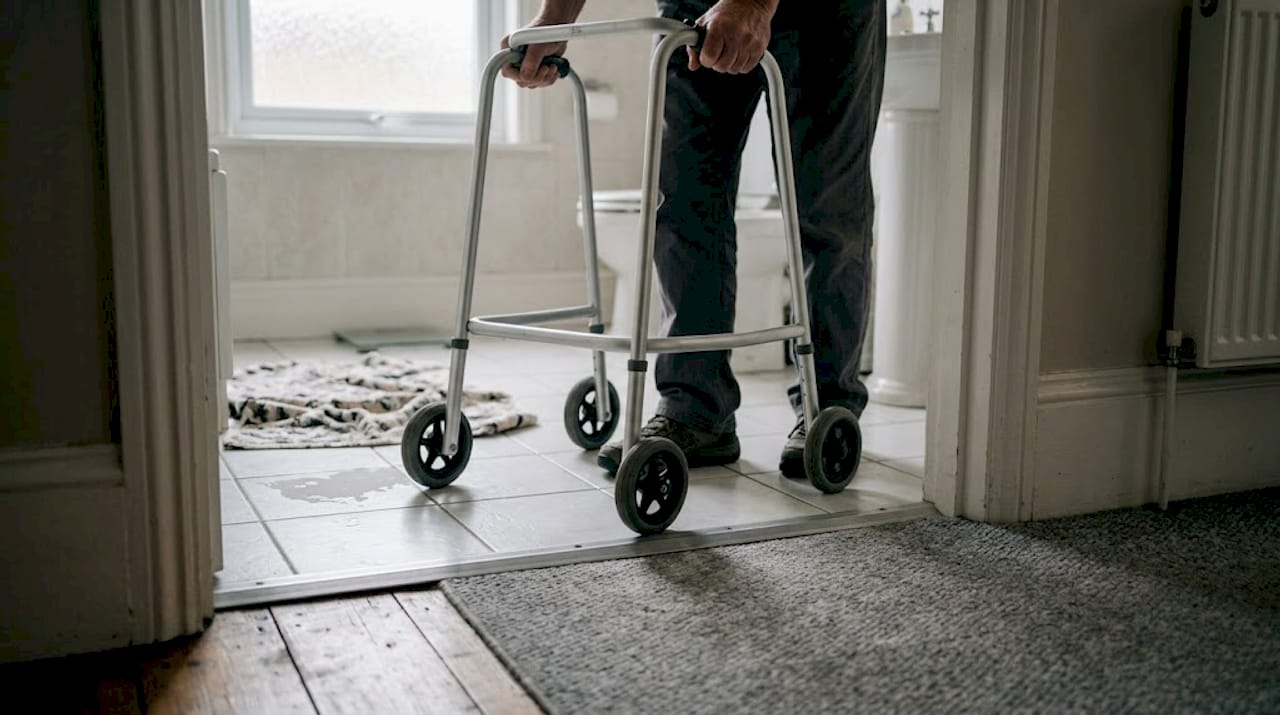
Accessibility is a legal consideration in the UK, not just a design preference. UK Building Regulations Part M permits a maximum upstand of 15mm for accessible thresholds, with chamfered edges required to allow wheelchair and pram users to cross without difficulty. Getting this wrong in a new build or significant renovation is not just inconvenient; it can mean failing an inspection.
Here are the top practical benefits a quality threshold delivers:
- Draught reduction: A fitted threshold seals the base of a door, cutting cold air infiltration and reducing heating bills
- Moisture control: Particularly important in kitchens and bathrooms where water on the floor is a daily reality
- Sound dampening: Thresholds reduce the transfer of noise between rooms, improving privacy and comfort
- Trip hazard elimination: Covering height differences between floor types protects children, elderly residents, and guests
- Floor edge protection: Prevents the edges of carpet, laminate, and vinyl from lifting, curling, or fraying
For wet areas, the bathroom threshold essentials are particularly important. A threshold at the bathroom door creates a physical barrier that slows water from spreading onto adjacent flooring, protecting both the subfloor and the room beyond.
Pro Tip: If accessibility is a priority, select a threshold with a chamfered or ramped profile. You retain the draught and moisture barrier while keeping the crossing point smooth and safe for all users.
When reviewing material choices and durability, it is worth noting that solid metal thresholds consistently outperform plastic alternatives in terms of longevity and resistance to daily foot traffic.
Flush vs. raised thresholds: What works best and where
Having established the benefits, let us compare the main types to help you select the best fit for your project. The choice between flush and raised thresholds is one of the most debated decisions in flooring specification.
Flush thresholds sit level with the surrounding floor surface. Designers favour them for their clean appearance and their compliance with accessibility standards. They work beautifully in interior doorways, open-plan spaces, and anywhere that visual continuity is the priority.
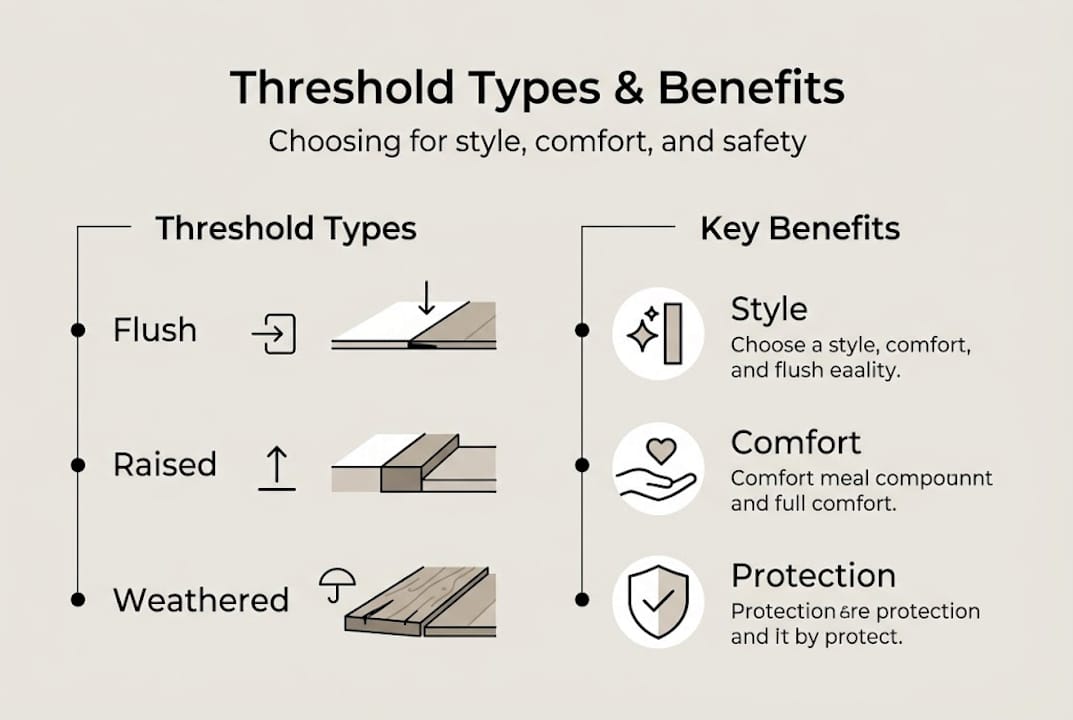
Raised and weathered thresholds sit slightly above the floor level. They offer a more robust barrier against water ingress and are particularly suited to exposed locations. In the UK, where coastal and rural properties face significant weather exposure, a raised threshold is often the more practical choice. Raised or weathered types typically have an upstand of 14 to 20mm, providing superior weatherproofing compared to flush alternatives.
When to use each type:
- Flush threshold: Interior doorways, open-plan living areas, accessible entrances, contemporary new builds
- Raised threshold: External doors, exposed or coastal locations, bathrooms, kitchens, older properties with uneven subfloors
- Weathered threshold: Front and back doors in high-rainfall areas, any door facing prevailing wind
| Feature | Flush threshold | Raised threshold | Weathered threshold |
|---|---|---|---|
| Accessibility | Excellent | Moderate | Limited |
| Water resistance | Moderate | Good | Excellent |
| Visual appeal | Seamless | Visible profile | Functional look |
| UK regulation fit | Part M compliant | Depends on height | Check local regs |
| Best setting | Interior rooms | External doors | Exposed locations |
Statistic to note: UK Building Regulations allow a maximum upstand of 15mm for accessible thresholds. Weathered thresholds typically range from 14 to 20mm, meaning some may exceed the accessible threshold limit and require careful specification.
For a broader view of available profiles, the threshold strips range covers the full spectrum of options, and installer perspectives from technical guides highlight how real-world conditions affect the final choice.
The real difference thresholds make in modern UK homes
Here is the honest truth that most flooring guides will not tell you. The debate between flush and raised thresholds is not really about aesthetics versus function. It is about understanding your specific context and refusing to apply a one-size-fits-all answer.
Designers consistently favour flush thresholds for their clean lines and accessibility credentials. Installers, particularly those working on exposed properties in the north of England, Scotland, or coastal Wales, will argue firmly for raised or weathered options based on hard experience with water damage. Both are right, for their own context.
As noted in contrasting professional views, designers prioritise flush thresholds for aesthetics and Part M compliance, while installers lean toward raised options for reliability in UK weather conditions. The mistake most homeowners make is choosing on looks alone, then discovering the practical consequences the following winter.
The smarter approach is to assess each doorway individually. An internal doorway between a living room and hallway is a completely different specification challenge from a back door opening onto a garden in a west-facing property in Wales. The door threshold benefits you actually experience depend entirely on choosing the right type for the right location. Urban homes with well-sheltered entrances can often prioritise aesthetics. Rural and coastal homes should treat weatherproofing as non-negotiable. Treat every threshold decision as its own brief, and you will get it right every time.
Find the ideal thresholds and trims for your project
Choosing the right threshold is one of those decisions that pays dividends for years. It protects your floors, completes your interior, and quietly handles the practical demands of daily life without drawing attention to itself.
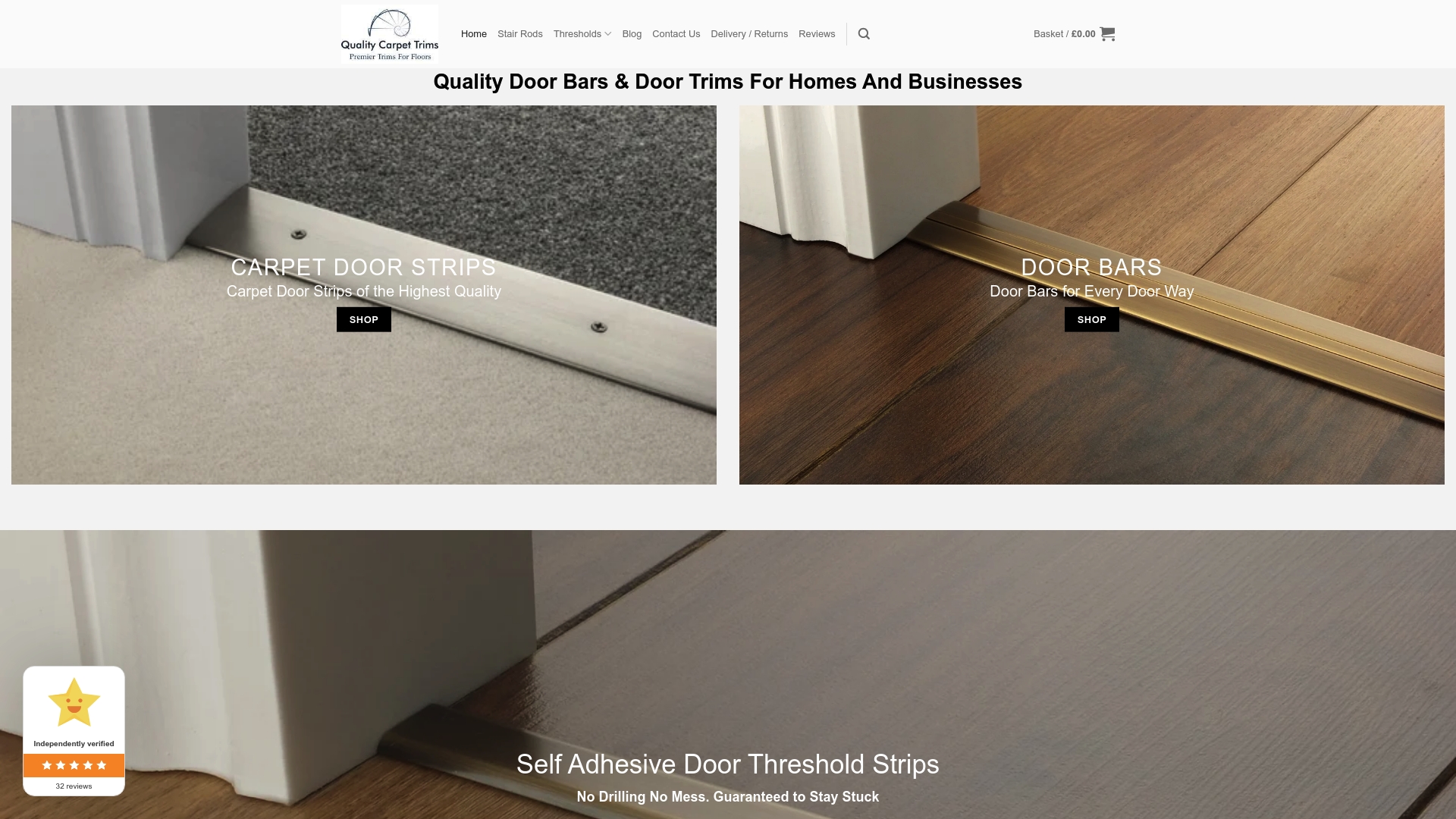
At Quality Carpet Trims, we supply solid metal door thresholds hand-finished in 10 beautiful finishes, giving you the quality and choice to match any interior scheme. Explore our threshold strips range to find the right profile for your project, browse our matwell flooring trims for entrance solutions, or visit our flooring trim terminology guide to make sure you are specifying exactly the right product from the start.
Frequently asked questions
Are door thresholds necessary in all UK homes?
Yes, thresholds are vital for joining different floor surfaces, preventing draughts, and meeting accessibility requirements. As noted by flooring specialists, thresholds are essential for clean transitions and practical home protection.
Can door thresholds be fitted to meet accessibility standards?
Absolutely. Flush or low-profile thresholds with a maximum 15mm upstand and chamfered edges comply with Building Regulations Part M, making them suitable for wheelchair and pram users.
Which threshold material is most durable?
Solid metal thresholds offer the best long-term durability and resistance to warping. Aluminium resists warping better than PVC, while wood requires sealing and regular maintenance to perform well over time.
Do all door thresholds help with water protection?
Not equally. Raised and weathered thresholds provide the strongest defence against water ingress. Flush thresholds risk water penetration in exposed UK locations, making raised profiles the safer choice for external and wet-area doorways.
Recommended
- Why use door thresholds? Key benefits for UK homes
- What is a door threshold? Expert guide for UK homes
- Doorway Details, Sorted: What Thresholds, Door Bars And Transition Strips Actually Do – Quality Carpet Trims
- Door Threshold Bars – Quality Carpet Trims