Blog
Flooring finish standards 2026: the compliance guide

Jun
TL;DR:
- The 2026 flooring finish standards specify performance criteria for fire safety, slip resistance, formaldehyde emissions, and circular economy documentation that professionals must meet. Compliance requires detailed evidence from specific tests, assembly-specific certifications, and product passports, with deadlines for formaldehyde limits set for August 2026. Practitioners should proactively audit their products, request proper documentation early, and build a comprehensive compliance file from project inception.
Flooring finish standards 2026 define the mandatory and recommended performance criteria that construction professionals and interior designers must satisfy across fire safety, slip resistance, formaldehyde emissions, and circular economy documentation. The regulatory picture has shifted considerably this year, with Approved Document F (2026) published by the Ministry of Housing, Communities and Local Government on 24 March 2026, SIST EN 18135:2026 introducing product passports for floor coverings, and EU REACH Annex XVII Entry 77 enforcing formaldehyde emission limits from 6 August 2026. For any professional specifying or installing flooring in the UK or EU this year, understanding these updates is not optional. Compliance failures carry real consequences: inspection delays, liability exposure, and costly remediation.
What are the main flooring finish standards 2026 regulations?
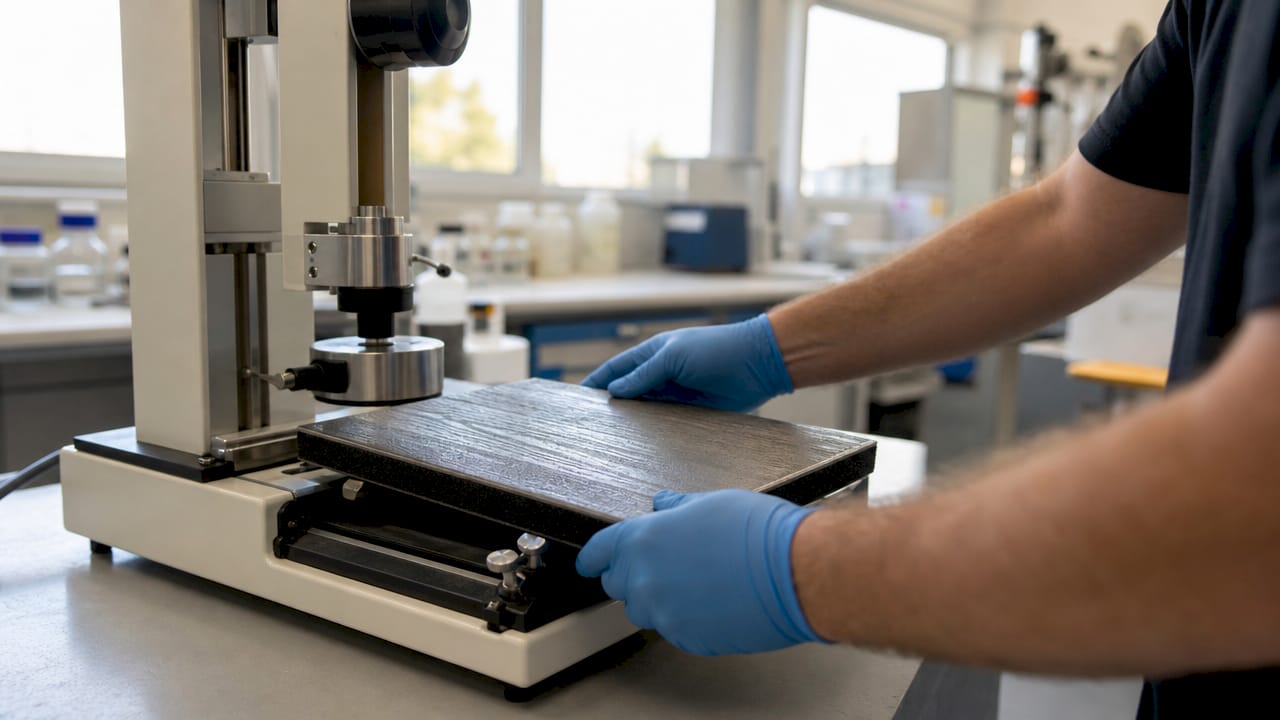
The 2026 floor finish guidelines update draws together several distinct regulatory frameworks, each targeting a different performance risk. Modern flooring compliance involves multi-criteria assessment, meaning fire performance, slip resistance, moisture control, and air quality are governed by separate referenced standards rather than a single overarching code. That distinction matters enormously when you are writing specifications or briefing a supply chain.
The principal standards and regulations affecting flooring finishes in 2026 are:
- Approved Document F (2026): Statutory guidance supporting Part F of the Building Regulations 2010 for dwellings in England. It addresses ventilation and moisture control, both of which directly affect flooring performance and finish durability in habitable spaces.
- SIST EN 18135:2026: Specifies the minimum and optional content of a product passport for resilient, textile, laminate, and modular mechanically locked floor coverings and their underlays. It covers product identification, composition, environmental impact, and reuse and recycling information, supporting circular economy obligations.
- ANSI A326.3: Sets dynamic coefficient of friction (DCOF) thresholds for slip resistance. The minimum is 0.42 for level interior surfaces and 0.50 for ramps or heavily wet areas, with the BOT-3000E Digital Tribometer as the approved testing instrument.
- ASTM E648 / NFPA 253: The primary fire performance test for commercial flooring. Class I requires a critical radiant flux of at least 0.45 W/cm² and Class II requires at least 0.22 W/cm². Tested product documentation is mandatory for building compliance.
- REACH Annex XVII Entry 77: From 6 August 2026, Regulation (EU) 2023/1464 enforces formaldehyde emission limits of 0.062 mg/m³ for furniture and wood-based articles and 0.080 mg/m³ for other indoor-use articles including flooring.
- EN ISO 2551:2026: Sets procedures to measure dimensional stability and distortions for textile floor coverings and tiles under water and heat exposures, providing performance guarantees for textile flooring under environmental stress.
Pro Tip: When briefing suppliers, request test certificates that reference the specific standard number and year. A certificate citing an earlier edition of ANSI A326.3 or a pre-2026 REACH compliance declaration will not satisfy an inspector reviewing the current requirements.
How do 2026 standards affect material selection and safety compliance?
The updated flooring safety standards 2026 have direct consequences for which materials you can specify and how you document their performance. Each risk category demands its own evidence trail, and the four areas below are where most specification errors occur.
-
Slip resistance and installation context. Slip resistance compliance depends on installation context. Test data must match actual conditions, including wet areas and system components, for liability protection. A tile rated at 0.44 DCOF in a dry showroom test may fall below the 0.42 threshold once installed with a particular adhesive and grout combination in a wet commercial kitchen. Always request wet condition testing per ANSI A326.3 protocol rather than relying on generic product ratings.
-
Fire performance and assembly specificity. Fire surface class ratings are not equivalent to fire-resistance ratings for floor assemblies. A carpet tile carrying a Class I rating under ASTM E648 must be tested at the exact thickness, backing, and underlayment configuration you intend to install. Substituting a different underlay invalidates the test data. This is one of the most common and costly oversights on commercial projects.
-
Formaldehyde limits and wood-based flooring. The REACH Entry 77 limits affect laminate, engineered wood, and composite flooring most acutely. Products that were compliant under previous voluntary limits may now exceed the 0.080 mg/m³ threshold for indoor articles. Procurement teams need to audit existing approved product lists and request updated declarations of performance from manufacturers before August 2026.
-
Product passports and circular economy documentation. SIST EN 18135:2026 requires manufacturers and suppliers to deliver traceable data on composition, environmental impact, and end-of-life options. For design professionals, this means specifying flooring that comes with a compliant product passport is now part of responsible procurement, not an optional sustainability gesture. Clients seeking BREEAM or LEED credits will expect this documentation as standard.
Documented test evidence is the thread connecting all four areas. Inspectors and Authorities Having Jurisdiction (AHJs) expect to see specific test reports, not vague declarations that a product “meets flooring code.”
Comparison of key flooring finish standards for 2026 compliance
The table below summarises the six principal standards relevant to the best flooring materials 2026 specification decisions, showing scope, test method, threshold, and geographic applicability.
| Standard | Scope | Test method | Threshold / requirement | Applicability |
|---|---|---|---|---|
| Approved Document F (2026) | Dwellings in England: ventilation, moisture | Statutory guidance, no single test | Compliance with Part F, Building Regs 2010 | England (mandatory) |
| SIST EN 18135:2026 | Resilient, textile, laminate, modular flooring and underlays | Product passport data compilation | Minimum content: composition, environmental impact, reuse data | EU / UK (recommended, circular economy aligned) |
| ANSI A326.3 | All interior floor surfaces | BOT-3000E Digital Tribometer | DCOF ≥ 0.42 (level); ≥ 0.50 (ramps/wet) | US standard, widely referenced internationally |
| ASTM E648 / NFPA 253 | Commercial flooring assemblies | Critical radiant flux test | Class I ≥ 0.45 W/cm²; Class II ≥ 0.22 W/cm² | US/international, mandatory for commercial builds |
| REACH Annex XVII Entry 77 | Wood-based and indoor-use articles including flooring | Chamber emission testing | ≤ 0.062 mg/m³ (wood-based); ≤ 0.080 mg/m³ (other indoor) | EU (mandatory from 6 August 2026) |
| EN ISO 2551:2026 | Textile floor coverings and tiles | Water and heat exposure testing | Dimensional stability within specified tolerances | EU / international (performance standard) |
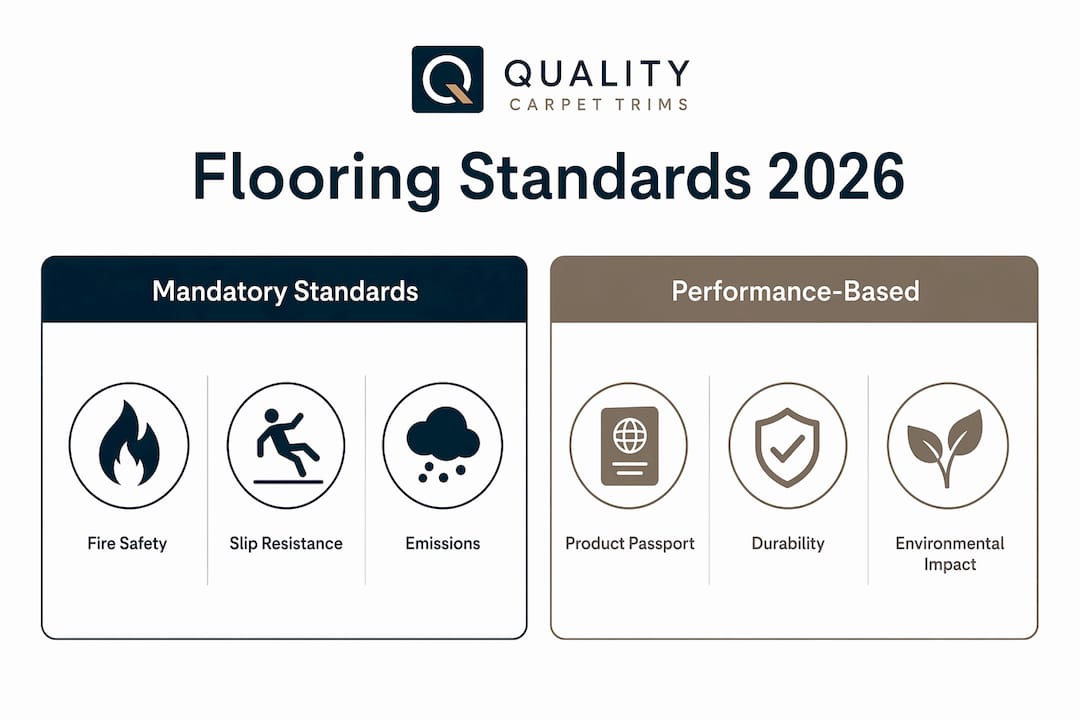
The most significant distinction in this table is between mandatory and performance-based standards. Approved Document F and REACH Entry 77 carry legal force in their respective jurisdictions. ANSI A326.3 and ASTM E648, while originating in the US, are routinely referenced in UK and EU project specifications because no single equivalent standard covers the same test methodology with the same precision.
Pro Tip: On UK commercial projects, specify both the ASTM E648 fire test report and the relevant British Standard fire classification in your flooring schedule. Inspectors increasingly expect both, particularly for healthcare and education builds where occupancy risk is higher.
What practical steps help ensure compliance with 2026 flooring standards?
Meeting the 2026 flooring regulations in practice requires a structured workflow from specification through to handover documentation. The following steps reflect what experienced practitioners treat as non-negotiable on compliant projects.
- Split your specification by risk category. Write separate performance clauses for fire, slip resistance, moisture, and emissions. Detailed test document mapping reduces inspection delays far more effectively than a single “meets all applicable standards” clause.
- Request product passports at tender stage. Do not wait until practical completion to chase EN 18135:2026 documentation. Suppliers who cannot provide a compliant product passport at tender stage represent a procurement risk, particularly on projects with sustainability reporting obligations.
- Match test data to your exact installation assembly. Confirm that slip resistance and fire test certificates reference the specific backing, adhesive, and underlay you are specifying. A mismatch between the tested assembly and the installed assembly is the single most common cause of compliance failure on inspection.
- Audit your approved product list for REACH compliance. Any laminate, engineered wood, or composite flooring approved before 2025 may need re-evaluation against the 0.080 mg/m³ formaldehyde threshold. Build this audit into your procurement programme before the August 2026 deadline.
- Consult the AHJ early on fire classification. For commercial, healthcare, and education projects, confirm with the Authority Having Jurisdiction which fire class is required for each space before finalising the flooring schedule. Retrofitting a higher-rated product after tender award is expensive and disruptive.
- Maintain a project compliance file. Retain test reports, declarations of performance, product passports, and installation records in a single project file. This protects you during inspection and provides evidence in the event of a post-occupancy liability claim.
For the flooring threshold selection stage, the same principle applies: the trim or threshold must be specified and documented as part of the compliant installation assembly, not treated as an afterthought.
Key takeaways
Flooring finish standards 2026 require separate compliance evidence for fire performance, slip resistance, formaldehyde emissions, and circular economy documentation, and no single standard covers all four.
| Point | Details |
|---|---|
| Multi-criteria compliance | Address fire, slip, emissions, and product passport requirements as separate evidenced obligations. |
| REACH August 2026 deadline | Audit all wood-based and composite flooring against the 0.080 mg/m³ formaldehyde limit before August. |
| Assembly-specific test data | Fire and slip certificates must match the exact installation configuration, not just the product alone. |
| Product passports now standard | EN 18135:2026 product passport data should be requested at tender stage, not at project completion. |
| Specification discipline | Split flooring schedules by risk category and reference specific test protocols to satisfy inspectors. |
Why I think most flooring specifications are still written for 2019
The honest observation, having reviewed dozens of flooring schedules over recent years, is that most practitioners are still writing specifications as though a single product data sheet covers everything an inspector needs. It does not. The shift toward sustainability documentation under EN 18135:2026 is the change most professionals are least prepared for. Product passports require coordination between manufacturers and suppliers to deliver traceable data on composition and end-of-life options. That coordination takes time, and most supply chains are not yet set up to deliver it at tender stage without being pushed.
The formaldehyde deadline is the other area where I see complacency. The August 2026 date for REACH Entry 77 is firm. Procurement teams that have not yet audited their approved product lists are running out of runway. The circular economy alignment built into EN 18135:2026 is not a future aspiration. It is a current specification requirement on any project where sustainability credentials matter to the client.
Treat flooring finish compliance as a matrix, not a checklist. Fire, slip, emissions, moisture, and dimensional stability each demand their own evidence. The professionals who get this right are the ones who build the compliance file from day one, not the week before practical completion.
— Matt
Finish your flooring project with trims built to last
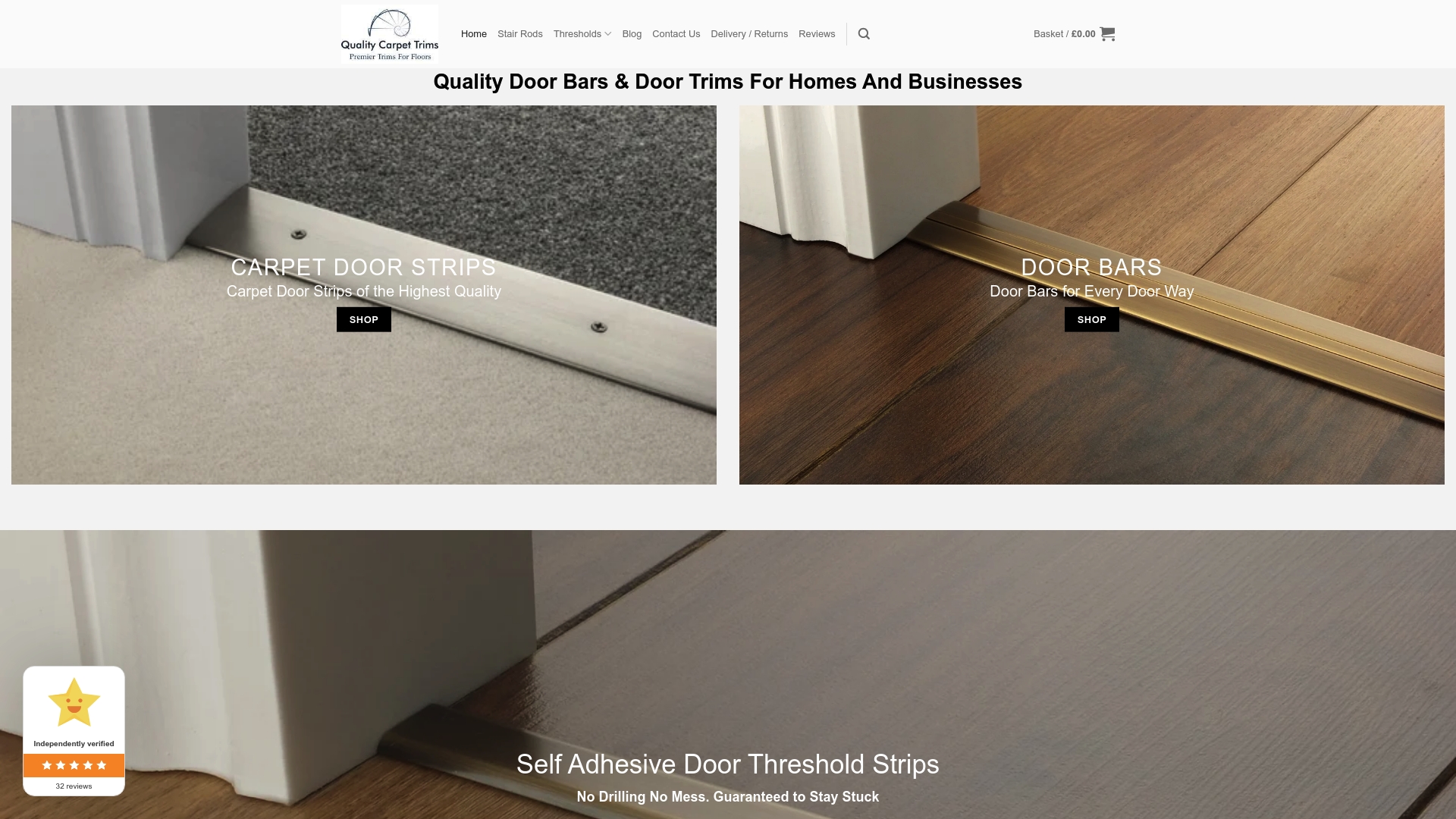
Compliant flooring is only as good as its finishing details. Cheap trims made from aluminium, wood, or plastic split, bend, and dent under load, undermining both the safety and the aesthetic of an otherwise well-specified installation. Qualitycarpettrims supplies solid brass door bars and flooring trims, hand-finished in 10 luxury powder-coated colours, engineered to hold their form and finish across the life of the floor. Every trim is manufactured in the UK and designed to complement carpet, laminate, vinyl, and hard floor surfaces in residential and commercial settings. Explore the full range of premium flooring trims and find the finish that completes your 2026-compliant installation.
FAQ
What are flooring finish requirements under 2026 regulations?
Flooring finish requirements in 2026 cover fire performance under ASTM E648, slip resistance under ANSI A326.3, formaldehyde emissions under REACH Annex XVII Entry 77, and circular economy documentation under SIST EN 18135:2026. Each requirement is governed by a separate standard with its own test method and threshold.
When do the REACH formaldehyde limits for flooring take effect?
The REACH Annex XVII Entry 77 formaldehyde limits take effect from 6 August 2026, enforcing a maximum of 0.080 mg/m³ for indoor-use articles including flooring and 0.062 mg/m³ for wood-based articles.
What is a product passport for flooring under EN 18135:2026?
A product passport under SIST EN 18135:2026 is a structured document specifying a floor covering’s composition, environmental impact, and reuse and recycling information. It supports circular economy compliance and is required for resilient, textile, laminate, and modular mechanically locked floor coverings.
What slip resistance threshold applies to commercial flooring in 2026?
Under ANSI A326.3, the minimum dynamic coefficient of friction is 0.42 for level interior surfaces and 0.50 for ramps or heavily wet areas. Test data must reflect the actual installed conditions, including wet scenarios, to be valid for compliance purposes.
Does Approved Document F (2026) affect flooring specifications?
Approved Document F (2026), published on 24 March 2026 by the Ministry of Housing, Communities and Local Government, provides statutory guidance on ventilation and moisture control for dwellings in England. Moisture management requirements directly affect flooring material selection and finish durability in habitable spaces.
Recommended
- Industry standards for flooring trims: a complete UK guide
- Defining flooring compatibility: the UK DIY and contractor guide
- Flooring trim terminology explained for UK finishes 2026
- What is a flooring transition: guide for UK homeowners 2026