
Blog
Door bars explained: seamless flooring transitions made simple

Apr
TL;DR:
- Door bars protect flooring edges, bridge gaps, and create a polished look between rooms.
- Choosing the correct type and profile depends on flooring materials and height differences.
- Quality, finish, and proper fitting ensure safety, durability, and seamless interior design.
Most people assume a door bar is just a bit of metal you shove under a door to tidy up the carpet. In reality, these small profiles do far more than that, and choosing the wrong one can leave your flooring looking patchy, create trip hazards, or cause expensive edge damage over time. Door bars, threshold strips, and transition strips are often used interchangeably, but they are distinct products with different purposes. This guide cuts through the confusion, explains exactly what each product does, and gives you the practical knowledge to choose and fit the right door bar for any room in your home or commercial space.
Table of Contents
- What is a door bar?
- Types of door bars and where to use them
- How door bars contribute to seamless design and safety
- Choosing and fitting the right door bar
- Our take: what most guides miss about door bars
- Explore high-quality door bars for your project
- Frequently asked questions
Key Takeaways
| Point | Details |
|---|---|
| Essential for transitions | A door bar bridges and protects the join between different floor surfaces in doorways. |
| Variety for every project | There are types and finishes for nearly every flooring transition, from carpet to wood and more. |
| Safety and style impact | Quality door bars improve both the appearance and the safety of entrances and walkways. |
| Fit for DIY or pros | Most homeowners can fit door bars themselves, but professional fitting brings flawless results. |
What is a door bar?
A door bar is a solid metal profile fitted across a doorway to bridge the join between two flooring surfaces. It sits flush or just above floor level, covering the raw edges where one floor type meets another. Without it, those edges are exposed to foot traffic, moisture, and general wear, which means fraying carpet, chipped tiles, or lifting laminate over time.
Door bars serve three core functions:
- Edge protection: They cap the raw, vulnerable edges of your flooring so they cannot fray, lift, or crack.
- Gap bridging: They cover the expansion gap or uneven join that naturally occurs between two floor surfaces.
- Visual finishing: They create a clean, intentional line between rooms, giving your interior a polished, professional look.
It is worth knowing the difference between a door bar and similar products. Door threshold bars are designed with a more protective focus, often used where there is a slight height difference between floors. A transition strip, by contrast, is typically used on a single flat surface where two materials meet without any significant level change. A metal door bar threshold combines both roles, offering edge protection and a smooth transition across a height difference.
“Door bars are key for both aesthetics and safety in UK homes.”
Solid metal door bars are the premium choice for durability and finish. Brass, for example, develops a warm patina over time, while other metal finishes can be matched precisely to your existing hardware and fixtures. The quality of the finish matters enormously. A poorly finished bar will look out of place no matter how well it is fitted, whereas a hand-finished solid metal bar becomes a subtle design feature in its own right.
One thing many homeowners do not realise is that the bar itself must be compatible with the flooring thickness on both sides. A bar fitted over a thick carpet pile and a thin vinyl tile will sit at a steep angle if the wrong profile is used, creating both a visual and physical trip hazard. Always check the height differential before purchasing.
Types of door bars and where to use them
Having established what a door bar is, let us explore its main types and their best applications. The right bar depends entirely on what flooring materials are meeting in your doorway.
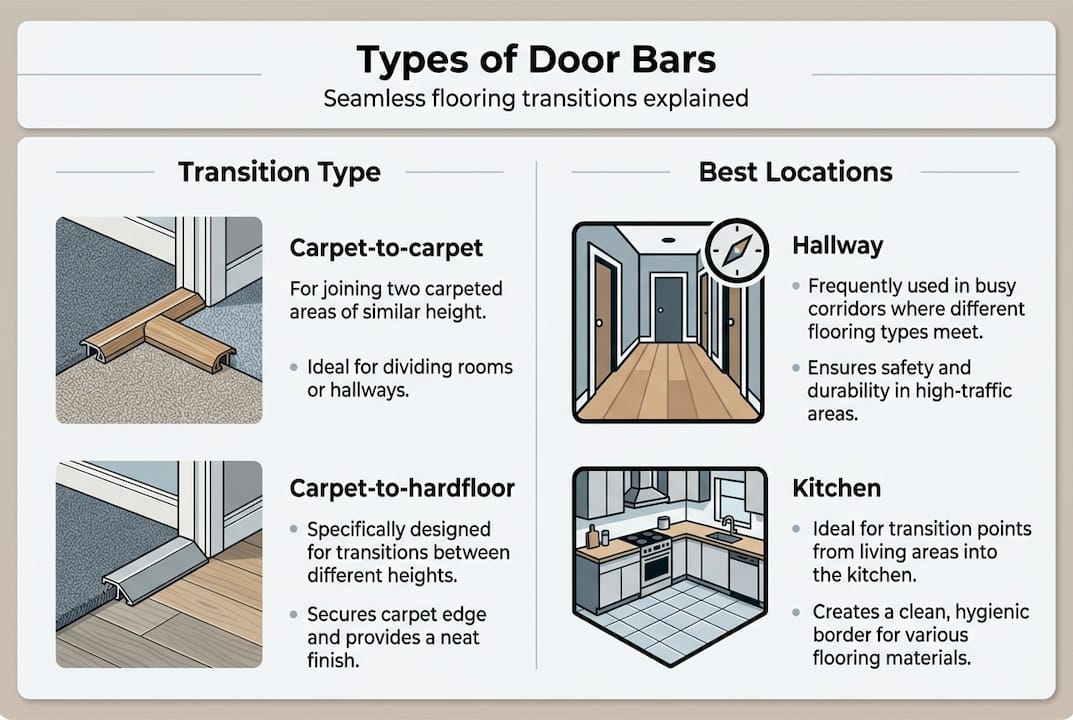
Different door bars suit different flooring transitions, such as carpet-to-carpet or carpet-to-hard flooring. Here is a breakdown of the main categories:
| Type | Best for | Typical location |
|---|---|---|
| Carpet-to-carpet | Joining two carpeted rooms | Hallway to bedroom |
| Carpet-to-hardfloor | Carpet meeting tile, wood, or vinyl | Living room to kitchen |
| Hardfloor-to-hardfloor | Two hard surfaces at similar heights | Bathroom to hallway |
| Extra wide bar | Large or uneven gaps | Older properties, extensions |
Carpet-to-carpet bars typically feature a central spine that grips both carpet edges, holding them neatly in place without glue or tacks. Carpet-to-hardfloor bars have an angled or stepped profile to accommodate the height difference between a soft and hard surface. Hardfloor-to-hardfloor bars are usually flat or slightly raised, designed to cover expansion gaps cleanly.
For rooms with larger gaps or uneven subfloors, extra wide door threshold bars at 55mm wide are the sensible choice. Standard bars are typically around 36mm wide, which suits most modern doorways. Older properties, extensions, or areas where the subfloor has settled unevenly often need that extra coverage to look right.
Key considerations when choosing by room:
- Kitchens and bathrooms: Prioritise a bar with a tight seal to prevent moisture getting under the flooring edge.
- High-traffic hallways: Choose a heavier gauge metal bar for longevity.
- Living rooms: A decorative finish matters more here, so match the bar to your skirting boards or door furniture.
- Commercial spaces: Opt for the most robust profile available.
If you are fitting a bar where hardwood or engineered wood meets another surface, a wood door bar threshold profile gives the cleanest visual result by accommodating the specific thickness and expansion characteristics of timber flooring.
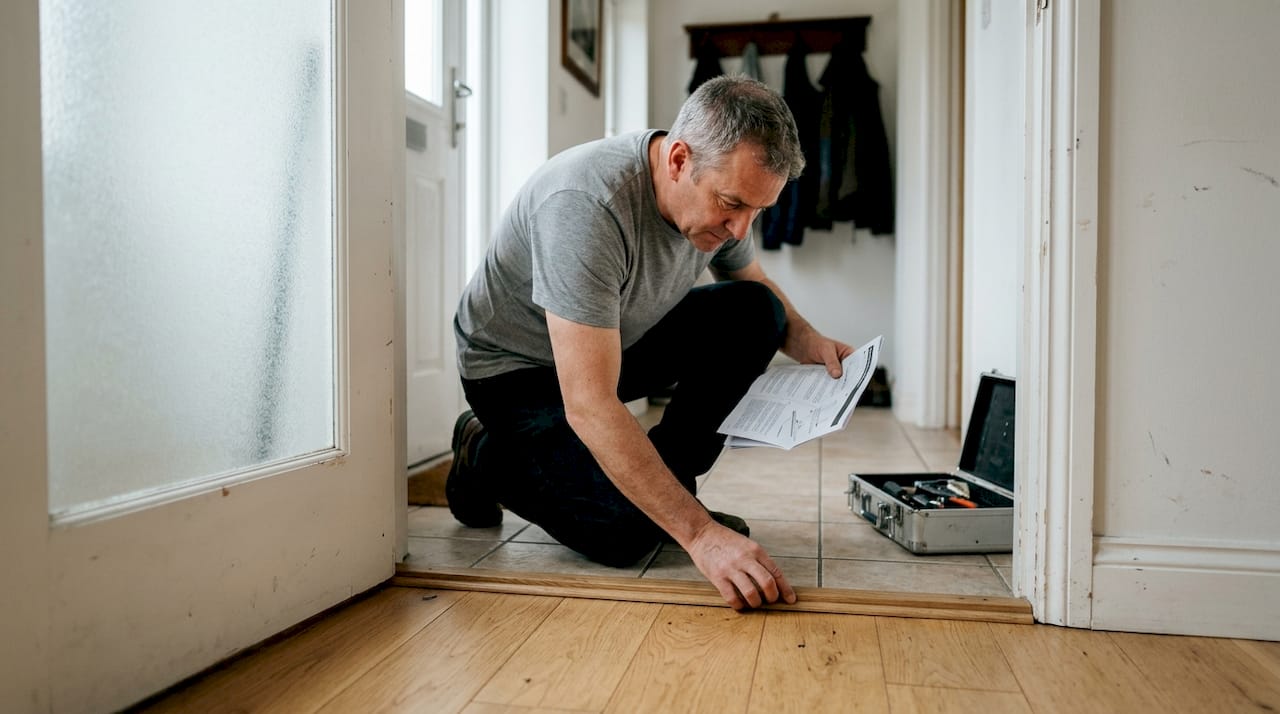
Pro Tip: When in doubt about width, go wider. A bar that is slightly too wide looks intentional. One that is too narrow leaves a visible gap on either side, which looks unfinished and allows dirt to collect.
How door bars contribute to seamless design and safety
Understanding the types of door bars, let us see how they enhance design and safety in any space. The practical benefits go well beyond aesthetics.
- Visual continuity: A well-chosen bar creates a deliberate, clean line between rooms. It signals intentional design rather than an afterthought, which matters enormously in open-plan spaces where the eye travels across multiple floor surfaces.
- Edge preservation: Carpet edges fray when left exposed. Tile edges chip. Laminate lifts. A door bar locks those edges in place, extending the life of your flooring significantly.
- Trip hazard reduction: Proper fitting can reduce trip hazards and preserve flooring edges, which is particularly important in homes with elderly residents or young children.
- Accessibility compliance: In commercial spaces, smooth transitions are not just a design preference. They are often a requirement under accessibility guidelines, ensuring wheelchair users and those with mobility aids can move freely.
Matching the finish of your door bar to your existing metalwork, such as door handles, light switches, and radiator valves, ties the room together in a way that feels considered rather than accidental. Brushed brass with brass handles, satin chrome with chrome fixtures. It sounds minor but the difference is immediately noticeable.
A quality door bar is one of those details that nobody notices when it is right, but everyone notices when it is wrong.
Carpet to hardfloor trims are particularly valuable in kitchens and utility rooms where the transition from a soft hallway carpet to a hard tile floor is both a visual and functional challenge. Similarly, carpet to carpet door bars prevent the unsightly bunching and fraying that occurs when two carpet edges are simply butted together without support.
Pro Tip: In rental properties, always fit door bars before tenants move in. Unprotected flooring edges deteriorate rapidly under foot traffic, and replacing damaged flooring is far more costly than a quality bar fitted from the outset.
Choosing and fitting the right door bar
Now, let us choose the right door bar for your space and ensure it is fitted for lasting results. The selection process starts with a simple assessment of your transition.
Start by identifying the flooring types on each side of the doorway, then measure the gap width and the height difference between the two surfaces. These two measurements determine your bar type and profile.
Key steps for fitting:
- Measure accurately: Measure the doorway width and cut the bar to length using a fine-tooth metal saw or angle grinder. Most bars can be trimmed to fit.
- Mark the fixing positions: Hold the bar in place and mark through the fixing holes onto the subfloor.
- Drill and fix: Use the correct fixings for your subfloor type. Concrete requires masonry fixings; timber subfloors take screws directly.
- Test before finalising: Lay the bar in position without fully tightening and check the fit on both sides before committing.
Reliable fitting ensures maximum performance and smooth transitions, which means taking the time to get the subfloor preparation right before the bar goes down.
| Flooring transition | Recommended bar type | Key consideration |
|---|---|---|
| Carpet to carpet | Double-grip carpet bar | Pile height must match profile |
| Carpet to tile | Angled threshold bar | Tile thickness affects profile choice |
| Carpet to vinyl | Low-profile transition bar | Vinyl is thin; check height differential |
| Tile to wood | Flat T-bar or reducer | Allow for wood expansion gap |
| Wood to wood | T-bar or flat bar | Match finish to floor colour |
For anyone new to fitting a door bar, the process is genuinely manageable as a DIY project. The key is preparation. A clean, flat subfloor and accurate measurements make the difference between a bar that sits perfectly and one that rocks or leaves gaps. If you want to brush up on the broader language around flooring products, trim terminology explained is a useful reference before you start shopping.
Our take: what most guides miss about door bars
Most fitting guides focus entirely on the mechanics of installation and overlook the single most important variable: the quality of the bar itself. You can fit a cheap bar perfectly and it will still look wrong within a year. The finish will dull, the metal will flex under heavy foot traffic, and the edges will show wear in ways that a solid, hand-finished bar simply will not.
We see this regularly. Homeowners spend thousands on flooring and then save a few pounds on the bar connecting it all together. The bar is the first thing you see as you walk through a doorway. It is a detail that industry terminology calls a “transition profile,” but in design terms it is a full stop at the end of a sentence. Get it wrong and the whole paragraph reads badly.
Design professionals know that the finish on a door bar should be selected with the same care as a door handle or tap fitting. It is not an afterthought. It is part of the room’s material palette. Solid metal, hand-finished in a considered colour, elevates the entire space in a way that no plastic or hollow-section bar ever could.
Explore high-quality door bars for your project
If this guide has helped clarify what you need, the next step is finding products that genuinely deliver on quality, finish, and longevity. At Quality Carpet Trims, every bar is solid metal and hand-finished in one of ten beautiful finishes, so you can match your home’s existing metalwork with confidence.
Whether you need a matwell flooring trim for an entrance area, want to explore the full range of UK trim terminology before committing to a purchase, or are ready to shop door threshold bars directly, we have the right product for your transition. Fast UK delivery, free samples available, and expert advice on hand means you can get it right first time.
Frequently asked questions
What is the difference between a door bar and a threshold strip?
A door bar covers and protects the join between floors in a doorway, while a threshold strip is often used for minor level changes or as a finishing trim. Threshold strips and door bars serve different but complementary protective roles.
Are metal door bars better than wooden ones?
Metal door bars are typically more durable and better suited to high-traffic areas. Metal and wood bars each suit specific design and durability needs, so the right choice depends on your interior style and usage.
How do I choose the right width for my door bar?
Pick a width that fully covers the join and fits your doorway opening. Wider door bars are recommended for tricky, uneven flooring transitions where a standard bar would leave gaps.
Can I fit a door bar myself?
Yes, most homeowners can fit a door bar with basic tools and careful preparation. DIY fitting is possible but skilled installation guarantees a smooth, long-lasting finish.
Are door bars suitable for commercial spaces?
Absolutely. Solid metal door bars offer the durability and compliance required in busy public buildings and offices. Metal door bars are particularly valued in high-traffic commercial environments where longevity and safety are non-negotiable.
Recommended
- Doorway Details, Sorted: What Thresholds, Door Bars And Transition Strips Actually Do – Quality Carpet Trims
- Carpet to Hardfloor Trims – High-End Door Bars
- How to Choose Flooring Transitions: Cut Trip Hazards 30%
- Extra Wide Door Threshold Bars: A Must-Have for Seamless Flooring – Quality Carpet Trims
- The Ultimate Guide to Hardwood Floor Finishes – J.R. Hardwood Floor Refinishing & Cleaning