
Blog
Defining premium door bars: what really sets them apart

May
TL;DR:
- Premium door bars are defined by solid brass construction combined with high-quality finishes like powder coating or PVD, ensuring durability and aesthetic appeal. Proper manufacturing tolerances and bolt-through installation methods guarantee long-lasting performance and precise alignment, preventing movement or damage. Selecting a high-quality door bar enhances both the safety and visual harmony of flooring transitions, supporting long-term home value.
Most homeowners give door bars almost no thought until a flooring fitter asks them to choose one. That is a mistake. Defining premium door bars is not about picking the most expensive option in a catalogue. It is about understanding the precise combination of materials, construction methods, and finishes that separate a bar that will still look flawless in twenty years from one that will split, corrode, or bend within two. This article cuts through the noise and explains exactly what makes a door bar genuinely premium, how to identify the best door bar options, and why those distinctions matter for your home’s aesthetics and long-term performance.
Table of Contents
- Key takeaways
- Defining premium door bars: materials and construction
- Finishes that define luxury door bars
- Functional benefits for high-quality flooring transitions
- Industry standards and quality benchmarks
- Selecting, installing, and maintaining door bars
- My honest take on choosing a premium door bar
- Explore Qualitycarpettrims’ premium door bar range
- FAQ
Key takeaways
| Point | Details |
|---|---|
| Material is everything | Solid brass construction is the single most reliable marker of a truly premium door bar. |
| Finish quality drives longevity | Powder-coated or PVD finishes on solid brass resist corrosion and wear far longer than plated alternatives. |
| Manufacturing tolerances count | Precise tolerances in production deliver consistent alignment and a professional finish at every threshold. |
| Installation method matters | Bolt-through fixing is the professional standard for premium door bars, offering superior hold and longevity. |
| Cheaper materials always fail | Wooden, plastic, and aluminium trims split, dent, and corrode. Solid brass does not. |
Defining premium door bars: materials and construction
The single most reliable way to identify a genuinely premium door bar is to look at what it is made from. Solid brass is the benchmark. It is dense, non-ferrous, and naturally resistant to corrosion, which means it holds both its structure and its finish under years of daily foot traffic without compromise.
What separates brass from the alternatives is not just its raw properties. It is how those properties interact with the finishing processes applied to it. Solid brass and powder coatings deliver the long-term durability and luxury aesthetic that cheaper trims simply cannot match. Wooden trims swell, warp, and eventually split. Plastic trims dent under pressure and yellow over time. Aluminium trims scratch easily and offer none of the visual weight or warmth that a premium interior demands. None of these materials belong in a high-specification home.
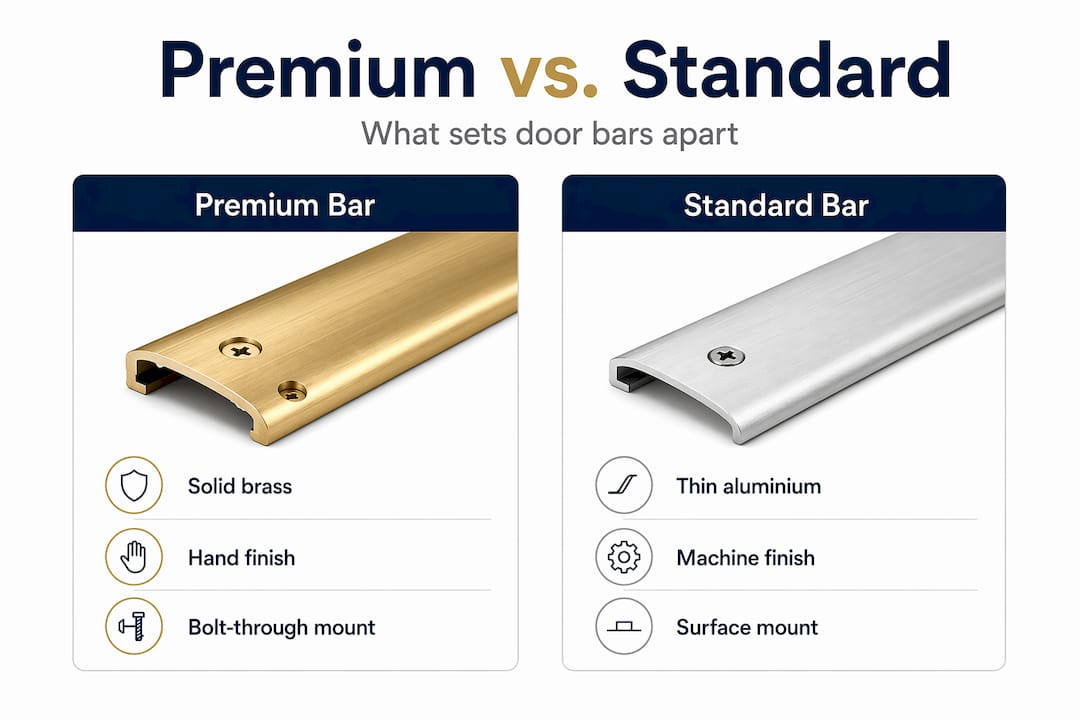
The powder coating applied over the solid brass core is equally significant. A quality powder coat bonds to the metal at a molecular level, creating a surface that resists chipping, scratching, and the kind of gradual degradation that exposes bare metal. PVD finishing processes significantly increase corrosion and wear resistance, making it the preferred choice for premium door hardware exposed to constant use.
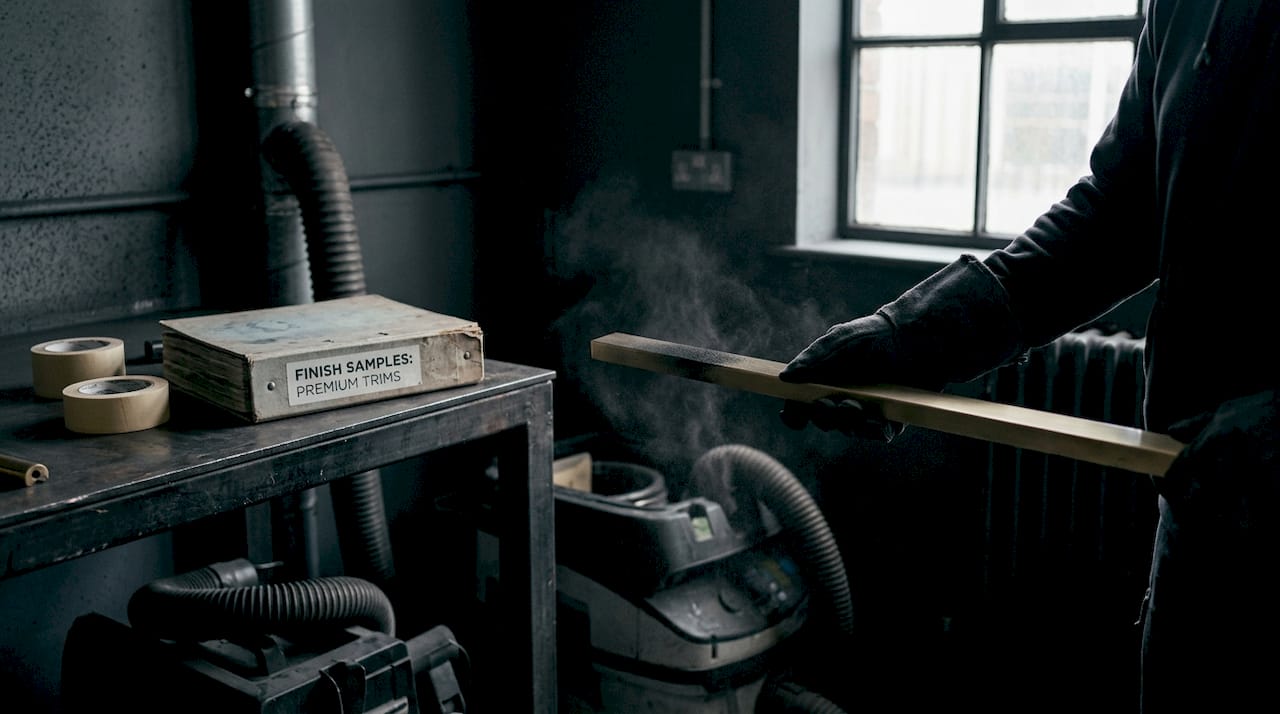
Thickness and profile geometry also contribute to quality. A bar that flexes underfoot or has visible manufacturing inconsistencies along its length is not premium regardless of what it is made from. True quality shows up in rigidity, straight edges, and consistent cross-section from one end to the other.
Pro Tip: When assessing a door bar in person, press firmly along its length. A premium solid brass bar will show no flex whatsoever. Any movement at all signals a hollow profile or an inferior alloy.
Mounting method completes the picture. Bolt-through installation is recommended over surface-mount approaches because it prevents the bar from shifting, lifting, or detaching under load. This is particularly important in high-traffic doorways where surface screws alone will eventually work loose.
Finishes that define luxury door bars
Finish choice is where high-quality door bars become genuinely tailored to a space rather than simply functional. The best premium door bar options offer a range of hand-applied finishes that complement door furniture, architrave, and the wider colour palette of a room without looking like an afterthought.
The most sought-after finishes for luxury homes include:
- Satin brass. A warm, slightly muted gold tone that suits both period properties and contemporary interiors with natural material palettes.
- Antique brass. Deeper and more characterful, with tonal variation that gives a sense of age and craftsmanship.
- Polished brass. High-reflectivity, formal, and traditionally associated with Georgian and Victorian design schemes.
- Matt black. Sharp, architectural, and increasingly popular in minimalist and industrial-influenced interiors.
- Brushed finishes. Reduce visible surface marking in high-traffic areas while retaining the premium appearance of the underlying metal.
Qualitycarpettrims offers ten distinct hand-finished options across its solid brass range, which means there is a matching finish option for virtually any door handle or hinge specification.
Manufacturing tolerances have a direct effect on finish consistency. A door bar machined to tight tolerances will sit level at every point along the threshold, creating the kind of clean shadow line that elevates an interior rather than drawing the eye to a gap or tilt. This is the difference that separates a premium product from one that merely looks premium in a photograph.
Pro Tip: Match your door bar finish to your door handles before anything else. Get a free sample from Qualitycarpettrims and hold it directly against your existing hardware in the light conditions of the room. Colour temperature shifts finishes significantly between showroom and home.
Functional benefits for high-quality flooring transitions
A premium door bar is not decorative in isolation. It performs a specific structural role at one of the most vulnerable points on any floor. Door bars for flooring transitions protect the exposed edges of carpet, laminate, vinyl, and hard flooring from the mechanical damage that accumulates at a threshold every time someone crosses it.
Here is what a properly specified, correctly installed premium door bar delivers:
- Edge protection. The bar covers and clamps the flooring edge, preventing the fraying, chipping, or delamination that starts when that edge is left exposed or protected by an inferior trim.
- Level transition. Even a small height difference between two flooring types creates a trip hazard and accelerates edge wear on the higher surface. A quality bar bridges that change in height cleanly.
- Resistance to mechanical damage. A solid brass bar will not dent when a chair castor rolls across it, will not bow under furniture weight, and will not split if something heavy is dropped on it. Premium door bars prevent splitting, bending, and denting in a way that cheaper materials cannot replicate.
- Long-term flooring maintenance. By protecting the flooring edge, a premium bar reduces the likelihood of the flooring itself needing repair or early replacement. The bar absorbs the damage so the floor does not.
- Aesthetic continuity. A well-chosen door bar completes a flooring installation. A poor one undermines everything else in the room by drawing the eye to a compromised threshold.
The safety dimension is frequently underestimated. Luxury security experts recommend viewing threshold hardware as an integral part of the perimeter rather than a purely cosmetic addition, and the same principle applies to the structural integrity of floor transitions in residential settings.
For commercial contexts, the stakes are even higher. You can read more about commercial door bar standards and how they translate into residential best practice.
Industry standards and quality benchmarks
Understanding what premium means in manufacturing terms gives you a framework to evaluate products rather than relying on marketing language. There are recognised benchmarks that the best door bars meet or exceed.
| Standard or criterion | What it measures | Why it matters for door bars |
|---|---|---|
| Grade 1 certification | Highest residential hardware standard | Grade 1 withstands 1,600+ pounds pressure, confirming structural integrity |
| Powder coat adhesion | Bond strength of surface finish to metal | Prevents peeling and corrosion over years of use |
| Manufacturing tolerance | Dimensional accuracy during production | Determines how consistently the bar sits level along the threshold |
| Corrosion resistance | Long-term exposure to moisture and cleaning products | Critical for hallway and bathroom doorway applications |
| Load testing | Resistance to repeated pressure from foot traffic | Confirms the bar will not deform under normal use conditions |
Premium panic bars comply with ANSI/BHMA Grade 1 standards including rigorous safety and vandal resistance testing, and the underlying principles of those standards apply directly to any door bar that claims premium quality. Corrosion-resistant alloy components and certified load performance are not marketing additions. They are baseline requirements.
Advanced manufacturing processes also use thermal break technology and precision tooling to reduce material stress and maintain durability over time. These are the kinds of manufacturing investments that separate a bar produced to a price point from one produced to a quality standard.
Selecting, installing, and maintaining door bars
Choosing the right door bar comes down to three aligned decisions: material specification, finish match, and profile type for the transition you are bridging. Getting all three right means your door bar performs structurally and looks as though it was always meant to be there.
Key selection factors include:
- Profile type. Different profiles suit different flooring combinations. A carpet-to-hard-floor transition needs a different bar geometry than a hard-floor-to-hard-floor join. Qualitycarpettrims publishes detailed profile guidance for each product, and their flooring trim types guide is worth reading before you specify.
- Width and height. Match the bar dimensions to the gap and height differential at the threshold. An oversized bar looks clumsy; an undersized one will not bridge the joint cleanly.
- Finish coherence. Your door bar should feel like a considered design decision, not a leftover. Match to door handles, hinges, or light fittings for a pulled-together result.
For installation, bolt-through fixing is the professional standard. Bolt-through mounting prevents unauthorised removal and supports the weight of solid brass hardware far more reliably than surface screw approaches. Make sure the subfloor fixings are sound before fitting.
Maintenance is straightforward with solid brass and powder-coated finishes. Routine hardware maintenance including regular cleaning and periodic checks for any fastener movement will preserve the finish and structural performance for years. Use a non-abrasive cleaner and a soft cloth. Never use wire wool or acidic cleaners on powder-coated surfaces.
Pro Tip: If your door bar sits in a doorway that receives direct sunlight, check the finish compatibility with UV exposure before ordering. Some powder-coat colours perform better under prolonged UV than others. Qualitycarpettrims can advise on finish suitability for specific conditions.
My honest take on choosing a premium door bar
I have seen the same mistake repeated dozens of times: a carefully designed interior let down by a door bar that was chosen on price rather than specification. Watching a high-quality engineered oak floor framed by a bowing aluminium trim is genuinely dispiriting once you understand what it means for the longevity of both.
What I have learned is that the real distinction in premium door bars sits beneath the finish. It is in the precise tolerances of the machining, the density of the brass, and the adhesion quality of the coating. You feel it when you pick up a solid brass bar compared to a hollow profile. The weight tells you something. Products that feel light for their size are telling you something about what was spent on material.
The customers I have seen most satisfied over time are those who treated the door bar as part of the floor specification rather than an accessory to it. When you are spending serious money on flooring, a bar that will outlast the floor without complaint is not an indulgence. It is the logical conclusion of the same quality standard applied consistently.
What many people miss is how much the finish matching contributes to the overall quality of perception in a room. A beautifully installed floor with a mismatched bar looks like an oversight. The same floor with a bar in the correct satin brass or antique brass finish looks complete. That coherence is what separates good design from great design.
— Matt
Explore Qualitycarpettrims’ premium door bar range
If this article has clarified what you should be looking for, the next step is seeing it in practice.
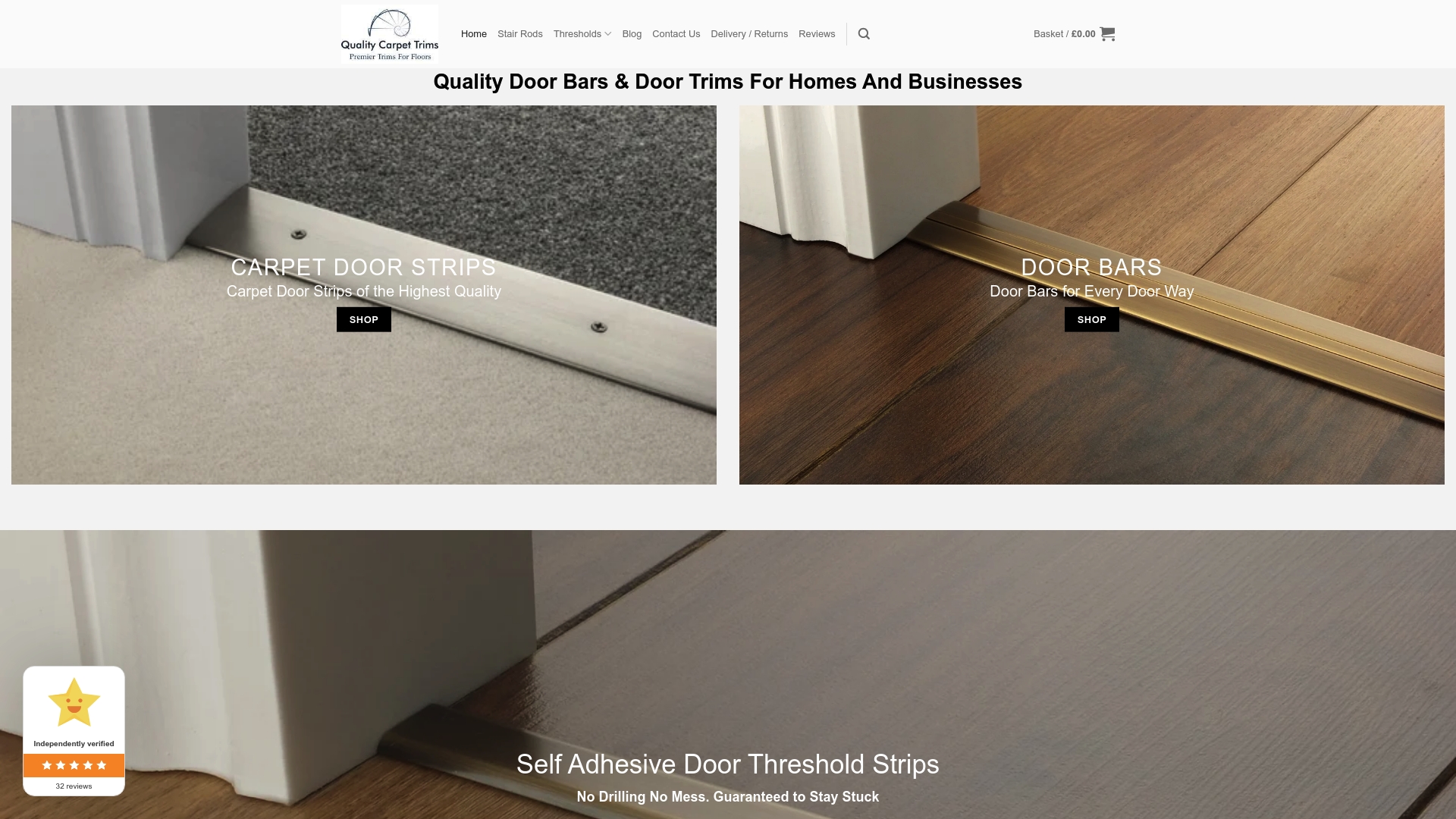
Qualitycarpettrims manufactures every door bar from solid brass, hand-finished to order in ten luxury colour options including satin brass, antique brass, matt black, and more. Nothing is hollow-profile. Nothing is aluminium, plastic, or wood. Every bar is made to precise tolerances in the UK, so the fit and finish are consistent from the first bar to the last. Browse the full premium door bar collection to see profile types, finish options, and full specification details. If you are working on a carpet-to-hard-floor transition specifically, the carpet edge trim range covers high-end options with the same material and finish standards. Free samples are available, and the team is on hand to advise on profile selection, installation, and finish matching for your specific project.
FAQ
What does defining premium door bars actually mean?
Defining premium door bars means identifying products built from solid brass with high-grade powder-coated or PVD finishes, manufactured to precise tolerances, and installed using bolt-through methods. These characteristics separate lasting, aesthetically consistent products from inferior alternatives.
Why are solid brass door bars better than aluminium or plastic?
Solid brass does not split, bend, dent, or corrode under normal conditions in the way that aluminium, plastic, or wooden trims do. It holds its finish and structural integrity under decades of foot traffic.
What finishes are available on premium door bars?
Premium door bars are available in a range of hand-applied finishes including satin brass, antique brass, polished brass, matt black, and brushed options. Qualitycarpettrims offers ten distinct finishes across its solid brass range.
How should premium door bars be installed?
The bolt-through fixing method is the professional standard for premium solid brass door bars. It prevents movement, supports the weight of the hardware correctly, and ensures the bar remains secure under sustained use.
Do premium door bars meet any recognised quality standards?
Yes. The best door bars meet or exceed Grade 1 certification criteria, which is the highest residential hardware standard and requires resistance to sustained mechanical pressure and corrosion across the product’s lifespan.
Recommended
- Door bars explained: achieve flawless flooring transitions
- Understanding door bars: enhance flooring transitions with style
- Understanding door bars: seamless flooring transitions made easy
- The real value of door bars for seamless floor transitions