
Blog
Why Use Laminate Thresholds – Practical Benefits Explained

Feb
Choosing the right flooring finishers can make or break the look and safety of your home improvements. Many British homeowners tackling DIY renovations are surprised by how much difference quality laminate thresholds provide in protecting exposed laminate edges and creating a smooth transition between surfaces. Misunderstandings about materials and fitting mean the wrong trim often ends up being replaced within months. Clear guidance helps ensure your installation meets modern durability expectations, unifying rooms with a polished, professional result.
Table of Contents
- Laminate Thresholds Defined and Debunked
- Types of Laminate Threshold Profiles Explained
- Functions: Protection, Transition and Aesthetics
- Fitting Requirements and Compatibility Considerations
- Comparing Laminate Thresholds to Alternative Trims
Key Takeaways
| Point | Details |
|---|---|
| Core Functionality | Laminate thresholds protect edges, create smooth transitions, and hide gaps between different flooring types. |
| Material Importance | Quality thresholds made from solid brass last longer and resist damage better than cheaper alternatives like plastic or aluminium. |
| Installation Simplicity | Modern laminate thresholds are easy to install with basic tools, taking approximately one hour for fitting. |
| Aesthetic Integration | Choosing the right finish for thresholds enhances the overall aesthetic of your home, making them both functional and visually appealing. |
Laminate Thresholds Defined and Debunked
Laminate thresholds are the metal bars that sit at doorways and transitions between different flooring types. They protect your laminate edges and create a smooth, safe passage between rooms. Yet many people misunderstand what they do and why they matter.
Let’s start with what a laminate threshold actually is. It’s a solid metal trim that bridges the gap where laminate meets carpet, vinyl, hardwood, or another flooring surface. Quality thresholds are manufactured from solid metals like brass, not flimsy alternatives. They’re designed to handle foot traffic whilst maintaining their appearance for years.
The core purpose of a laminate threshold is threefold:
- Protect exposed laminate edges from chipping and water damage
- Create a smooth transition that prevents tripping hazards
- Hide unsightly gaps between flooring types
Here’s where myths start creeping in. Many people believe any cheap plastic or aluminium trim will work just fine. That’s simply not true. Inferior materials bend, crack, and dent under regular use, requiring replacement within months.
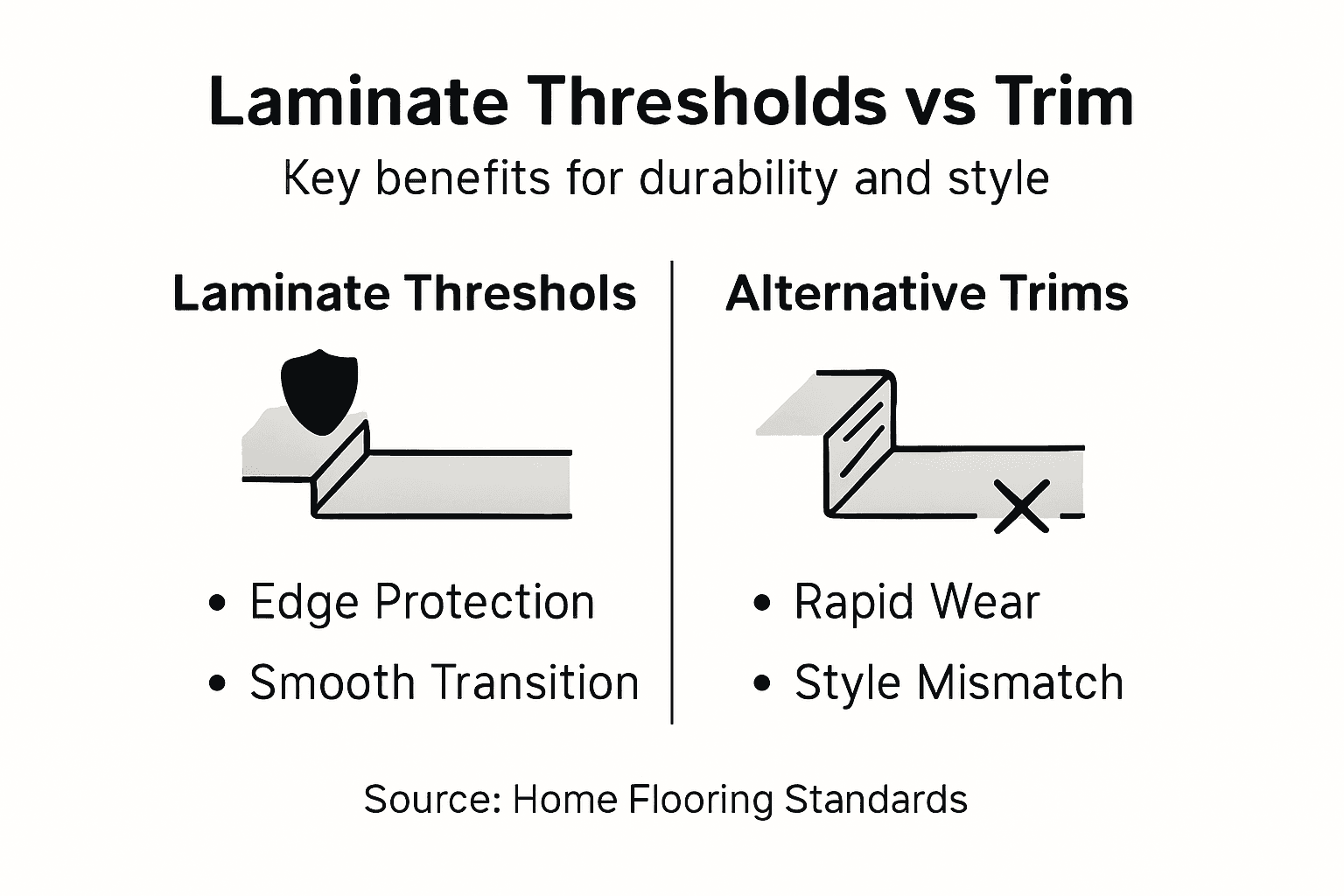
Quality laminate thresholds are manufactured from solid brass and hand-finished in ten beautiful luxury finishes. Unlike cheaper alternatives, these won’t split, bend, or dent. They’re engineered to meet BS EN 13329:2023 standards, which define performance requirements for laminate flooring systems.
Another common misconception involves installation difficulty. People imagine complex fitting processes, but modern thresholds are straightforward to install yourself. Most require only basic tools and an hour of your time.
Thresholds also serve a practical safety function. They eliminate trip hazards that occur naturally when flooring heights differ. This matters especially if you have elderly relatives or young children visiting your home.
Quality laminate thresholds protect your flooring investment whilst creating professional-looking transitions throughout your home.
When selecting thresholds for your project, consider the flooring types you’re connecting. A carpet to laminate threshold differs from one connecting laminate to vinyl, for instance. Each scenario requires a specifically designed profile.
The finish matters too. Your threshold should complement your interior décor, not clash with it. Hand-finished solid brass options come in ten different luxury finishes, allowing you to match your home’s aesthetic perfectly.
Pro tip: Measure your doorway width and flooring height difference before ordering, and verify that your threshold profile matches the specific flooring transition you’re creating.
Types of Laminate Threshold Profiles Explained
Not all laminate thresholds look the same or serve identical purposes. Different profiles exist because flooring transitions vary across homes. Understanding which profile suits your specific situation ensures a professional finish and lasting durability.
The main threshold profiles you’ll encounter are:
- T-moldings for floors at the same height
- Reducers for height differences between surfaces
- End caps for terminating flooring edges
- Stair nosing for step transitions
T-moldings fit neatly into the expansion gap between two flooring surfaces of equal or similar height. They work brilliantly when connecting laminate to laminate, or laminate to vinyl where heights match perfectly. The profile spans both surfaces evenly, providing protection and a neat finish without creating a slope.
Reducers are the workhorses of most homes. They slope downwards from a higher floor to a lower one, preventing trip hazards that occur naturally. This profile is essential when transitioning from laminate to carpet, as carpet sits lower than laminate. Reducer profiles prevent the awkward step that would otherwise trip unsuspecting visitors.
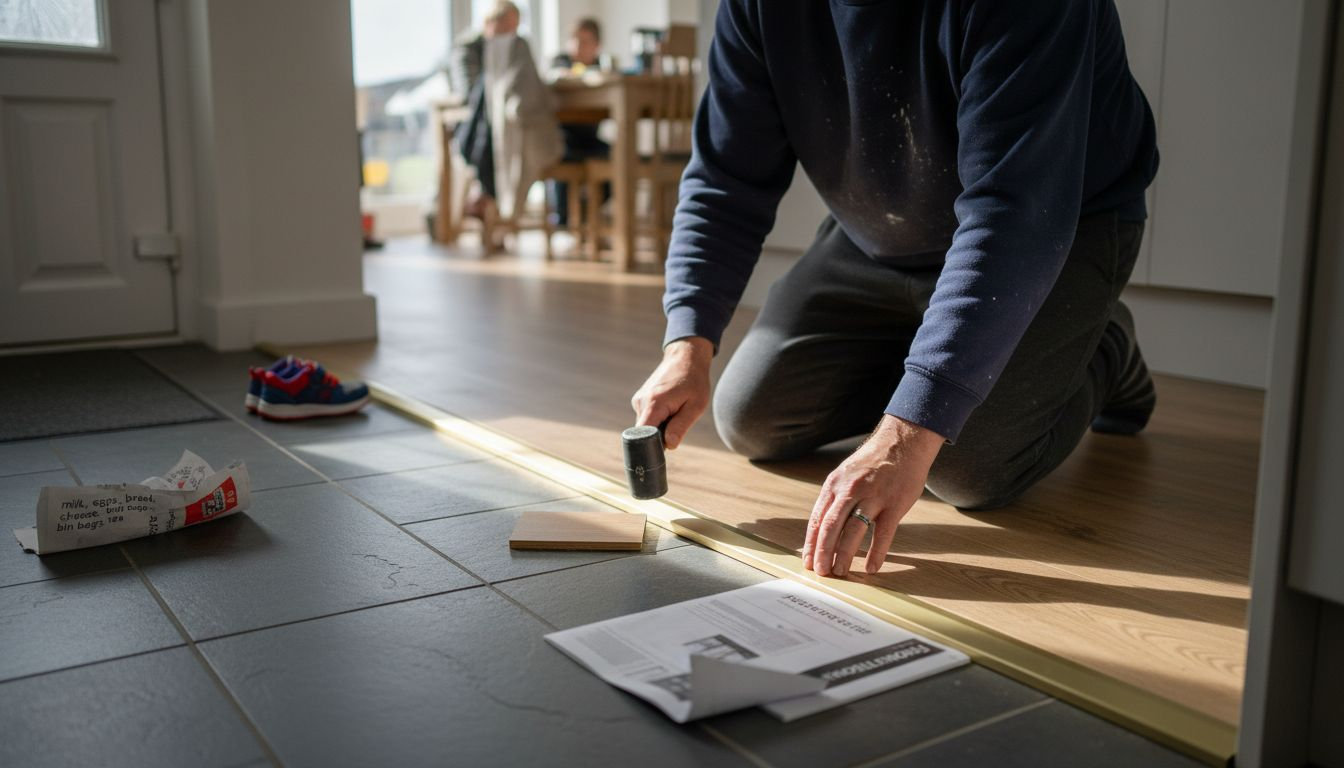
End caps seal off exposed laminate edges where flooring terminates. You’ll need these at the edges of doorways or where laminate meets a wall. They’re not decorative alone—they protect the vulnerable core of your laminate from water and dust infiltration.
Stair nosing handles step edges, adding safety and durability to staircase transitions. Though less common in typical DIY projects, they’re invaluable for basement conversions or split-level homes.
To help clarify which threshold suits your needs, here is a comparison of common laminate threshold profiles:
| Profile Type | Ideal Use Case | Key Benefit | Common Placement |
|---|---|---|---|
| T-moulding | Equal height surfaces | Seamless visual transition | Between laminate floors |
| Reducer | Uneven floor heights | Reduces trip hazard | Laminate to carpet/tile |
| End cap | Flooring meets a wall | Protects exposed laminate edge | Room perimeters, wall edges |
| Stair nosing | Stair step edges | Enhances safety and durability | Stairs, split-level homes |
Choosing the right profile depends on three factors:
- The height difference between your flooring surfaces
- The types of flooring you’re connecting
- Your desired aesthetic outcome
Selecting the correct profile prevents trip hazards, protects your flooring investment, and creates seamless visual transitions throughout your home.
When you’re connecting laminate flooring surfaces, precise measurement matters tremendously. Measure both the thickness and height of each flooring type at the transition point. This determines whether you need a T-molding or a reducer.
Quality thresholds in solid brass come in all these profiles, hand-finished in ten luxury finishes. This means you’re not compromising on aesthetics when choosing the functionally correct profile for your space.
Pro tip: Create a cardboard template at your doorway before ordering, marking the exact height difference and doorway width to ensure your profile selection is spot-on.
Functions: Protection, Transition and Aesthetics
Laminate thresholds serve three critical functions in your home. Understanding each one helps you appreciate why they’re not optional extras but essential components of professional flooring installations.
Protection
Your laminate’s edges are genuinely vulnerable. The core material absorbs moisture readily, and chipping happens faster than you’d expect. Thresholds act as shields, sitting directly over these exposed edges and taking the impact that would otherwise damage your flooring.
They also cover the expansion gaps necessary for floating floors. Laminate needs room to expand and contract with temperature and humidity changes. Without thresholds hiding these gaps, dust and moisture seep underneath, compromising your floor’s integrity over time.
Protective thresholds prevent edge chipping, water infiltration, and wear that would otherwise shorten your laminate’s lifespan. Quality solid brass thresholds excel at this role, resisting the wear that damages cheaper alternatives.
Transition
Transitions between different flooring types create obvious problems if left unmanaged. Height differences cause trip hazards. Uneven surfaces look sloppy and feel awkward underfoot. Thresholds solve both issues elegantly.
Reducer thresholds slope smoothly from higher to lower surfaces, eliminating dangerous steps. End caps seal off termination points. T-moldings bridge surfaces at equal heights. Each profile addresses a specific transition challenge:
- Smooth height transitions prevent falls and injuries
- Neat finishes hide gaps and mismatches
- Professional appearance improves your home’s value
When rooms connect with different flooring materials, thresholds create visual unity. They frame transitions rather than highlighting them as problems.
Aesthetics
This is where many people underestimate thresholds’ importance. A beautiful laminate floor loses its impact if transition areas look cheap or mismatched. Conversely, the right threshold elevates your entire project.
Solid brass thresholds hand-finished in ten luxury finishes solve this completely. You’re not stuck with basic silver—instead, you select finishes matching your interior décor perfectly. Your threshold becomes a design feature, not an eyesore.
Proper threshold selection creates cohesive, polished spaces. This attention to detail distinguishes professional renovations from amateur attempts. Visitors notice the refinement without necessarily knowing why.
Quality thresholds protect your investment, ensure safety, and create the polished finish that transforms good renovations into excellent ones.
The three functions work together seamlessly. You can’t separate protection from transition from aesthetics—they’re interconnected. When you choose the correct threshold profile in the right finish, you’re simultaneously solving functional challenges and enhancing your home’s visual appeal.
Pro tip: Visit a physical showroom or request samples before ordering, ensuring your chosen finish complements your specific laminate colour and adjacent flooring materials.
Fitting Requirements and Compatibility Considerations
Getting the right threshold is half the battle. Making it fit properly and ensuring it works with your specific flooring situation is equally crucial. Skipping these considerations leads to frustration, poor aesthetics, and premature wear.
Measuring Accurately
Precise measurements prevent costly mistakes. You’ll need three critical measurements before ordering your threshold.
First, measure your doorway width from wall to wall. Record this in millimetres for accuracy. Second, measure the height difference between your two flooring surfaces at the transition point. This determines whether you need a T-molding, reducer, or another profile entirely. Third, measure the thickness of both flooring materials where they meet.
Height differences are particularly important. Even small variations demand specific profiles. A 5mm difference requires a different solution than a 15mm step. Proper measurement techniques prevent installation problems and ensure safety.
Compatibility With Adjoining Materials
Your threshold must work harmoniously with the flooring it connects. Laminate to carpet requires different considerations than laminate to tile or vinyl.
Compatibility issues include:
- Material expansion rates differ, requiring proper gaps
- Height transitions vary significantly between flooring types
- Moisture sensitivity differs among materials
- Aesthetic matching needs careful consideration
When connecting laminate to carpet, reducers slope downward smoothly. The threshold accommodates carpet’s thickness whilst protecting laminate edges. When transitioning to rigid materials like tile, your profile sits flush because heights often match naturally.
Expansion Gap Requirements
Laminate flooring is installed as a floating system, meaning it sits on underlayment without being nailed down completely. This allows expansion and contraction with temperature and humidity changes. Your threshold must respect these requirements.
Expansion gaps around room perimeters protect against buckling. Thresholds cover these gaps whilst allowing movement beneath them. Solid brass thresholds accommodate this movement better than cheaper alternatives that crack under stress.
Laminate installation standards emphasise the critical nature of proper expansion gap management. Ignoring this causes catastrophic floor damage.
Door Swing Direction
Consider how your door swings. Will the threshold interfere with the door’s movement? Some profiles are too tall for certain doors. Others might catch carpet or trigger tripping hazards.
Test your door swing before installation. Open and close it whilst imagining the threshold in place. Adjust your profile selection if necessary. This simple check prevents embarrassing mistakes and safety issues.
Proper fitting requires precise measurement, material compatibility awareness, and respect for laminate’s floating installation needs.
Subfloor condition also matters. Ensure your subfloor is flat and stable before installing thresholds. Uneven bases cause poor threshold fitting and future problems.
Pro tip: Create a small cardboard mock-up of your threshold at the actual transition point, testing door swing, foot traffic flow, and visual appearance before making your final purchase.
Comparing Laminate Thresholds to Alternative Trims
When you start researching flooring transitions, you’ll encounter numerous trim options. Understanding what each alternative actually does—and why quality laminate thresholds outperform them—helps you make informed decisions for your home.
The Main Alternatives
You’ve likely heard terms like transition strips, door bars, carpet trims, and baseboards thrown around. These aren’t all the same thing, and they don’t all solve the same problems.
Transition strips include T-moldings and reducers. They bridge floors of equal or varying heights. Door bars manage thresholds at doorways specifically. Carpet trims secure carpet edges safely without handling height transitions. Baseboards frame walls and cover expansion gaps visually—they’re aesthetic rather than functional for transitions.
Each serves distinct purposes. Confusing them leads to poor selections and installation headaches.
Durability: The Real Game-Changer
Here’s where the comparison becomes stark. Cheap alternatives—plastic trims, rubber trims, aluminium trims, wooden trims—fail rapidly under normal household use. They crack, bend, dent, and split within months.
Quality laminate thresholds made from solid brass simply don’t have these problems. Brass resists wear, maintains its appearance, and handles foot traffic that would destroy inferior materials. Hand-finished in ten luxury finishes, these thresholds won’t dent under chair legs or crack from temperature fluctuations.
The durability difference isn’t minor. Cheap trims require replacement. Quality brass thresholds last decades.
Below is a summary of key differences between solid brass thresholds and common alternatives:
| Feature | Solid Brass Threshold | Plastic/Aluminium Trim | Wooden/Rubber Trim |
|---|---|---|---|
| Durability | Lasts decades | Prone to damage | Rapid wear in damp areas |
| Appearance | Ten luxury finishes | Basic, limited finish | Matches some décor styles |
| Maintenance Needed | Low | Frequent replacement | High in wet conditions |
| Cost Over Lifetime | Lower (long-lasting) | Higher (repeated buy) | Medium |
Functional Differences
Different trims handle different scenarios. Understanding these distinctions prevents costly mistakes.
Metal trims offer higher durability than many alternatives, particularly in high-traffic areas where foot traffic is relentless. Laminate thresholds specifically manage expansion gaps—something baseboards cannot do. Carpet trims secure carpet edges but don’t bridge height differences.
Your choice depends on:
- What flooring types you’re connecting
- Height differences at the transition
- Expected foot traffic intensity
- Aesthetic requirements for your space
Aesthetic Appeal
Wooden trims blend naturally with certain décor styles but fail quickly in moisture-prone areas. Plastic and rubber alternatives look cheap regardless of price paid. Aluminium trims are utilitarian, not beautiful.
Solid brass thresholds hand-finished in luxury finishes become design features. Champagne Gold, Polished Chrome, Satin Black, Antique Brass—these finishes complement rather than clash with your décor. Your threshold becomes invisible if it matches, or a stylish accent if you choose contrast.
Quality brass thresholds outperform every alternative through superior durability, proper functionality, and genuine aesthetic appeal.
When you’re examining flooring edge trims during your research, recognise that not all edge protection is equal. A threshold that protects laminate edges also complements your installation aesthetic—something cheap alternatives simply cannot achieve.
The false economy of cheaper trims becomes obvious within a year. You’ll replace them repeatedly, spending far more than investing in quality from the start.
Pro tip: Request physical samples of your chosen brass finish before ordering, comparing them against your actual laminate colour and adjacent flooring materials to ensure perfect harmony.
Elevate Your Flooring Transitions with Premium Laminate Thresholds
If you want to protect your laminate flooring edges while ensuring smooth, safe transitions between rooms, choosing the right threshold is essential. Many people struggle with trip hazards, chipped edges, or mismatched finishes due to using inferior trims. Our collection of solid brass laminate thresholds solves these problems effortlessly. They are hand-finished in ten luxury finishes to perfectly complement your interior décor and engineered to resist wear so they last for decades.
Discover a variety of specially designed profiles like reducers, T-mouldings and end caps that suit every flooring combination. Take the guesswork out of your project and achieve professional results you can trust. Visit Quality Carpet Trims now for expert advice, free samples, and fast UK delivery. Protect your investment today by selecting the perfect laminate threshold from our premium range at Quality Carpet Trims and see the difference a quality finish makes.
Frequently Asked Questions
What is the purpose of a laminate threshold?
Laminate thresholds protect exposed laminate edges, create safe transitions between different flooring types, and hide gaps between surfaces.
How do I choose the right laminate threshold profile for my flooring?
Consider the height difference between your flooring surfaces, the types of materials you are connecting, and your desired aesthetic. T-moldings are for equal heights, reducers for height differences, and end caps for terminating edges.
Are laminate thresholds easy to install?
Yes, modern laminate thresholds are straightforward to install with basic tools, often taking about an hour for a DIY approach.
What materials are laminate thresholds made from, and why does it matter?
Quality laminate thresholds are typically made from solid brass, as they resist wear, maintain appearance, and better handle foot traffic compared to cheaper alternatives like plastic or aluminium.
Recommended
- Laminate Flooring Threshold Strips | Quality Quality Trims UK
- Carpet To Laminate Threshold – Carpet Laminate Trim – Quality Carpet Trims
- Laminate Transition – Achieving Seamless Flooring Results
- Laminate to Carpet Join: Ensuring Seamless Transitions