
Blog
Why floor trims matter: improve your home’s look and value

Apr
TL;DR:
- Floor trims protect flooring, prevent hazards, and enhance home aesthetics.
- Choosing the right trim type and material ensures durability and a polished look.
- Proper installation and planning with trims improve longevity and increase property value.
Most homeowners treat floor trims as an afterthought, something to grab quickly once the main flooring is down. That’s a costly mistake. Trims do far more than hide a gap or tidy an edge. They protect your flooring investment, prevent safety hazards, and can genuinely influence how a buyer perceives your home. Whether you’re refurbishing a hallway, fitting a new kitchen floor, or updating a bedroom, the trim you choose shapes the final result in ways that go well beyond appearance. This guide walks you through what trims actually do, which types suit which situations, how to install them correctly, and the pitfalls that catch even experienced renovators off guard.
Table of Contents
- What are floor trims and why do they matter?
- Types of floor trims and where to use them
- Aesthetic and practical benefits of using floor trims
- Installation tips: Common mistakes and how to avoid them
- What most guides miss: The hidden role of trims in longevity and design
- Find the perfect floor trims for your next project
- Frequently asked questions
Key Takeaways
| Point | Details |
|---|---|
| Trims boost value | Investing in quality floor trims increases home appeal and can raise property value. |
| Essential for neatness | Trims provide a seamless transition and protect floor edges from damage and dirt. |
| Right trim matters | Choosing the correct trim for each area ensures durability, style, and easy maintenance. |
| Proper install pays off | Careful installation of trims avoids common DIY mistakes and ensures lasting results. |
What are floor trims and why do they matter?
A floor trim is a narrow strip of material fitted at the junction between two flooring surfaces, or at any exposed edge where flooring ends. You’ll find them at doorways, room transitions, stair nosings, and along walls where carpet or hard flooring meets a skirting board. They come in a range of profiles designed to solve specific problems, from covering expansion gaps to bridging height differences between surfaces.
The functions of a floor trim go well beyond looking neat. Here’s what they actually do:
- Cover expansion gaps that all hard flooring needs to breathe and move with temperature changes
- Prevent trip hazards at raised edges or uneven transitions between rooms
- Stop dirt and moisture from working their way into gaps and underneath flooring
- Contain carpet edges so they don’t fray or lift over time
- Create a visual boundary that defines spaces and ties a room’s design together
The importance for stylish interiors is easy to underestimate until you see a room finished without them. Exposed edges look unfinished, gaps attract grime, and flooring can shift or lift prematurely. A well-chosen trim solves all three problems at once.
“Floor trims enhance aesthetics and boost property value, making them a worthwhile investment in any renovation project.”
From an economic standpoint, trims signal quality. Estate agents and buyers notice when a finish is polished versus rushed. If you’re unsure about the vocabulary used in the trade, brushing up on floor trim terminology before you shop will save you time and help you ask the right questions. Understanding terms like reducer, threshold, and nosing means you can match the right product to the right problem, first time.
Now that you know trims are more than decoration, let’s look deeper at their specific roles and benefits.
Types of floor trims and where to use them
With a clear idea of why trims are crucial, here’s how to choose the right type for each spot in your home.
The main categories you’ll encounter are:
- Threshold strips: Fitted in doorways to bridge two floor surfaces, often at different heights
- Edge trims: Used at exposed flooring edges, such as where a floor meets a step or a wall recess
- Angle trims: Protect and finish the edge of a floor that drops away, such as at a step down
- Reducer bars: Designed to create a smooth slope between two surfaces of differing heights
- End caps: Seal off the end of a flooring run, typically at sliding door tracks or room perimeters
Choosing correctly depends on your specific junction. Here’s a quick reference:
| Trim type | Main function | Best for |
|---|---|---|
| Threshold strip | Bridges two surfaces at a doorway | Carpet to laminate, vinyl to tile |
| Edge trim | Finishes an exposed edge neatly | Stair edges, room perimeters |
| Angle trim | Protects a drop edge or step | Steps, raised platforms |
| Reducer bar | Smooths height differences | Laminate to thicker tile |
| End cap | Seals a flooring run’s end | Sliding doors, bay windows |
Material matters enormously here. High-quality trims like brass give a professional finish and complement different interior styles far better than cheaper alternatives. Solid metal trims, hand-finished in a range of colours, suit both traditional and contemporary interiors. They resist wear, don’t warp with moisture, and hold their finish for years.
For a thorough breakdown of each category, trim types explained covers the full range with guidance on matching profiles to flooring types. If you’re specifically working with carpet or vinyl meeting a hard surface, understanding how to achieve a seamless finish with edge trims will make a real difference to the final look.
Design integration is worth thinking about early. A brushed brass trim reads as warm and traditional. A dark bronze finish suits modern industrial schemes. Matching your trim finish to door handles or light fittings creates a cohesive, considered look that elevates the whole room.
Aesthetic and practical benefits of using floor trims
Understanding types is just the start. Now, see how the right trims improve both looks and longevity.
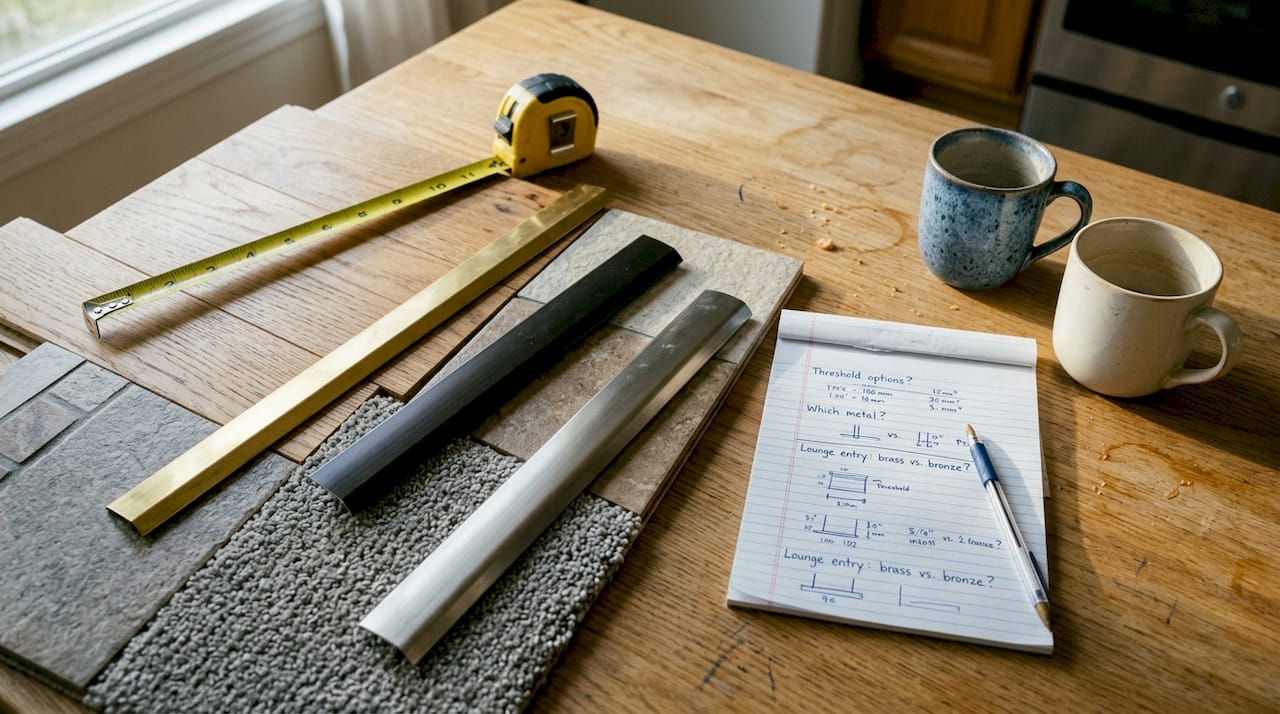
The visible benefits are obvious: a neat, finished edge that looks intentional rather than rushed. But the hidden benefits are where trims really earn their place. A correctly fitted trim prevents flooring edges from lifting or fraying, which is especially important in high-traffic corridors and hallways. It also acts as a barrier against moisture creeping under hard flooring at wet room thresholds, which is a leading cause of premature floor failure.
Here’s what you gain from using quality trims throughout your home:
- Neat, professional appearance at every transition and edge
- Protection from moisture ingress at bathroom and kitchen doorways
- Reduced trip hazard at raised or uneven junctions
- Longer flooring lifespan by preventing edge movement and fraying
- Higher perceived quality that influences buyer and valuer impressions
Matching or contrasting trims with your flooring boosts both style and market value, which is a point many renovation guides overlook entirely. A home that looks finished commands more interest and, often, a higher price.
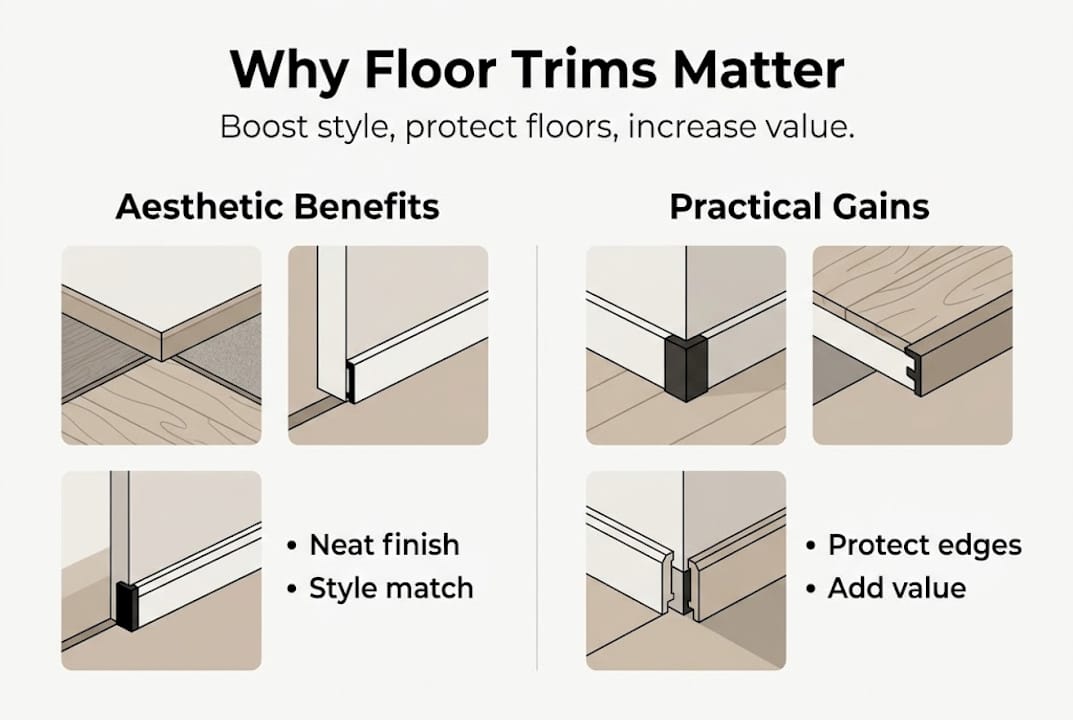
Knowing how to choose the right trim for each location is the first step towards a result you’ll be proud of. For doorways and transitions specifically, following professional transition tips ensures you avoid the common mistake of using a profile that’s visually jarring or structurally unsuitable.
Pro Tip: In high-traffic zones like hallways, landings, and kitchens, always invest in solid metal trims. They outlast cheaper options by years and retain their finish even under daily wear. The small additional cost pays for itself many times over.
Installation tips: Common mistakes and how to avoid them
To maximise the advantages above, follow these expert steps and avoid typical errors.
Installing floor trims is well within reach for a confident DIYer. The key is preparation. Rushing the fitting stage is where most problems begin, and a poorly fitted trim can undo an otherwise excellent flooring job.
Follow these steps for a clean, lasting result:
- Measure twice, cut once. Measure the full length of the junction before cutting. Account for any angles at bay windows or alcoves.
- Pre-fit before fixing. Lay the trim in position without adhesive or screws first. Check the fit, alignment, and height against both surfaces.
- Allow for expansion. Never fit a trim so tightly that it prevents the flooring from moving. Leave the manufacturer’s recommended expansion gap beneath the trim.
- Choose the correct fixing method. Some trims use a track-and-cap system. Others are glued or screwed. Match the fixing method to the subfloor type.
- Clean the subfloor. Dust, debris, or old adhesive under a trim will cause it to rock or lift. A clean, level surface is essential.
Here are the most common mistakes and how to fix them:
| Mistake | Why it matters | How to avoid it |
|---|---|---|
| Skipping expansion gaps | Flooring buckles under heat | Follow manufacturer guidance |
| Wrong trim profile | Poor fit, trip hazard | Match profile to height difference |
| Poor adhesion | Trim lifts or shifts | Use correct adhesive for subfloor |
| Cutting without pre-fitting | Wasted material, poor finish | Always dry-fit first |
| Ignoring subfloor level | Trim rocks or sits unevenly | Check and correct level before fitting |
Properly installed trims last longer and reduce the risk of flooring issues developing further down the line. For detailed fitting guidance, professional trim installation covers the full process, and for a practical walkthrough, the step-by-step trim install guide is an excellent starting point.
Pro Tip: Always pre-fit your trim before applying any adhesive or driving any screws. This single habit prevents the majority of installation errors and saves both time and material.
What most guides miss: The hidden role of trims in longevity and design
Most renovation guides treat trims as a footnote. They appear at the end of a flooring article, listed under “finishing touches” alongside skirting boards and door stops. That framing is misleading, and it leads homeowners to underinvest in something that quietly determines whether a renovation holds up over five or ten years.
We’ve seen it repeatedly. A beautiful floor laid without proper trims at the threshold develops a lifted edge within two years. Moisture gets in at the kitchen doorway. The carpet frays at the hallway junction. Each of these problems costs more to fix than the trim would have cost in the first place.
There’s also a design consistency argument that rarely gets made. Trims are the connective tissue of a floor scheme. They link rooms visually, signal intentionality, and give a renovation its finished quality. Ignoring them to save money is like painting a room beautifully and leaving the ceiling unfinished.
The best renovators plan their trims at the same time as their flooring, not after. Checking UK standards for trims early in the planning process ensures you meet both aesthetic and safety requirements from the start, rather than retrofitting solutions that never quite look right.
Find the perfect floor trims for your next project
Ready to achieve a professional finish? Here’s where to find the trims that make it possible.
At Quality Carpet Trims, we supply solid metal door bars and trims, hand-finished in 10 beautiful finishes to complement any interior scheme. Every product is British-made, built to last, and designed to give you a result that looks genuinely professional.

If you’re new to the world of flooring trims, start with our guide to floor trim terminology for UK finishes to get confident with the vocabulary before you buy. Browsing our matwell trims range is ideal for entrance areas, while our full threshold strips range covers every doorway transition you’ll encounter. Order with confidence: fast delivery, expert advice, and quality guaranteed.
Frequently asked questions
What is the main function of a floor trim?
A floor trim covers the gap between flooring types or at edges, creating a neat, safe, and professional-looking finish. Trims enhance aesthetics while also serving important structural and safety roles.
Do floor trims make a difference to home value?
Yes, quality trims improve a property’s look and signal a high standard of finish to buyers and valuers. Matching or contrasting trims with your flooring is a straightforward way to boost both style and perceived market value.
Can I install floor trims myself?
Most trims can be installed by confident DIYers, but careful measuring and correct fixing are essential for a lasting result. Properly installed trims reduce the risk of flooring problems developing over time.
What is the best material for a floor trim?
Solid metal trims, such as those in brass or dark bronze finishes, offer outstanding durability and a premium look for high-traffic or design-led areas. High-quality metal trims give a professional finish and complement a wide range of interior styles.
Recommended
- Why flooring trims are essential for stylish interiors
- How to choose the right flooring trim: flawless finish
- Flooring trim types explained: choosing the right finish
- Why floor transitions matter: enhance safety and style
- Chevron flooring: elegant style and installation tips
- Why Select Travertine for Flooring: Luxury and Value – Marmorique