
Blog
Why choose solid metal door bars for flooring transitions

Jun
TL;DR:
- Solid metal door bars serve as durable and aesthetically pleasing solutions for flooring transitions, lasting decades without deformation. They feature safety benefits like anti-slip grooves and edge protection, making them ideal for high-traffic or family homes. Proper sizing, surface preparation, and secure installation maximize their lifespan and performance.
Solid metal door bars are the industry-standard solution for protecting and finishing the junction between two different flooring surfaces. Known formally as threshold strips or transition profiles, they sit at doorways where carpet meets laminate, vinyl meets hardfloor, or tile meets wood. The question of why choose solid metal door bars comes down to three things: structural longevity, safety, and the kind of finish that still looks good a decade from now. Qualitycarpettrims supplies solid brass door bars, hand finished in 10 luxury finishes, made specifically for homeowners and renovators who want a result that lasts.
What are the benefits of solid metal door bars over other materials?
Solid metal door bars outlast every cheaper alternative by a significant margin. PVC and budget alternatives last only 3–5 years before cracking, warping, or discolouring under foot traffic. Solid brass profiles maintain their structural integrity and aesthetic finish for decades, making them the clear long-term choice for any home.
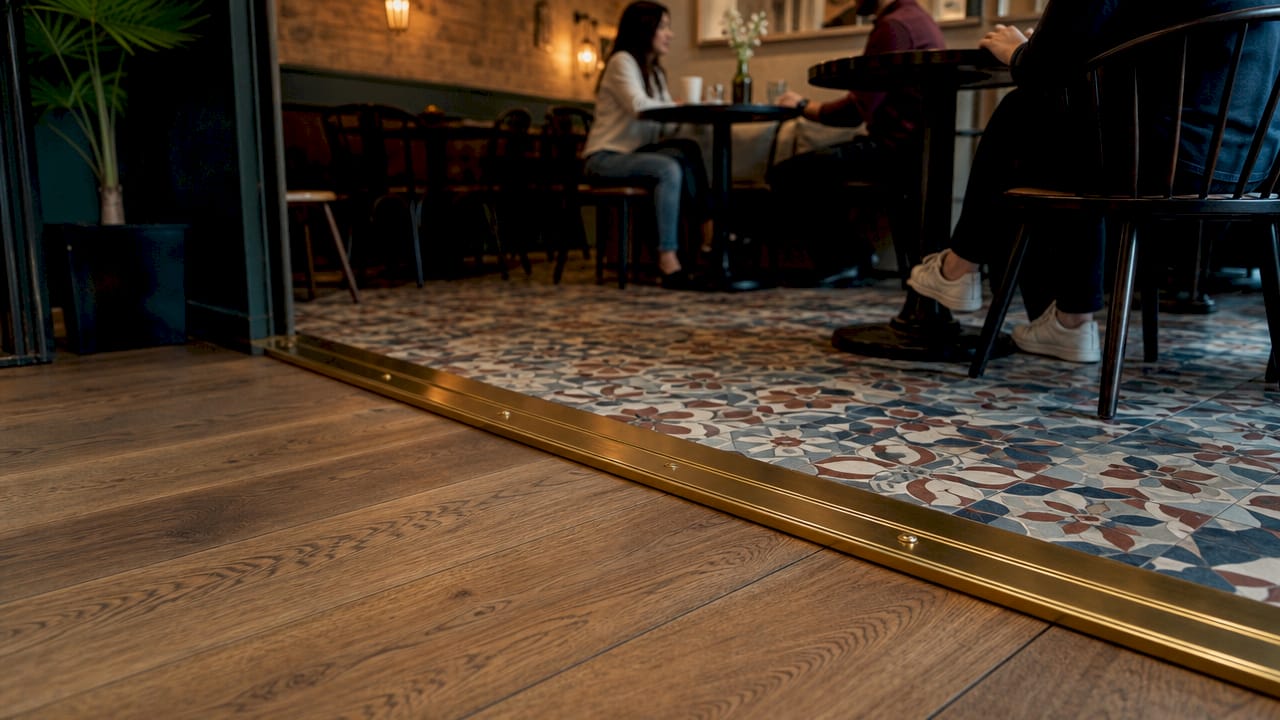
The physical advantages are not subtle. Wooden trims split and swell with moisture. Plastic trims crack under pressure and yellow over time. Rubber trims compress and lose their shape. Solid brass does none of these things. It holds its form under repeated impact, heavy furniture movement, and daily foot traffic without deforming.
The benefits of metal door bars extend beyond raw durability. Anti-slip surface grooves on solid metal profiles reduce slip hazards at doorway transitions, which matters in busy hallways, kitchens, and entrances where floors can become wet. That safety feature alone makes solid bars worth the investment for families with young children or elderly relatives.
Here is a summary of the core metal door bar advantages:
- Structural strength: Solid brass resists bending, denting, and deformation under heavy loads
- Longevity: Maintains finish and form for decades, not years
- Safety: Anti-slip grooves reduce slip risk at floor transitions
- Edge protection: Guards fragile tile and laminate edges from chipping under impact
- Aesthetic quality: Hand-finished surfaces look premium and hold their appearance over time
- Cost-effectiveness: One quality installation replaces multiple cheap ones over the same period
The cost argument is straightforward. A solid brass bar fitted once costs less over ten years than replacing a plastic or rubber trim every few years. The labour saving alone justifies the upfront difference.
How does wall thickness affect door bar performance?
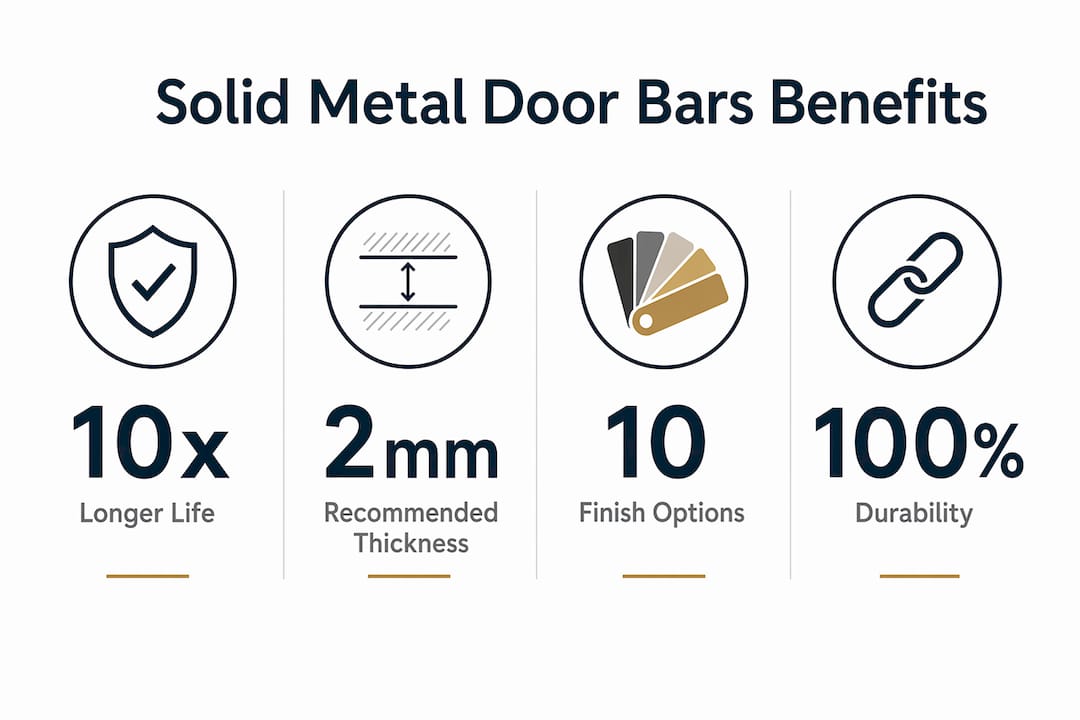
Wall thickness is the single most important technical factor in door bar durability. Profiles thicker than 1.0mm, specifically 1.5mm to 2.0mm, prevent deformation from trolleys, cleaning equipment, and sustained foot traffic. Thinner profiles, regardless of material, will eventually buckle under the same conditions.
The material density behind that thickness matters too. High-density H59 brass alloy absorbs mechanical impacts without shifting or collapsing. This is critical at tile edges, where a single hard impact from a dropped object or trolley wheel can chip or crack the tile if the bar provides no resistance. Solid brass absorbs that force. Aluminium alloys, while lighter and corrosion-resistant, are prone to bending and surface wear under the same conditions.
| Property | Solid brass (H59 alloy) | Aluminium alloy |
|---|---|---|
| Impact resistance | High. Absorbs force without deforming | Moderate. Bends under sustained load |
| Surface wear | Holds finish under heavy traffic | Anodised surface wears through over time |
| Lifespan | Decades with minimal maintenance | Shorter lifespan in heavy-use settings |
| Edge protection | Strong. Prevents tile chipping | Weaker. Less effective under impact |
| Weight | Heavier. Stays in position | Lighter. Can shift if not fixed well |
Choosing the correct thickness for your specific use is more important than simply picking any solid metal option. A hallway in a family home with pets and children needs a 2.0mm profile. A bedroom doorway with light traffic can work with 1.5mm. Getting this right at the point of purchase avoids problems later.
Pro Tip: Measure the height difference between your two floor surfaces before ordering. A bar that is too tall creates a trip hazard. A bar that sits too low will not protect the flooring edge properly.
What finish options are available for solid metal door bars?
The finish on a solid metal door bar does two jobs. It protects the brass beneath from corrosion and daily wear, and it determines how the bar looks against your flooring and décor. Qualitycarpettrims offers 10 hand-finished options, each applied by hand in the UK to a consistent standard.
Brushed brass finish is one of the most practical choices for high-traffic areas. The directional brushed lines conceal minor scratches that would show clearly on a polished surface. This means the bar continues to look well-maintained even after years of daily use. A polished finish, by contrast, shows every scuff and requires more frequent attention to stay looking sharp.
Powder-coated finishes add a further layer of protection. The coating bonds to the brass surface and resists corrosion, moisture, and cleaning products. This makes powder-coated bars particularly well-suited to kitchens, bathrooms, and entrance halls where water and cleaning chemicals are part of daily life. Luxury finishes including brushed, velvet, and powder coating provide both functional protection and the kind of aesthetic versatility that lets you match a bar to any interior style.
Popular finish choices from Qualitycarpettrims include:
- Brushed brass: Warm, contemporary tone that hides daily wear
- Satin gold: Softer sheen, suits traditional and modern interiors equally
- Matt black: Bold contrast finish, works well with dark hardfloors or grey carpet
- Antique brass: Classic appearance, suits period properties and heritage interiors
- Chrome effect: Clean and minimal, pairs well with light flooring
Pro Tip: Order a free sample before committing to a finish. Colours read differently under artificial light than in product photography. Qualitycarpettrims offers samples so you can check the match against your actual flooring before buying.
How do you install and maintain solid metal door bars correctly?
Correct sizing and secure fitting are the two factors that determine whether a door bar performs well or fails early. A bar that is the wrong width for the gap, or fitted without proper fixing, will shift under foot traffic and eventually damage the flooring edges it was meant to protect.
Follow these steps for a reliable installation:
- Measure the doorway gap accurately. Measure the width of the opening and the height difference between the two floor surfaces. Both measurements determine which profile you need.
- Prepare the subfloor. The surface beneath the bar must be clean, flat, and free of debris. Any unevenness will cause the bar to rock and loosen over time.
- Cut the bar to length. Use a fine-toothed metal saw or an angle grinder with a metal cutting disc. Cut slowly to avoid burring the edges.
- Fix the bar securely. Most solid brass bars fix via a central channel screwed to the subfloor, with the decorative cover clipping over the top. Follow the specific fixing method for your profile type.
- Check the fit before finishing. The bar should sit flush with both floor surfaces, with no rocking or movement. Adjust the fixing if needed before the floors are fully laid around it.
Maintenance is straightforward. Clean with a damp cloth and avoid harsh chemical cleaners, which can strip powder-coated finishes over time. A mild soap solution is sufficient for most cleaning tasks. Check the fixing screws annually in high-traffic areas, as vibration from foot traffic can gradually loosen them. Tighten any loose screws before they cause the bar to shift and create a gap at the flooring edge.
Professional installation is worth considering for complex transitions, such as where three or more flooring types meet, or where the subfloor is uneven and requires levelling compound before the bar can be fitted correctly.
Key takeaways
Solid metal door bars are the only flooring transition solution that combines structural durability, long-term aesthetic quality, and genuine safety performance in a single product.
| Point | Details |
|---|---|
| Material superiority | Solid brass outlasts plastic, rubber, and wooden trims, which crack, split, and deform under regular use. |
| Wall thickness matters | Choose 1.5mm–2.0mm profiles for high-traffic areas to prevent deformation and protect tile edges. |
| Finish choice is functional | Brushed and powder-coated finishes conceal wear and resist corrosion, not just improve appearance. |
| Safety built in | Anti-slip surface grooves reduce slip hazards at floor transitions in kitchens, hallways, and entrances. |
| Installation determines lifespan | Correct sizing, flat subfloor preparation, and secure fixing prevent early failure and flooring edge damage. |
Why I always recommend solid brass over anything else
I have seen a lot of flooring transitions over the years, and the pattern is consistent. Homeowners who cut costs on the door bar end up replacing it within a few years, often damaging the flooring edges in the process. The bar is the last thing people think about and the first thing that fails when it is the wrong material.
The misconception I hear most often is that all metal bars are the same. They are not. An aluminium bar and a solid brass bar look similar in a product photo. In a busy hallway after two years, they look completely different. The aluminium has bent slightly at the fixing point, the anodised surface has worn through in the middle, and the flooring edge it was protecting has started to chip. The brass bar looks almost identical to the day it was fitted.
The finish question is where I think most homeowners underestimate their options. People default to chrome or silver because it feels neutral. But a brushed brass or matt black bar in the right setting genuinely lifts the look of a room. It is a small detail that reads as considered and deliberate rather than an afterthought. Qualitycarpettrims hand finishes every bar in the UK, and that shows in the consistency of the finish across the full length of the bar.
My honest advice: buy the right thickness for your traffic level, choose a finish that works with your flooring rather than against it, and fit it properly the first time. You will not need to think about it again for a very long time.
— Matt
Solid brass door bars from Qualitycarpettrims
Qualitycarpettrims supplies solid brass door threshold bars hand finished in 10 luxury finishes, made in the UK for homeowners and renovators who want a result that holds up. Every bar is solid brass, not aluminium, not plastic, and not a composite. The range covers standard doorway widths and extra wide threshold options for larger gaps, with finishes from brushed brass to matt black to antique gold.
Free samples are available so you can check the finish against your actual flooring before ordering. Browse the full range, get expert advice, and order with confidence at Qualitycarpettrims. Every product comes with fitting guidance, and the team is available to help you choose the right profile for your specific transition.
FAQ
What makes solid metal door bars better than other types?
Solid brass door bars resist bending, denting, and surface wear that cause plastic, rubber, and wooden trims to fail within a few years. They maintain their structural integrity and finish for decades, making them the most cost-effective choice over time.
How do I choose the right finish for my home?
Match the finish to your existing flooring and hardware tones. Brushed brass suits warm wood and carpet tones, matt black works well with grey or dark hardfloors, and chrome effect pairs with light or neutral flooring. Qualitycarpettrims offers free samples to help you decide before purchasing.
What thickness do I need for a busy hallway?
A 2.0mm wall thickness is the recommended choice for high-traffic areas such as hallways and entrances. Profiles at 1.5mm–2.0mm prevent deformation under sustained foot traffic and protect fragile tile edges from chipping.
Are solid metal door bars safe at floor transitions?
Solid metal bars include anti-slip surface grooves that reduce slip hazards at doorway transitions. This is particularly relevant in kitchens and entrances where floors can become wet, and in homes with elderly residents or young children.
How do I maintain a powder-coated door bar?
Clean with a damp cloth and a mild soap solution. Avoid harsh chemical cleaners, which can degrade the powder coating over time. Check and tighten fixing screws annually in high-traffic areas to prevent the bar from shifting.
Recommended
- Door bars explained: seamless flooring transitions made simple
- Why use door bars? Safe, seamless flooring transitions
- Understanding door bars: enhance flooring transitions with style
- Understanding door bars: seamless flooring transitions made easy