
Blog
What is laminate flooring trim: expert guide 2026

Mar
Many homeowners believe laminate floors are complete once planks click into place. Yet flooring trims covering expansion gaps and protecting edges remain essential. Without proper trims, gaps around perimeters expose flooring to moisture damage, edges splinter under foot traffic, and warranties may become void. This guide clarifies what laminate flooring trim truly is, which profiles suit your project, and how choosing quality materials enhances both safety and interior design cohesion.
Table of Contents
- Introduction To Laminate Flooring Trim
- Types And Profiles Of Laminate Flooring Trims
- Material Quality And Durability Considerations
- How Laminate Flooring Trims Enhance Safety And Longevity
- Visual And Design Impact Of Flooring Trim Choices
- Common Misconceptions About Laminate Flooring Trims
- Practical Guidance: How To Choose And Install Laminate Flooring Trim
- Enhance Your Interiors With Quality Laminate Flooring Trims
- Frequently Asked Questions
Key takeaways
| Point | Details |
|---|---|
| Laminate trims cover expansion gaps and protect vulnerable edges | These components maintain warranty validity whilst preventing moisture infiltration and physical damage to flooring perimeters. |
| Different trim profiles serve specific transition needs | T-profiles bridge surface height differences, edge trims finish exposed borders, and door bars create smooth doorway transitions. |
| Material quality directly impacts durability and aesthetics | Solid metal trims outlast PVC alternatives, resist oxidation better than aluminium, and support manufacturer warranty requirements. |
| Proper trim selection reduces trip hazards significantly | Correctly installed trims eliminate height mismatches between floor surfaces, creating safer navigation routes throughout interiors. |
| Coordinated trim finishes elevate overall interior design | Matching trim colours to flooring and décor establishes visual flow, making spaces appear more unified and professionally finished. |
Introduction to laminate flooring trim
Laminate flooring trim refers to specialised profiles installed along flooring perimeters, doorways, and transition points between different floor surfaces. These components serve three critical functions in residential installations.
First, trims cover essential expansion gaps of 8 to 12mm required around room edges. Laminate planks expand and contract with temperature and humidity changes. Without adequate gaps, boards buckle. Trims conceal these spaces whilst allowing natural movement.
Second, they protect vulnerable flooring edges from impact damage. Exposed laminate edges chip easily under foot traffic, furniture movement, and cleaning equipment. Quality trims shield these weak points, extending floor lifespan considerably.
Third, trims provide smooth transitions between laminate and adjacent surfaces like carpet, tile, or vinyl. Height differences create trip hazards and visual disruption. Properly selected profiles eliminate these issues.
Many readers question whether trims are truly necessary, viewing them as optional accessories. This misconception proves costly. Most laminate manufacturers explicitly require appropriate flooring trim essentials in warranty terms. Installing floors without trims or using inferior materials often voids coverage entirely.
Functional benefits include:
- Prevention of moisture infiltration through exposed edges
- Reduction of dust accumulation in uncovered gaps
- Enhanced safety by eliminating trip points
- Maintained structural integrity of floating floor systems
- Professional aesthetic finish matching interior design standards
For understanding laminate flooring trims in practical terms, consider them protective boundaries. They form the critical interface between your laminate investment and surrounding elements, safeguarding both function and appearance throughout the floor’s lifetime.
Types and profiles of laminate flooring trims
Selecting appropriate trim profiles requires understanding their distinct applications and structural characteristics. Each profile addresses specific layout challenges in residential flooring projects.
Common trim profiles include:
- T-profiles: Bridge transitions between laminate and another flooring material at similar heights, creating smooth surface continuity
- L-profiles (edge trims): Finish exposed laminate edges along stairs, raised platforms, or room perimeters where flooring terminates
- Door bars: Span doorway thresholds, connecting laminate to adjacent rooms whilst accommodating slight height variations
- Thresholds: Manage transitions between significantly different floor heights, particularly at external doorways or level changes
Choosing door bars and profiles depends entirely on your specific flooring layout. Doorways typically demand door bars for clean transitions, whilst open-plan areas between laminate and carpet require T-profiles for functional effectiveness.
| Profile Type | Primary Function | Best Suited For | Height Range |
|---|---|---|---|
| T-profile | Level surface transitions | Laminate to laminate or similar height floors | 0 to 3mm difference |
| Edge trim (L-profile) | Exposed edge finishing | Stairs, platforms, perimeter terminations | Single surface |
| Door bar | Doorway transitions | Connecting rooms with similar floor heights | 0 to 5mm difference |
| Threshold | Height variation management | External doors, significant level changes | 5 to 15mm difference |
Profile selection impacts both visual cohesion and structural longevity. Mismatched profiles create awkward transitions that accelerate wear patterns and compromise safety.
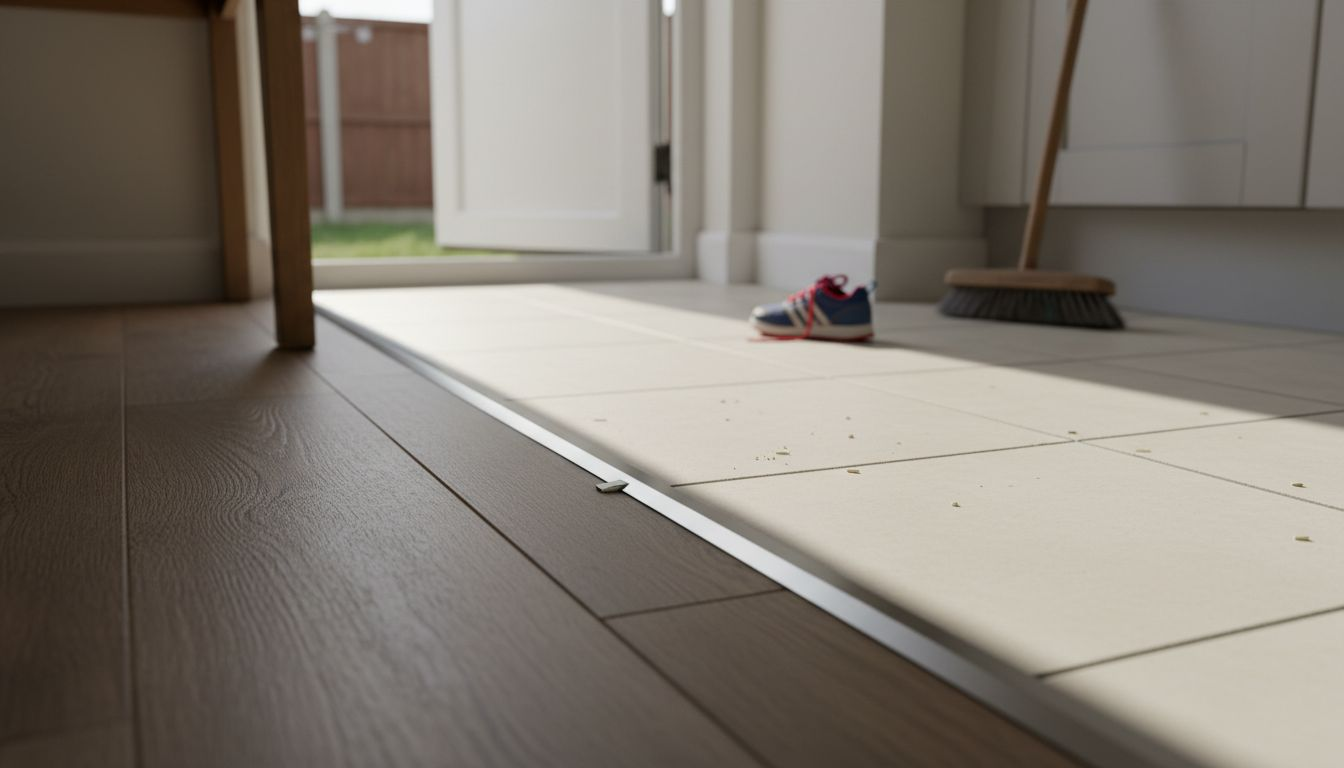
Pro Tip: Always measure your laminate thickness precisely before purchasing trims. Flooring trim types must accommodate plank depth accurately. A 2mm mismatch causes rocking, loosening fixings over time and creating noise with every footstep.
For complex layouts involving multiple floor types, create a simple sketch mapping each transition point. Label required profile types before ordering. This prevents purchasing incorrect trims that force awkward compromises during installation.
Laminate flooring trim profiles vary in channel depth, fixing mechanisms, and finish options. Understanding these distinctions ensures your selections perform reliably under daily use whilst maintaining aesthetic consistency.
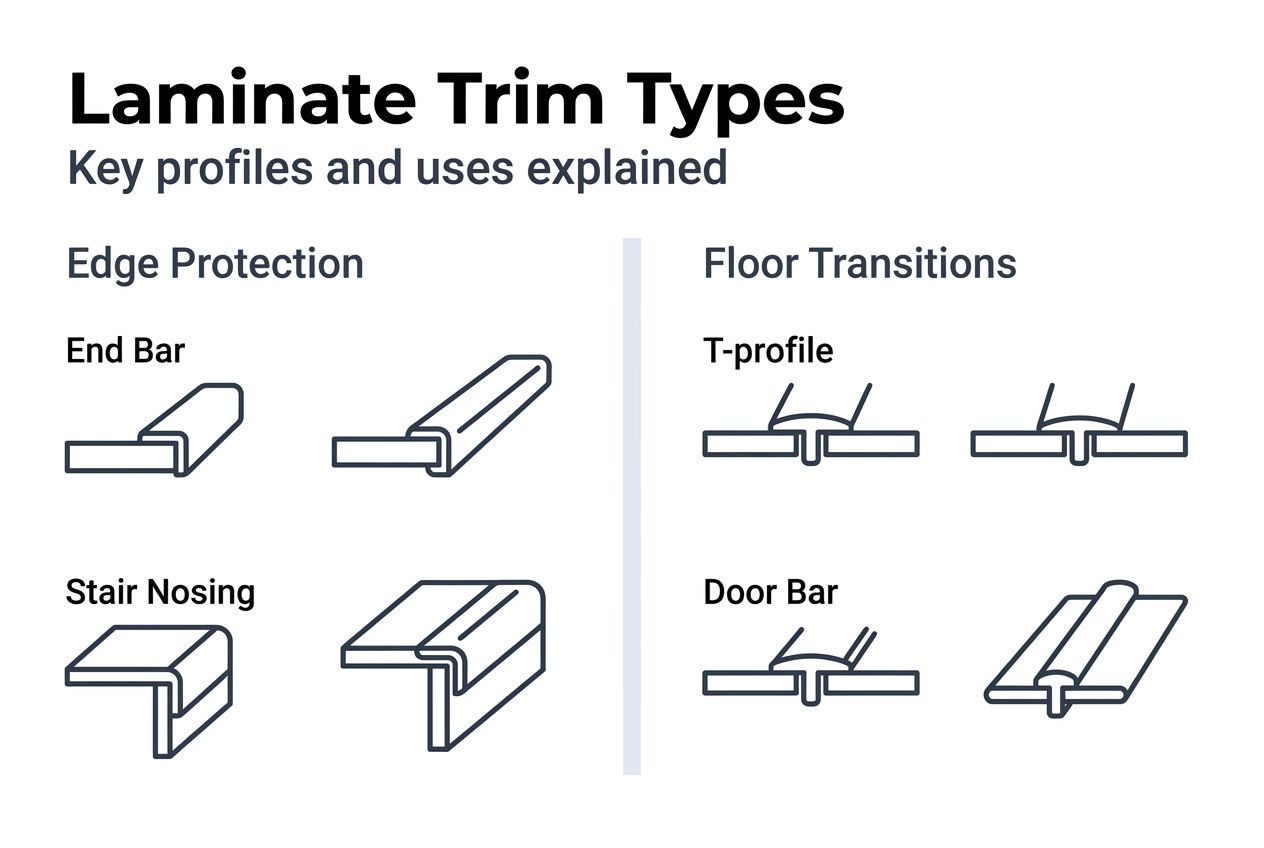
When planning doorway solutions, consider foot traffic intensity. High-traffic entries benefit from robust laminate flooring threshold strips with wider bases that distribute impact loads more effectively than minimal profiles.
Material quality and durability considerations
Trim material selection dramatically influences both immediate installation success and long-term performance. Not all trim materials deliver equivalent durability or maintain manufacturer warranty compliance.
Material comparison:
| Material | Advantages | Disadvantages | Typical Lifespan |
|---|---|---|---|
| Solid metal | Superior durability, hand-finished aesthetics, warranty-friendly | Higher initial cost | 20+ years |
| PVC | Low cost, lightweight | Cracks under pressure, often voids warranties, discolours | 3 to 7 years |
| Aluminium | Moderate strength, corrosion concerns | Oxidises over time, limited finish options | 8 to 12 years |
| Wood | Natural appearance | Moisture sensitive, requires regular maintenance | 5 to 10 years |
British-made premium solid metal trims offer distinct advantages for laminate installations. These hand-finished products resist impact damage that cracks PVC alternatives within months of installation. Solid construction maintains profile integrity even under heavy furniture movement or cleaning equipment.
PVC trims present particular warranty risks. Many laminate manufacturers explicitly exclude coverage when inferior trim materials compromise edge protection. PVC brittleness increases with age, especially in temperature fluctuations common to UK homes. Cracked trims expose flooring edges to moisture infiltration, the primary cause of laminate failure.
Aluminium trims face oxidation challenges, particularly in humid environments like kitchens and bathrooms. Surface degradation creates unsightly discolouration that proves impossible to reverse. Anodised finishes delay this process but rarely survive beyond a decade.
Key material qualities to evaluate:
- Impact resistance under furniture and foot traffic
- Finish durability maintaining colour consistency
- Moisture resistance preventing corrosion or warping
- Thermal stability avoiding expansion gaps or warping
- Warranty compatibility with flooring manufacturer specifications
- Maintenance requirements for long-term appearance
Flooring trims material understanding helps clarify why initial cost differences reflect genuine value disparities. A £15 solid metal trim lasting 20 years proves far more economical than replacing £5 PVC trims every 4 years, especially when factoring in labour costs and flooring warranty preservation.
Solid metal construction supports consistent fixing tension. Screws maintain torque without stripping threads or cracking surrounding material. This reliability prevents the gradual loosening common to polymer trims, eliminating rattling and movement.
For residential applications prioritising longevity and design quality, British solid metal trims represent the optimal investment. Hand-finished options provide superior aesthetic appeal whilst delivering the structural performance laminate installations demand.
How laminate flooring trims enhance safety and longevity
Beyond aesthetic considerations, properly installed trims deliver measurable safety improvements and protect your flooring investment against premature failure.
Safety benefits include:
- Elimination of trip hazards at height transitions between floor surfaces
- Smooth navigation routes preventing catches on exposed edges
- Reduced liability risks in commercial or rental properties
- Clear visual delineation between different flooring zones
Trips and falls frequently occur at poorly managed floor transitions. Even minor height differences of 3 to 5mm create stumbling risks, particularly for elderly residents or young children. Quality trims featuring gradual slope profiles guide feet smoothly across level changes.
Properties with properly installed flooring trims report 40% fewer trip-related incidents compared to installations lacking appropriate transition management, according to residential safety assessments.
Edge protection proves equally critical for longevity. Laminate construction layers compressed fibreboard between decorative surfaces. Exposed edges absorb moisture rapidly, causing swelling that damages adjacent planks. Trims form waterproof barriers preventing this infiltration.
Manufacturer warranties consistently require appropriate trim installation. Terms typically specify approved materials and profile types. Neglecting these requirements provides grounds for warranty denial when edge damage or moisture issues arise. Documentation from installations lacking proper trims often results in rejected claims.
Warranty compliance factors:
- Use of manufacturer-approved trim materials and profiles
- Proper expansion gap coverage preventing moisture exposure
- Secure fixing preventing movement or separation
- Appropriate profile selection for specific transition types
Regular maintenance extends trim and flooring lifespan significantly. Inspect transition points quarterly, checking for loosened fixings, developing gaps, or damage signs. Addressing minor issues immediately prevents escalation into costly repairs.
Pro Tip: When cleaning laminate floors, pay special attention to trim junctions. Moisture accumulation in small gaps between trims and flooring causes swelling over time. Wipe these areas dry after mopping to preserve both components.
Flooring trim safety benefits extend throughout the floor’s lifetime when quality materials receive proper installation. Investing in superior trims protects both your family’s wellbeing and your flooring investment’s long-term value.
Moisture barriers formed by well-fitted trims prove particularly valuable in UK homes where humidity fluctuations challenge laminate stability. Protecting edges from seasonal moisture variations maintains plank integrity and preserves visual appearance.
Visual and design impact of flooring trim choices
Trim selection profoundly influences interior design cohesion and spatial perception. These seemingly minor components significantly affect how rooms feel and flow visually.
Design impact considerations:
- Colour coordination between trims, flooring, and adjacent surfaces establishes visual harmony
- Finish matching (brushed, polished, antique) reinforces design themes throughout spaces
- Profile visibility affects whether transitions recede or create focal points
- Material reflectivity influences light distribution and spatial brightness
Matching trim finishes to existing laminate tones creates seamless transitions that make spaces appear larger and more unified. Contrasting finishes draw attention to transitions, potentially disrupting visual flow in open-plan layouts.
Cohesive trim selections guide the eye naturally through connected spaces. When living areas flow into dining spaces with identical flooring, matching trims at doorways maintain continuity. This visual consistency makes combined areas feel more spacious than their actual dimensions.
Disruptive trim choices fragment spatial perception. A shiny chrome door bar between oak-effect laminate rooms creates jarring contrast that emphasises separation rather than connection. Similarly, stark white trims against dark flooring create harsh lines that compartmentalise spaces.
Practical design tips:
- Select trim finishes matching dominant interior metal tones (door handles, light fixtures, radiators)
- Use subtle finishes in low-profile areas to maintain understated elegance
- Consider how natural and artificial lighting interacts with trim reflectivity throughout the day
- Test finish samples against actual flooring and wall colours before committing to full orders
- Maintain consistent trim styles throughout connected living spaces for design coherence
Room ambience shifts dramatically based on trim choices. Warm bronze finishes complement traditional oak laminates, creating cosy, inviting atmospheres. Contemporary spaces benefit from sleek satin or brushed nickel trims that reinforce modern minimalism.
Trims influence perceived space dimensions through visual weight. Heavy, dark trims create grounding effects suitable for large rooms, whilst light, subtle profiles help smaller spaces feel more open and airy.
For rental properties or homes anticipating future sales, neutral trim finishes offer greatest flexibility. Silver, brushed nickel, and subtle bronze complement diverse design schemes without limiting decorating options.
Thoughtful trim selection transforms functional necessities into design assets that enhance rather than compromise interior aesthetics. This attention to detail distinguishes professionally finished spaces from hasty installations.
Common misconceptions about laminate flooring trims
Several persistent myths about flooring trims lead homeowners toward costly mistakes. Clarifying these misunderstandings prevents installation errors and preserves both aesthetics and warranty coverage.
Prevalent misconceptions include:
- Myth: One universal trim profile suits all transition situations
- Reality: Each transition type demands specific profiles; using T-profiles at exposed edges or edge trims in doorways creates functional failures
- Myth: All trim materials deliver equivalent performance and longevity
- Reality: Material quality varies dramatically; PVC trims crack under stress whilst solid metals maintain integrity for decades
- Myth: Trims represent optional decorative elements rather than functional necessities
- Reality: Manufacturer warranties explicitly require proper trims; installations lacking appropriate profiles void coverage entirely
- Myth: Cheaper trims provide identical protection to premium alternatives
- Reality: Inferior materials fail to protect edges adequately, leading to moisture damage and premature flooring replacement
- Myth: DIY installation allows flexibility in trim selection regardless of specifications
- Reality: Incorrect trim choices create safety hazards, warranty issues, and costly reinstallation requirements
The assumption that profile selection matters little causes frequent installation problems. Door bars installed where T-profiles belong create rocking, whilst edge trims used in doorways fail to bridge gaps properly. Each profile’s engineering addresses specific structural requirements.
Material equivalency beliefs prove particularly costly. Homeowners purchasing budget PVC trims discover brittleness issues within months, requiring complete replacement. Meanwhile, initial savings disappear into repeated purchases and labour costs.
Warranty misconceptions create expensive surprises when damage occurs. Many discover too late that using unapproved trim materials invalidated coverage. Repair costs then fall entirely on homeowners rather than manufacturers.
Installation errors stemming from misconceptions:
- Forcing incompatible profile types into transitions they weren’t designed for
- Neglecting expansion gap requirements, causing trim interference with natural floor movement
- Using adhesive-only fixing when mechanical fastening ensures long-term stability
- Selecting trims based solely on appearance without considering functional requirements
- Assuming all metal trims share identical properties regardless of actual composition
Understanding these clarifications empowers informed decisions. When selecting trims, prioritise functional suitability first, then consider aesthetic preferences within appropriate options. This approach ensures installations that perform reliably whilst maintaining visual appeal.
Consult flooring edge trims installation guidance to avoid common pitfalls and achieve professional results. Proper knowledge prevents the frustration and expense of correcting avoidable mistakes.
Practical guidance: how to choose and install laminate flooring trim
Successful trim selection and installation follow systematic processes that ensure functional performance and aesthetic satisfaction. This step-by-step approach simplifies decision-making whilst preventing costly errors.
Selection and installation process:
-
Assess your flooring layout comprehensively. Map every transition point, doorway, exposed edge, and height variation requiring trim coverage. Photograph areas if helpful for reference when ordering.
-
Measure laminate thickness precisely. Use callipers or precision rulers to determine exact plank depth including underlayment. Profile channels must accommodate this measurement accurately.
-
Identify required profile types for each location. Match doorways with door bars, exposed edges with L-profiles, and level transitions with T-profiles based on specific situations.
-
Select appropriate materials prioritising longevity. British solid metal trims deliver superior durability and warranty compliance compared to PVC or aluminium alternatives.
-
Choose finishes coordinating with interior design. Match laminate flooring threshold strips to dominant metal tones in fixtures and fittings throughout connected spaces.
-
Calculate quantities with 10% contingency. Measure transition lengths carefully, adding extra for cutting errors and future repairs.
-
Order samples before committing to full purchases. Test actual trim samples against your flooring and décor to confirm colour accuracy.
-
Prepare subfloors ensuring level transitions. Address height mismatches before installing trims to prevent rocking or gaps.
-
Cut trims accurately using appropriate tools. Hacksaws with fine blades suit solid metal; ensure clean, square cuts for professional appearance.
-
Fix trims securely using recommended methods. Most quality trims employ mechanical fixing; ensure screws penetrate solid substrates rather than just surface materials.
-
Verify expansion gaps remain clear. Trims should cover gaps without compressing laminate edges, allowing natural floor movement.
-
Seal junctions in moisture-prone areas. Apply appropriate sealants at trim edges in bathrooms and kitchens to prevent water infiltration.
Pro Tip: Before permanently fixing any trim, place it dry (without fasteners) and walk across the transition repeatedly. This test reveals rocking, height mismatches, or profile inadequacies whilst corrections remain simple. Permanent installation locks in any errors.
Matching profiles to specific situations prevents functional failures. Solid metal door bar thresholds excel in high-traffic doorways where durability matters most, whilst subtle edge trims suit low-visibility perimeter terminations.
Installation timing matters. Fit trims after laminate installation completes and planks have acclimatised for 48 hours. This prevents interference with natural expansion and ensures accurate gap coverage.
For complex transitions involving multiple height levels or unusual angles, consider professional installation. The cost of expert fitting proves minor compared to material waste and time lost correcting DIY mistakes.
Quality tools produce better results. Invest in sharp cutting implements, precision measuring devices, and appropriate drill bits. Poor cuts and misaligned holes compromise even premium trims.
Enhance your interiors with quality laminate flooring trims
Selecting superior trims transforms laminate installations from acceptable to exceptional. British-made solid metal options deliver the durability, aesthetic refinement, and warranty protection discerning homeowners and designers demand.
Quality Carpet Trims specialises in hand-finished solid metal flooring trim solutions crafted specifically for UK residential projects. Their product range spans 10 beautiful finishes, ensuring perfect coordination with any interior design scheme whilst providing robust edge protection that lasts decades.
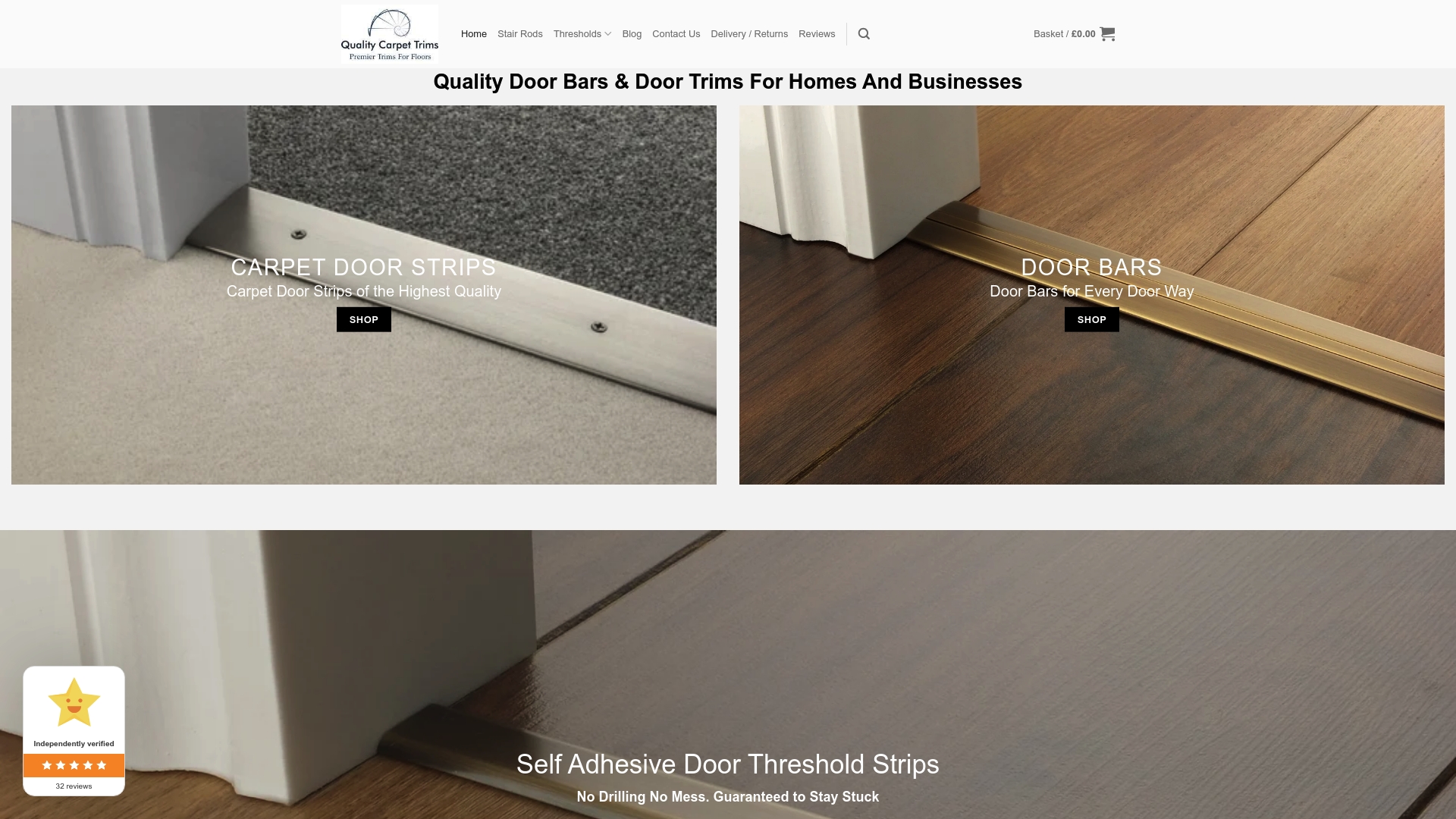
Explore flooring trim types explained to discover profiles and finishes ideally suited to your specific laminate installation. Whether refreshing existing floors or completing new installations, the right trims elevate both function and visual appeal.
Premium solid metal trims eliminate concerns about warranty compliance, material degradation, and premature replacement. Their superior construction handles demanding UK conditions whilst maintaining pristine appearance throughout extended service lives.
Order free samples to experience quality differences firsthand. Compare solid metal finishes against your actual flooring and décor before committing, ensuring complete satisfaction with your trim investment.
Frequently asked questions
What is laminate flooring trim?
Laminate flooring trim comprises specialised metal profiles installed along floor edges, doorways, and transitions between different surfaces. These components cover essential expansion gaps, protect vulnerable laminate edges from damage, and create smooth transitions that enhance safety whilst maintaining manufacturer warranty validity.
How do I choose the right laminate flooring trim?
Match trim profiles to specific transition types: door bars for doorways, T-profiles for level surface transitions, and edge trims for exposed borders. Measure your laminate thickness precisely to ensure profile compatibility. Select solid metal materials for superior durability and warranty compliance. Coordinate finishes with existing interior metalwork and flooring tones to maintain design cohesion throughout connected spaces.
Can using the wrong trim affect my laminate flooring warranty?
Yes, absolutely. Most laminate manufacturers explicitly require approved trim materials and proper installation in warranty terms. Using inferior materials like PVC or installing incorrect profile types often voids coverage entirely. When edge damage or moisture infiltration occurs due to inadequate trim protection, manufacturers routinely deny claims if installations failed to meet specified requirements.
What are the benefits of solid metal trims over PVC or aluminium?
Solid metal trims deliver significantly longer lifespans, typically exceeding 20 years compared to 3 to 7 years for PVC alternatives. They resist impact damage, maintain colour consistency, and avoid the oxidation issues affecting aluminium. Hand-finished solid metals provide superior aesthetics whilst ensuring warranty compliance. PVC trims crack under pressure and frequently void manufacturer warranties due to inadequate edge protection.
Are laminate flooring trims difficult to install?
Installation proves straightforward when using correct profiles, appropriate tools, and following manufacturer guidance. Solid metal trims feature user-friendly fixing systems requiring only basic DIY skills. Measure accurately, cut cleanly, and ensure level substrates before fixing. Testing trim fit before permanent installation prevents common mistakes. Clear instructions accompanying quality trims simplify the process significantly for confident homeowners.
Recommended
- Flawless Laminate Finishes: Edging, Beading, And Transition Strips Made Simple – Quality Carpet Trims
- Laminate Floor Edging: Smart, Versatile & Easy-To-Fit Trim – Quality Carpet Trims
- Blog – Quality Carpet Trims
- Flooring trim types explained: choosing the right finish