
Blog
Vinyl flooring bars: A practical UK guide for seamless transitions

Apr
TL;DR:
- Vinyl flooring bars are precise products that ensure safety and protect flooring edges.
- Choosing the correct profile and proper installation is essential to prevent damage and warranty issues.
- Properly matched and installed transition bars improve both appearance and flooring performance.
Most homeowners assume any strip of metal or plastic shoved in a doorway will do the job. It won’t. A vinyl flooring bar, also known as a door bar, threshold bar, or transition strip, is a precisely engineered product designed to bridge gaps between different floor surfaces safely and neatly. Get it wrong and you risk trip hazards, damaged flooring edges, and even a voided manufacturer warranty. This guide covers everything you need to know: what vinyl flooring bars are, which types suit your situation, how to install them correctly, and how to handle the trickier scenarios that catch most people out.
Table of Contents
- Understanding vinyl flooring bars
- Types and profiles of vinyl flooring bars
- How to install vinyl flooring bars: Step-by-step
- Addressing tricky transitions and special cases
- Expert perspective: Don’t overlook transition bars for performance and warranties
- Find the right vinyl flooring bar and trims for your UK project
- Frequently asked questions
Key Takeaways
| Point | Details |
|---|---|
| Defines vinyl flooring bars | Vinyl flooring bars bridge the gap between floor types for safety and style. |
| Multiple types available | Choose T-profile, reducer, single-edge or Tramline bars based on transition needs and flooring. |
| Correct installation is vital | Proper installation and expansion gaps prevent buckling and maintain manufacturer warranties. |
| Adapt to special cases | Use adhesive for underfloor heating, aluminium for high-traffic, and stair nosings for safe steps. |
| Expert sourcing matters | Select bars and trims from specialist UK suppliers for durability and compliance. |
Understanding vinyl flooring bars
A vinyl flooring bar is not simply decorative. It serves a genuine structural and safety purpose in any room where two different floor surfaces meet. Whether you are moving from vinyl into carpet, tile, or hardwood, there will always be a gap or a level change that needs managing. Without the right bar in place, that edge becomes a snag point, a trip hazard, and an entry point for dirt and moisture.
The term “vinyl flooring bar” is used loosely in the trade. You will also hear it called a door bar, threshold strip, transition strip, or even a cover strip. These names often refer to the same category of product, though some describe specific profiles. Understanding this helps when you are searching for the right product or speaking with a supplier.
Vinyl flooring bars are used in several key locations:
- Doorways, where flooring changes from one room to the next
- Open-plan transitions, where two floor types meet without a door
- Level changes, such as where a raised tiled area meets a lower vinyl floor
- Perimeter edges, where flooring meets a wall, step, or fixed unit
It is worth understanding how vinyl bars compare to other transition types before committing to a product. The table below gives a quick overview:
| Transition type | Best for | Typical material | Level change handled |
|---|---|---|---|
| Vinyl flooring bar | Vinyl to vinyl, vinyl to carpet | Solid metal, vinyl insert | 0 to 10mm |
| Metal threshold bar | Laminate, hardwood, tile | Solid metal | 0 to 15mm |
| Reducer strip | Floors at different heights | Metal or vinyl | Up to 15mm |
| T-bar profile | Same-height floor joins | Metal or vinyl | 0mm |
The key takeaway here is that a vinyl flooring bar bridges gaps between surfaces while protecting the exposed edges of both floors. Choosing the wrong type does not just look untidy. It can cause the flooring edge to lift, chip, or delaminate over time.

Now that you understand the importance of vinyl flooring bars, let’s look at the range of types available for different floors and transitions.
Types and profiles of vinyl flooring bars
Choosing the right profile is where most DIY projects go wrong. There are several distinct profiles available, and each one is designed for a specific situation. The main types include T-profile, reducer, single-edge, threshold bars, end caps, and Ali Tramline, which is a popular UK-specific option often used in commercial settings.
Here is a breakdown of the most common profiles and when to use them:
- T-profile: Used where two floors are at the same height. The bar sits centrally over the join.
- Reducer: Used where one floor is higher than the other, sloping down from one surface to the next.
- Single-edge: Ideal for finishing a flooring edge against a wall or step, or for carpet-to-vinyl joins.
- Threshold bar: A broader, flat bar used in doorways, often covering both surfaces slightly.
- End cap: Finishes an exposed flooring edge, such as at the top of a step or against a sliding door.
- Ali Tramline: A two-part system popular in UK commercial projects, allowing the top bar to be replaced without disturbing the fixed base.
Size matters too. Most vinyl threshold strips are available in widths ranging from 20mm to 45mm and lengths from 0.9 metres up to 2.7 metres. If you are dealing with a height difference between floors, check whether the bar accommodates that gap. Many transition strips for uneven floors handle differences of 3mm to 15mm, which covers most real-world scenarios.
| Profile | Height difference | Typical width | Common use |
|---|---|---|---|
| T-profile | 0mm | 30 to 40mm | Room-to-room same level |
| Reducer | 3 to 15mm | 35 to 45mm | Vinyl to tile height change |
| Single-edge | 0 to 5mm | 20 to 30mm | Carpet meets vinyl |
| Threshold | 0 to 10mm | 35 to 45mm | Doorways |
| End cap | 0mm | 20 to 30mm | Exposed flooring edge |
For very wide gaps or unusual doorway widths, extra wide threshold bars are available to cover joins that standard sizes cannot manage.
Pro Tip: Always check your flooring manufacturer’s installation guidelines before selecting a bar profile. Some manufacturers specify which transition type must be used, and fitting the wrong profile can void your flooring warranty entirely.
With a clear grasp of options, let’s discover how to install vinyl flooring bars for a flawless finish.
How to install vinyl flooring bars: Step-by-step
Installation is more straightforward than most people expect, but the details matter. Rushing this stage is how you end up with a bar that rocks underfoot, lifts at the edges, or causes the flooring beside it to buckle.
Here is the standard installation process for a two-part threshold bar with a track base:
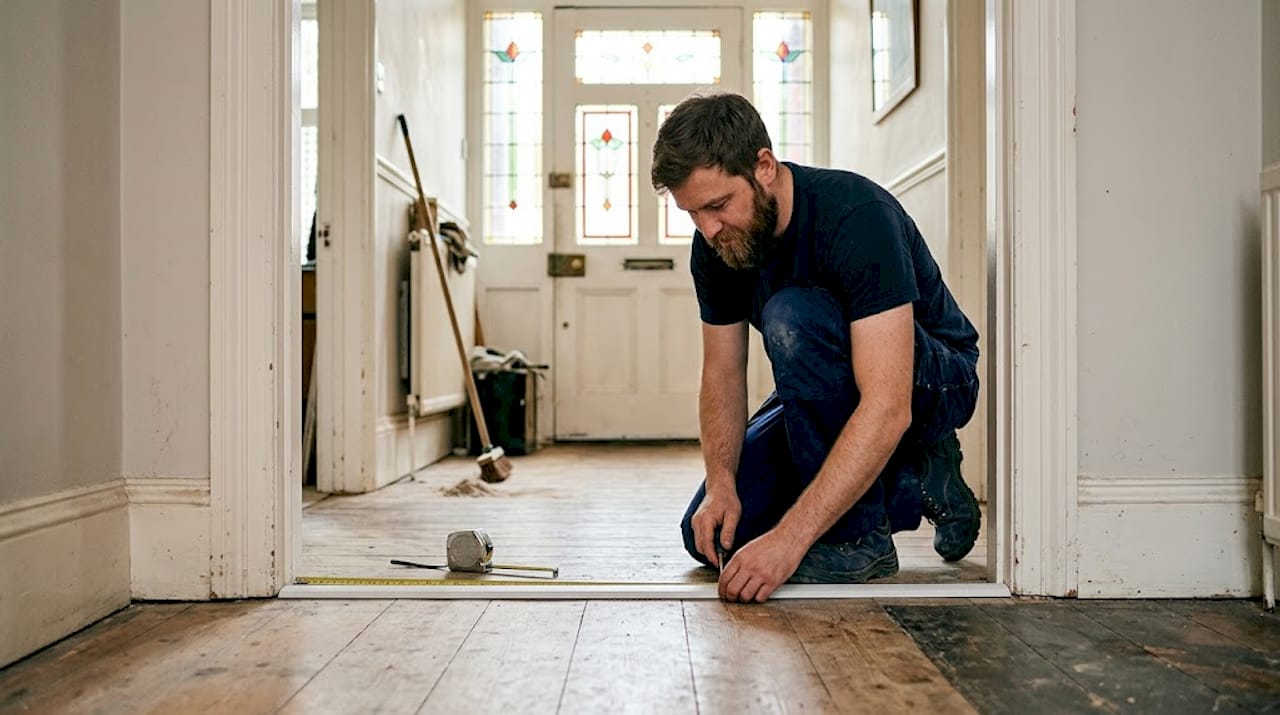
- Measure the gap accurately. Measure the width of the doorway or join, and note the height difference between the two floor surfaces.
- Cut the bar to length using a fine-tooth hacksaw or metal cutting blade. Always cut from the decorative side downward to avoid chipping.
- Position the base track centrally over the gap. Mark the fixing points with a pencil.
- Secure the base using the appropriate method: screws into a timber subfloor, adhesive over underfloor heating, or nail-down fixings for concrete.
- Leave expansion gaps of 5mm to 10mm at each end of the bar. This is critical. Vinyl flooring expands and contracts with temperature changes, and without this gap, the bar will buckle or push the flooring out of alignment.
- Snap or insert the top bar into the base track. Some profiles click into place; others require a rubber mallet to seat correctly.
- Check alignment and press firmly along the full length to ensure the bar is fully seated.
The installation methodology above applies to most standard profiles. For carpet to tile transition strips, you will also need to tuck the carpet edge under the bar before securing it, which requires a knee kicker or carpet tucker tool.
One common point of confusion: a pull bar is a separate installation tool used for tightening floor planks together during laying. It is not a finishing bar and plays no role in transitions.
For staircases, the process differs. You will need stair nosing for vinyl plank flooring, which wraps over the step edge and provides a safe, non-slip finish at each tread.
Pro Tip: Always leave expansion gaps when fitting any transition bar over floating vinyl or LVT. A gap of 5mm to 10mm at each end prevents buckling as the floor moves seasonally.
“Improper transitions can void flooring warranties and cause failure.” Fitting the correct bar correctly is not optional. It is part of the installation specification.
The installation process is straightforward, but unique situations call for adaptations. Let’s explore solutions for tricky transitions and demanding environments.
Addressing tricky transitions and special cases
Standard installations cover most situations, but there are several scenarios where you need to think more carefully before reaching for a bar and a drill.
Here are the most common edge cases and how to handle them:
- Floating vinyl and LVT: These floors are not fixed to the subfloor, so they move. Always leave the full recommended expansion gap and never screw through the flooring itself. The bar must bridge the gap without restricting movement.
- Underfloor heating: Drilling or nailing through a floor with underfloor heating beneath it is a serious risk. Use an adhesive-fixed base track instead. Most quality threshold bars offer this as a fixing option.
- High-traffic and commercial areas: In shops, offices, or hallways with heavy footfall, a solid metal bar will outlast a vinyl-insert product significantly. Well-chosen metal bars in commercial settings can last 20 years in high-traffic areas with minimal maintenance.
- Staircases: A standard threshold bar is not appropriate on stairs. You need a stair nosing profile, which is shaped to sit over the front edge of each tread and protect it from wear while providing grip.
- Uneven subfloors: If the subfloor itself has a significant dip or rise, no transition bar will compensate for that. Use a self-levelling compound to bring the subfloor to within 3mm of flat before fitting the bar. Then use strips for uneven floors to handle any remaining height difference.
- Carpet to vinyl: Use a single-edge gripper bar. The carpet is tucked and gripped on one side while the bar covers the vinyl edge on the other. A standard carpet-to-tile transition bar follows the same principle.
Pro Tip: Flexible vinyl bars offer good waterproofing at the join, which makes them useful in bathrooms or kitchens. However, they are not as scratch-resistant as solid metal bars and will show wear faster in busy areas.
Having addressed best practices and edge cases, it’s time to distil the most important lessons UK homeowners and contractors need to know.
Expert perspective: Don’t overlook transition bars for performance and warranties
After years of working with flooring professionals and homeowners across the UK, one pattern stands out clearly: transition bars are consistently the last thing people think about and the first thing that causes problems.
There is a widespread assumption that any bar will do, as long as it covers the gap and looks acceptable. This thinking is genuinely costly. UK flooring manufacturers are explicit in their installation guides. Use the wrong profile, skip the expansion gap, or fit a bar that restricts floor movement, and you have grounds for a warranty claim to be rejected. Improper transitions can void flooring warranties entirely, leaving you to cover the cost of replacement yourself.
Beyond warranties, there is the question of aesthetics. A bar that does not match the floor finish in colour or sheen draws the eye immediately. It signals an unfinished job, even if everything else is perfect. Matching the finish of your bar to your flooring is not vanity. It is attention to detail that separates a professional result from an amateur one.
Our strong recommendation: treat the transition bar as part of the flooring specification, not an afterthought. Choose the profile first, confirm it meets the manufacturer’s requirements, then select a finish that complements the floor. That sequence protects your investment and delivers a result you will be proud of for years.
Find the right vinyl flooring bar and trims for your UK project
Selecting the correct bar is only half the job. Sourcing it from a supplier who understands UK flooring standards and can match finishes precisely makes the real difference to your finished result.

At Quality Carpet Trims, we supply solid metal door bars, hand-finished in 10 beautiful finishes to suit any interior. Whether you need a vinyl floor edge trim for a bathroom project or want to understand which profile suits your specific transition, our guides and product range are built around real UK installation needs. Browse our flooring trim types explained guide for a deeper look at profiles and finishes, or head straight to our shop for trims to find the right bar for your project today.
Frequently asked questions
What is the main purpose of a vinyl flooring bar?
A vinyl flooring bar bridges gaps between surfaces, protecting exposed flooring edges while maintaining a safe, seamless finish between different floor types.
Which bar profile should I use for a vinyl-carpet transition?
Single-edge bars are ideal for carpet-to-vinyl joins, as they grip the carpet edge on one side while covering the vinyl edge on the other.
How do I install a vinyl flooring bar over underfloor heating?
Use an adhesive-fixed base track rather than screws or nails. For underfloor heating, use adhesive to avoid puncturing the heating system beneath the floor.
Can skipping transition bars void my flooring warranty?
Yes. Improper transitions void warranties and can cause flooring failure, leaving you responsible for the full cost of repair or replacement.
Is a ‘pull bar’ the same as a vinyl flooring bar?
No. A pull bar is a separate tool used to tighten floor planks during installation. It has no role in finishing transitions or covering gaps between floor surfaces.
Recommended
- How T-bars create flawless flooring transitions: UK guide
- What is a vinyl transition strip? A complete guide for 2026
- What is a flooring transition: guide for UK homeowners 2026
- Installing carpet to vinyl transitions with metal trims