
Blog
Trim compatibility: why it matters for every renovation

Jul
TL;DR:
- Proper trim compatibility ensures safe, durable flooring transitions by matching profiles, materials, and measurements accurately. Using solid brass trims with correct profiles and finishes prevents trip hazards, maintains appearance, and extends longevity. Careful measurement and consultation of manufacturer charts help homeowners achieve professional results and avoid costly mistakes.
Trim compatibility is the precise matching of flooring trims to existing surfaces, floor heights, and transition points to produce a safe, durable, and visually consistent result. Get it wrong and you face trip hazards, damaged flooring edges, and finishes that look out of place from the moment you fit them. Get it right and every doorway, every transition between carpet and hard floor, every exposed edge looks deliberate and professional. The importance of trim compatibility runs through every stage of a renovation project, from the first measurement to the final fixing. Qualitycarpettrims supplies solid brass trims hand finished in 10 luxury finishes precisely because compatibility demands materials that hold their shape and colour for years.
Why does trim compatibility matter for installation quality and safety?
Trim compatibility is not just a design concern. It is a safety requirement. Improper trim fit can create trip hazards and cause damage to surrounding flooring materials, affecting both durability and appearance. A trim that sits proud of the floor surface by even a few millimetres becomes a catch point for feet, particularly for older adults and young children.
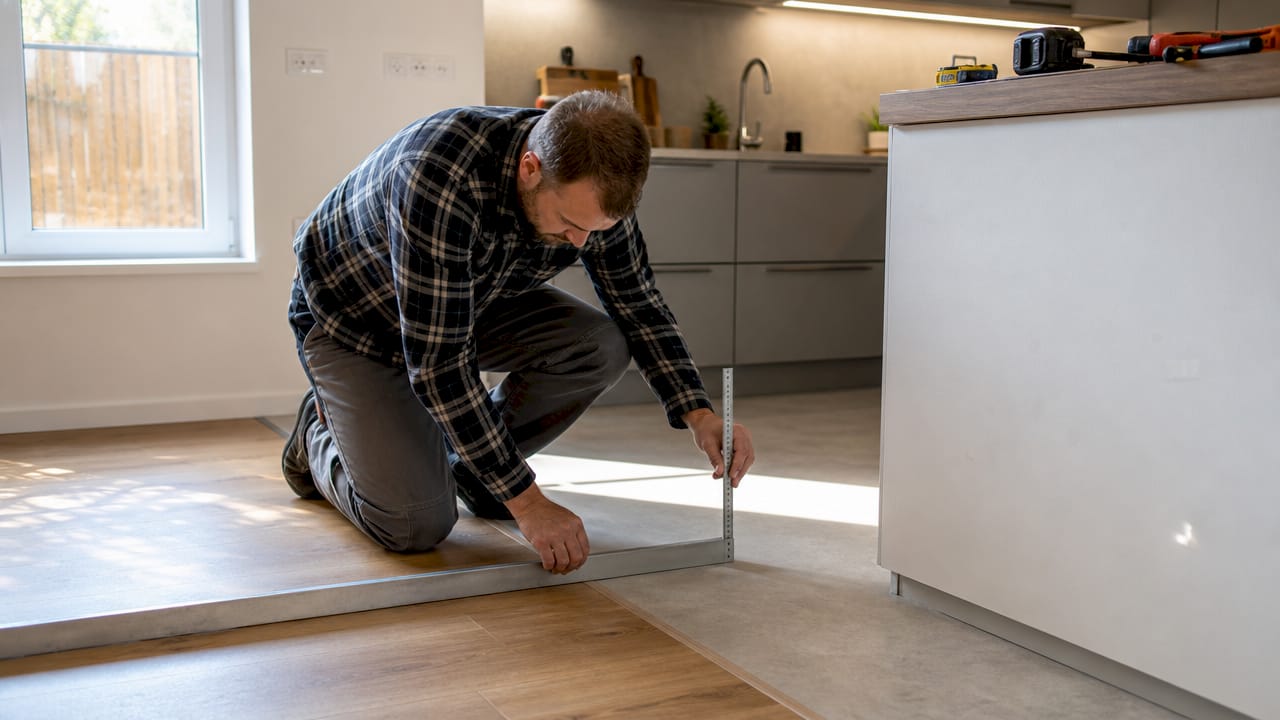
The shape of the trim profile matters as much as the material. A flat bar fitted over a height difference of 10mm or more will rock underfoot and work loose over time. A reducer profile, by contrast, slopes gradually between two floor heights and sits flush on both surfaces. Choosing the wrong profile for the transition type is one of the most common mistakes homeowners make.
Precise measurements are the foundation of a compatible fit. Measure the gap width, the height difference between the two floor surfaces, and the depth of any fixing channel before selecting a trim. Specialists stress consulting compatibility charts over guessing based on general sizes, because a mismatch of just a few millimetres can prevent a secure fixing.
Solid brass trims resist the deformation that undermines a safe fit over time. Cheaper materials such as plastic, rubber, or aluminium split, bend, or dent under foot traffic, creating the very edges and lips that cause trips. Solid brass holds its profile under repeated load, which means the trim stays flush and secure for the life of the floor.
- Profile match: Select a profile designed for your specific transition type, whether carpet to hard floor, hard floor to hard floor, or an exposed edge.
- Height difference: Measure the height gap accurately. A difference of more than 3mm typically requires a reducer or ramp profile rather than a flat bar.
- Fixing method: Check whether the trim fixes by grip rail, adhesive, or screw, and confirm the subfloor material supports that method.
- Material durability: Solid brass maintains its shape under heavy use. Plastic and rubber alternatives deform and create uneven surfaces.
Pro Tip: Before buying, lay a straight edge across both floor surfaces at the transition point and measure the height difference with a steel rule. That single measurement determines which profile you need.
What compatibility factors should you consider when selecting trims?
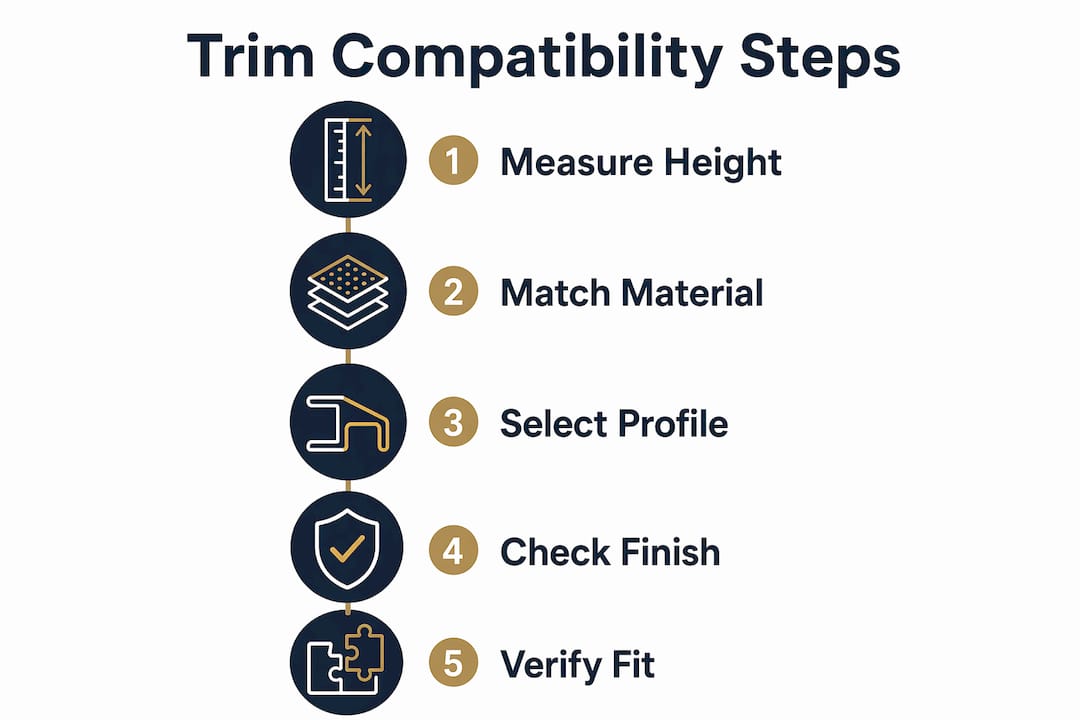
Selecting the right trim requires you to think across four distinct areas: material, profile dimensions, finish, and manufacturer specifications. Overlooking any one of them leads to a fitting that either fails functionally or looks wrong.
Material compatibility
The floor type dictates the trim material. Solid brass trims work with carpet, laminate, vinyl, ceramic tile, and natural stone because brass does not react chemically with adhesives or grout, and it does not absorb moisture. High-quality trims provide enhanced durability, improved aesthetic integration, and contribute to safer, longer-lasting flooring installations. That is the practical case for choosing brass over cheaper alternatives from the start.
Profile dimensions and size standards
Trim profiles come in standard widths, typically 25mm, 38mm, and 55mm, and in lengths of 90cm or 90cm multiples. The width you need depends on the gap you are covering and the height difference between floors. An extra wide threshold bar at 55mm covers larger gaps that standard bars cannot bridge without leaving exposed subfloor. Always match the profile width to the actual gap, not to a rough estimate.
Colour and finish matching
A trim that fits perfectly but clashes with the floor colour draws the eye to the transition rather than away from it. Qualitycarpettrims offers 10 hand finished brass finishes, from satin brass to dark bronze, so you can match the trim to door furniture, skirting boards, or the floor itself. Finish matching is part of trim compatibility in design, not an afterthought.
Manufacturer specifications and compatibility charts
- Identify the flooring types on both sides of the transition.
- Measure the height difference and gap width precisely.
- Consult the manufacturer’s compatibility chart for the correct profile.
- Confirm the fixing method suits your subfloor.
- Order a free sample to check the finish against your floor before committing.
Homeowners often overlook manufacturer compatibility charts, which leads to selection errors and maintenance problems later. Official charts exist for a reason. They encode the manufacturer’s testing data for specific floor types and transition heights.
| Compatibility factor | What to check |
|---|---|
| Profile type | Matches the transition: flat, reducer, ramp, or edge trim |
| Width | Covers the gap without overhanging onto the floor surface |
| Height range | Suits the height difference between the two floor surfaces |
| Finish | Coordinates with door furniture and floor colour |
| Fixing method | Compatible with subfloor material and floor thickness |
Pro Tip: Order a free sample from Qualitycarpettrims and hold it against both floor surfaces in natural light before placing your order. Finish colours read differently under artificial light.
What are the most common trim compatibility challenges?
Even careful homeowners run into problems. The most frequent issues come from assumptions rather than measurements.
- Assuming universal fit: No single trim profile fits every transition. A bar that works perfectly between two laminate floors will not sit correctly between carpet and ceramic tile at different heights. Check the specification for every transition individually.
- Ignoring height differences: A height difference that looks minor to the eye can be 5mm or more. That gap requires a specific reducer profile. Fitting a flat bar over it creates a lip that rocks and eventually works loose.
- Skipping the manufacturer guide: Professional guides advise strict adherence to official charts for the best trim fit and lasting installation. Skipping this step is the single most avoidable cause of a failed fitting.
- Choosing non-durable materials: Plastic, rubber, and aluminium trims deform under foot traffic. Solid brass trims maintain shape and finish even under heavy use, which means the transition stays flush and safe for years.
- Underestimating uneven subfloors: Old houses often have subfloors that are not perfectly level. A trim that fits at one end of a doorway may not sit flat at the other. Use a spirit level across the full width of the transition before fitting.
When a standard profile does not solve an uneven transition, specialist trims with adjustable fixing rails offer more flexibility. The fixing rail can be shimmed to compensate for minor subfloor variations without affecting the visible face of the trim. This approach preserves both the fit and the finish without cutting corners on either.
Knowing when to call a professional matters too. If the height difference exceeds 15mm, or if the subfloor is damaged or uneven across a wide area, a flooring contractor can prepare the surface before you fit the trim. Attempting to bridge a large or uneven gap with a standard trim always produces a poor result.
How do you verify and match trims step by step?
A clear workflow removes guesswork from the selection process. Stepwise selection helps homeowners avoid pitfalls and achieve professional results with minimal waste or rework.
- Measure the transition point. Record the gap width, the height of each floor surface, and the height difference between them. Use a steel rule, not a tape measure, for accuracy at small dimensions.
- Identify the profile type. Match the height difference and gap width to the correct profile category using the manufacturer’s compatibility guide.
- Select the finish. Hold finish samples against your floor and door furniture in the room’s natural light. Confirm the finish before ordering.
- Order a sample. Qualitycarpettrims provides free samples. Test the sample in the actual doorway before placing a full order.
- Test the fit before fixing. Lay the trim in position without fixing it. Check that it sits flat on both surfaces and that the fixing rail engages correctly with the subfloor.
- Fix and inspect. After fixing, run your hand along the trim to confirm there are no proud edges. A correctly fitted trim should feel flush with both floor surfaces.
Pro Tip: Take a photograph of the transition point with a steel rule in frame before you order. You can share that image with the Qualitycarpettrims team if you need advice on which profile to select.
Maintenance of solid brass trims is straightforward. Wipe with a damp cloth and a mild detergent. The powder coating protects the brass from tarnishing, so no specialist products are needed. A trim that is correctly fitted and made from solid brass will outlast the floor it finishes.
Key takeaways
Trim compatibility is the single most important factor in achieving a flooring transition that is safe, durable, and visually consistent across every room in your home.
| Point | Details |
|---|---|
| Safety depends on fit | An incorrectly fitted trim creates trip hazards and damages flooring edges over time. |
| Measure before you buy | Record gap width and height difference precisely; these two figures determine the correct profile. |
| Use manufacturer charts | Official compatibility charts prevent selection errors that lead to poor fit and maintenance problems. |
| Material quality matters | Solid brass trims hold their shape under heavy use; cheaper materials split, bend, and dent. |
| Finish is part of compatibility | Matching the trim finish to door furniture and floor colour produces a cohesive, professional result. |
Why I think homeowners underestimate trim compatibility
Most homeowners treat trims as the last item on the shopping list. They spend weeks choosing flooring, weeks choosing paint, and then grab the first trim that looks roughly the right width. I have seen that approach produce results that undermine an otherwise excellent renovation.
The part that surprises people most is how much a mismatched trim affects the feel of a room. A brass trim in the wrong finish does not just look wrong at the doorway. It pulls your eye to the transition every time you walk through the room. Conversely, a trim that matches the door furniture and sits perfectly flush disappears. You stop noticing it, which is exactly what a good trim should do.
The other thing I have observed is that homeowners trust their eye over their tape measure. A height difference that looks like nothing can be 4mm or 5mm. That is enough to require a reducer profile rather than a flat bar. Skipping the measurement and fitting the wrong profile means the trim rocks, the fixing loosens, and within a year the trim is lifting at one end.
My honest advice is to treat the trim selection with the same rigour you give to the flooring itself. Measure twice, consult the DIY homeowner’s guide for your profile type, and order a sample before you commit. The cost of getting it right the first time is always lower than the cost of replacing a trim that has failed.
— Matt
Qualitycarpettrims: solid brass trims built for a perfect fit
Qualitycarpettrims supplies solid brass door bars and flooring trims hand finished in 10 luxury finishes, from satin brass to dark bronze, to match any interior. Every trim is made in the UK and will not split, bend, or dent the way plastic, rubber, or aluminium alternatives do under daily foot traffic.
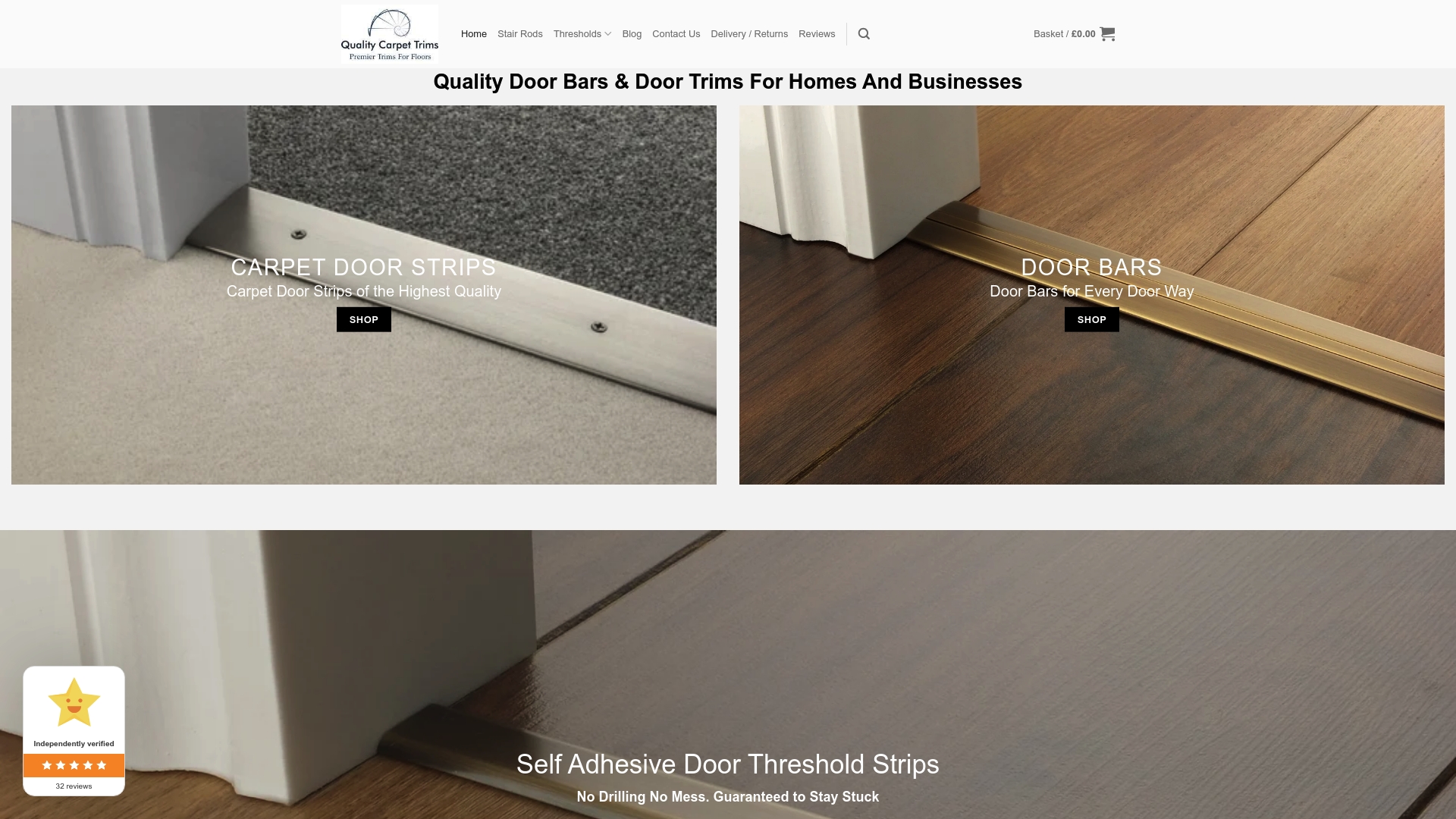
The range covers every transition type, including carpet to hard floor, carpet to carpet, and exposed edges, with profiles sized to suit standard and wider gaps. Free samples are available so you can check the finish against your floor before ordering. Browse the full range of brass threshold bars and find the profile that fits your project precisely.
FAQ
What is trim compatibility in flooring?
Trim compatibility is the matching of a flooring trim’s profile, dimensions, and material to the specific floor types and height differences at a transition point. A compatible trim sits flush, fixes securely, and suits the finish of the surrounding interior.
Why does an incompatible trim create a safety risk?
A trim that does not sit flush on both floor surfaces creates a proud edge that catches feet, particularly for older adults and children. Improper trim fit causes trip hazards and damages the flooring edges around the transition over time.
How do I choose the right trim profile for my floor transition?
Measure the height difference between the two floor surfaces and the width of the gap. Match those figures to the manufacturer’s compatibility chart to identify the correct profile type, whether flat bar, reducer, ramp, or edge trim.
Why are solid brass trims better than cheaper alternatives?
Solid brass trims maintain their shape and finish under heavy foot traffic. Plastic, rubber, and aluminium trims split, bend, or dent over time, creating uneven surfaces that compromise both safety and appearance.
How often should I check fitted trims for wear?
Run your hand along each trim once or twice a year to check for proud edges or loosening fixings. A correctly fitted solid brass trim requires no specialist maintenance beyond occasional wiping with a damp cloth.
Recommended
- Understanding trim compatibility: a DIY homeowner’s guide
- Explaining trim compatibility: a homeowner’s guide
- Why trims matter: choosing the right finish for your renovation
- What is flooring compatibility: a homeowner’s guide