
Blog
Metal carpet trims: protection, style, and lasting value

May
TL;DR:
- Choosing metal carpet trims over plastic or wood significantly extends floor edge durability and reduces long-term repair costs.
- Proper selection and installation of quality metal trims protect flooring, enhance safety, and contribute to a polished room finish.
Most homeowners only notice their carpet edges once the damage is already done. A fraying threshold here, a curling edge there, and suddenly a room that felt polished starts looking tired. What many people fail to realise is that the choice of carpet trim made during installation quietly determines how much time and money gets spent on repairs years down the line. Metal carpet trims solve this problem before it starts, offering genuine edge protection, a clean visual finish, and a durability that cheaper options simply cannot match.
Table of Contents
- The purpose of carpet trims in modern interiors
- Why metal outperforms plastic and wood
- Saving money and time with metal trims
- Choosing the right finish and style for every space
- A flooring expert’s view: what most guides miss about metal trims
- Upgrade your project with premium metal carpet trims
- Frequently asked questions
Key Takeaways
| Point | Details |
|---|---|
| Best edge protection | Metal carpet trims stop fraying and chipping at high-wear points for longer floor life. |
| Real cost savings | Investing in metal trims cuts long-term repairs and cleaning compared to plastic or wood. |
| Lasting style | Quality metal trims deliver seamless looks that retain their finish even under heavy use. |
| Safer transitions | Well-chosen trims help eliminate trip hazards between different floor levels or surfaces. |
The purpose of carpet trims in modern interiors
A carpet trim, sometimes called a door bar, threshold strip, or edge trim, is the slim profile fitted at the junction between two different floor surfaces. You’ll most commonly see them where carpet meets hard flooring such as tiles, engineered wood, or vinyl. They sit at one of the most exposed points in any room, catching foot traffic with every single step.
The essential functions of a good carpet trim go well beyond tidiness:
- Edge protection: Prevents the carpet pile from separating, unravelling, or fraying at the cut edge.
- Safety: Creates a flush, even transition that eliminates trip hazards, particularly important in family homes or commercial settings.
- Cleanliness: Seals the gap between surfaces so dirt, moisture, and debris don’t collect underneath.
- Aesthetics: Delivers a clean, professional finish that ties the room together.
Without a trim, the raw edge of a carpet is vulnerable. Metal trims protect edges from fraying, unravelling, chipping, and wear caused by foot traffic, vacuuming, and everyday impacts. Over time, an unprotected edge becomes an eyesore and then a genuine maintenance problem.
A carpet trim is not an afterthought. It’s the last detail that holds the whole floor together, literally and visually.
Common problems that arise when homeowners skimp on quality here include premature fraying within the first year, trims buckling or cracking under regular foot traffic, and the unsightly gaps that develop as cheaper materials shift with temperature changes. Understanding what are flooring edge trims and how they function is the first step to making a smarter choice. When selecting carpet trims, the material question matters more than most people realise.
With an understanding of why edge protection is essential, let’s examine exactly how metal trims outperform their alternatives.
Why metal outperforms plastic and wood
The flooring market offers trim products in plastic (PVC), wood, and metal. Each has its price point, but the differences in performance over time are significant. Metal trims, specifically solid brass and similarly robust alloys, resist physical damage, moisture, and daily wear in a way that plastic and wood simply cannot replicate.
| Feature | Metal trim | Plastic trim | Wood trim |
|---|---|---|---|
| Typical lifespan | 15 to 25+ years | 3 to 7 years | 5 to 10 years |
| Moisture resistance | Excellent | Moderate | Poor |
| Scratch resistance | High | Low | Medium |
| Maintenance required | Minimal | Moderate | Regular |
| Visual longevity | Retains finish | Yellows or cracks | Fades or warps |
The data tells a clear story. Metal trims last 2 to 3 times longer than plastic or wood alternatives and reduce the need for edge repairs by 40 to 50 per cent over a three to five year period, according to FIRG and NFA data. That means fewer call-outs for contractors and fewer replacement purchases for homeowners.
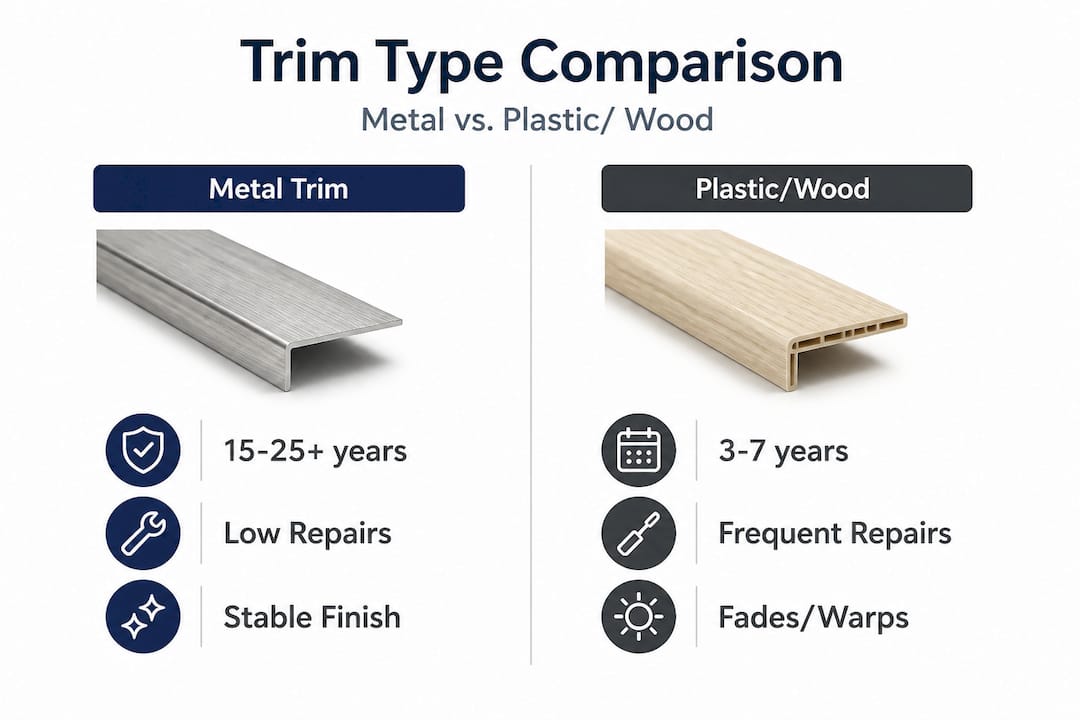
Plastic trims are particularly prone to yellowing in rooms with strong natural light. In kitchens and bathrooms, they can warp or lift slightly at the edges where moisture repeatedly gets beneath them. Wood trims, while attractive initially, require periodic sanding, staining, or sealing to maintain their appearance, and they swell in humid environments.
Metal, by contrast, holds its shape and finish through temperature changes, moisture exposure, and heavy foot traffic. The carpet edge trim durability argument becomes even more persuasive when you consider high-use areas: hallways, open-plan kitchen-diners, and commercial thresholds where traffic is relentless.
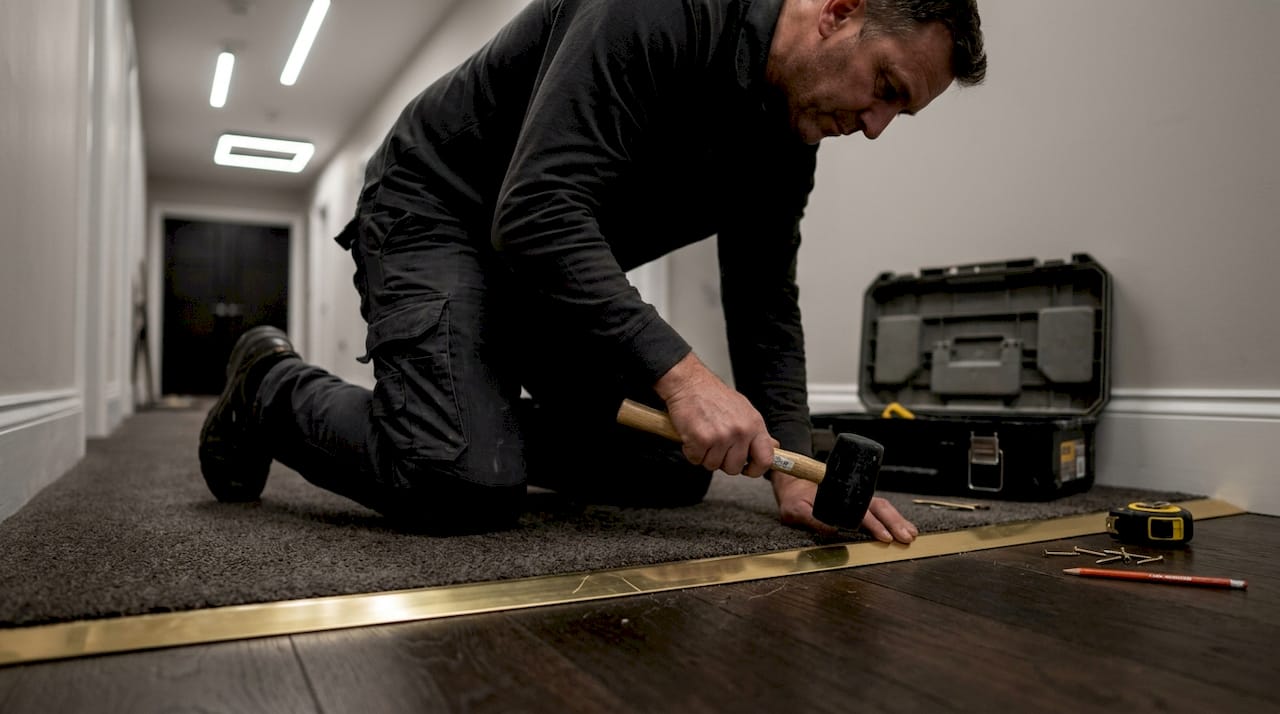
Pro Tip: For kitchens, utility rooms, and bathrooms, always choose a trim with a finish that handles moisture gracefully. A hand-finished brass trim not only withstands humidity but develops a warm patina that adds character rather than looking worn. Consider the foot traffic level for each specific doorway rather than applying a one-size-fits-all choice across your entire project. And don’t overlook safety: brass trims and safety is a genuine consideration in homes with older adults or young children, as a rigid, flush metal profile eliminates the flex and lift that makes plastic trims a tripping risk over time.
Saving money and time with metal trims
The upfront cost of a quality metal trim is higher than a plastic strip from a DIY shed. That fact puts some buyers off. But it’s worth running the actual numbers rather than making a decision based on purchase price alone.
Metal trims cost more upfront but deliver measurable savings on maintenance and repairs over their lifespan, and they simplify cleaning because the sealed edge does not trap dirt or moisture the way a failing plastic trim does.
| Cost consideration | Metal trim | Plastic trim |
|---|---|---|
| Initial purchase | Higher | Lower |
| Replacement frequency (10 years) | Once | 2 to 3 times |
| Repair call-outs | Minimal | Frequent |
| Cleaning time per week | Negligible | Moderate |
| Total 10-year cost (estimate) | Lower | Higher |
Here is a practical scenario. A homeowner installs plastic trims throughout a three-bedroom house. Within four years, the trim in the hallway has lifted and cracked, two kitchen thresholds have discoloured, and one bathroom strip has buckled. Each replacement involves purchasing materials, clearing furniture, and spending time on the floor. If a contractor does the work, the cost mounts quickly.
The same homeowner, had they chosen solid metal trims from the start, would still have their original thresholds looking excellent a decade later. The initial spend would have been recouped within five to six years through avoided replacements alone, not accounting for cleaning time saved.
Follow these steps to estimate your needs accurately before ordering:
- Measure every doorway and flooring junction where a trim is needed, recording each length to the nearest centimetre.
- Group measurements by room type (wet areas versus dry areas, high traffic versus low) to help decide on finishes.
- Add ten per cent to your total linear measurement to account for cutting waste.
- Choose your finish based on the dominant hardware and fittings in each room.
- Order samples before committing to a full purchase if you’re unsure about colour matching.
Pro Tip: Never estimate your measurements from memory. Walk the property with a tape measure and a notepad. A few minutes of careful measuring prevents ordering errors and avoids the frustration of running short mid-project. For those installing trims across multiple rooms, metal trim installation tips can save considerable time on the day of fitting. Understanding the full range of types of flooring trims also helps you select the right profile for each specific transition, whether that’s carpet to tile, carpet to vinyl, or carpet to hardfloor.
Choosing the right finish and style for every space
Once you’ve decided on metal, the next question is which finish suits your space. This is where the decision becomes genuinely enjoyable rather than purely functional. A well-chosen trim does not just protect. It finishes a room.
Metal trims in brass, and other solid metal alloys resist dents, scratches, corrosion, and moisture better than any plastic or wood alternative. But within the metal category, the hand-applied finish makes an enormous visual difference.
Consider these factors when choosing your finish and style:
- Room type and moisture level: Bathrooms and kitchens need finishes that handle humidity without tarnishing. Warm gold and antique brass tones work particularly well here.
- Foot traffic volume: High-traffic hallways and commercial thresholds benefit from harder-wearing finishes that hide minor scuffs and maintain their appearance under repeated use.
- Existing colour scheme: Match your trim finish to door handles, light switches, radiator valves, or skirting details for a cohesive, considered look. Brushed finishes suit contemporary interiors; richer, warmer tones feel at home in more traditional settings.
- Accessibility: In homes with older adults or young children, a low-profile flush trim reduces trip risk. The rigidity of metal ensures the trim stays flush over time rather than flexing upwards.
- Personal style: A trim is a small detail but it contributes to the overall tone of a room. A polished gold finish adds warmth and a touch of elegance. A satin or matte finish is cooler and more understated.
For open-plan spaces where carpet to vinyl with metal transitions are common, consistency of finish across multiple doorways pulls the design together. It’s one of those small, considered details that interior designers rely on to make a space feel intentional rather than assembled by accident. Whether you’re working on a period property or a modern new-build, there is a metal finish that not only performs but genuinely complements the design.
A flooring expert’s view: what most guides miss about metal trims
Here’s something most articles on this subject won’t tell you: the single most common cause of premature carpet replacement is not the carpet itself. It’s the unprotected edge.
We’ve seen it time and again. A homeowner invests in a quality carpet, installs it professionally, then fits a cheap plastic trim at the door because it seemed like a sensible saving. Within three years, the edge is frayed. The fraying extends inward. The carpet starts to look shabby from the doorway, which is precisely where every visitor’s eye goes first. A full carpet replacement follows, at considerable cost, simply because the edge was never properly protected.
What frustrates us about the standard advice in this space is that it tends to focus almost entirely on installation technique and rarely on material selection. A perfectly fitted cheap trim is still a cheap trim. It will fail. The question is only when.
The hidden cost of this decision is not the replacement trim. It’s the carpet that gets pulled up with it. It’s the contractor time. It’s the disruption to the household. All of that is avoidable.
That said, we’re not suggesting you spend a fortune on every single trim in every room. There is room for considered economising. In low-traffic areas like spare bedrooms, the demands on a trim are significantly lighter, and you can afford to prioritise aesthetics over absolute durability. But in hallways, living rooms, and kitchens, where floors take genuine punishment, a solid metal trim is not a luxury. It’s the right choice, full stop.
The other thing that rarely gets mentioned is the cumulative visual effect of consistent, high-quality trims across a property. When you walk through a home where every threshold has been finished with the same considered touch, the whole interior feels elevated. It’s the kind of seamless finish advice that professionals give to clients who want their home to feel truly finished rather than merely functional.
Upgrade your project with premium metal carpet trims
If this article has helped you understand why trim quality genuinely matters, the next step is choosing products that deliver on every point discussed.
At Quality Carpet Trims, we supply solid metal door bars and edge trims that are hand finished in ten beautiful finishes, made here in the UK. Whether you’re a homeowner working through a refurbishment or a contractor finishing a commercial site, our range covers every transition type. Browse our carpet to hardfloor metal trims to find the right profile for your project, or explore our matwell flooring trim options for entrance areas. Not sure which style suits your space? Our flooring trim types explained guide makes the decision straightforward. Free samples are available, and our team is on hand to give expert advice before you order.
Frequently asked questions
How do metal carpet trims extend the life of flooring?
Metal trims protect vulnerable carpet and tile edges from fraying, unravelling, and chipping from daily wear, significantly reducing the need for costly repairs or early replacement.
Are metal trims worth the upfront cost compared with plastic?
Absolutely. Metal trims last 2 to 3 times longer and require 40 to 50 per cent fewer repairs over time, making the total cost of ownership considerably lower than plastic alternatives.
Can metal trims help with cleaning and hygiene?
Yes. Because metal trims seal the edge properly, they don’t trap dirt or moisture at the flooring join the way a buckling plastic trim does, making routine cleaning quicker and more effective.
Which spaces benefit most from metal trims?
High-traffic areas such as hallways, entrances, and open-plan living spaces benefit enormously, as do moisture-exposed rooms like kitchens and bathrooms where plastic and wood trims deteriorate fastest.
Recommended
- What Is Carpet Edge Trim? 30% Safer, 3x More Durable
- Carpet Edge Trim – Quality Carpet Trims
- Square Edge Carpet Trim: Stylish Solutions for a Polished Finish – Quality Carpet Trims
- What Is a Carpet Trim? 30% Safer & 3x Longer Lasting
- Fliesenideen für stilvolle Räume: Trends und Tipps 2026