
Blog
Guide to edge protectors: choosing and fitting them right

Jul
TL;DR:
- Edge protectors prevent floor damage and injuries by fitting at transitions and furniture corners. Solid brass or powder-coated trims offer durability and a professional finish, unlike cheaper materials that degrade quickly. Proper surface preparation and matching the trim profile are essential for long-lasting, safe, and attractive results.
Edge protectors are defined as strips, profiles, or guards fitted to exposed flooring transitions, furniture corners, and step edges to prevent damage and reduce injury risk. They sit at the intersection of home safety and interior finishing, and getting them right matters more than most homeowners realise. The wrong material splits, bends, or dents within months. The right one, such as a solid brass or powder-coated trim from Qualitycarpettrims, holds its shape and finish for years. This guide to edge protectors covers every decision you need to make, from material selection to final fixing.
What types of edge protectors are there for homes and DIY projects?
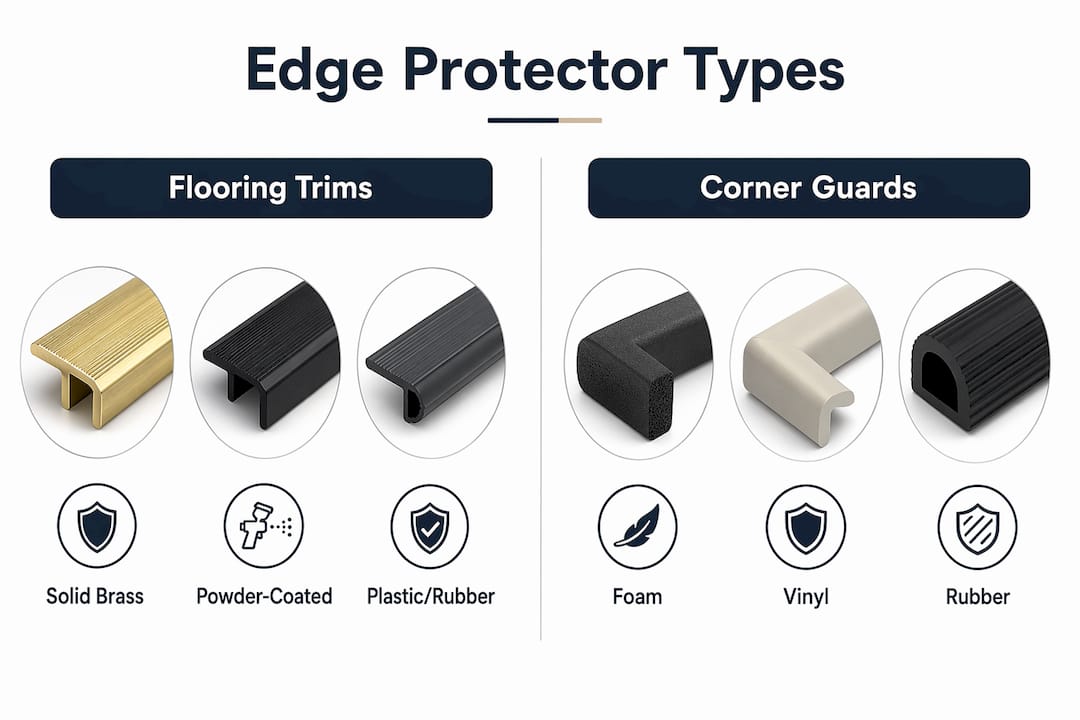
Edge protectors fall into two broad categories: flooring transition trims and furniture or corner guards. Each serves a different purpose, and confusing the two leads to poor results.
Flooring transition trims are rigid profiles fitted at the junction between two floor surfaces. A carpet meeting a hardwood floor, or a tile meeting a vinyl plank, creates an exposed edge that catches feet, collects dirt, and lifts over time without a trim. The industry term for these is “threshold strips” or “edge trims,” and they are the backbone of any professional floor finish. Qualitycarpettrims manufactures these in solid brass, hand finished in ten luxury colours, including satin brass, antique gold, and matt black. Solid brass does not split, bend, or dent under foot traffic. That is the critical difference between a trim that lasts a decade and one that fails within a year.
Cheaper materials tell a different story. Wooden trims swell and crack with moisture. Plastic and rubber guards deform under heat and heavy use. Aluminium trims scratch easily and lose their finish quickly. None of these hold up in a busy hallway or kitchen doorway. Reusability and durability are the primary factors separating quality protectors from disposable ones. A solid metal trim is a one-time investment; a plastic one is a recurring cost.
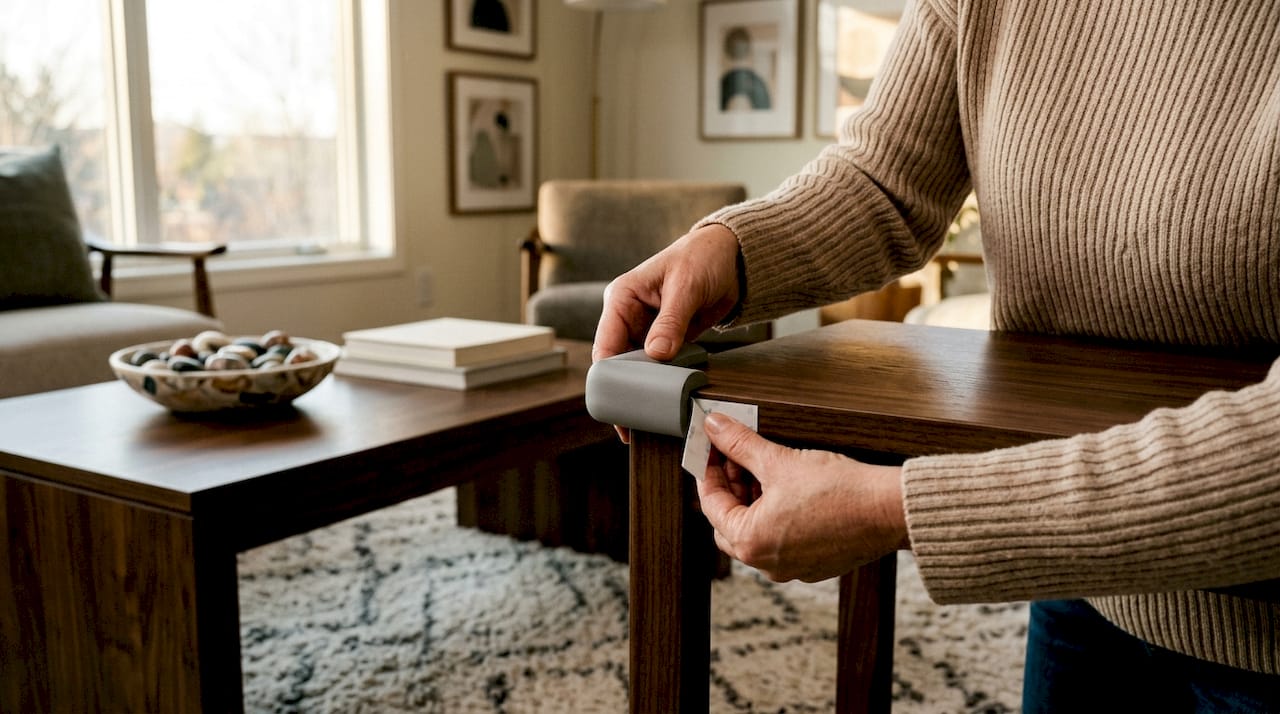
Furniture and corner guards serve a different function. These are softer profiles, often made from foam or vinyl, fitted to table corners, hearth edges, and low furniture to protect children and older adults from sharp impacts. Soft vinyl foam guards can be cut to length for babyproofing or furniture safety, making them adaptable to almost any edge shape. They are not structural and are not designed for flooring transitions, but they are genuinely useful for edge protectors for kids safety in family homes.
The key distinction is this: use rigid solid brass or powder-coated trims for flooring transitions, and use soft foam or vinyl guards for furniture corners and child safety. Mixing the two up wastes money and leaves gaps in your home’s protection.
How do you choose the right edge protector for your floor and safety needs?
Selecting the correct protector starts with assessing your specific situation. The flooring type, the edge shape, the room’s moisture level, and your household’s safety needs all feed into the decision.
Start with these questions:
- What flooring types are meeting? Carpet to hardfloor, tile to vinyl, and laminate to laminate each require a different profile shape. A flat bar suits two hard surfaces at the same height. A ramp profile suits a height difference between carpet and a hard floor.
- What is the moisture exposure? Kitchens, bathrooms, and utility rooms need protectors that resist moisture. Material selection based on environment is a core principle of edge protector specification. Solid brass with a powder-coated finish resists moisture far better than wood or untreated metal.
- What are the safety priorities? A household with young children or elderly relatives needs protectors with no sharp lips or raised edges. A low-profile, flush-fitting trim eliminates trip hazards at floor level.
- What finish suits the room? A trim should complement the floor, not fight it. Qualitycarpettrims offers ten hand-finished colours, so matching a satin chrome trim to a grey laminate or an antique brass to a warm oak floor is straightforward.
Professional installers recommend selecting protector materials based on expected handling and environmental exposure for long-term durability. That principle applies directly to home flooring. A trim in a busy hallway faces more wear than one in a bedroom, so the hallway demands a harder, denser material.
Pro Tip: Order a free sample from Qualitycarpettrims before committing to a finish. Colours look different under artificial light than in a product photograph, and a physical sample held against your floor saves a costly mistake.
The width of the trim also matters. Common flange sizes run from 35mm to 75mm, and the right width depends on the gap between the two floor surfaces. A wider trim covers a larger gap but can look heavy in a narrow doorway. Measure the gap first, then choose the narrowest trim that covers it cleanly.
How to install edge protectors: a step-by-step guide
Installation is where most DIY projects go wrong. A trim fitted to a poorly prepared surface will lift, shift, and look unprofessional within weeks. Follow these steps and you will get a result that holds.
-
Measure and cut the trim to length. Measure the doorway or transition gap accurately. Use a junior hacksaw or a mitre saw to cut solid brass trims. Cut slightly short rather than long; a gap at the wall is hidden by a door frame, but an overlong trim buckles.
-
Prepare the surface. Clean the floor on both sides of the transition. Remove dust, grease, and any adhesive residue from a previous trim. Bond failures result from dust, oils, or moisture on the surface. This step is the single most important factor in how long an adhesive-backed trim stays in place.
-
Choose your fixing method. Qualitycarpettrims trims can be fixed with screws through pre-drilled holes or with a strong contact adhesive. Screw fixing is more permanent and suits concrete or timber subfloors. Adhesive fixing suits situations where drilling is not possible, such as over underfloor heating.
-
Position the trim. Lay the trim in place dry before applying any adhesive or drilling any holes. Check it sits flat and covers the edge of both floor surfaces. Mark the screw positions or the adhesive line with a pencil.
-
Fix the trim. For screw fixing, drill pilot holes to avoid cracking the subfloor, then drive screws flush. For adhesive, apply an even bead along the back of the trim, press firmly into position, and hold for the time specified by the adhesive manufacturer.
-
Check the finish. Run your finger along the trim. No edge should catch a fingernail. If a lip remains, the trim is not fully seated. Press again or add a screw at the problem point.
Pro Tip: For a truly professional finish, use a complete DIY fitting guide to check profile compatibility before you cut. Cutting the wrong profile wastes material and time.
A common mistake is fitting a trim before the floor covering is fully settled. Carpet, in particular, compresses over the first few weeks. Fit the trim after the carpet has been laid and walked on for a day or two, so the final height is accurate.
What are the benefits of using high-quality edge protectors?
The benefits of edge protectors extend well beyond a tidy finish. A quality trim protects your investment in flooring, reduces injury risk, and adds measurable value to a home’s interior.
“Edge protectors are not standalone devices. They are integral to a system that includes securing methods and surface preparation to protect edges effectively. Skipping any part of that system produces a result that fails early.”
The practical benefits break down clearly:
- Injury prevention. Exposed flooring edges catch feet and cause trips. A flush-fitted trim at a doorway threshold eliminates that hazard. For households with young children, edge protectors for kids safety are a straightforward, low-cost intervention.
- Floor edge protection. Without a trim, the edge of a carpet frays and the edge of a laminate board chips. A solid brass trim holds the edge in place under foot traffic and furniture movement.
- Long-term durability. Solid brass and powder-coated metal do not split, bend, or dent. Cheaper materials fail under repeated stress. The cost difference between a quality trim and a replacement cycle of inferior ones is significant over five years.
- Aesthetic finish. A well-chosen trim ties two floor surfaces together visually. It signals that a room has been finished with care, which matters when selling a property.
- Coverage matters. Full-length coverage across the entire transition provides maximum protection. A short trim that covers only part of a doorway leaves the uncovered section vulnerable to damage and lifting.
The benefits of edge protectors compound over time. A trim fitted correctly in year one is still performing in year ten. A cheap trim replaced every two years costs more in total and creates repeated disruption to the floor covering around it.
Key takeaways
Solid brass and powder-coated edge protectors, fitted to a clean and properly prepared surface, deliver the best combination of durability, safety, and finish for residential flooring transitions.
| Point | Details |
|---|---|
| Material quality is decisive | Solid brass and powder-coated trims resist splitting, bending, and denting; cheaper materials fail quickly. |
| Surface preparation determines longevity | Clean, dry, grease-free surfaces are the primary factor in how long any fixed trim holds. |
| Profile matching is non-negotiable | The trim profile must suit the height difference and flooring types on each side of the transition. |
| Full-length coverage protects the whole edge | A trim that spans the full transition prevents damage and lifting across the entire doorway. |
| Finish choice affects both safety and value | A well-matched trim eliminates trip hazards and contributes to a polished interior that holds property value. |
Why I think most homeowners underestimate their edge trims
Most people treat edge protectors as an afterthought. The floor goes down, the furniture goes in, and the trim gets fitted last with whatever is left in the budget. That order of priorities is exactly backwards.
The trim is the most-touched part of any flooring installation. Every person who walks through a doorway steps on or near it. Every chair that rolls across a threshold passes over it. A trim that fails, lifts, or looks cheap undermines the entire floor, regardless of how good the boards or carpet underneath are.
The misconception I see most often is that all metal trims are equal. They are not. Aluminium scratches and oxidises. Hollow profiles dent under a chair leg. Solid brass, hand finished to a consistent colour, holds its appearance under real domestic use. The difference is visible within six months.
The second mistake is skipping substrate preparation. Homeowners focus on the trim itself and forget that the surface it bonds to is doing half the work. A spotless, dry subfloor is not optional. It is the foundation. Proper surface cleaning before adhesive application is consistently underestimated, yet it is the primary factor in how long a trim stays fixed.
My honest advice: spend the time on preparation, spend the money on solid brass, and choose a finish you genuinely like. A trim you are proud of gets fitted carefully. A trim you view as a cheap necessity gets rushed, and rushed installations fail.
— Matt
Premium edge trims from Qualitycarpettrims: built to last
Qualitycarpettrims supplies solid brass, hand-finished flooring trims in ten luxury finishes, from satin brass to matt black, designed for UK homes and fitted by homeowners and professionals alike.
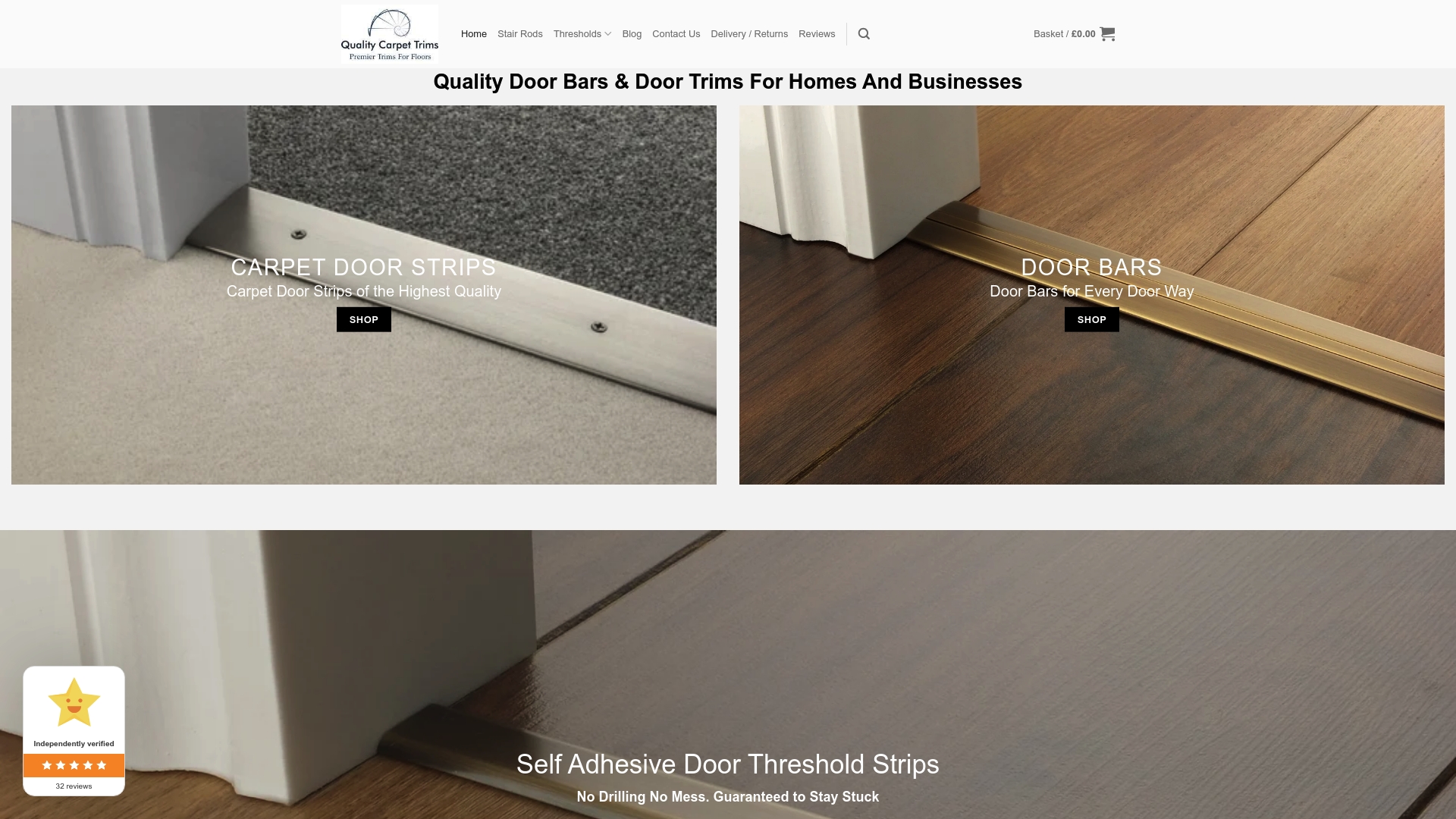
Every trim is manufactured in the UK, hand finished for consistency, and built to resist the splitting, bending, and denting that cheaper materials cannot avoid. Whether you need a door threshold bar for a carpet-to-hardfloor transition or a matwell flooring trim for a more specific application, the range covers the most common residential scenarios. Free samples are available, delivery is fast, and expert advice is on hand if you are unsure which profile suits your floor. Browse the full range and order the finish that fits your home.
FAQ
What is an edge protector in flooring?
An edge protector in flooring is a rigid trim or profile fitted at the junction between two floor surfaces to protect the exposed edge, prevent lifting or fraying, and eliminate trip hazards.
How do I choose the right edge protector for my floor?
Match the trim profile to the height difference between your two floor surfaces, choose a material suited to the room’s moisture level, and select a finish that complements your flooring colour.
Are solid brass trims better than plastic or aluminium ones?
Solid brass trims outlast plastic and aluminium alternatives because they do not split, bend, dent, or lose their finish under regular foot traffic and furniture movement.
How do I install an edge protector without it lifting?
Clean the substrate thoroughly before fixing. Dust, oil, or moisture on the surface is the leading cause of adhesive bond failure in edge trim installations.
Are edge protectors suitable for homes with young children?
Flush-fitted flooring trims remove trip hazards at doorway thresholds, and soft foam or vinyl guards fitted to furniture corners reduce the risk of cuts and bruises, making both types genuinely useful for child safety.
Recommended
- Edge trims: essential for safe, stylish UK flooring
- Step by step edge trim fitting: your complete DIY guide
- Why use edge trims? Enhance safety and style in flooring
- Floor trim fitting guide for a professional finish