
Blog
Laminate Transition – Achieving Seamless Flooring Results

Feb
Finding the right laminate flooring transitions can feel overwhelming for British DIY homeowners determined to create seamless finishes that last. The reality is that these components do much more than simply join different floor surfaces. Laminate transitions accommodate natural expansion, prevent damage, and protect your investment. This guide unpacks the technical purpose behind transition strips, clears up common misconceptions, and helps you choose solutions that support both aesthetics and durability for your next renovation.
Table of Contents
- Laminate Transition Explained: Core Purpose And Misconceptions
- Types Of Laminate Transition Strips For UK Homes
- How Laminate Transitions Function And Installation Basics
- Safety, Regulations And Compatibility Requirements
- Common Mistakes And Premium Transition Alternatives
Key Takeaways
| Point | Details |
|---|---|
| Importance of Transitions | Laminate transitions are essential for structural integrity and longevity, accommodating natural floor movements beyond aesthetics. |
| Types of Transition Strips | Various transition strip types serve specific functions, including threshold, T-molding, reducer, expansion joint covers, and stair nose strips. |
| Premium vs Standard Options | Premium transition strips offer enhanced durability and moisture resistance, ensuring better performance than standard alternatives. |
| Installation Precautions | Proper measurement and adherence to installation guidelines are critical to avoid common pitfalls and ensure successful transitions. |
Laminate transition explained: Core purpose and misconceptions
Laminate flooring is more than just a decorative surface; it’s a sophisticated system designed to provide both aesthetic appeal and functional performance. Laminate flooring construction involves multiple layers that work together to create a durable and adaptable floor covering.
The core purpose of laminate transitions extends far beyond simple visual connection between different floor surfaces. These critical components serve several essential functions:
- Accommodate natural floor expansion and contraction
- Prevent potential damage from uneven surface interfaces
- Create smooth, seamless connections between different flooring types
- Provide structural integrity and stability
- Protect floor edges from wear and potential chipping
Common misconceptions often underestimate the technical complexity of laminate transitions. Many homeowners mistakenly believe these strips are purely decorative, when in reality, they play a crucial protective and structural role. Transition strips are engineered solutions that manage the complex interactions between different flooring materials.
Professional installers understand that proper transitions are not optional—they’re essential for long-term floor performance and durability.
The scientific principles behind laminate transitions involve understanding material expansion characteristics. Lamination theory principles reveal that different materials expand and contract at varying rates, necessitating carefully designed transition mechanisms.
Understanding these technical nuances helps homeowners make more informed decisions about their flooring installations. Transition strips are not merely cosmetic accessories but critical components that ensure your floor’s longevity and performance.
Pro tip: Always measure and plan your transitions carefully, accounting for potential temperature and humidity variations in your specific environment.
Types of laminate transition strips for UK homes
Laminate transition strips represent a critical component in achieving seamless flooring solutions for British homes. High-pressure laminate technologies have revolutionised the way homeowners approach floor transitions, offering both functional and aesthetic benefits.
In the United Kingdom, several primary types of laminate transition strips are commonly utilised:
- Threshold strips: Connect floors at different height levels
- T-molding strips: Bridge two hard surfaces of equal height
- Reducer strips: Transition between floors with significant height differences
- Expansion joint covers: Accommodate natural floor movement and expansion
- Stair nose strips: Provide safe, smooth transitions on staircase edges
Modern transition strips are engineered using sophisticated materials that meet rigorous British standards. Decorative laminate technologies enable manufacturers to create strips that not only perform functionally but also complement existing floor designs.
Selecting the right transition strip is as much about performance as it is about aesthetic harmony.
Unlike cheaper alternatives, premium transition strips are constructed from high-quality materials such as thermoplastic films including vinyl, polyester, and polypropylene. These materials offer superior durability, moisture resistance, and dimensional stability, ensuring long-lasting floor interfaces.
Homeowners should consider factors like floor height differences, expansion requirements, and aesthetic compatibility when selecting transition strips. Understanding these nuanced requirements helps prevent potential installation issues and ensures a professional, seamless finish.
To aid homeowners in choosing the right laminate transition strip, here’s a comparison of key strip types commonly used in UK homes:
| Strip Type | Typical Use Case | Durability Level | Noteworthy Property |
|---|---|---|---|
| Threshold Strip | Level change between rooms | Moderate to High | Protects edges from wear |
| T-Molding | Seamless join between equal heights | Moderate | Blends floor aesthetics |
| Reducer Strip | Significant height difference | High | Superior moisture barrier |
| Expansion Joint Cover | Accommodates floor movement | High | Resists thermal changes |
| Stair Nose Strip | Stair edge protection | Very High | Enhanced slip resistance |
Pro tip: Always measure floor heights precisely and purchase transition strips that provide at least 10mm of additional coverage to accommodate potential variations.
How laminate transitions function and installation basics
Laminate floor transitions are sophisticated engineering solutions that do more than simply connect different flooring surfaces. Laminate flooring installation techniques involve intricate processes designed to accommodate natural floor movement and prevent potential damage.
The fundamental functions of laminate transitions include:
- Bridging height differences between floor surfaces
- Allowing for natural floor expansion and contraction
- Preventing moisture infiltration between flooring sections
- Providing a smooth, visually appealing connection point
- Protecting floor edges from wear and potential damage
Transition strip mechanics rely on precision engineering to ensure seamless integration. Unlike rudimentary connection methods, these strips are designed to flex and move with the underlying flooring, accommodating temperature and humidity changes without compromising structural integrity.
Professional installation demands meticulous attention to expansion gaps and precise strip fitting.
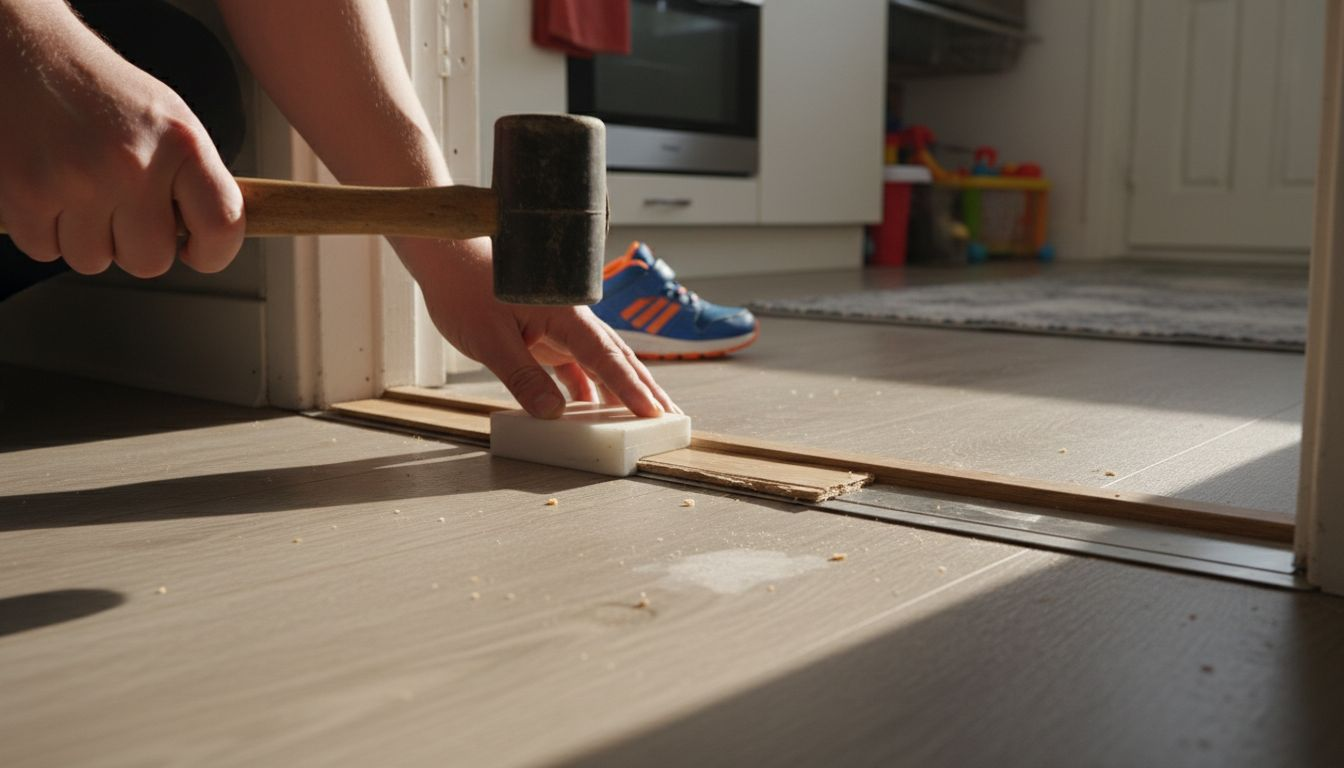
Technical installation guidelines emphasise several critical steps for successful laminate transition implementation:
- Prepare the subfloor completely, ensuring it is clean, dry, and level
- Install appropriate underlayment to provide moisture protection
- Leave recommended expansion gaps around room perimeters
- Select transition strips that match both floor height and aesthetic requirements
- Secure strips using manufacturer-recommended fastening techniques
Understanding these nuanced installation principles helps homeowners avoid common pitfalls such as floor buckling, gaps, or premature wear. The key is recognising that transitions are not merely decorative elements but crucial structural components of a successful laminate flooring system.
Pro tip: Always purchase transition strips with a minimum 10mm additional coverage and test-fit before permanent installation to ensure perfect alignment.
Safety, regulations and compatibility requirements
Navigating the complex landscape of laminate flooring safety involves understanding multiple regulatory standards that protect both homeowners and installation professionals. Laminate flooring safety standards establish critical guidelines that ensure structural integrity, chemical safety, and performance reliability.
Key safety considerations for laminate transitions include:
- Compliance with British and European building regulations
- Chemical emission control for indoor air quality
- Slip resistance and fall prevention
- Load-bearing capacity and structural performance
- Fire retardancy and material reaction standards
Compatibility requirements extend beyond simple physical matching, encompassing complex interactions between materials, adhesives, and underlying subfloors. These technical specifications prevent potential chemical reactions, ensure long-term performance, and mitigate risks associated with improper installation.
Professional installations demand meticulous adherence to manufacturer and regulatory specifications.
Chemical emission regulations play a crucial role in protecting household health, particularly regarding formaldehyde levels and volatile organic compound (VOC) emissions. Homeowners should prioritise products that meet stringent environmental and health standards.
Understanding these intricate requirements helps prevent potential issues such as floor degradation, health risks, and premature system failure. Careful selection of transition materials, rigorous compliance checks, and professional installation are essential for creating safe, durable flooring solutions.
Pro tip: Always request comprehensive safety certification documentation from manufacturers and verify compliance with current British building regulations before finalising your laminate flooring transition installation.
Common mistakes and premium transition alternatives
Laminate flooring transitions require precision and expertise to avoid costly installation errors. Laminate flooring installation guidelines highlight numerous potential pitfalls that can compromise floor performance and aesthetic appeal.
Common installation mistakes include:
- Neglecting critical expansion gaps around room perimeters
- Improper subfloor preparation and levelling
- Using incorrect adhesives or fastening techniques
- Failing to acclimate materials before installation
- Ignoring manufacturer-specific installation requirements
Transition strip selection demands careful consideration beyond mere aesthetic preferences. Premium transition alternatives offer sophisticated solutions that transcend traditional limitations, providing enhanced durability and performance.
Professional-grade transition strips represent an investment in long-term flooring integrity.
Premium transition alternatives typically feature advanced materials and engineering, such as:
- Solid brass profiles with powder-coated finishes
- Precision-engineered polymer composites
- Corrosion-resistant metal alloys
- Seamless design integration technologies
- Enhanced moisture and thermal expansion resistance
Understanding the nuanced differences between standard and premium transition solutions helps homeowners make informed decisions that protect their flooring investment. Cheap alternatives often lead to premature wear, unsightly gaps, and potential structural compromises.
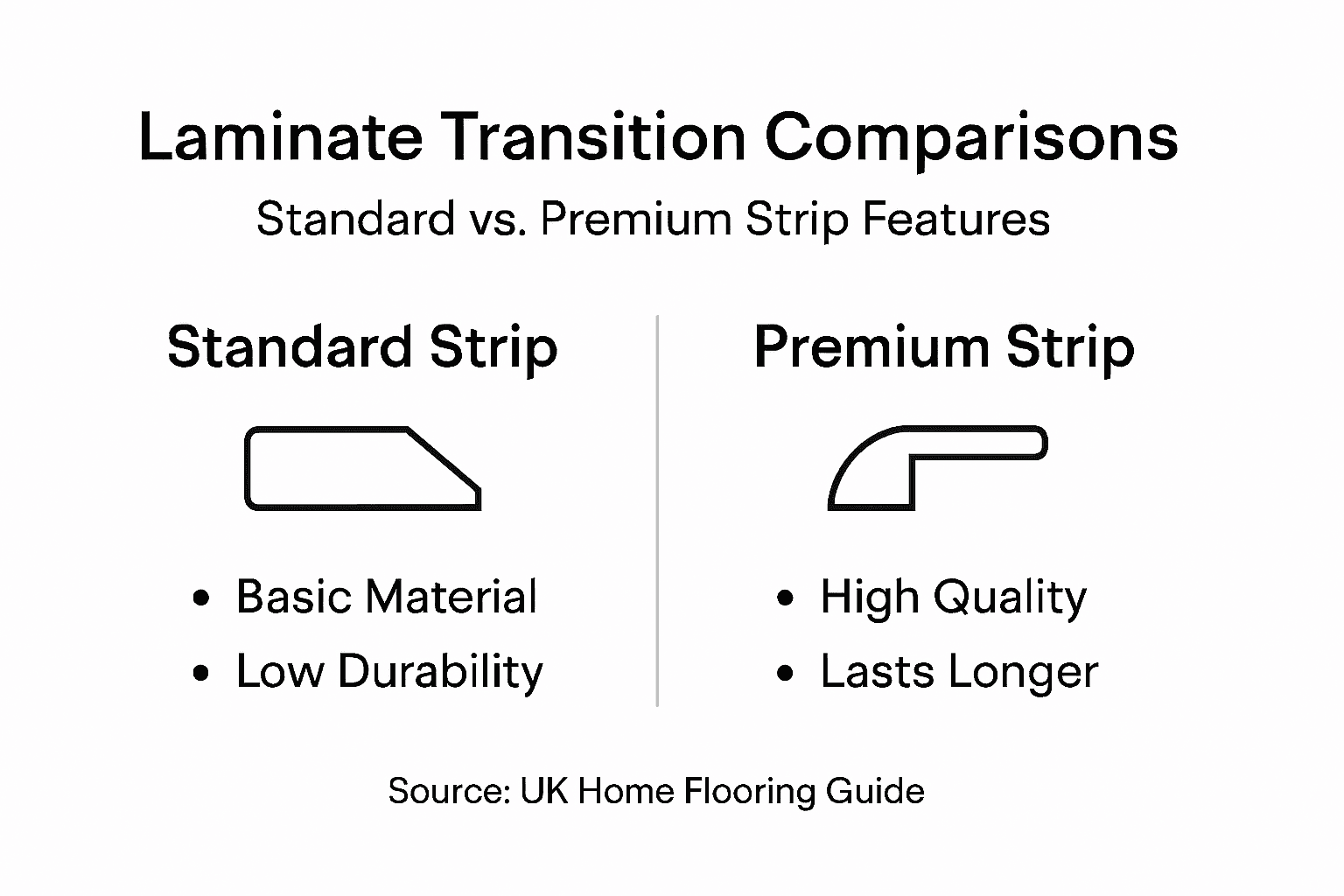
Below is a summary of standard versus premium transition strip features for those seeking durability and performance:
| Feature | Standard Strip | Premium Alternative |
|---|---|---|
| Material Quality | Basic plastic or aluminium | Solid brass, engineered composite |
| Moisture Resistance | Moderate | Enhanced, long-lasting |
| Design Integration | Basic finish | Seamless aesthetic match |
| Lifespan | 3-5 years | Over 10 years |
Pro tip: Invest in high-quality transition strips with professional-grade materials and always prioritise precise measurement and proper installation techniques.
Achieve Flawless Flooring Transitions with Quality Craftsmanship
The article highlights the critical challenge of ensuring seamless, durable laminate transitions that accommodate floor movement and height differences while enhancing aesthetics. Many homeowners face frustration with poorly fitting or low-quality transition strips that can cause damage, uneven surfaces, or premature wear. Precision-engineered transition strips that offer moisture resistance, dimensional stability, and perfect compatibility are essential to protect your flooring investment and achieve a professional finish.

Discover a superior range of solid metal door bars and transition trims at Quality Carpet Trims. Our hand-finished British-made products deliver the strength and elegance necessary for enduring laminate transitions. With 10 beautiful finishes to match your interior style and expert guidance available, you can avoid common installation pitfalls and create smooth, safe, and visually appealing joins between floor surfaces. Don’t settle for inferior plastics or aluminium alternatives — invest in lasting quality today. Explore our comprehensive selection of flooring trims, thresholds, and door bars and start your perfect installation journey now.
Frequently Asked Questions
What are the primary functions of laminate transition strips?
Laminate transition strips are essential for bridging height differences, allowing for natural expansion and contraction of flooring, preventing moisture infiltration, and protecting floor edges from wear.
How do I properly install laminate transition strips?
Proper installation involves preparing the subfloor by ensuring it’s clean and level, installing underlayment for moisture protection, leaving recommended expansion gaps, choosing the right strips based on height and aesthetics, and following manufacturer fastening techniques.
What types of laminate transition strips are available and when should I use each?
Common types include threshold strips for level changes, T-molding for equal heights, reducer strips for significant height differences, expansion joint covers for floor movement, and stair nose strips for staircase edges. The type to use depends on the specific flooring requirements.
Why should I choose premium transition strips over standard ones?
Premium transition strips are made from advanced materials that offer enhanced durability, moisture resistance, and better aesthetic integration, which can prevent premature wear and improve the longevity and performance of your flooring system.
Recommended
- transition strip, transition strips for uneven floors – Quality Carpet Trims
- Flawless Laminate Finishes: Edging, Beading, And Transition Strips Made Simple – Quality Carpet Trims
- Discover Top Laminate Flooring Threshold Strips – Quality Carpet Trims
- Carpet To Tile Trim – Quality Carpet Trims
- LVT Perform Flooring | High Quality Click Lock Flooring