
Blog
Laminate to Carpet Join: Ensuring Seamless Transitions

Feb
Choosing the right join between laminate and carpet can make the difference between a project that looks professionally finished and one that leaves you frustrated every time you walk across the room. Floors experience constant wear in every British home, and mistakes at the transition point often lead to unnecessary damage or unsightly gaps. This guide highlights the importance of a well-chosen laminate to carpet join, explains essential transition profiles, and shares expert advice to help you achieve a safe, durable, and visually pleasing result.
Table of Contents
- Laminate To Carpet Join: Definition And Purpose
- Main Types Of Laminate To Carpet Profiles
- How Metal Door Bars Deliver Superior Results
- Installation Steps And Key Practical Tips
- Avoiding Common Mistakes And Achieving Longevity
Key Takeaways
| Point | Details |
|---|---|
| Smooth Transitions | Laminate to carpet joins provide a critical solution for safely transitioning between different flooring types, minimising tripping hazards and ensuring aesthetic appeal. |
| Profile Selection | Choosing the right transition profile based on floor height and traffic intensity is essential for durability and visual harmony. |
| Installation Precision | Accurate measurements and surface preparation are vital to achieve a flawless join and maintain long-lasting performance. |
| Preventative Maintenance | Regular checks and proper care, including allowing for expansion gaps, can significantly extend the lifespan of floor transitions. |
Laminate to Carpet Join: Definition and Purpose
A laminate to carpet join represents a critical transitional element in flooring design, bridging two distinctly different floor surfaces with both functional and aesthetic considerations. This specialised connection ensures a smooth, safe transition between laminate and carpet flooring, addressing height differences and preventing potential tripping hazards.
Laminate flooring, a multi-layer synthetic product designed to simulate wood or stone, requires careful joining techniques when meeting carpet surfaces. The join serves multiple essential purposes:
- Seamlessly connecting different floor materials
- Accommodating height variations between surfaces
- Preventing potential tripping risks
- Maintaining a professional, finished appearance
- Protecting floor edges from wear and damage
The technical purpose of a laminate to carpet join goes beyond mere aesthetics. Carpet installation standards emphasise the critical role of transitions in ensuring durability and safety. By creating a precise, level connection, these joins distribute weight evenly and reduce stress on individual flooring materials.
Pro tip: Always measure floor height differences precisely before selecting a transition strip to guarantee a smooth, seamless join between laminate and carpet surfaces.
Main Types of Laminate to Carpet Profiles
Laminate to carpet profiles are specialised transition elements designed to create smooth, professional connections between different floor surfaces. Transition profile varieties encompass multiple technical solutions that address specific flooring challenges, ensuring both aesthetic appeal and functional integrity.
The primary types of laminate to carpet profiles include:
- Metal Transition Strips: Durable and sleek, ideal for high-traffic areas
- T-Molding Profiles: Perfect for level floor height transitions
- Reducer Strips: Designed to bridge height differences between surfaces
- Threshold Bars: Specifically engineered for doorways and passage areas
- Sloped Transition Profiles: Accommodating significant height variations
Each profile type serves a unique purpose in floor transitions. Carpet installation standards recommend selecting profiles based on critical factors such as:
- Precise floor height measurements
- Expected foot traffic intensity
- Aesthetic design requirements
- Material compatibility
- Wear resistance characteristics
The selection process involves careful evaluation of the specific transition point, considering both functional performance and visual harmony between laminate and carpet surfaces. Professional installers prioritise precision and compatibility to achieve seamless, professional-looking results.
The following table summarises how key transition profile types are best matched to common flooring scenarios:
| Profile Type | Ideal Application Area | Floor Height Difference |
|---|---|---|
| Metal Strip | High-traffic doorways | Moderate differences |
| T-Moulding | Wide open spaces | Minimal differences |
| Reducer Strip | Uneven joins | Significant difference |
| Threshold Bar | Entry passages | Slight step change |
| Sloped Profile | Ramps or slopes | Large variations |
Pro tip: Measure floor height differences precisely and select transition profiles that offer a smooth, gradual connection to prevent tripping hazards and ensure long-lasting performance.
How Metal Door Bars Deliver Superior Results
Metal door bars represent the pinnacle of flooring transition technology, offering unparalleled performance in connecting laminate and carpet surfaces. Professional installation standards highlight their exceptional durability and structural integrity, making them the preferred choice for discerning homeowners and professional installers.
The key advantages of metal door bars include:
- Exceptional strength and rigidity
- Resistance to wear and impact
- Professional, clean aesthetic finish
- Enhanced corrosion protection
- Long-term dimensional stability
- Uniform load distribution across floor transitions
Carpet installation guidelines emphasise the critical role of metal door bars in maintaining floor integrity. Their robust construction provides several significant benefits:
- Minimises edge damage to laminate and carpet
- Prevents premature wear at transition points
- Creates a smooth, level surface between different flooring materials
- Reduces tripping hazards
- Offers superior load-bearing capabilities
Professional installers appreciate metal door bars for their precision engineering and adaptability. The surface treatments like anodising not only enhance aesthetic appeal but also provide robust protection against environmental factors, ensuring a lasting and professional finish to floor transitions.
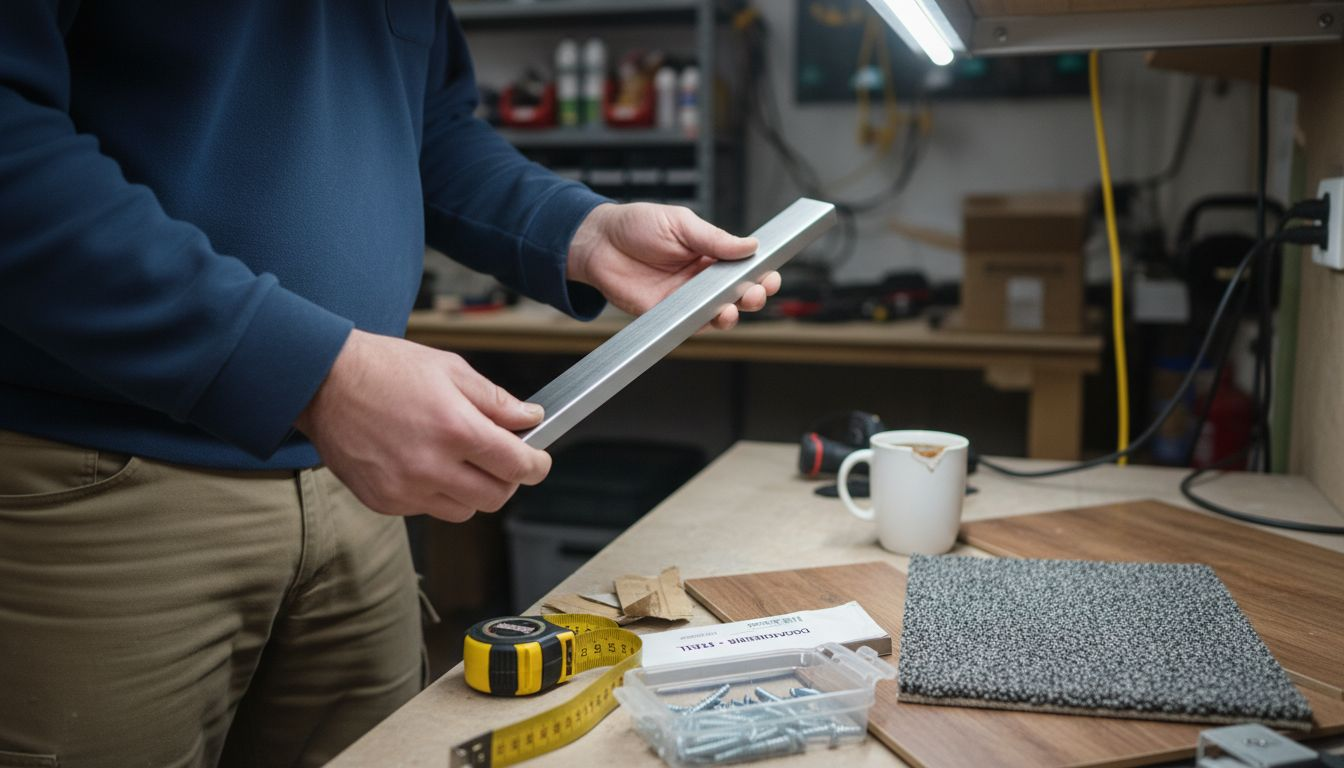
Pro tip: Select metal door bars with multiple finish options to ensure perfect colour and style matching with your specific flooring design and interior aesthetic.
Installation Steps and Key Practical Tips
Successful laminate to carpet transitions require meticulous preparation and precision. Carpet installation guidelines emphasise the critical importance of careful measurement and methodical execution to achieve professional results.
The comprehensive installation process involves several key steps:
- Measure floor height differences precisely
- Clean and prepare both floor surfaces thoroughly
- Select appropriate transition profile
- Ensure clean, straight edges on carpet and laminate
- Position transition strip accurately
- Secure using recommended fastening method
Required tools for the installation include:
- Measuring tape
- Sharp utility knife
- Adhesive or mechanical fasteners
- Seam roller
- Safety equipment (gloves, protective eyewear)
- Level
Professional installation standards recommend paying special attention to surface preparation. This involves:
- Removing debris and dust
- Checking floor levelness
- Trimming carpet edges cleanly
- Providing adequate underlayment support
- Allowing for potential floor expansion
Precision matters. Even minor misalignments can compromise the transition’s aesthetic appeal and functional performance. Professional installers understand that patience and attention to detail are crucial for achieving a flawless, seamless join between laminate and carpet surfaces.
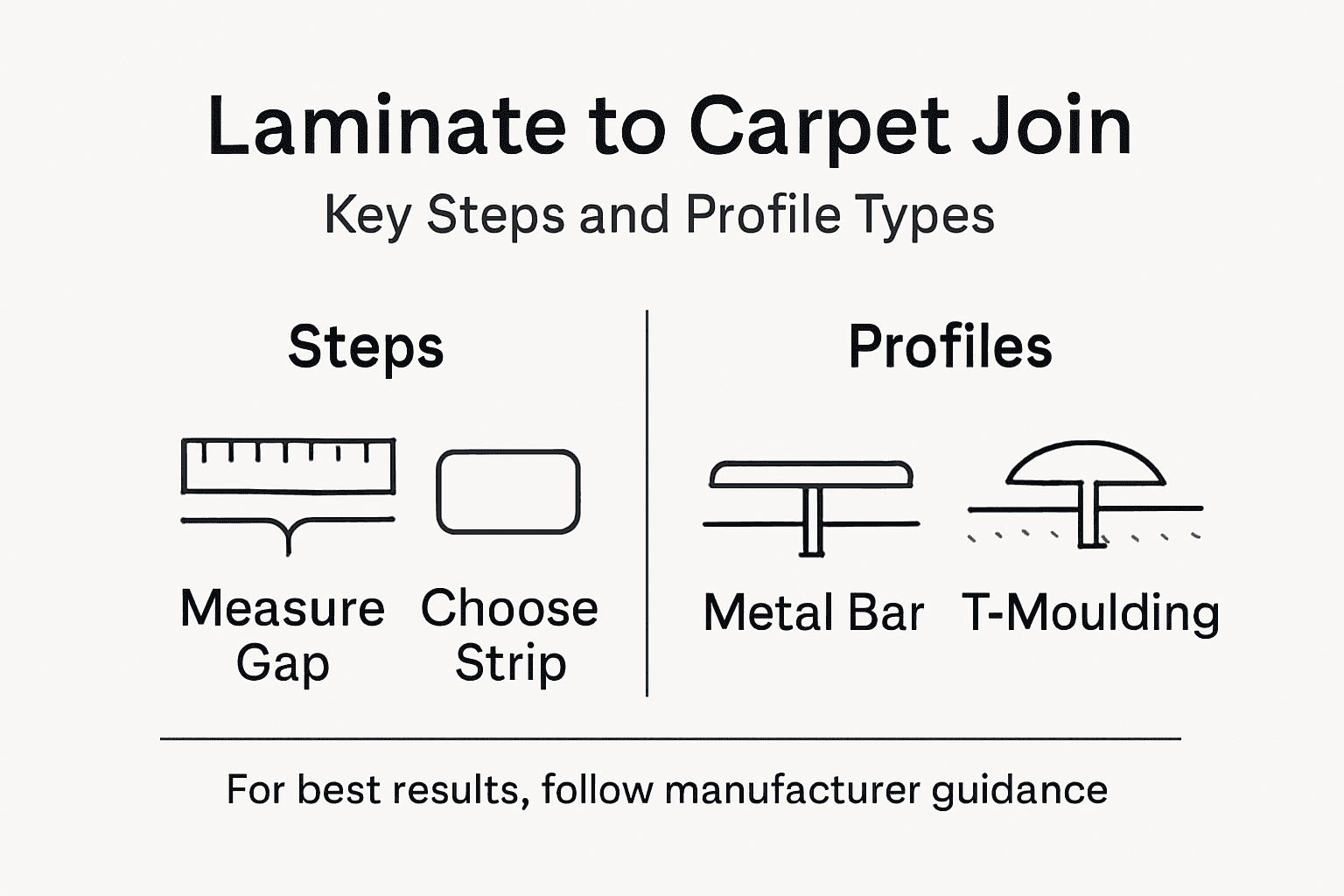
Pro tip: Always test-fit the transition strip before final installation and ensure you have a 2-3mm expansion gap to accommodate potential floor movement and temperature variations.
Avoiding Common Mistakes and Achieving Longevity
Laminate to carpet transitions demand precision and strategic planning to ensure long-lasting performance. Laminate flooring guidelines highlight the critical importance of understanding potential pitfalls that can compromise the durability and aesthetic quality of floor joins.
Common mistakes that can significantly reduce transition longevity include:
- Inadequate height matching between surfaces
- Insufficient expansion gap allowance
- Using incompatible adhesive materials
- Neglecting subfloor moisture control
- Poor initial surface preparation
- Ignoring manufacturer installation guidelines
Prevention strategies involve several key approaches:
- Acclimate flooring materials before installation
- Thoroughly clean and level subfloors
- Select transition strips compatible with specific floor heights
- Use recommended fastening techniques
- Monitor join condition periodically
Carpet installation standards recommend comprehensive maintenance practices to extend transition durability. These include:
- Regular cleaning around transition areas
- Checking for signs of wear or damage
- Maintaining consistent indoor humidity levels
- Addressing minor issues before they escalate
- Protecting joins from excessive moisture
Professional installers understand that longevity is not just about initial installation, but ongoing care and proactive maintenance. Small, consistent efforts can prevent significant future repair costs and maintain the aesthetic appeal of your flooring transition.
The table below outlines common mistakes in transitions and useful prevention actions:
| Common Mistake | Preventative Measure | Long-Term Impact |
|---|---|---|
| Poor height alignment | Measure and level floors accurately | Prevents trip hazards |
| Skipping expansion gap | Leave 2–3mm gap | Avoids buckling |
| Incompatible adhesive | Use recommended products | Improves join durability |
| Ignored subfloor moisture | Check humidity before fitting | Reduces risk of warping |
Pro tip: Create a maintenance log to track your floor transition’s condition, noting any changes or potential issues during routine cleaning sessions.
Achieve Perfect Laminate to Carpet Transitions with Quality Carpet Trims
Creating a seamless and safe join between laminate and carpet flooring is essential to avoid trip hazards and ensure a professional finish. The article highlights the challenges of matching floor heights and selecting the right transition profile, especially emphasising the superior durability and aesthetic benefits of metal door bars. If you want to eliminate common installation pitfalls and enhance your interior with long-lasting, elegant solutions, choosing the right trim is crucial.

Discover the hand-finished solid metal door bars available in 10 stunning finishes at Quality Carpet Trims. Our British-made products offer unmatched strength and style that perfectly complements your flooring design. Whether you are a DIY enthusiast, contractor, or interior designer, our extensive expertise and fast delivery ensure you get the right profile for a flawless laminate to carpet join. Visit our site now to explore our superior range and take the first step towards flawless floor transitions with expert advice and free samples.
Frequently Asked Questions
What is a laminate to carpet join, and why is it important?
A laminate to carpet join is a transitional element that connects laminate and carpet floors. It is crucial because it prevents tripping hazards, accommodates height differences, and ensures a professional, finished appearance between two different flooring types.
What are the main types of laminate to carpet profiles?
The main types include metal transition strips, T-moulding profiles, reducer strips, threshold bars, and sloped transition profiles, each designed for specific flooring scenarios and height variations.
How do metal door bars enhance flooring transitions?
Metal door bars provide exceptional strength and durability, minimise edge damage between laminate and carpet, create a smooth surface, and reduce tripping hazards. Their robust construction offers superior load-bearing capabilities and long-term stability.
What are common mistakes to avoid when installing laminate to carpet transitions?
Common mistakes include inadequate height matching, skipping necessary expansion gaps, using incompatible adhesives, and poor initial surface preparation. Avoiding these pitfalls ensures a long-lasting and aesthetically pleasing transition.
Recommended
- Laminate Transition – Achieving Seamless Flooring Results
- What Is Carpet Transition? Achieving Seamless Floors
- Carpet To Tile Trim – Quality Carpet Trims
- Flawless Laminate Finishes: Edging, Beading, And Transition Strips Made Simple – Quality Carpet Trims