
Blog
Carpet to Tile Transition: Achieving Seamless Floors

Feb
Switching from carpet to tile often leaves UK home renovators puzzled by the tricky boundary where these two materials meet. Defining a proper transition zone is more than a design choice, it directly affects the safety and long-term condition of your floors. By focusing on the use of quality metal trims, you can address challenges like uneven surfaces and exposed edges while achieving a smart, durable finish that stands up to daily use.
Table of Contents
- Defining Carpet to Tile Transition Zones
- Types of Carpet to Tile Transition Trims
- How Metal Thresholds Ensure Seamless Joins
- Installation Techniques for a Professional Finish
- Comparing Metal Trims to Common Alternatives
Key Takeaways
| Point | Details |
|---|---|
| Importance of Transition Zones | Proper planning is essential to ensure safety and aesthetic continuity between carpet and tile flooring. |
| Selection of Transition Trims | Choosing the correct transition trim is vital for managing height differences and enhancing visual appeal. |
| Metal Threshold Benefits | Metal thresholds provide structural stability and edge protection, significantly reducing tripping hazards. |
| Professional Installation Techniques | Thorough preparation and precise execution are crucial for achieving a durable and visually pleasing floor transition. |
Defining Carpet to Tile Transition Zones
Carpet to tile transition zones represent the critical boundary where two distinct flooring materials converge, creating a complex intersection that demands meticulous planning and execution. These zones are not merely aesthetic considerations but functional spaces that significantly impact floor safety, durability, and overall interior design integrity.
Understanding transition zones involves recognising the nuanced challenges presented by different flooring materials. Transition zone standards emphasise the importance of managing elevation differences, surface continuity, and potential tripping hazards. The primary objectives include:
- Ensuring smooth surface alignment between carpet and tile
- Preventing uneven edges that could cause accidents
- Creating a visually seamless flooring change
- Managing height differences between flooring materials
- Protecting floor edges from potential damage
Professional flooring experts recognise that successful transition zones require careful substrate preparation and strategic material selection. Height variations between carpet and tile can range from 2-15mm, necessitating precision transition techniques that accommodate these structural differences.
This table summarises key factors to consider when planning carpet to tile transitions:
| Factor | Importance | Common Challenge | Solution |
|---|---|---|---|
| Height Difference | Safety, alignment | Tripping hazard | Custom trim selection |
| Surface Texture | Aesthetic, integration | Rough junctions | Choose suitable trim |
| Subfloor Condition | Longevity | Uneven base | Professional inspection |
| Traffic Intensity | Wear resistance | Premature damage | Durable materials |
The complexity of these zones extends beyond mere aesthetic considerations. Comprehensive transition planning involves assessing texture, flexibility, and structural characteristics of both flooring types. Professionals must consider factors like expansion, contraction, and potential wear patterns when designing these critical junctions.
Pro tip: Always measure the exact height difference between your carpet and tile before selecting a transition trim to ensure a perfect, safe installation.
Types of Carpet to Tile Transition Trims
Carpet to tile transition trims represent critical solutions for bridging flooring differences, offering both functional and aesthetic advantages. Metal and vinyl transition options provide homeowners with versatile methods to create seamless floor connections that enhance interior design and safety.
The primary types of transition trims include:
- Metal trims: Renowned for durability and sleek appearance
- Vinyl strips: Flexible and cost-effective
- Wood reducers: Adding natural warmth to transitions
- Rubber transition strips: Providing cushioning and adaptability
Professional installers understand that selecting the right transition trim depends on several critical factors. Height differential between carpet and tile surfaces plays a crucial role in determining the most appropriate trim type. Some trims work best for minimal height variations, while others accommodate more significant level changes.
Each transition trim type offers unique benefits. Transition trim selection involves carefully balancing functional requirements with aesthetic preferences. Metal trims excel in high-traffic areas, providing robust protection and clean lines. Vinyl and rubber options offer greater flexibility, making them ideal for spaces requiring more forgiving installation techniques.
Here’s a concise overview of common carpet to tile transition trims and their typical applications:
| Trim Type | Best Application | Durability | Visual Impact |
|---|---|---|---|
| Metal | High-traffic zones | Excellent | Modern, sleek |
| Vinyl | Residential spaces | Moderate | Subtle, adaptable |
| Wood | Living areas | Moderate | Warm, natural |
| Rubber | Wet or flexible areas | Good | Functional, understated |
Pro tip: Measure your floor height differences precisely and consider traffic patterns before selecting a transition trim to ensure optimal performance and visual appeal.
How Metal Thresholds Ensure Seamless Joins
Metal threshold installation techniques represent a sophisticated solution for creating smooth, professional floor transitions between carpet and tile surfaces. These precision-engineered components play a crucial role in managing height differentials and protecting vulnerable flooring edges.
Key advantages of metal thresholds include:
- Structural stability: Providing rigid support across floor junctions
- Height management: Accommodating variations between different flooring materials
- Edge protection: Preventing carpet fraying and tile chipping
- Safety enhancement: Reducing potential tripping hazards
- Aesthetic integration: Creating visually seamless floor connections
Professional installers understand that proper threshold selection depends on multiple factors. The metal threshold must match the specific height difference between carpet and tile, typically ranging from 3-15mm. Precision is paramount, as even slight misalignments can compromise both functional performance and visual appeal.
Threshold installation methods demonstrate that metal thresholds are engineered to resist deformation and provide long-lasting floor transitions. Their rigid structure ensures a stable connection, masking height variations while maintaining a clean, professional appearance. Modern metal thresholds can be selected in various finishes to complement surrounding flooring, transforming a potential visual disruption into a deliberate design feature.
Pro tip: Always test-fit your metal threshold before permanent installation, checking alignment and ensuring a smooth, gap-free transition between different flooring surfaces.
Installation Techniques for a Professional Finish
Professional installation techniques demand meticulous planning and precision to achieve seamless carpet to tile transitions. Successfully bridging different flooring materials requires understanding complex technical requirements and executing each step with exceptional attention to detail.
Key preparation steps include:
- Surface inspection: Checking subfloor flatness and condition
- Moisture testing: Ensuring appropriate environmental conditions
- Height measurement: Accurately determining elevation differences
- Clean preparation: Removing debris and ensuring smooth surfaces
- Tool selection: Choosing appropriate cutting and fastening equipment
Professional installers recognise that successful transitions depend on comprehensive preparation. Carpet and Rug Institute standards emphasise the importance of thorough surface evaluation and strategic layout planning. This approach minimises potential complications during installation and ensures long-term performance of the floor transition.
The installation process involves precise cutting of carpet and tile edges, carefully positioning transition strips, and securing them using mechanical fasteners or specialised adhesives. Professionals pay particular attention to alignment, ensuring no gaps or unevenness compromise the final finish. Temperature control and subfloor condition play critical roles in achieving a durable, aesthetically pleasing result that withstands regular foot traffic and environmental changes.
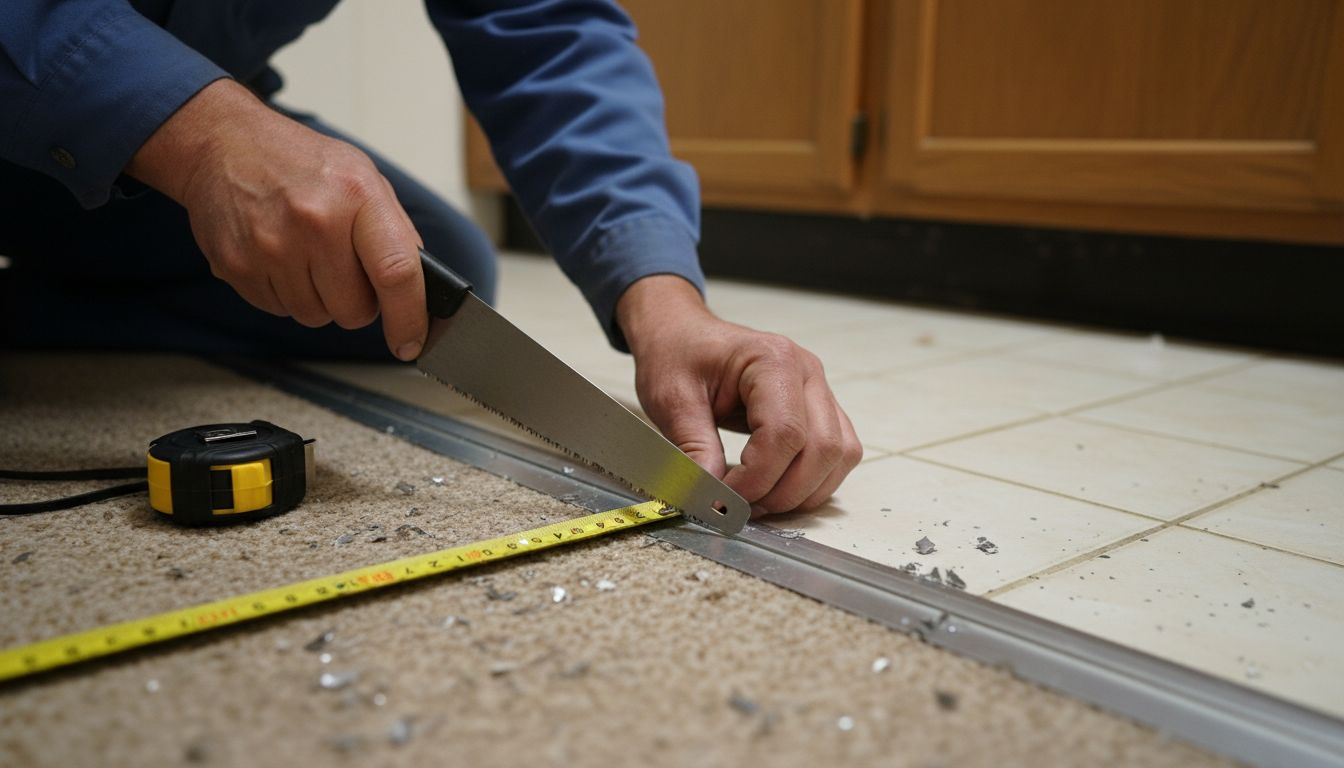
Pro tip: Always perform a dry-fit of your transition trim before final installation, checking alignment and making incremental adjustments to guarantee a perfect, professional finish.
Comparing Metal Trims to Common Alternatives
Transition trim performance analysis reveals significant differences between metal trims and alternative materials used in carpet to tile transitions. Understanding these variations helps homeowners and professionals make informed decisions about floor finishing solutions.
Key comparative characteristics include:
- Durability: Metal trims offer superior longevity
- Aesthetic appeal: Metal provides sleek, modern visual integration
- Traffic resistance: Metal handles heavy usage more effectively
- Installation complexity: Varies across different trim materials
- Cost considerations: Metal trims often represent longer-term investment
Professional flooring specialists recognise that material selection critically impacts transition performance. Materials comparison research demonstrates that while vinyl and rubber trims offer initial cost advantages, they compromise on long-term durability. Metal trims create more precise, flush transitions that significantly reduce potential tripping hazards and maintain structural integrity through years of use.
The comprehensive evaluation of transition trim alternatives reveals nuanced trade-offs. Vinyl and rubber options provide cushioning and economic installation but sacrifice aesthetic consistency and wear resistance. Wood trims, while visually appealing, remain vulnerable to moisture and mechanical damage. Metal trims emerge as the most robust solution, delivering exceptional edge protection, minimal maintenance requirements, and a professional finish that withstands intense residential and commercial environments.
Pro tip: Always prioritise long-term performance over initial cost when selecting floor transition trims, considering factors like traffic intensity and environmental conditions.
Achieve Seamless Carpet to Tile Transitions with Expert Precision
Creating a flawless carpet to tile transition means handling height differences, edge protection, and durability with confidence. If you are navigating challenges like uneven surfaces or searching for the perfect metal threshold to enhance safety and style, you are not alone. The article highlights the importance of proper height measurement and selecting a trim that combines both function and aesthetic appeal—exactly what discerning homeowners and professionals demand.
At Quality Carpet Trims, we specialise in premium solid metal door bars and transition trims hand-finished in ten stunning finishes to match your interior. Our commitment to quality guarantees and British manufacturing means you get durable, elegant solutions designed to withstand heavy traffic and maintain seamless joins between carpet and tile. Whether you are a DIY enthusiast or a contractor aiming for a professional finish, our range supports your goal of flawless floor transitions.

Don’t settle for flimsy or temporary fixes when you can trust meticulous craftsmanship that enhances both safety and style. Explore our expert fittings and comprehensive advice to find the exact profile you need. Visit Quality Carpet Trims now to order free samples and experience fast delivery. Take the first step towards perfect floor transitions today with products engineered for excellence.
Frequently Asked Questions
What are the key factors to consider when planning a carpet to tile transition?
When planning a carpet to tile transition, important factors include height differences, surface texture, subfloor condition, and traffic intensity. These aspects help ensure safety, alignment, and durability of the transition.
How do I choose the right transition trim for my carpet to tile floors?
Selecting the right transition trim involves measuring the height difference between the carpet and tile surfaces, considering the traffic patterns in your space, and assessing the aesthetic preferences. Metal trims are ideal for high-traffic areas, while vinyl and rubber options offer versatility.
What advantages do metal thresholds provide for carpet to tile transitions?
Metal thresholds provide structural stability, manage height differences, protect flooring edges from damage, enhance safety by reducing tripping hazards, and offer a sleek aesthetic integration with the surrounding floors.
What installation techniques ensure a professional finish for carpet to tile transitions?
Professional installation techniques include thorough surface inspection, accurate height measurement, careful cutting of carpet and tile edges, and precise positioning of transition strips. Ensuring clean preparation and proper alignment are critical steps for a seamless finish.
Recommended
- Carpet To Tile Trim – Quality Carpet Trims
- transition strip, transition strips for uneven floors – Quality Carpet Trims
- carpet to carpet tranistion Archives – Quality Carpet Trims
- Transition Strips For Uneven Floors – Quality Carpet Trims
- Pastel Sandstone Wall Cladding Transition Strip